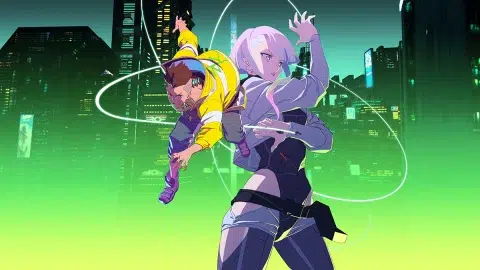
With the premiere of the second iteration of Cyberpunk Edgerunners, it’s easy to forget the dire straights the now-incredibly popular video game was in at the time when the show was first released. Anime iconoclast Hiroyuki Imaishi’s series was a total PR coup, compelling viewers to give Cyberpunk 2077 a second chance in droves, but it was also an incredibly emotive piece of art in its own right, drawing a story in a corner of Mike Pondsmith’s Night City with a simple rise-and-fall crime story and striking stylisation.
For season two, Kai Ikarashi, known best for episodes in the previous season which pushed the show to stylish and expressive extremes, takes over from Imaishi, and follows an entirely new cast. To Ikarashi’s credit there’s no resting on the laurels of the previous season, even as the second occasionally comes into close orbit with the tale of David Martinez, and even into close orbit with the video game itself (there are some fun similarities with the story of V which I won’t spoil). Edgerunners 2 differentiates itself from the first season both with its web of stories around new characters and aesthetically in places. These differences begin with the fuzzy digital camera used by the 12-year-old boy Roman, one of this season’s principle characters.
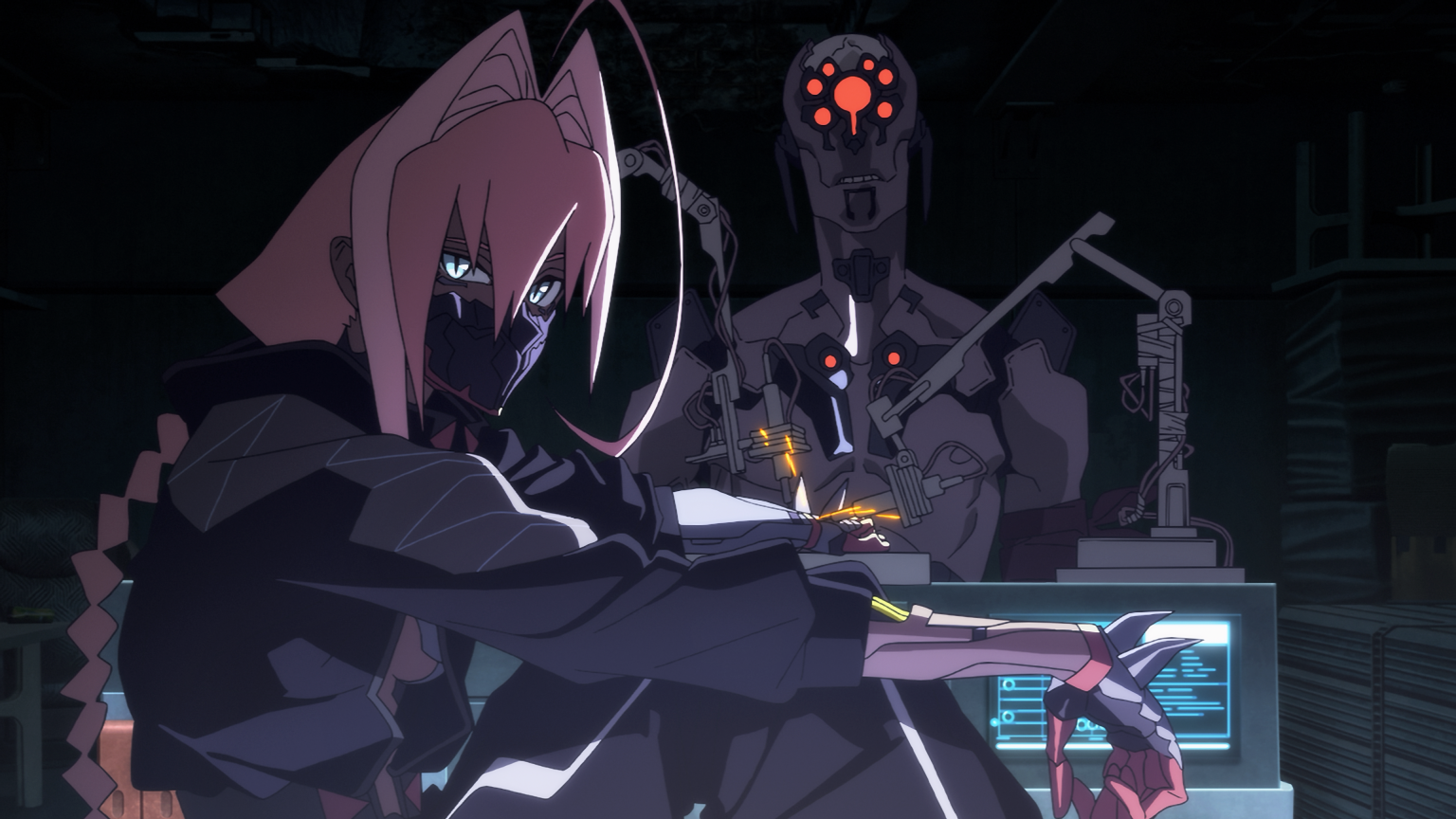
The aspiring filmmaker is the unlikely glue holding together a group of characters all on the brink of totally burning out with all the awful things Night City has thrown their way: Weak Kingsley (colloquially known as ‘King’) is an Edgerunner (mercenary) who has a brush with cyberpsychosis, essentially a psychotic break provoked by an over-dependency on cybernetic enhancements. Weak, as it turns out, is some unfortunate nominative determinism, as he ends up with all of his empowerment taken from him as any use of cybernetics may provoke another attack. Then there’s Talia, a teenager who may be on her way to Weak’s condition, as she falls in with the gang Maelstrom, known for their intense body modification (as well as extreme violence). Finally, there’s “D”, a one time Nomad (groups of petrolheads living outside of the city in clans) who seeks revenge for the extermination of his found family.
Cr. NETFLIX © 2026
Even though the story is different, if there’s any knock against Edgerunners 2, it’s that this new season pleads a little bit more audience familiarity with the world as established by the original series and the game. But there is always emotional clarity, especially as Roman documents the stories of the cast on camera, Ikarashi’s series using him to weaves together their individual struggles. Roman himself is a rarity in this world, in that he has no interest in modifying himself, just as he has no interest in the futuristic forms of visual entertainment (people watch “Brain Dance” videos beamed straight to their eyes rather than watch movies or TV). Like vinyl or casette, laserdisc or VCR – and in the world of Night City, your own flesh – video is obsolete. That said, it’s still in demand from a select few in search of something which feels authentic.
So much of Cyberpunk 2077 and the stories around it are interested in a growing numbness as people miss what’s tangible, what’s real, and don’t realise it. So it’s interesting to apply that to the idea of visual arts itself, and it’s through Roman’s filmmaking that Ikarashi’s series shows its standout visual conceit.
As Roman films D, Weak, and Talia, we see them as the camera sees them, through the low resolution of an old digital camera. That replication of a digital handheld style is both reminiscent of 90s and 00s camcorders and also anime from around that time, through the blown out colours and lighting. It’s not the first anime show to demonstrate such an interest with mixed mediums and archaic technology from an earlier period of animation, specifically the static and fuzzy texture of old digital video, but Ikarashi and the artists at Trigger combine this with some other exciting visual communication.
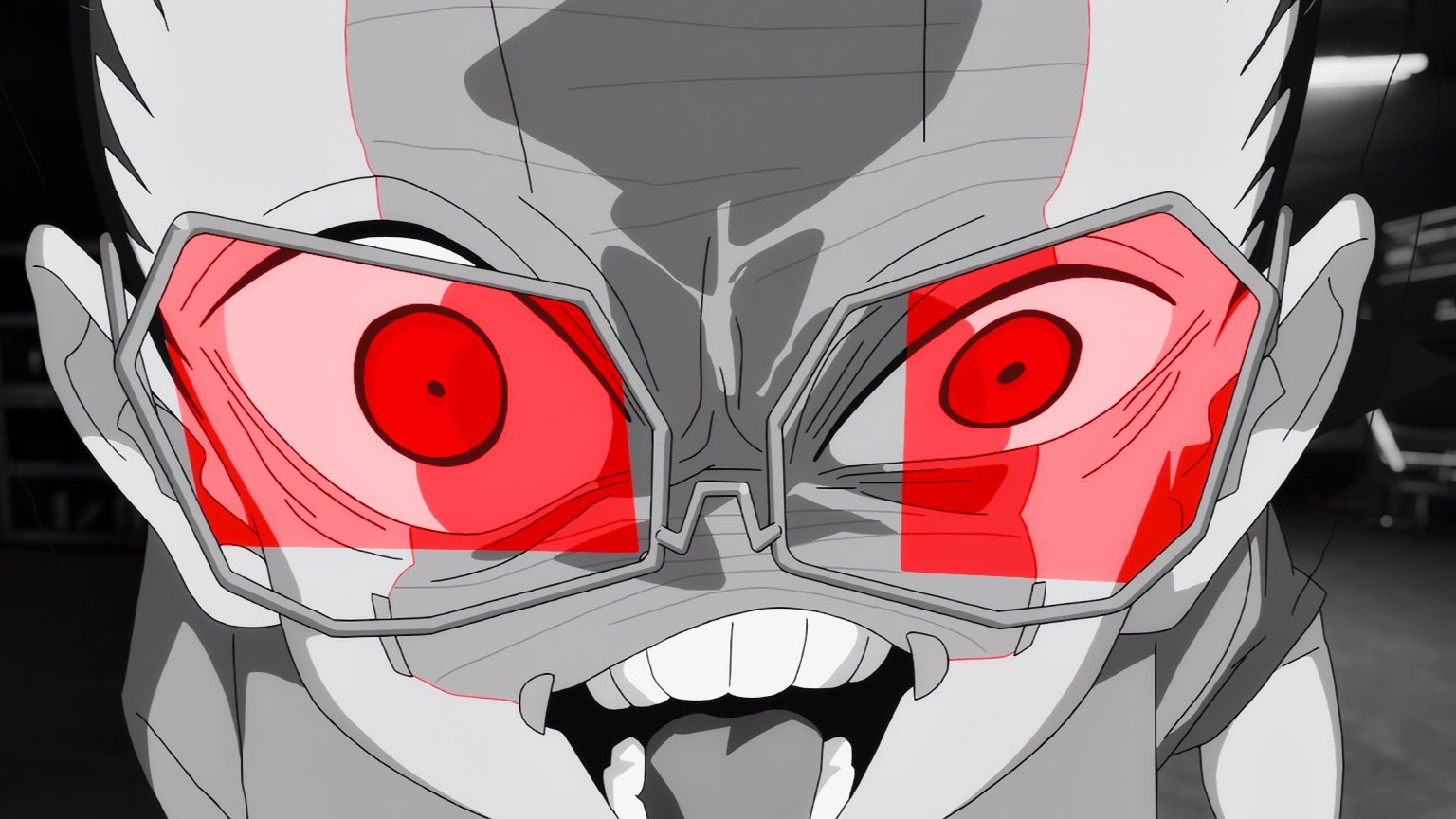
There’s a general looseness, a somewhat ironic sense of freedom, to the drawings and linework of Edgerunners 2, a combination of graphic brushstrokes with aggressive digital textures, both combining for an an overwhelming sense of emotion in tune with its volatile main cast: such as how cyberpsychosis for one character is represented by a digital RGB screen glitch (from his perspective) as well as the old school animation technique of multiples, but specifically of the characters eyes. That sense of haphazard collage feels appropriate for a series about so many broken people trying to reassemble themselves, both emotionally and sometimes literally.
It also might mean the art direction totally changing based on the scene, like a gorgeous sequence of D’s dreams about the Maelstrom attack on his clan, sky turning a deeper otherworldly blue and the flames a simple orange, the detail removed from the illustrations in favour of expressive colour. Not that the show is all abstraction: there’s plenty of extreme bloodshed to bring proceedings back down to the unpleasant earth, one memorable standout being a closeup of eyeball melting in its socket. (That intensity is underlined by Tsuneo Imahori’s frenetic and chaotic score, bouncing between different genres with no preference, just so long as it’s loud.)
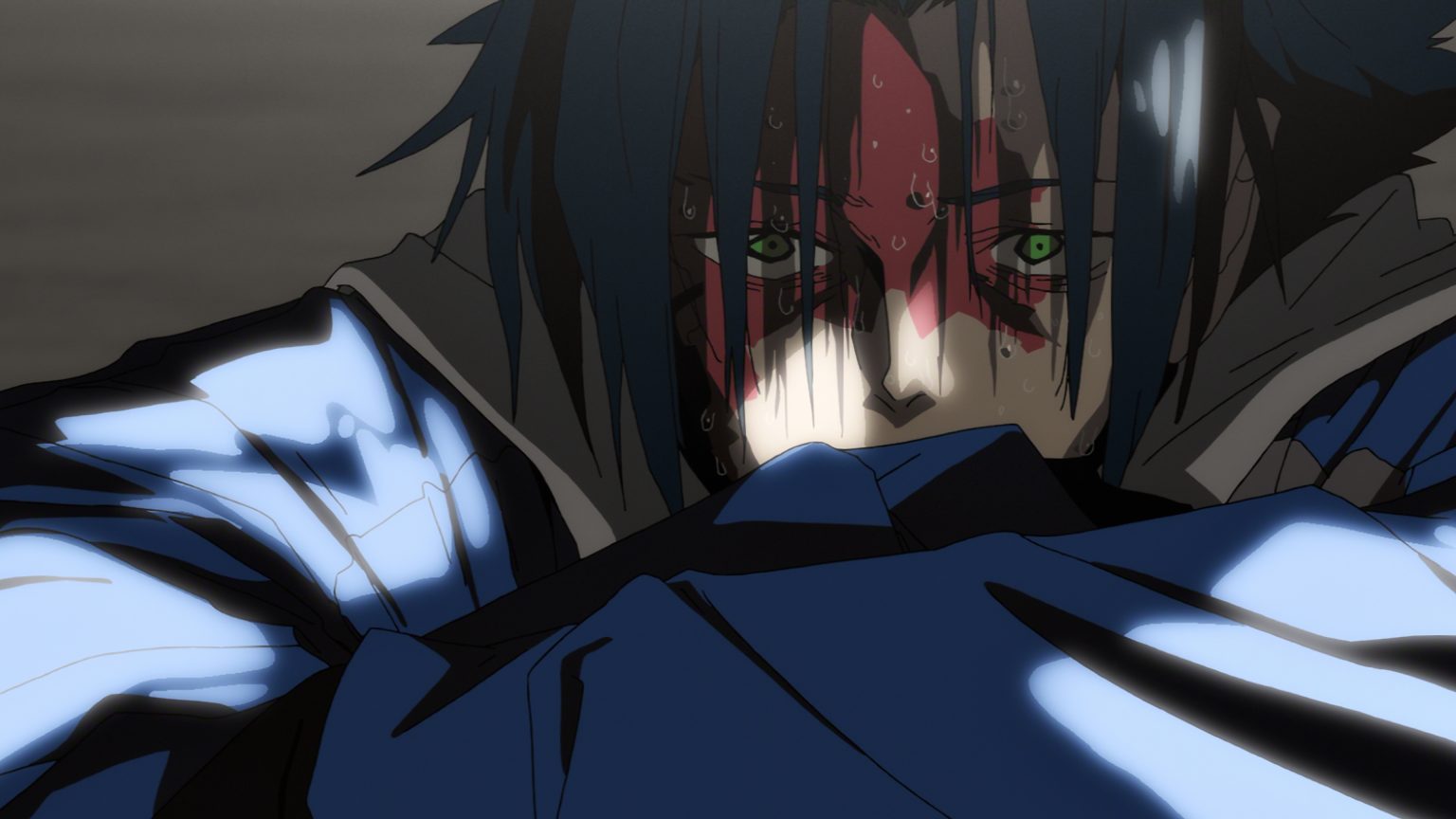
Cyberpunk: Edgerunners 2. Koki Uchiyama as D in Cyberpunk: Edgerunners 2. Cr. NETFLIX © 2026
Beyond this, and beyond the familiar traces of the game world (sound effects, UI, etc), Edgerunners 2 is incredibly inventive about how the technology of the world of Cyberpunk can influence the imagery of the show. Frames of conversations are sometimes broken up with split screen or multiple overlapping shots of eyes and faces superimposed over shots from a radically different angle, in the action itself the hacking skills of a netrunner might be communicated with movements of the camera, like a simple dolly zoom or pan. That commitment to just communicating visually makes things all the more satisfying.
Revenge tilting into needless violence, estranged parents and children struggling to find direction are hardly novel stories on their own, but as with the tragedy of David Martinez in the first season, it’s how the aesthetics tell that story which makes Edgerunners 2 feel so special. It also has a delightful tendency to divert from what a canny audience might expect from it, even on a marginal level, whether that’s the overall direction the story takes or even the opening song choice in “10:15 Saturday Night” by The Cure.
This applies to the writing of the characters too, who are quickly rendered in more complex shades than they first appear. D is a grim man on the path of vengeance but still very likeable and goofy in his own way, despite his seriousness and severity (at one point shown crawling away from a bed at Roman’s apartment shouting “revenge!” – Roman’s response: “you can get revenge tomorrow”). Talia seems angry and obtuse, but like with the rest of the cast, this show is good at finding the humanity in characters that could very easily escape it.
Cyberpunk: Edgerunners 2. Wasabi Mizuta as Kyoko in Cyberpunk: Edgerunners 2. Cr. NETFLIX © 2026
What works best about Cyberpunk Edgerunners 2, beyond the excitement of its flexible and anarchic visuals, is how it ties its own making into its premise. It’s scrappier, messier than its predecessor but that in itself feels human. And that’s what this series is about, a search for humanity in a world which seems more and more willing to shed that in the pursuit of physical and financial power. Season One found it in a doomed love story, season two finds it in a different sort of love, that found through the camera. Roman loves these people, and shows it through capturing them at their best and worst. Ikarashi lines up the death of film either as a symptom or the root cause of a general death of sympathy in the world of Cyberpunk. “Braindances” are direct, literal images without imagination or real empathy, film is visual communication of those things. There’s a crucial difference which the season excavates: when Talia sees herself as Roman captured her, whether or not she realises it in the moment, there’s a recognition of love in there somewhere. This core is what makes Edgerunners 2 work beyond the lore, beyond the gore and the wild aesthetics of its ever-compelling cyberpunk dystopia.