

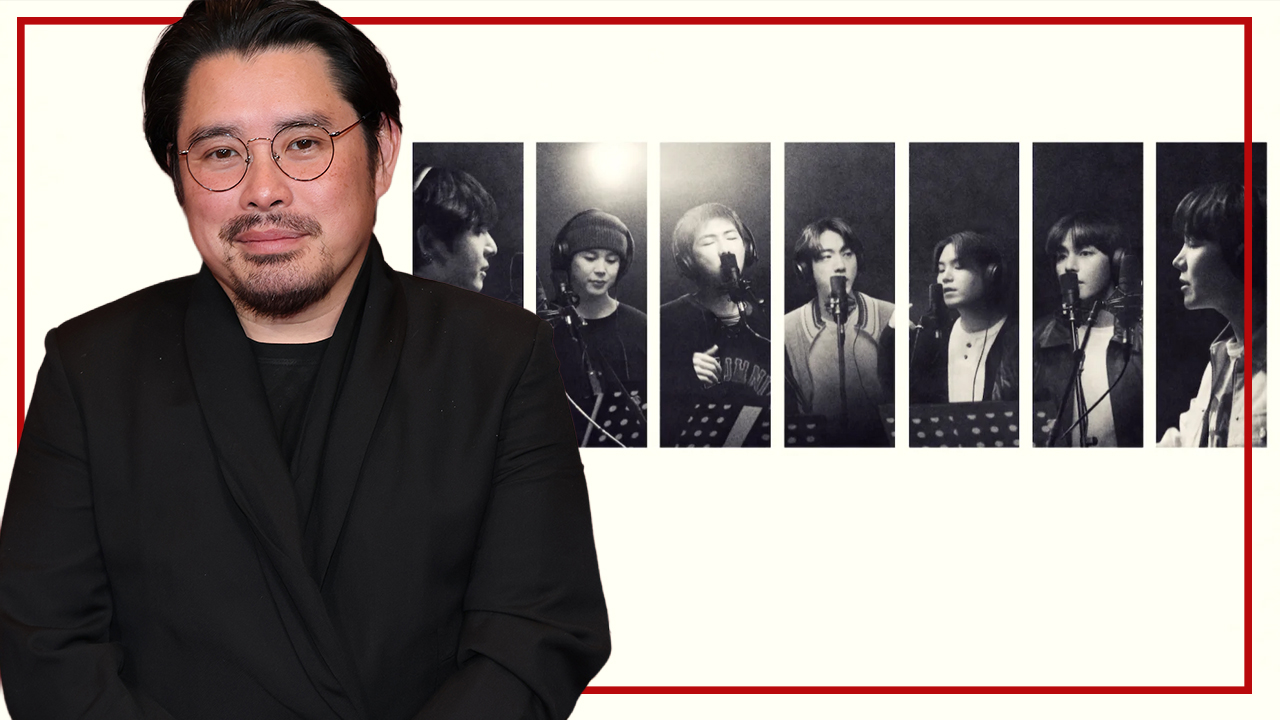
Picture credits: Netflix / Getty Images
Filmmaker Bao Nguyen grounds one of the most popular bands alive. Nguyen highlights the once-in-a-lifetime talents of a band like BTS, but he also captures their everyday creative anxiety and uncertainty. As an aspiring fly-on-the-wall, Nguyen and his team wanted to show audiences the mundanity behind the fireworks.
The filmmaker is no stranger to portraying the artistic process. He previously directed the hit Netflix doc The Greatest Night in Pop, as well as the acclaimed film about Bruce Lee, Be Water. Recently, Nguyen took What’s On Netflix behind the scenes of how he depicts artists at work.
Did you know going into it that it was going to be so much about time?
Well, when I first thought of the idea of the film, when BTS was leaving to go to military service, “The Odyssey” immediately came to mind, just the idea of BTS being Odysseus and Army being Penelope, their fans being Penelope longing for their return from the military. And so, I always thought about it in sort of mythical terms, but it wasn’t until we were sitting in the car with RM and he just was starting to have a conversation, and he talked about this idea of kairos and chronos.
I really love those concepts as well, and I didn’t feed him anything. I was asking him about military service, and he brought up the concept of kairos and chronos. Kairos being sort of like meaningful time, things that kind of stretch or are hard to measure, while chronos is sort of like linear time and routine, which he said the military service felt like.
And then, having already used the Odyssey as the inspirational framework in my mind for the film, I was trying to find every single moment where time could be reflected in the scenes and in the story. I remember my producer saying, “Hey, we need to focus on the more commercial aspects and the popular aspects.” And I was like, “No, no, we got this. It’ll all be great by the end.”
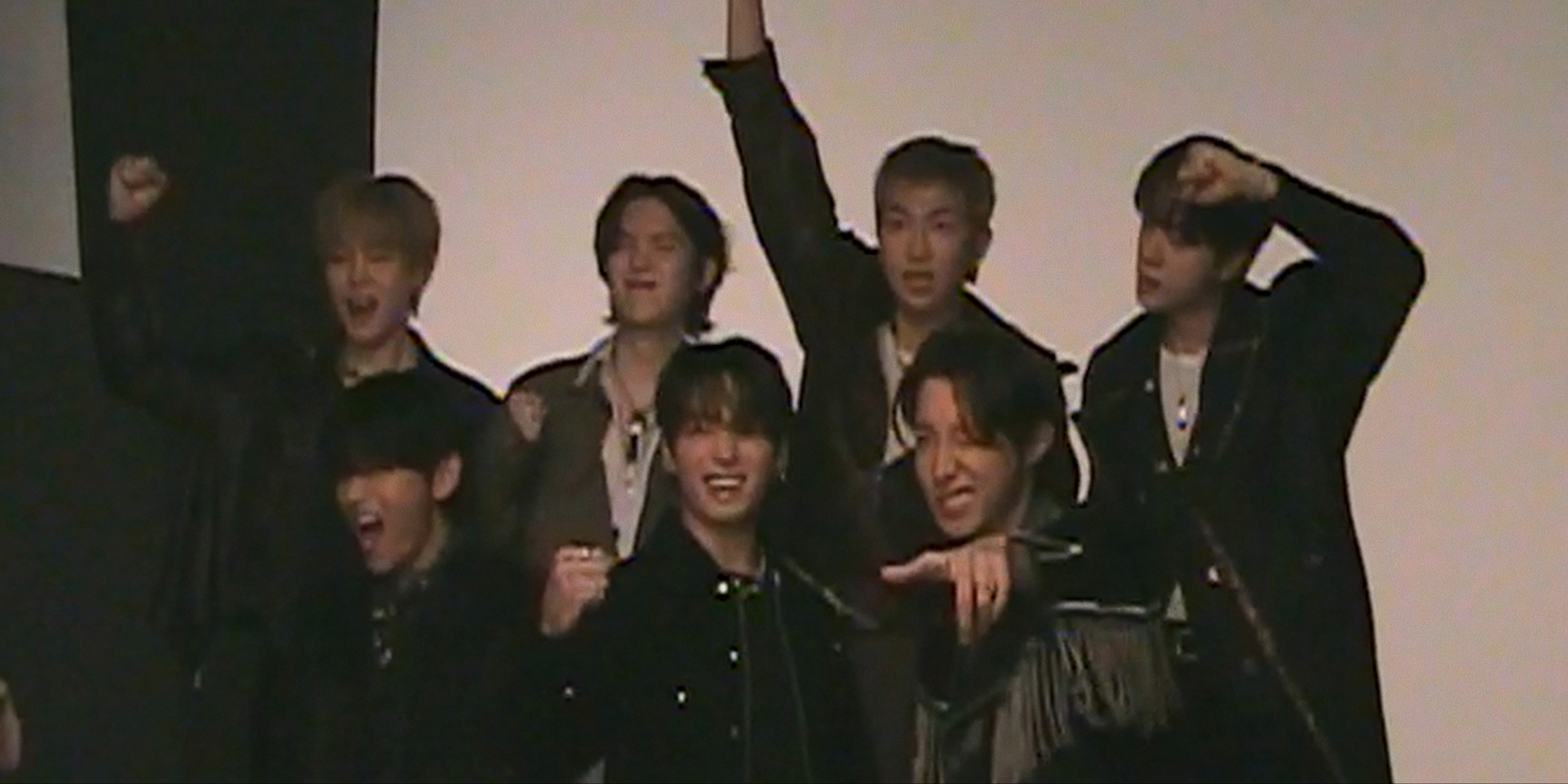
BTS: THE RETURN. (L-R) Jimin, Suga, RM, Jin, V, Jung Kook, and j-hope in BTS: THE RETURN. Cr. NETFLIX © 2026
That moment with BTS really crystalizes everything in the doc.
Luckily, those themes naturally showed themselves in the film. I think the ending of the film, where you talk about the LA time being kairos and going back to the home video-style footage of them in LA, it’s really talking about how meaningful that moment was for them to all be in LA.
I think it worked out perfectly, but yeah, there was no intention in the beginning to talk about time, but that’s how I love making films too. It’s having that sense of discovery, allowing the participants and the story to reveal itself in the making instead of coming in with too many assumptions.
Even if you’re not familiar with the band, which you kind of live under a rock to not to be, questions like that can pull you in.
Exactly. The film is like what it means to return to yourself, return to your identity, return to your life after a hiatus. I think people who don’t know BTS or aren’t really familiar or huge fans of them can relate to this idea of returning.
You’ve referenced Sofia Coppola when it comes to portraying time and Los Angeles, especially her film Somewhere. How did that movie specifically influence you?
Well, I’m glad you picked up on that reference because I was just watching a lot of films set in LA in the beginning of the process. It was research, thinking about how fame is represented and celebrities are represented in film. Somewhere I saw a long time ago. I remember it really having an impact on me, just the mundanity of fame sometimes and the routine of it. I was thinking that would be an interesting perspective on BTS’s story and how they’re in LA creating an album. So, there’s a process to it, but within that process there’s a level of monotony and routine.
read more about Sofia’s approach to it, and she wanted the minimal amount of frames to tell a story. What would that be? And that’s what Somewhere is. And there’s a direct homage to Somewhere too.
The Phoenix song?
The Phoenix song. There was synergy because Jane Cha Cutler, the producer, had just done a film with Sophia Coppola, her first documentary about Marc Jacobs. And so, Sofia gets these special thanks in our film.
There’s something about traveling, being in a new place that could bring a lot out of artists and musicians. How’d you witness that new way of thinking or exploring with BTS in LA?
I can only speak from my personal experience, but also just observing them a little bit, sometimes you need a routine because the moments of inspiration from that routine are impactful. It’s just obvious when that thing hits you. But when you’re going to a new place, you’re able to stimulate your mind in a different way than if you were in the same place all the time.
A filmmaker told me a few years ago that sometimes it takes someone from the outside to realize the beauty of a place, because the people who live there kind of take it for granted sometimes. There’s a certain monotony to the routine of them being in the studio every day, but then you have the moments where they go swimming or go to the beach, those moments really feel different from the scenes in the studio, in my opinion.
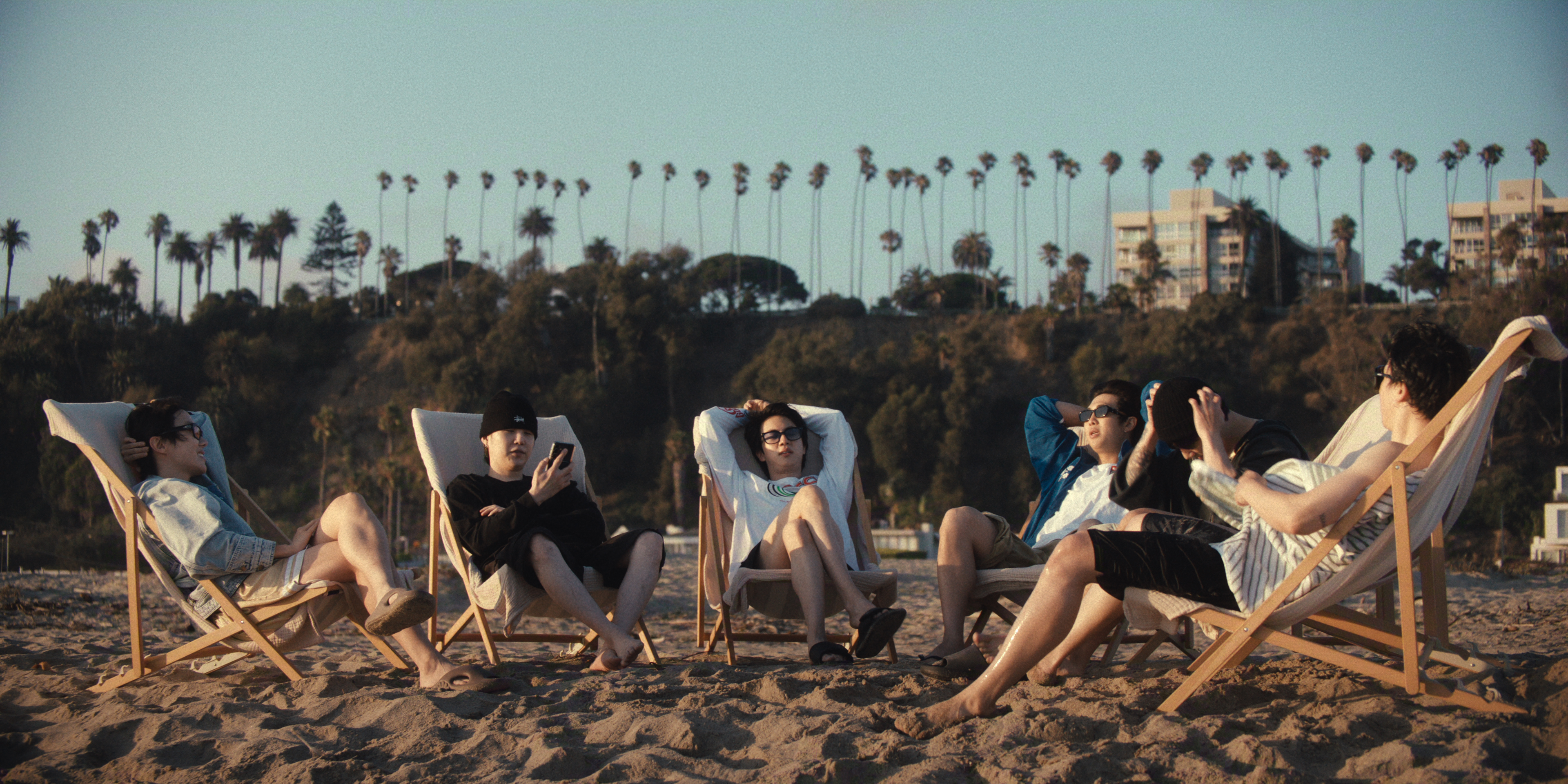
BTS: THE RETURN. (L-R) j-hope, Suga, Jin, RM, Jung Kook, and Jimin in BTS: THE RETURN. Cr. NETFLIX © 2026
Were there any other narrative filmmakers that really influenced you and BTS: The Return?
I love PTA. PTA creates tension and release very well in his zooms. And so, the film is full of zooming in and zooming out. We did zoom in a lot to create a sense of pressure and compression on the band members. And that idea came pretty early in the process because at first I was just like, “Oh, they’re the biggest band in the world with so many hits. They’re just going to nail it every time. This is just going to be a film about the process of someone who is at the top of the game doing the impossible.” But within the first few days, seeing their anxiety and the pressure that they were under, I was like, “Oh, this is going to be a different type of film.”
Another film is Almost Famous. I feel I’m almost like William in a way, being dropped into this process of the biggest band in the world. And so, coming in with a bit of innocence and curiosity, that’s how that film shaped how I thought about observing the process of BTS making their return.
A rock journalist with a camera.
Exactly. Just trying to be as much of a fly on the wall as possible.
You’ve covered BTS, made documentaries about Bruce Lee and SNL. When you’re portraying artists this gigantic, what are you always looking for?
I’ve been very privileged to do films about big subjects like SNL, Bruce Lee, Nguyen Thanh Nghe, and now BTS. I’m interested in these big ideas and iconic institutions and people. I’m always interested in what culture represents to society. Culture is what we choose to celebrate as a society, so by examining that in a deeper way, I get to understand where we are as a world at that moment.
That being said, I also want to demystify this iconography, in a way where it becomes human and intimate. You can recognize yourself, from Bob Dylan being nervous in Greatest Night in Pop versus BTS having this creative pressure to either return as who they were before they left or create a new identity. All these themes and conflicts connect us as human beings.
You see them under pressure, being told they’re international stars and need to think about a global audience. But one of the members even at one point in the studio more or less says, “Shoot, if we can just have fun, these other things be damned.” What was your impression of that moment?
I think for casual viewers coming into this film, BTS is just a group, right? They’re not seven individual members. I wanted to make a film where obviously it’s about the BTS group, but I also wanted to show their individual characteristics and opinions. Those conversations in the recording studio and back in Korea at the label are really eye-opening and fascinating because you see who has what opinions about songs and what that says about each person.
The scene where they’re discussing hearing the audience sample and “Body to Body” for the first time as a group, you can see each member having very distinct opinions about it. When you’re capturing it in the moment, you want to capture it as efficiently and cinematically as possible. It’s really in the edit where you can sit with what you captured and shape it into something around the theme and the greater message of the film.
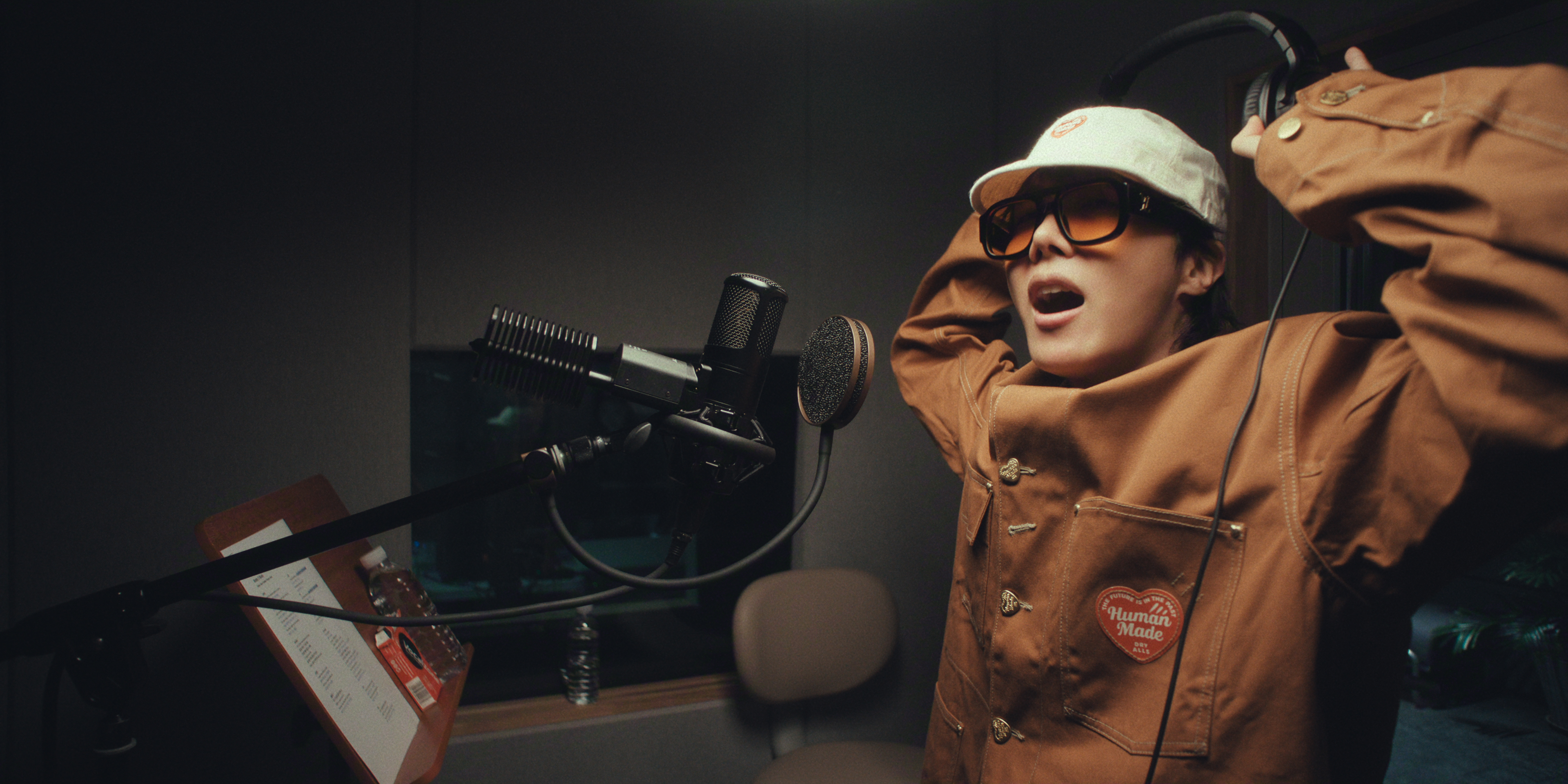
BTS: THE RETURN. j-hope in BTS: THE RETURN. Cr. NETFLIX © 2026
Did you know going in much of their creative process and reflection happened at dinnertime?
Totally. When you’re in a room full of artists and creatives, they definitely want to dissect things. It becomes like a release, almost like processing what you’ve done for the whole day. Dinner scenes are always, I think, very revealing to me in both documentaries and fiction.
It was funny, though, because it was always towards the end of the day. We were finishing the shoot and hadn’t eaten yet, and we would see them cook the most incredible-looking creative food. It smelled so good. There were moments where my stomach would growl, and the group — they’re so sweet — they’d look directly at the camera and say, “Are you hungry? You should join us and eat with us.” And I was like, “No, I’m making a film.” And so after we wrapped, I’d always order Korean barbecue as soon as I got home.
Almost every director talks about what a nightmare shooting dinner scenes can be.
They are, especially with seven members. They’re also boisterous. j-hope just loves to dance spontaneously too. So trying to capture him dancing and standing while everyone else is sitting, we had a good plan going into it.
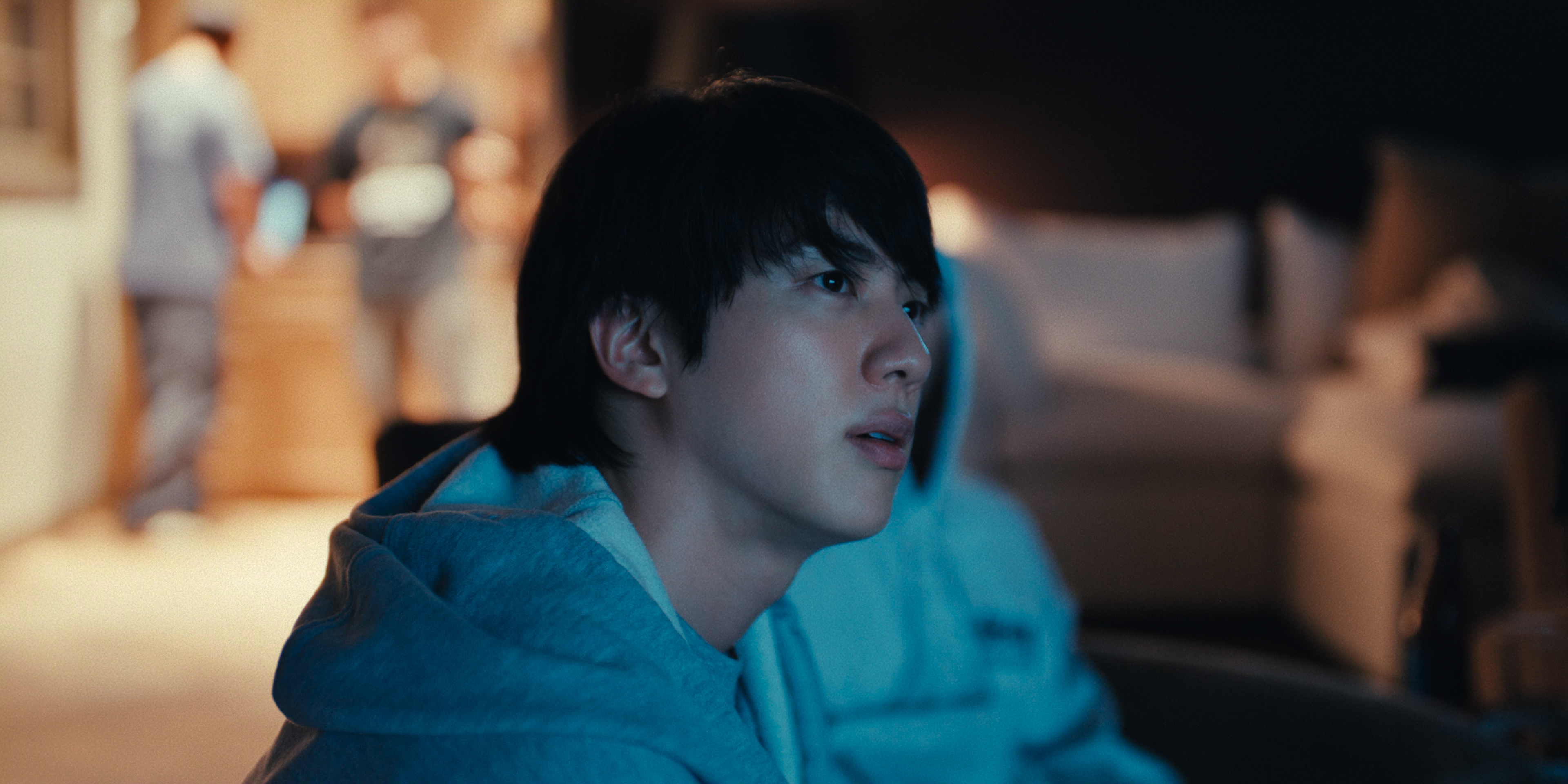
BTS: THE RETURN. Jin in BTS: THE RETURN. Cr. NETFLIX © 2026
When you started this process, you were warned there’s not much conflict or drama in the band. A part of the charm of the film is that they get along, though. What conflicts spoke to you, though?
Coming into it and having watched a lot of their previous films and content, the group and the label definitely warned us, “”this is not reality TV. They’re super polite and nice, especially to each other.” And so yeah, there was a bit of, “Oh no, is there going to be any drama in this film?”
The drama is these external forces, right? The weight of the world, the weight of their fans expecting this return. And so, that’s where these conversations at the dinner table are very expressive and representative of how they were thinking psychologically.
We were lucky that the outside pressure and the systems around them became what the drama was. Again, in the first few days I was like, “Oh, is this going to be watching people nailing every recording session, every take?” But having that true and honest sense of fear and anxiety and dread – like, “Are people going to like this?” — we were glad that we were able to capture that.


