Picture Credit: Getty Images / Netflix
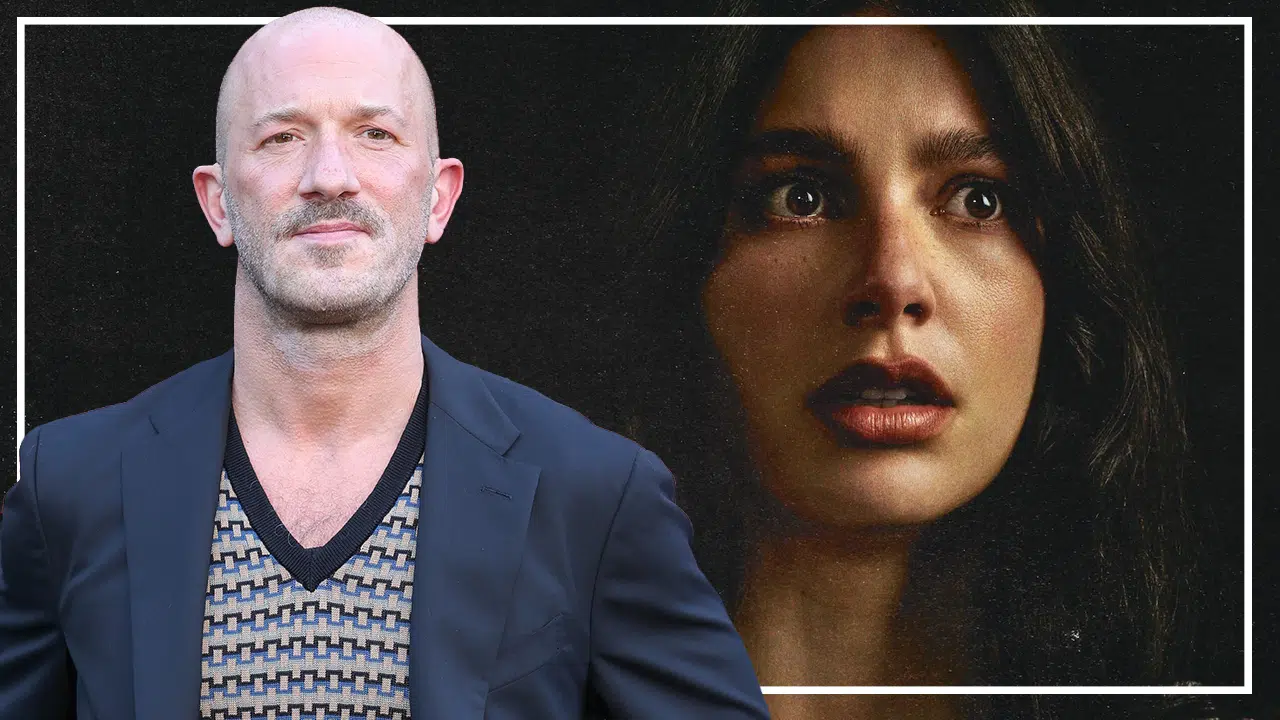
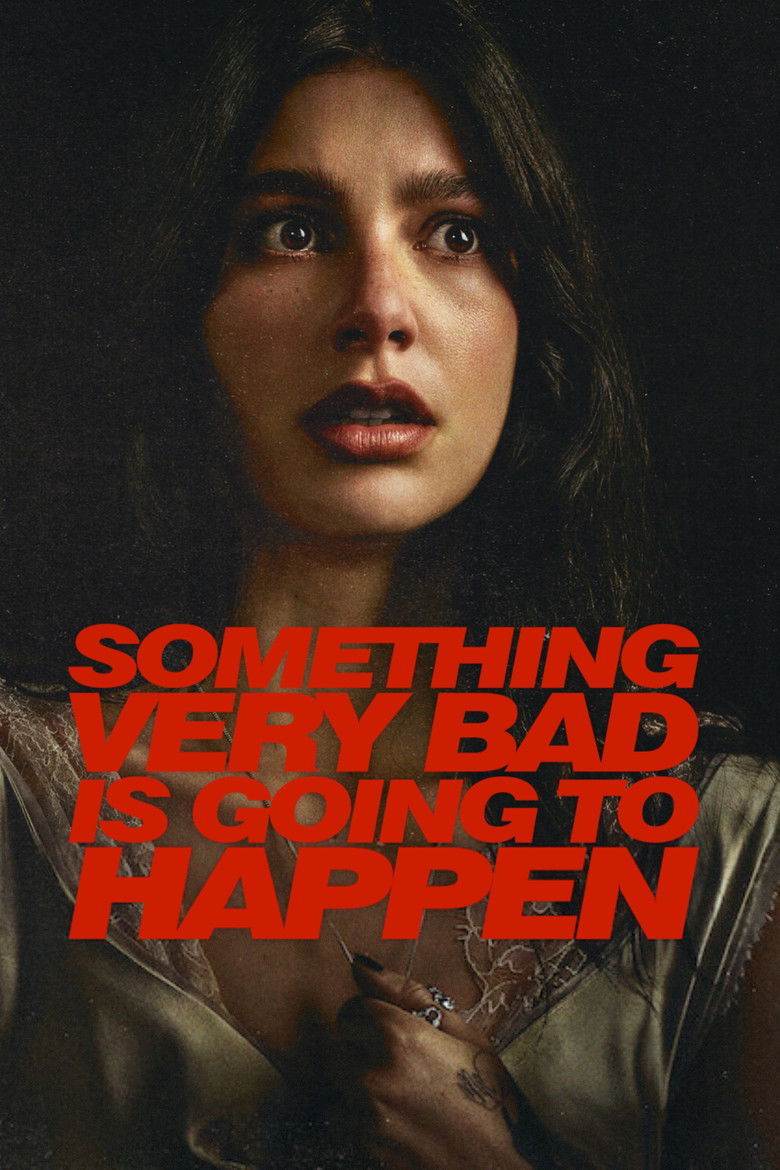
Colin Stetson ramps up the atmosphere, character, and horror in Something Very Bad Is Going to Happen. The composer delivers a haunting, goosebump-raising score that chills the bone even on its own. In creator Haley Z. Boston’s story about curses, family, love, and death, Stetson had a huge playground of horror to play in.
With a title like Something Very Bad Is Going to Happen, Stetson was more interested in scoring the immediate, not telegraphing the future, be it scares or plot. The composer behind Color Out of Space, Hereditary, and The Texas Chainsaw Massacre — as he told What’s On Netflix — sees himself as an antenna when he’s scoring a project.
In a conversation about Something Very Bad Is Going to Happen, Stetson explained how to be receptive to what a story as rich as this one gives him.
Something Very Bad is Going to Happen has many different flavors of horror. We get found footage for half of episode four, while episode seven is a walk-and-talk of horror. How’d you want to vary the score while keeping it consistent?
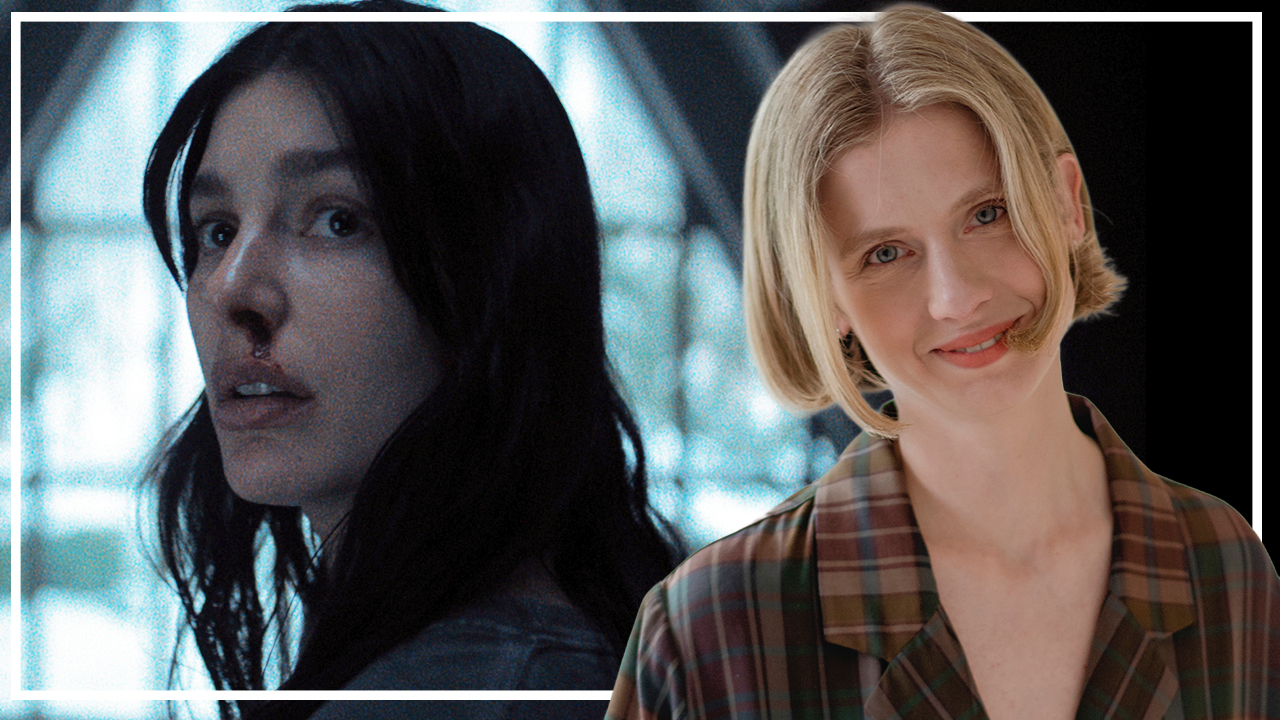
From the jump, that was the mandate. Almost from episode to episode, there had to be a theme, an aesthetic of their own for each one. Four and seven are two of the more extreme episodes. Seven is maybe the most extreme in its singularity.
The way that I went about it is weaving the same instruments throughout the course of everything. “How we met” and “Something red,” instrumentation-wise, are completely thematically different. The throughline is something used throughout the whole score.
Which was?
Taking these field recordings of trees creaking in the wind, and using that as percussive elements. The percussion that you’re hearing in both of those tracks is from the same sound source and aesthetically completely similar. And so, it was taking these themes and weaving them through all these disparate sonic characters.
“Something red” sounds like a party wrong. How does a track like that begin, evolve, and end for you?
We knew that episode seven was going to be something, pace-wise, different. It’s a launch from the beginning all the way out through the ending of that piece. I’ll preface this by saying it’s very difficult to talk about this series without spoiling at least something, but it is a bit of a scavenger hunt. It’s this mad dash. Time is of the essence.
Haley and I wanted it to be a bit of a left turn. I hinted at it at the very, very end of episode six that this was coming. And so, it really was in the nature of it. Thematically and narratively, it has so many twists and turns. From the page, it needed those twists and turns musically. None more marked and distinct, I think, than episode seven.
Which is like if Aaron Sorkin wrote an hour of horror. Sometimes the score sounds like a ticking clock or a heartbeat. How central was scoring time and death for you?
The ticking clock was a big one for me, because it takes place during a week. At the root of the show is time running out. It’s a countdown. The elements of the trees were tucked away in this one location for the vast majority of everything. And so, there’s that sound and feeling of the trees.
And then it’s winter, snow-covered. There’s an iciness, that cold that pervades all the shots, all of our exterior shots. For me, something that’s reminiscent of that, sonically in the way that it feels, is the clarinet choir.
These three elements are so foundational to how it is that I approached it musically, finding these tentpoles that everything else is going to get erected on top of. The vast majority of everything percussively comes from the trees in this show.
And then there are quite a few of the foreground themes and motifs, the refrains that stitch everything together from something like “Mother” to “How we met.” That’s all mellotron. There’s something very low-fi about the curse element that the narrative is based upon. I wanted to use this instrument and to try to coax something new out of it. It ended up being these spectral voices coming from the Mellotron. It’s maybe the crux of all the melodies.
What other sounds were you seeking that you wanted to speak to the audiences’ subconscious?
Oh, that’s kind of my bread and butter, I suppose.
You’re very good at it.
I’ve been kind of playing in that milieu for so many years. I remember with Hereditary, it was the absolute mandate. I went at it thinking, okay, everything is flipped on its head. I want to approach every trope from some backdoor where we’re not doing anything that is expected.
When I did the Texas Chainsaw Massacre score, it was how to do something that lives with Tobe Hooper’s original sonically, but that doesn’t utilize any of the same devices. So, he’s using all of these actual power tools and grinding metal. Almost all of the instrumentation for that is saxophone, Tibetan bowls, and prepared piano. It’s how to coax a completely different world out of what people wouldn’t necessarily expect. It’s very much the same thing here.
You want to score the unexpected.
Trailers have told us kind of what it’s supposed to be, so we get ready for what we’re about to see in the context of what we’ve already seen. Especially in horror, but throughout any storytelling, really, it’s incumbent on me to try to aid in diffusing that—. Stop it in its tracks in the very beginning so that people can have a real moment, an honest reaction to the story that they’re taking part in.
You never really telegraph scares, either.
Scares certainly happen, but you don’t want to use conventional devices of bar line and conventional song structure, music structure, chord changes in certain ways so that the audience knows when a thing is about to drop. You want to point not at a specific point in time and space; you want to point in a direction.
Always pointing in a direction so that when the happening happens, you knew something was coming because you were going towards something unknown to you. You just didn’t know when it was going to happen and already have your wits about you.
You’ve also said before you don’t want the music to simply make people uncomfortable, either. You want it to make them vulnerable. A good example here is “Death and the cold cold ground.” How’d you want to achieve that goal with that track?
When that track happens in its culmination there, everything in the show is leading to that moment. You want it to be truly, honestly, and personally affecting. That’s what I view this job as entirely. You’re trying to affect a palpable and inescapable change in the audience. The audience is made of individuals who are emotional creatures who want to be fully present in the emotions of whatever it is we’re trying to convey. And that one, that’s a big one. Nuts and bolts, I start with a saxophone arpeggio.
[Colin’s cat makes a cameo appearance.]
[Laughs] Sorry.
[Laugh] It’s all right.
Oh, yeah. He’s got a bag that he likes to sit in, and I’ve just realized that it’s upended and he’s trying with his cat hands to make it so that it’s upright. I’ll get it, bud.
Do you ever use your cat in your scores?
He’s happened on scores, for sure. He’s got a little scream sometimes when I’m recording stuff that’s quiet. There was a sparse piano piece I was recording, and he was on the other side of the door, so there’s little yelps that caught through. Nobody knows but me.
That’s awesome. So, nuts and bolts of “Death and the cold cold ground”?
Nuts and bolts of that song start with an arpeggio, a saxophone arpeggio that I believe is already doing what it needs to do to set up the emotional foundation and the basis for that whole cue. And then the rest is coaxing the shape, adding synths in the bottom.
For this one, I used an OB-6 quite a bit, and then these arpeggiated, loping-behind-the-beat elements barely held onto the whole of it. These clarinets give it this lazy, dwindling feeling to the whole thing. In the end, that ended up being something that I adored making and seeing it when it all came to fruition from page to composition to screen. Very satisfying.
[Director] Weronika Tofilska told us Hereditary was an inspiration for her on the show. It was clearly an influence for Haley, too. What’s it like working on a project inspired by your work?
Not to make the cliché answer, but anytime you make something, anytime I’ve made anything that people find that impactful and touches that many people, and they use it in these ways, when you see it come up in temp all over the place when I’m looking at films and shows, it’s affirming. It’s affirming that you’re on the right path. They are having the effect that it is that I wanted them to.
Ultimately, what we’re doing is we’re imbuing these vessels, like this vessel of a piece of music. We’re imbuing it with whatever emotional narrative intention we can. I’m sitting here in the studio as a kind of antenna, a sounding board, being affected by this.
As I’m affected by it, when I know it’s fully cooked is when the pit of me is terrified, when the pit of me is full of dread, when the pit of me is feeling that mourning, and then you put it out in the world like a game of telephone or a little note in a bottle. Then another person on the other side gets to take that object and be moved by it. It’s magic.
You’re wearing a lovely David Lynch sweater. Your description of being an antenna reminds me of Lynch’s book, “Catching the Big Fish,” and how he got ideas. Clearly being a fan of the man, who also influenced this show, how did his creativity inspire you on Something Very Bad Is Going to Happen?
When I’m trying to describe being an antenna, I’ve often described it as most of the job. We can talk about constructing the score, what it was made of, the proficiencies involved in writing and playing and recording and all of that.
I have to know when a thing is done, and it’s not done because aesthetically it’s a thing or looks like something. I can make something that has all the same pieces that’s found in an arpeggio and a slow unfolding progression, and then has lower-end pulsing notes on the bottom. And then you could do that and have it also be not in any way humanly impactful. And so, knowing when a thing is actually moving you is the whole of it.
Getting back to what you were saying about vulnerability, I want to be completely and utterly vulnerable. I want to be new and honestly react to a thing that I’ve seen a million times. I’m sitting there working on it, I’m putting it together, but you have to be able to stop on a dime and let it wash into you. Receive it as though you were receiving it for the first time so that I can know: is this something that will be affecting in the way that I want it to be to other human beings?
It’s how everyone learns this. We are alive, we experience extreme emotion – and I delve into that. You allow yourself to be affected by them. You open yourself up to them in such a way so that you can experience that, and you can take that learned experience and you can bring that into every other situation in your life.
There’s something about creators who are doing things that no one ever did. It’s inspiring on that level. Lynch changed everything, and in a kind of generic, fundamental way, the change is just there is no formula and no rules. The only rule is we’re human beings, and we are having an open-ended conversation with one another about what that means and what that feels like.
Maybe more than anything, that’s my takeaway. Never pigeonhole, never derive, and never reference. Always strive to get at the fundamental mandate rather than trying to exist in terms and in concepts like genre or idiom or style or expectation.
 Rating: TV-MA