Picture Credits: Netflix / Getty Images for Netflix
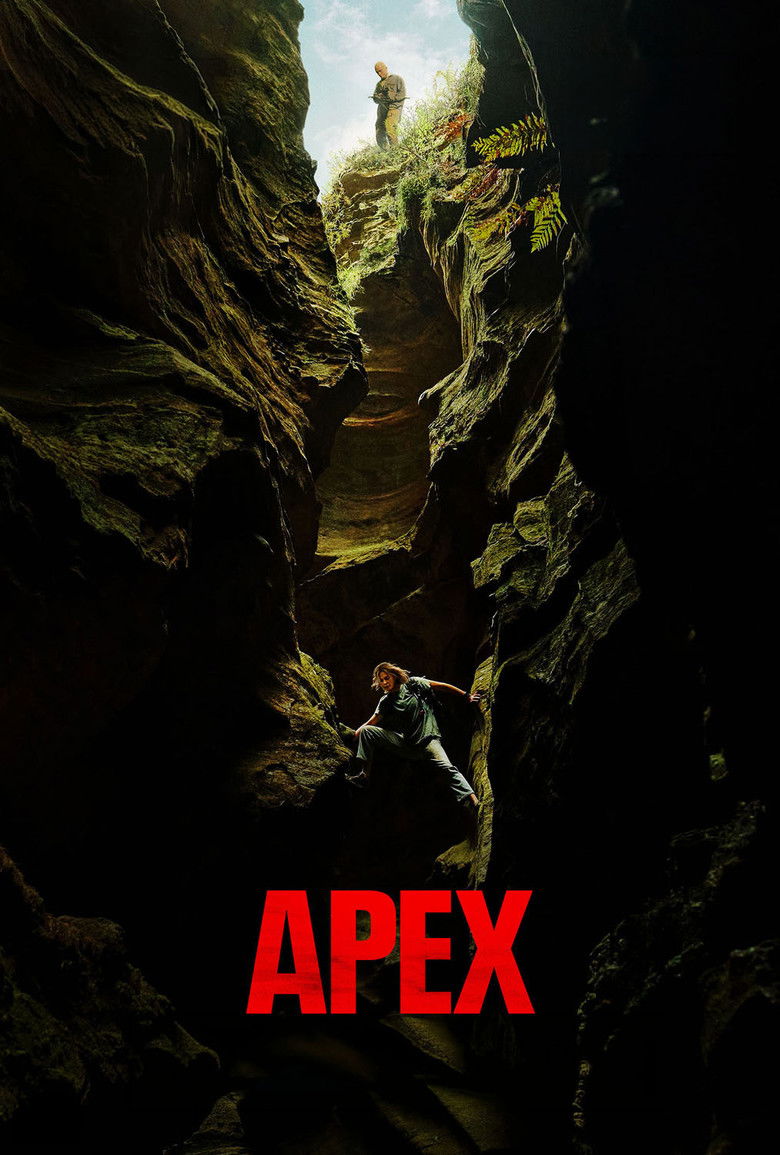
Jeremy Robbins wrote a lean, old-school popcorn movie with Apex. Emphasis on lean. It’s a survival story without wasted breath – following Sasha (Charlize Theron) as she battles her hunter, Ben (Taron Edgerton), in the Australian wilderness.
It’s the first film produced by Robbins, whose last produced credit was the The Purge television series. With Apex, he began by simply writing for himself. He wanted pure, action-driven entertainment. Years after he wrote the thriller, it became a rare spec sale to Netflix.
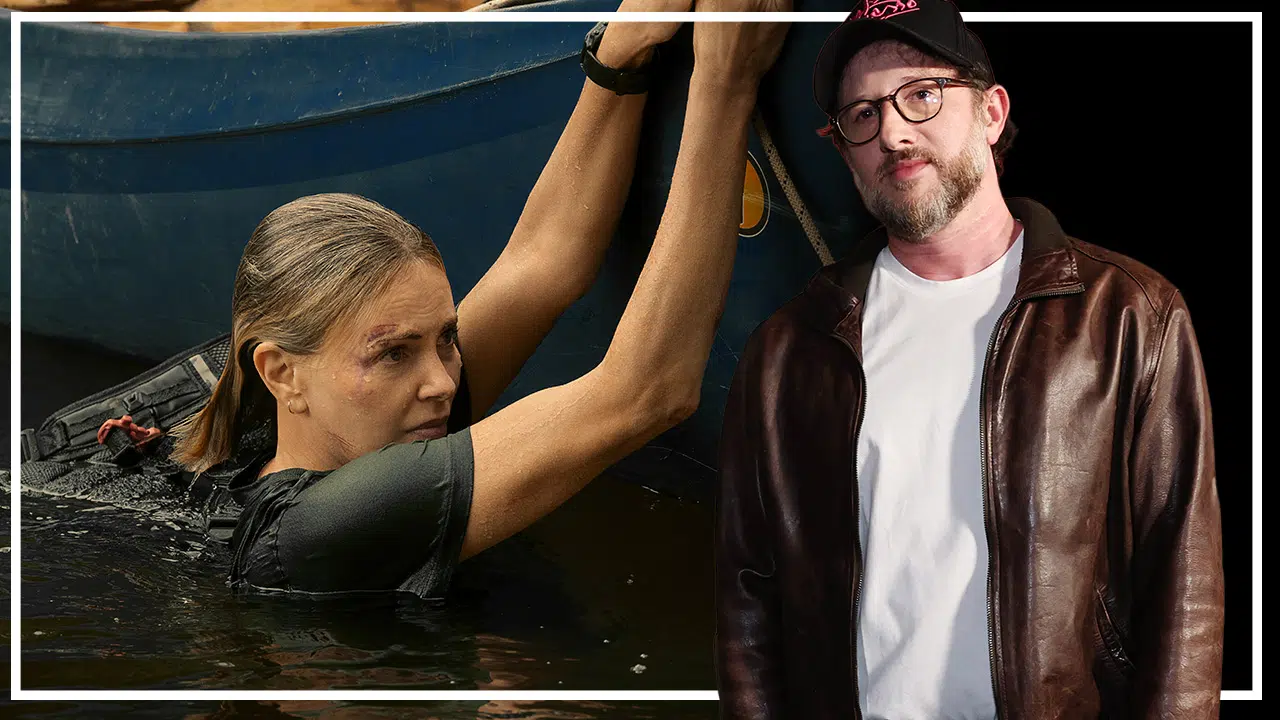
Robbins spoke with What’s On Netflix about writing a dangerous cat-and-mouse game and how it made its way to the streaming service.
Apex plays like a ’90s throwback, like The Edge or Arlington Road, mano e mano thrillers.
Speaking my language.
Any ‘90s movies that really influenced Apex?
A River Wild was a huge one. When I was a kid, I loved that. The Edge obviously is one of my favorites. There were some earlier ones like Deliverance, which isn’t obviously a ’90s one, but a similar crazy survival story. Look, Under Siege, Die Hard, Executive Decision, and Air Force One, those were the movies that were so seminal in my viewing life as an audience member long before I knew that I was interested in writing them. I loved watching them and then recreating them with my brothers in the basement.
Apex was really a chance to write something that I loved and both wanted to see as an audience member first and write as a writer second.
Back in the day, and maybe today, producers would describe those movies as “muscular.” Was there a similarly lean and mean feel you wanted for the film?
I did. I was really excited about telling a story largely through action and behavior. What does the character do? What are they faced with physically, and how can I design a variety of set pieces that are going to push this main character to her breaking point? It was figuring out that emotional and psychological journey, but to think about how to tell it through action.
Something that I was drawn to the story originally for that challenge, and that ended up being such a defining part of the movie. Baltasar, Charlize and Taron, push themselves to such crazy places, doing these stunts themselves, going to places that were so inaccessible to hikers, let alone a movie crew. They were helicoptering gear and would hike miles down the gorge to film.
It gave it that sense of reality and gritty naturalism that you can’t fake. What I loved about those movies was that when things exploded, they were really exploding. When people were jumping off of cars, they were jumping off of cars. I’m so grateful the way in which Apex was produced and directed was to capture that same kind of magic, which is real people doing real stunts.
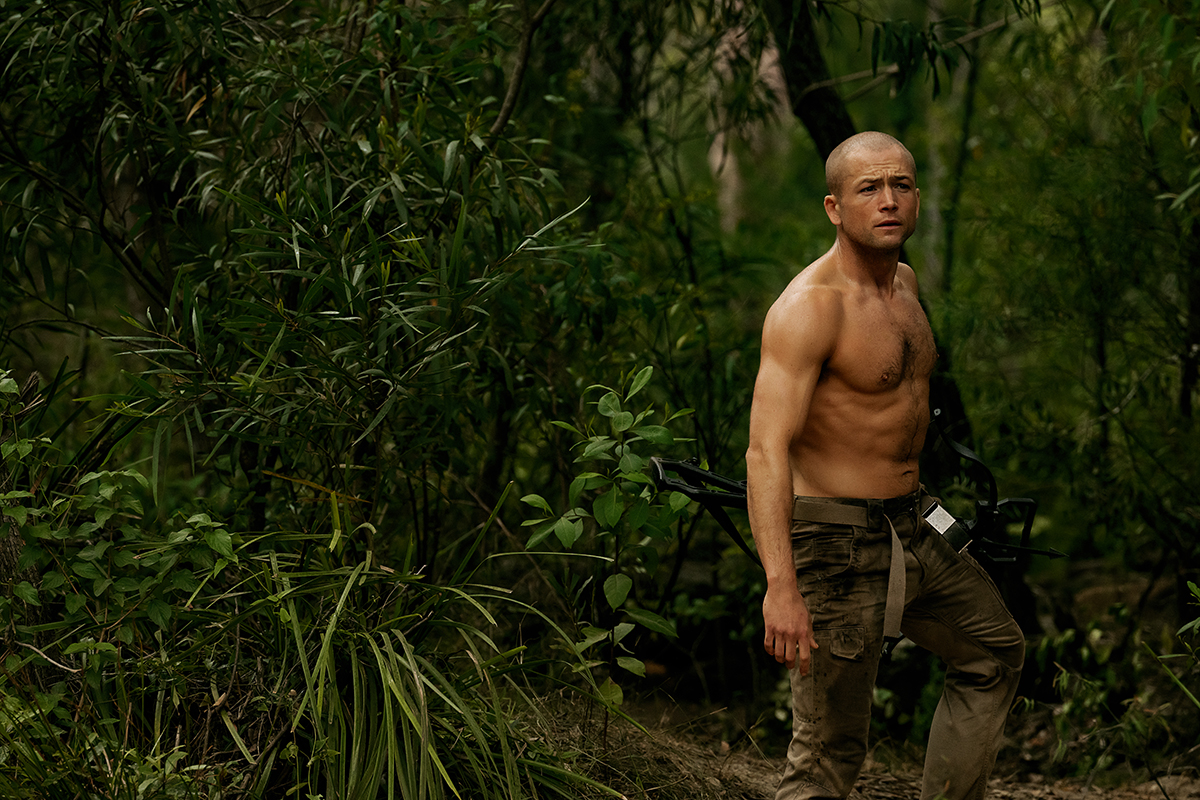
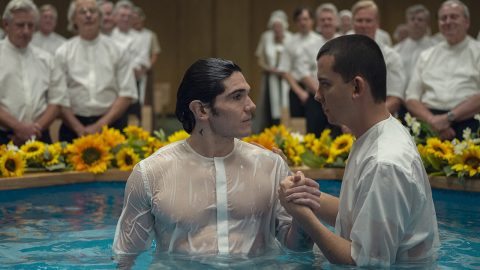
APEX. Taron Egerton as Ben in APEX. Cr. Kane Skennar/Netflix © 2026
As a screenwriter you’re always told to show, not tell. More often than not, movies tell instead of show. How does the story and your action lines look on the page?
I probably broke every screenwriting rule that I was ever taught in film school. I tried to write what I would see in my head. I storyboarded it in my mind. I thought about how I was choreographing it, how I was cutting it, how I was editing it. I was trying to think about the scope and scale to go from big wide shots to tiny small shots.
To me, the fun of it was trying to direct the story on the page with whatever tricks I could pull out, whether that’s a single word on a page or big font or small font or italics or bold or dashes. I just tried to think about the reader as the very first audience member, and I tried to pay attention to the pacing and the rhythm and the unfolding of the action.
You write escalation well. The build up in action and tension is there. How’d you chart the intensity level you wanted in the early days of writing Apex?
My own personal logline was always man versus woman versus nature. I wanted to strip it down to the most basic, most essential elements, and I then wanted to think about each sequence as being a different combination of those elements. Sometimes it’s man and nature versus woman, and sometimes it’s woman and nature versus man. Eventually in the back half of the movie, you kind of get man and woman versus nature. To me, that was how I conceived of each movement of the story so that the story wasn’t going to feel static, to continue to build and hopefully surprise people.
I was constantly paying attention to the dynamics. How were things built? It took a lot of mapping out on that whiteboard, figuring out how to put the pieces together. Once I knew where those pieces were going to fall, then it was figuring out, okay, what’s the right action so that we don’t do the biggest moment too early? I was trying to modulate them. I was pretty clear with what those movements would be in outline form before I ended up writing the script or at least writing the first draft of the script.

Picture Credit: Netflix
What did the first draft of Apex look like? Do you believe in the vomit draft or do you go slow and steady in the beginning?
I am not the fastest writer. I’m a fast rewriter. My agents will tell you, I’m a slow first draft because I do like to know some things, but I also love discovering the things that I don’t know and letting the story kind of take me where it wants to go. And so, there was only the roughest outline of sequences. The shape of it in there I was discovering through a draft or two, I wouldn’t quite call it a vomit draft, but I would call it a real exploratory chapter of let’s get the scenes up on their feet, let’s hear the characters talk for the first time. I think that that taught me so much about what the character is and what they wanted.
And then there’s such a refinement process when you have actors like Charlize and Taron come in and then you’re trying to write for the dynamics that they are interested in. It brought a whole other level to the understanding of the story and rapport between them, and the cat and mouse nature of that was something that wasn’t really in the story until those actors came aboard. Charlize was interested in the physical mountain that she has to climb with the cracks and the holds, but what are the cracks and the holds and the fissures in Ben’s armor?
What is the mountain that is Ben? What does that look like in terms of the modulations between them and the games that they’re playing, the mental psychological games? That was something that wasn’t in the story until these two actors were like, “That’s what we’re playing here. Let’s figure out what that exchange is going to be.” There was so much more to the story that they brought once they joined.
You avoid a lot of backstory for Ben. Was that important to you?
I never wanted that moment where the villain does the mustache twirl and gives you their whole monologue. You want enough to feel like you understand where the character is coming from, but not so much that it feels like it takes you out of this real-time, gritty story. I think that what was so amazing to me is that the version of Ben that existed in the script before Taron came aboard had a different energy.
How so?
When Taron came aboard, he wanted a little bit more of that manic childlike, boy-like teenage, high-wire act – a feral, wild animal. And that combination of energy played off of Charlize’s more stoic and reserved and inward energy. So, that was the right alchemy. It just didn’t exist in the story until they were figuring out, what are we going to make this come alive?

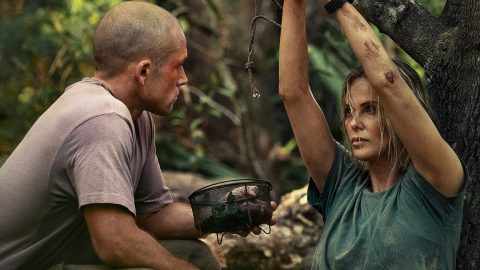
APEX. Charlize Theron as Sasha in APEX. Cr. Kane Skennar/Netflix © 2026
Jeremy, you sold Apex as a spec to Netflix. That’s a big deal – a massive accomplishment for a writer. When you and your reps started sending the script out, what was the journey like of getting to Netflix and getting it made at a time when few original specs do?
I started writing that story as year one was going into year two of the pandemic, and a lot of the TV stuff that I was developing and writing and the room that I was in closed down. I was left feeling like, what do I really want to write? Well, I want to write something that I love, that I really want to see as an audience member.
For all the movies that we talked about earlier, it was a survival thriller. I was excited about going back to the thing that I loved as a kid, reading those stories and watching those movies. And at that time, we were watching life and death in this terrifying way, and I found the survival story really hopeful. It was a really hopeful one of resilience and what is possible if you really, really want something really badly.
And so, I wrote this story and had amazing producers that came on board in that first draft. It got on The Black List in 2021. We continued to try to put versions together. Oh, there’s a director over here. Oh, there’s an actor who might be interested. Oh, there’s a company that might want to maybe put a version together. You kind of fall in love with all these different versions, and they continue to be the reason to work on the story and continue to do rewrites and continue to push the characters forward.
And then I just didn’t think anything was going to happen with it. I mean, it didn’t come together in any of the ways that we tried. And then I had a new manager who came in right after, and we started working together right before the writers’ strike. Right after that he was like, “Hey, just let me send Apex. Let me just do a couple submissions.”
Where’d it go from there?
It got into the hands of Chernin Entertainment, who then brought it to Netflix. From there, it went from this project that I really had no expectations of to… I mean, I had made peace with nothing happening and that being okay. I was still so glad I had a new sample, had a new spec, something in my portfolio. I hadn’t written a feature in a bunch of years. I had been working much more in television.
And then suddenly here, Netflix comes aboard and they give all these new notes. The notes are amazing. And suddenly, there’s an influx of momentum, a lot of wind in the proverbial sails. I got to go back to this script that I hadn’t touched in a year. I had all this new perspective about what I was writing and what I cared about and what I was interested in.
I did a rewrite and suddenly they’re like, “We’re sending it to Charlize.” She says yes, she’s sending it to Balt. He says yes, they have a window in January. Suddenly, nothing’s happening with a script, but now we’re making this movie in Australia in January. It’s go time. Now I’m on a rocket ship to the most unbelievable version that could possibly happen.
There’s an element of just luck. I feel so grateful that it happened to me. It just was so wonderful that it went from this story that I loved to suddenly this movie that now I’m just an audience member. I can’t wait to watch it.