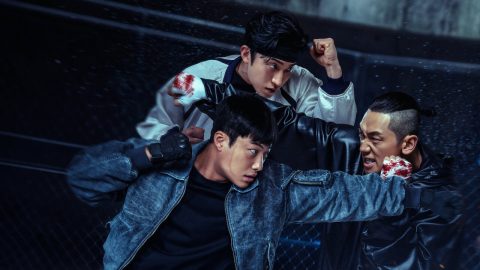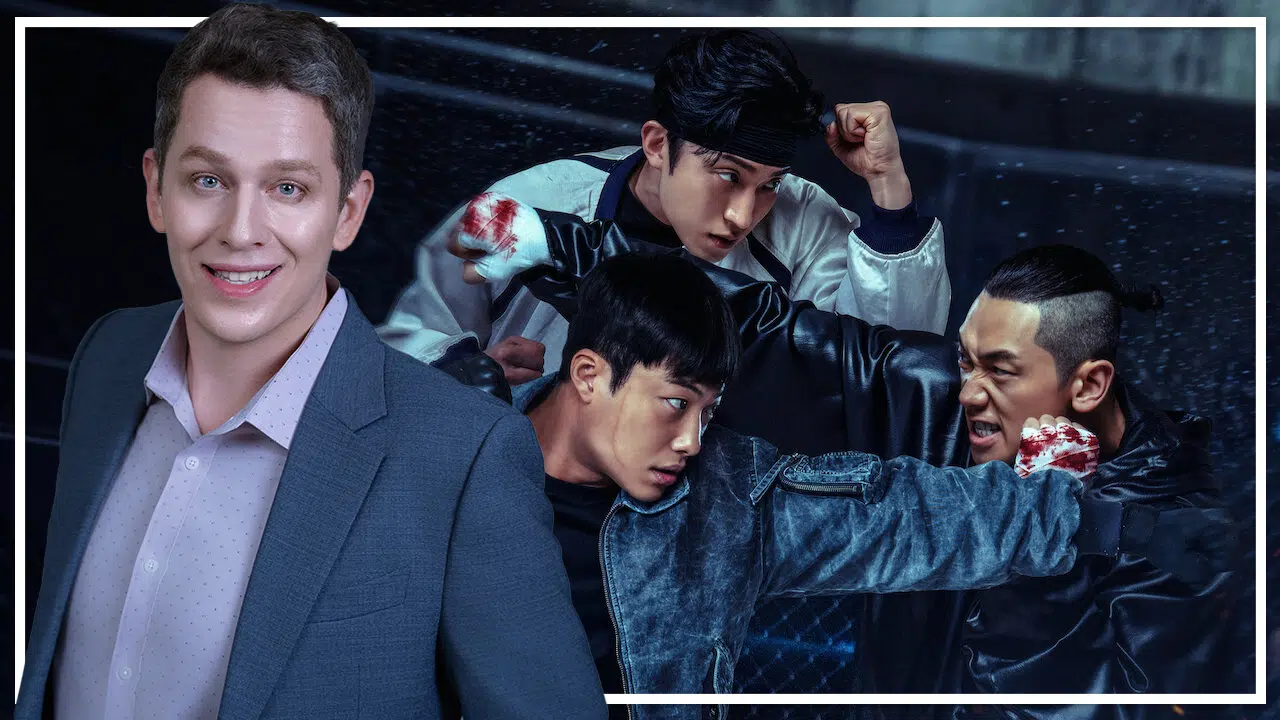
Picture: Joey Albright starred in Bloodhounds season 2.
From the USA to South Korea, American actor Joey Albright has built a career acting in K-dramas and films. For over a decade Joey has been one of the most familar guest actors in Korea, and most recently starred as Ian in Bloodhounds season 2. We recently spoke with Joey, who provided great insight into his career so far, his experience in Korea, Bloodhounds, and his return to the US to further his career soon.
Joey Albright is an American actor who has starred in dozens of Korean films and television shows as a prominest guest star. His acting credits include Chief Detective 1958, Vincenzo, Memoriest, Doctor John, Welcome to Waikiki season 2, Mr. Sunshine, Lawless Lawyer, Space Sweepers, Good News, Peninsula, and many more.
Jacob: So, Joey, why South Korea?
Joey: Well, I’ve always been drawn to Asian culture, especially Japan and Korea. And when I turned 21, I decided to take a chance and move to South Korea to study the language and experience the culture firsthand. I think Korea is very unique among Asian cultures, just like Japan and China. Obviously, they have their own thing going on. So what started as a short trip for me turned into something much bigger, obviously. And I initially came to Korea, then went to Australia. And then I came back because I liked Korea overall, the vibes here. And then I decided to go to university here. I built a career here, got married, and started a family. It’s basically my home because I have spent all of my adult life in Korea.
Jacob: So, what are some of the biggest challenges you faced as an American actor in South Korea?
Joey: Well, apart from the language barrier that existed for me in the beginning, I would say there have been a lot of challenges, but they’ve, I think, shaped me more in a positive way. The first one, obviously, is learning Korean, but it’s not just the language. It’s about how to communicate and adjust to the hierarchical work system that exists on sets. And this hierarchy is ingrained into the language. It’s like you say, “yes, sir.” But like it’s overly polite, and you have different layers that you have to add up, like different endings on verbs and stuff to adjust depending on position.
If you’re talking to a director, you use the politest form possible in the language. And then you bow, and you have to have this kind of like stint about what, whether you can go up and ask him a question or not. I would say it’s like dancing with a partner, and just kind of picking it up as you go. There’s a specific rhythm to the culture and understanding that I think was essential to doing the work that I do and collaborating effectively.
Another thing that I would say was challenging would be navigating the casting expectations. So the industry here, as much as all of the world, is very similar and has a very specific look in mind for a dad role. They prefer more model-esque people. For a businessman, an older gentleman with gray hair, you know, there’s a lot of typecasting here for Western actors or foreigners, I guess. But I think that can be very different from the Western markets. And especially because I’m a taller, heavier-set actor.
It took me some time, but I think I finally found my own lane and was able to focus on what I bring to a role rather than trying to fit into a particular mold or box or something. And then I think the last thing that would be a challenge for me, apart from just like the cultural language barrier that I’ve adjusted to and the typecasting or image casting, would be the business side of things. Overall, I would say I’ve learned to kind of navigate those more strategically. Then I’ve kind of been able to advocate for myself a little bit more over time. But yeah, it’s weird because these are things that you’re kind of expected to do as an actor, but I’m doing it in a foreign language. And so I think it’s made me more adaptable and more resilient overall as an actor.
Jacob: So, would you say the rise of Korean media across the world, in particular in the West, has presented more opportunities for you?
Joey: Yes, most definitely. I do get noticed by casting directors in the States as well. And because there’s a lot of crossover, for example, Beef, XO Kitty, these big Netflix productions are coming to create a film.
I’m getting a lot more opportunities in the audition room if the casting director knows me from a project. So it is nice to be seen in that kind of international spotlight overall, rather than just K-drama, right?
Even Phoebe Dyenvor, the actress from Bridgerton, came here to film a movie called Inheritance, and I got cast in that as security guard number one or whatever, which is pretty cool. And yeah, a lot of productions like to use Korea as a hub for filming, not only because it’s more cost-effective, but also because Korea has such a unique and efficient system for filming. They have a quicker turnaround on things, etc.
Jacob: How did you get the role of Ian in Bloodhounds?
Joey: I was driving out to the seaside with my wife and kid for our anniversary when I got a call asking if I could submit an audition tape as soon as possible. I had asked if I could have a couple of days, but the agent said that he really, really needs this today if possible.
So, as I got to the hotel room, I had a copy of the script, turned to my wife and said: “Okay, honey, I love you, but I just need 30 minutes.” 20 minutes to practice, 10 minutes to film. So she took our daughter to the playground.
Initially, I had auditioned for a completely different role, the boxing coach, since I had some boxing and MMA experience, not in the ring but training for stunts and roles. So, when I went in for the callback, the director told me he didn’t see me in that role and handed me the script for Ian instead.
After reading it once, I had a very clear instinct for the character, so I asked if I could just go for it without much preparation. We did one take, he gave me an adjustment, and I went again. Afterward, he told me my interpretation was different from what he originally imagined, but that he really liked it. That meant a lot to me, and I got the offer shortly after and dove straight into developing Ian.
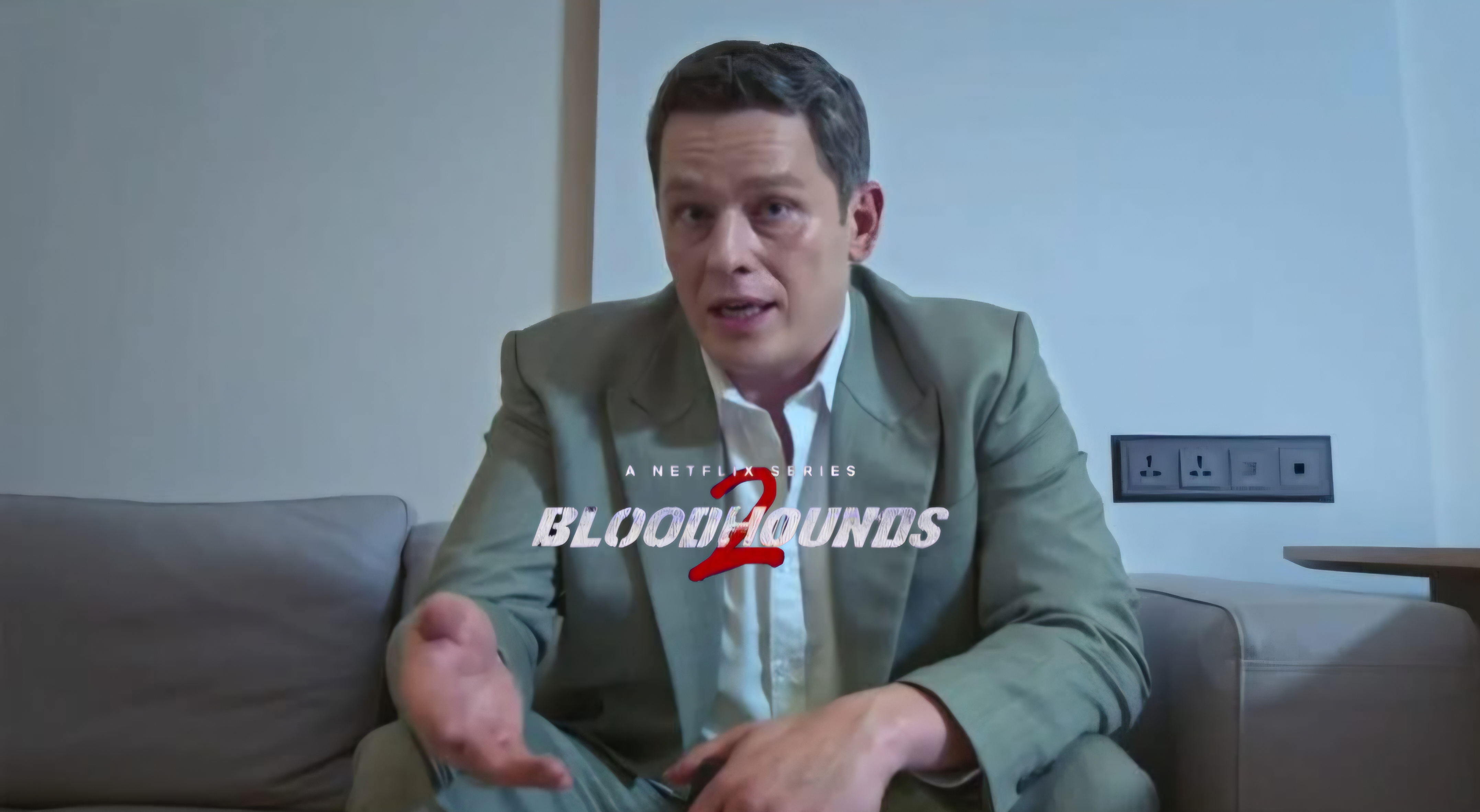
Picture: Joey Alrbright as Ian in Bloodhounds season 2 – Netflix
Jacob: I had seen your audition tape to play one of the billionaires in Squid Game. Would you say there’s a similarity between that character and Ian?
Joey: That is a great question. I would say there’s a lot of crossover. I think the difference is the billionaire is investing for the love of the game, right? It’s not about the money; he just wants to beat all the other billionaires. So his goal, or objective, would be somewhat similar but different from Ian’s.
For Ian, he’s like 90% sure of what he wants, but is definitely careful about where he puts his money for the long game. In that first scene, he already knows everything they’re telling him, but isn’t all in on investing until they can prove they’re worth the investment, and by the time we get to the second scene, he can see that the business venture is more viable than what he has on the table.
So I built a realistic version of a character whose goals were “this is my problem, and this is my solution,” and his solution was Baek Jeong stepping down. So it is somewhat similar but very different overall in the objective approach.
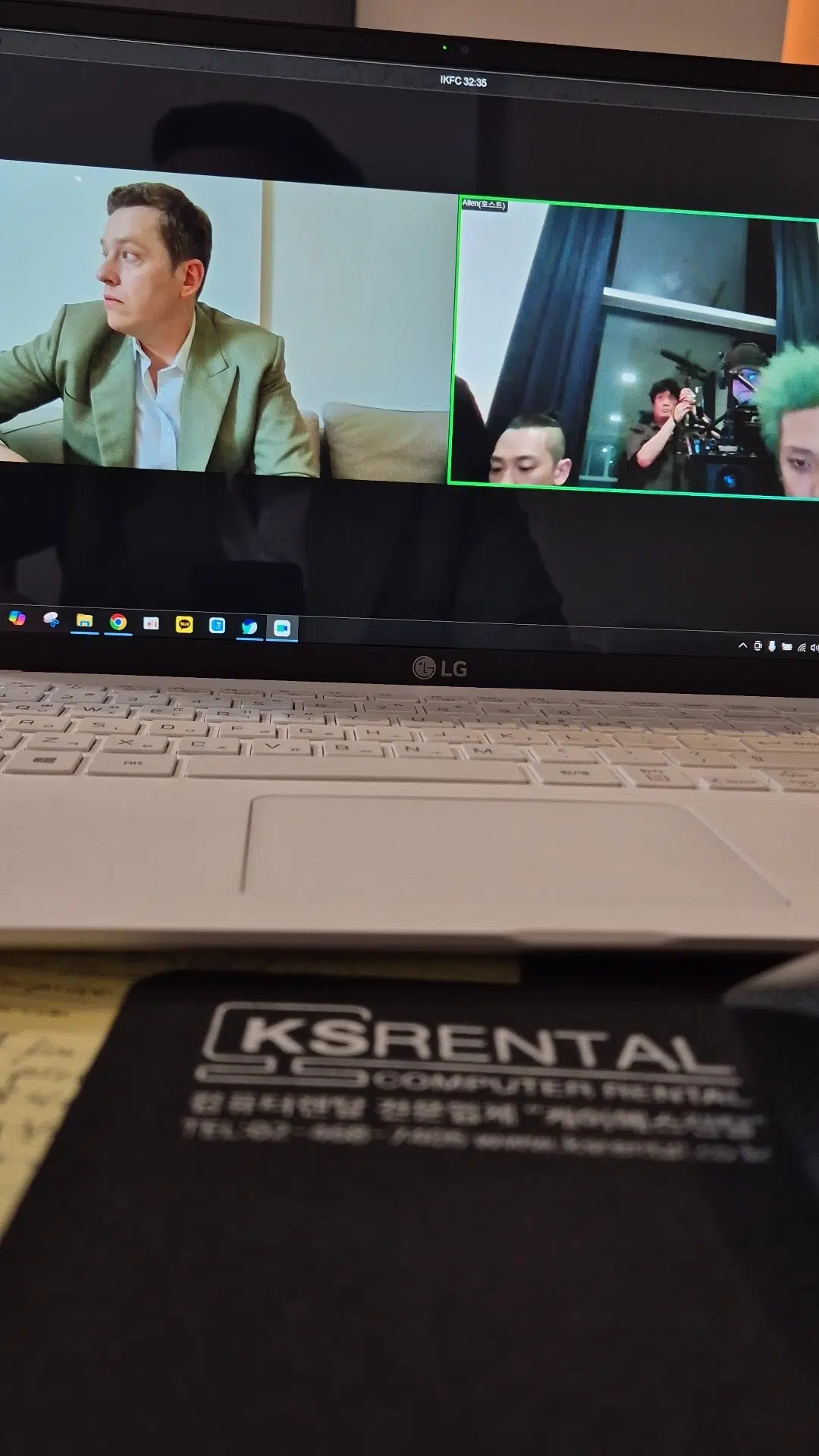
Picture: Joey Albright on the set of Bloodhounds for his scene with Rain and Lee Myung-ro
Jacob: So you’ve built that character in your own way to add more depth so you can use that in your performance?
Joey: Yeah, and a lot of dialogue had been cut in between those scenes. I had requested the director that instead of saying “IKFC” over and over, is there a way I can just call it a “little start-up”
So I collaborated with the director on the lines and stuff to kind of finesse them and give the character a little more depth than just being one-note. I do try not to do that, because at the end of the day, that’s stepping on the writer and the director. But you get into a scene, sometimes in Korea, you get a full Korean script that is coming from a translator, and often the translation is lacking the subtext that existed in the Korean version. So I’ll usually request both and compare them, and then explain to the director, ” This is how I feel about it. But if you don’t like that, I can say the lines verbatim.”
I’m happy not to stop on toes, and I’m not trying to give myself more screen time, but I do feel I can help by adjusting the line to be more specific and accurate to the character.
Jacob: Not that it gives you an advantage per se, as there will be other actors on set who speak English, but culturally speaking, having that knowledge of the language can add more context to the lines you’re given.
Joey: Yeah. A prime example of that would be someone had translated a cuss word in Korean as I played a racist soldier. I tend to play the villain, I don’t know why, but I appreciate it, don’t get me wrong, but it’s uniquely embarrassing because my daughter will find this footage later and assume I’m a bad person.
The way it was translated sounded more like a greeting than a cuss, so I approached the director, apologized, as I wasn’t trying to step on any toes, but explained what it meant in English, and that line can’t be said in that tone, so would it be okay if I tweaked the line? Just to be a little more accurate. But with Ian’s character, the director is fluent in English, and he wrote the lines. He’s a phenomenal writer and director, but I felt like I couldn’t make them land as naturally, and that Ian was kinda put into one specific spot, so I suggested a different route, and that’s what I did in my audition as well. And he accepted it, which was cool, but again, I don’t like to step on any toes, unless I can’t get the character there with that specific dialogue.
Jacob: How were your scenes shot with Rain and Lee Myung-ro? Were you on camera to them? Or was it all shot separately?
Joey: I wasn’t supposed to film that day, as they were going to book a location later, but the director had me hop into the rehearsal, and we were just meant to get the scene on tape. So they hooked up the laptops, and I was at hair and make-up, and they filmed my co-stars first because of the location, as they were very expensive.
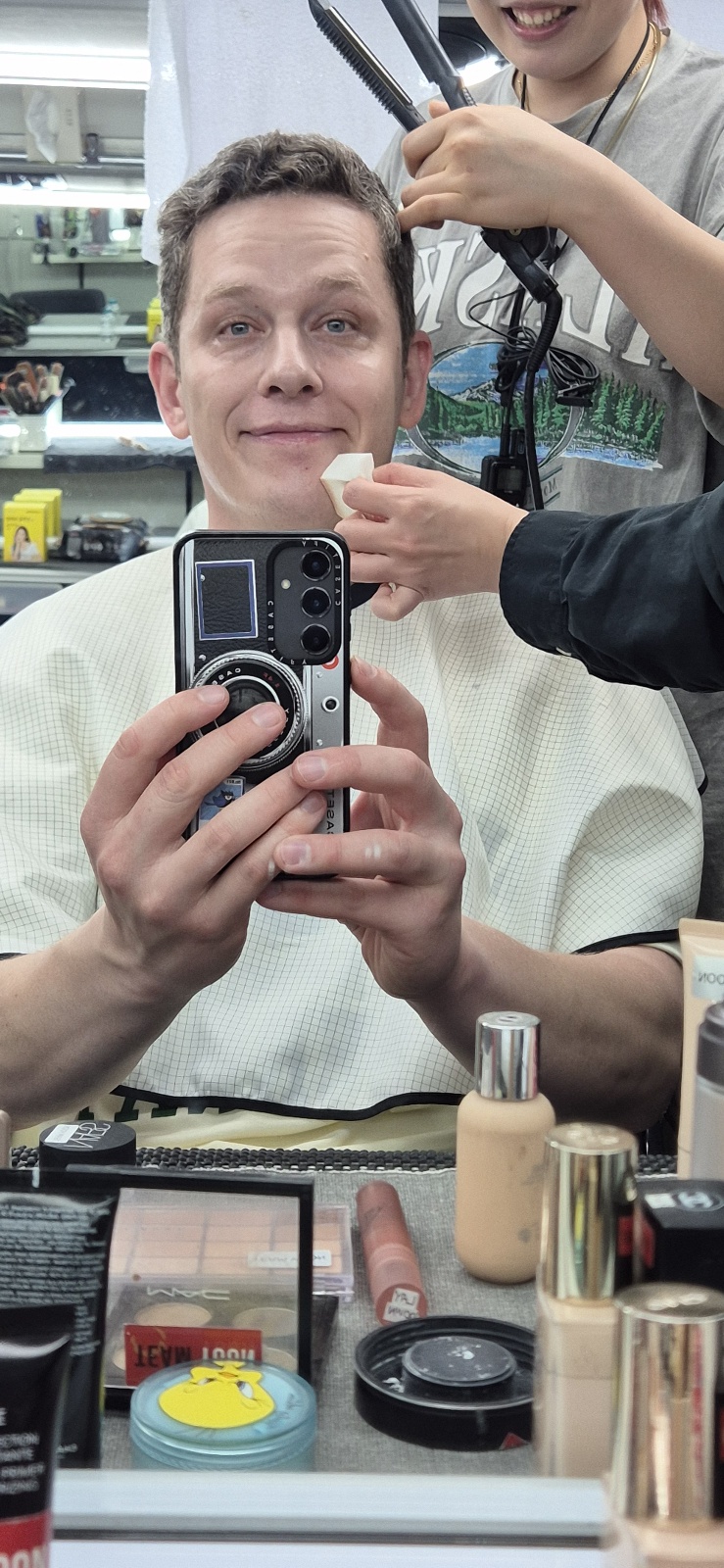
Picture: Joey Albright in the hair and makeup chair for Bloodhounds – Netflix
So, I was determined I was going to do my best, and not mess this up, so I sat there and did what is essentially a zoom video call, and after what they decided to do was to put my co-star on the video call again, and they brought the camera to me, and essentially shot me in one angle, so it’s very stagnant, and they did their best to make it look as realistic as possible for a call. They even added a green screen and put the video over it so it would look a little more realistic with the filter. It turned out to be a great experience, and the team was incredibly supportive.
Jacob: One of the lead actors has expressed interest in doing more seasons of Bloodhounds. Is there a possibility that Ian could return in future seasons?
Joey: I pray. I really want to do Ian again. He’s so much fun to just jump into. If they made a season three, I would love to see Ian. I’ve not heard anything. I’ve not been contacted, but if they make a season three, I will be on board for it. Even if it’s just a small cameo of me being tied up and beaten up by Baek Jung or something, I would love every moment of that because it was really one of my favorite sets to be on. And the director is just so intelligent and poignant, and the actor, being as big as they are, so talented that it really elevated my performance. And so I wasn’t sure if I could get there with Ian, but when you work with great actors, they really bring you up. And so I would love to have that experience to be in season three if they go for it. So fingers crossed.
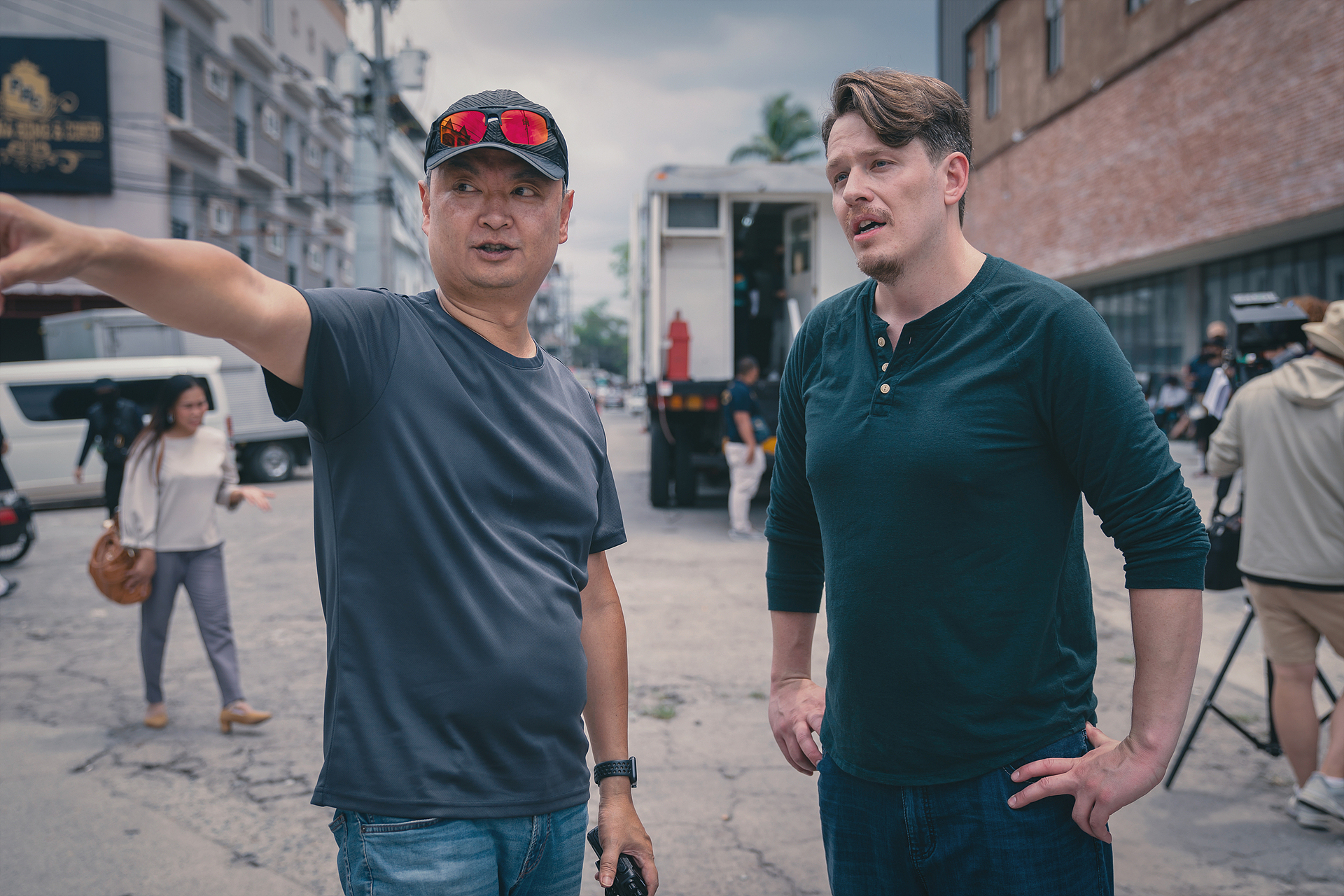
Picture: Joey Albright on the set of a previous project
Jacob: So, what comes next for you?
Joey: So I’m actually moving to America. I want to step back into the U.S. market. When COVID hit, I did a stint there and filmed 7 short films in 70 days. And I was leading in five of them. But I wasn’t sure, and my wife just had a child, and I was like, I can’t be that far away from my family. I’m very family-oriented. So I talked to my wife, and we discussed moving my family back to the States. I’m currently taking acting classes, but I can meet in person rather than at 4 a.m. Zoom. I would like to get more involved in the community.
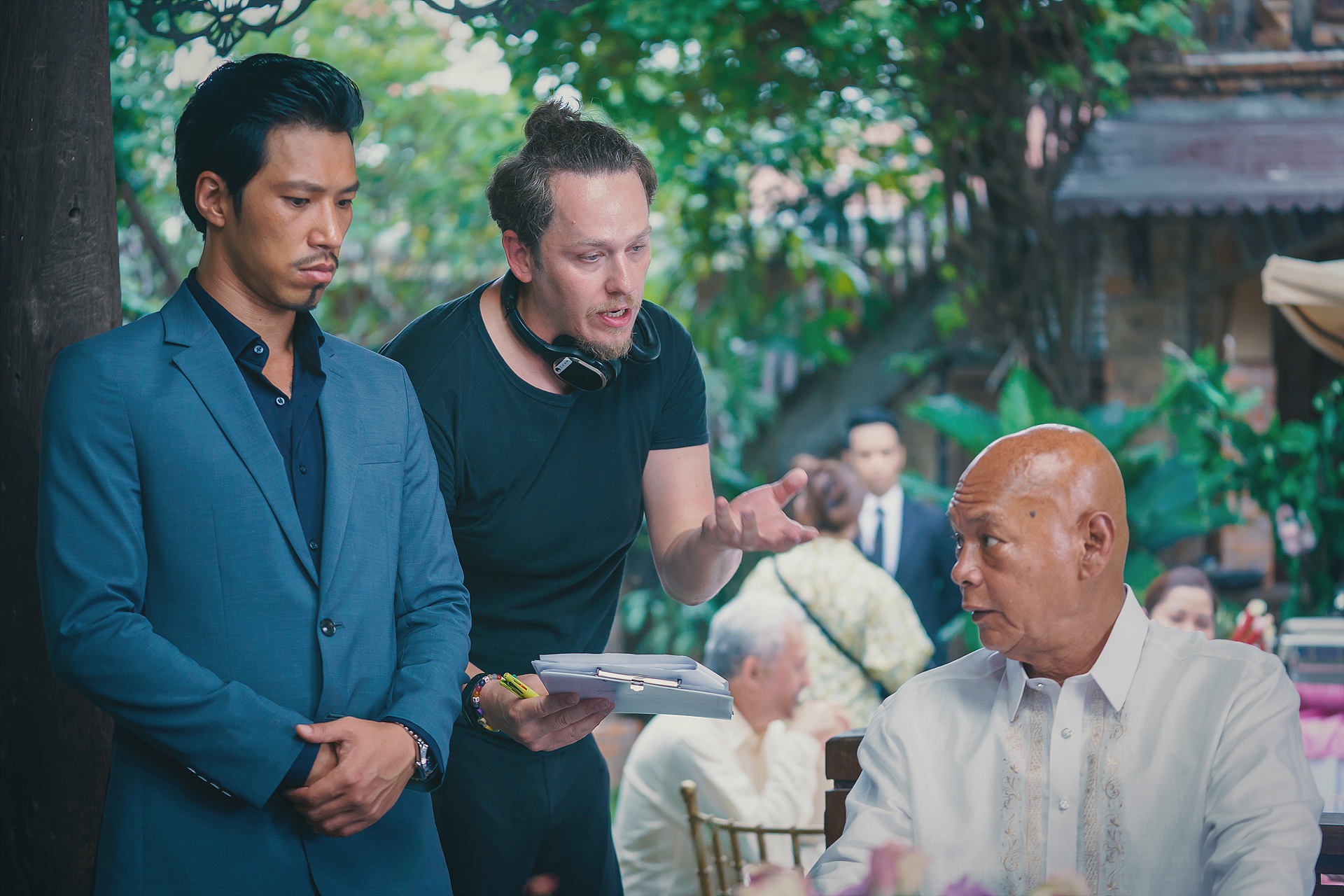
Picture: Joey Albright on the set of a previous project
I’m going to Portland, Oregon, which unfortunately doesn’t have very actor vibes. But there is a small acting community, and that’s where I essentially grew up before moving to LA and living there. So I feel like that’s a good, safe area for family. Yeah, I just, I think I can fly back to Korea anytime I book something. I love Korea. Korea will always be my second home, but I feel like it’s time for me to step into the U.S. market as well.
Did you enjoy Joey’s performance as Ian in Bloodhounds season 2? Would you like to see more seasons of Bloodhounds? Let us know in the comments below!