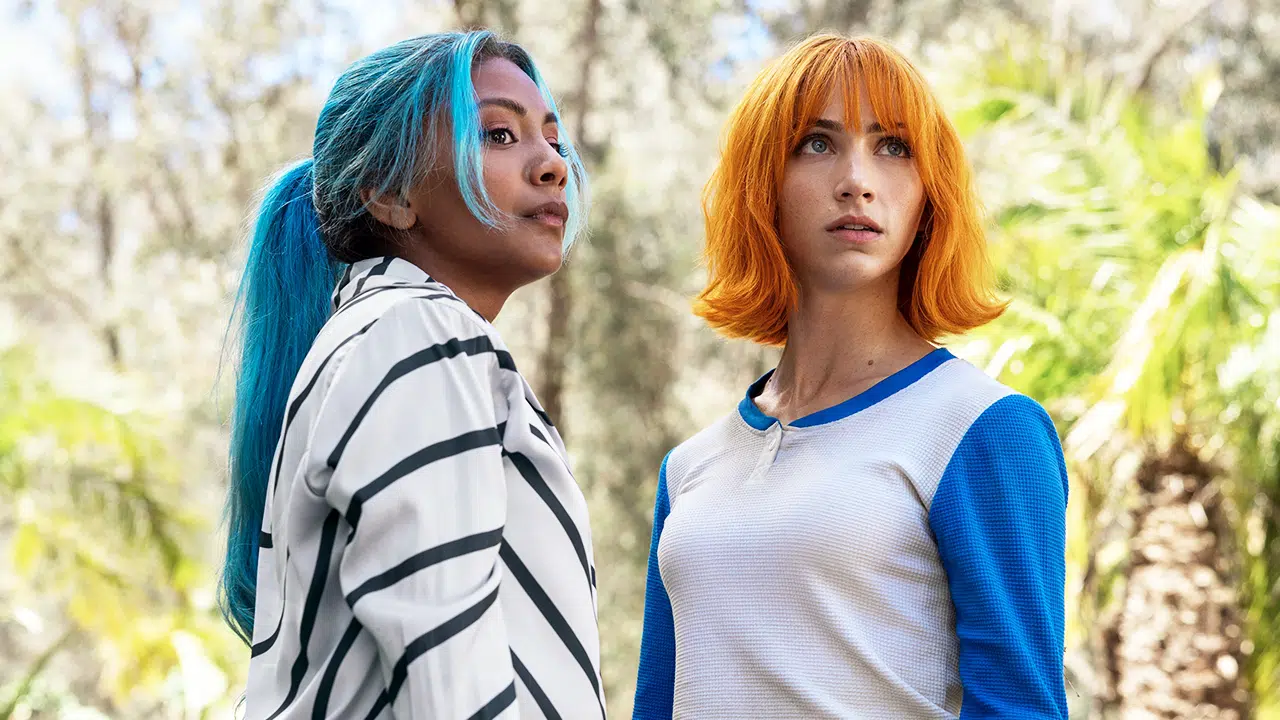
One Piece. (L to R) Charithra Chandran as Miss Wednesday, Emily Rudd as Nami in season 2 of One Piece. Cr. Casey Crafford/Netflix © 2026
Over the weekend, across social media on platforms like X and Instagram, you may have seen that the producers and, by extension, Netflix are planning to release 12 seasons of One Piece… That’s a big, bold claim, but not only is it probably unrealistic, it’s also not really accurate to what has been said either.
With Season 2 (Into the Grand Line) having just premiered on March 10, 2026, and Season 3 currently filming in Cape Town—bringing in a Cobra Kai alum as Ace alongside returning stars like Iñaki Godoy—the hype for the Straw Hats has never been higher. Naturally, the internet has taken a single quote and run with it, leading to viral panic about the cast aging into their golden years before they ever find the One Piece.
Here at What’s on Netflix, we like to bring things back down to earth. Let’s break down where this “12-season” rumor actually came from, why it’s highly unlikely to pan out that way, and what a realistic roadmap for the live-action series actually looks like.
The Origin of the “12 Seasons” Claim
The viral posts currently trending on X trace back to an interview with Deadline from all the way back in September 2023, shortly after the first season premiered and put in very good viewership numbers, resulting in a swift season 2 renewal.
During the interview, Tomorrow Studios producers Marty Adelstein and Becky Clements were asked about their hopes for the show’s future.
Adelstein replied: “We have hopes for 12 seasons, there’s so much material.”
Clements added more context: “We’re over 1,080 chapters at this point in the manga… We have plans with Matt Owens for how we would break multiple seasons, and I think even if we did six seasons, we would probably only use up half of the chapters of the manga. It really could go on and on and on.”
Notice the keyword there: hopes. Adelstein wasn’t confirming a 12-season greenlight from Netflix; he was expressing, almost to a jokey extent, the sheer ambition required to adapt Eiichiro Oda’s sprawling magnum opus. Netflix has never publicly committed to a 12-season plan. Currently, the show is taking things one (or sometimes two) steps at a time, with co-showrunner Joe Tracz reaffirming their commitment to doing the story justice under Oda’s watchful eye.
Why a 12-Season Run is Probably Unrealistic
Fans on X have already started pointing out the biggest logistical hurdle to a 12-season run: the unstoppable march of time.
As X user @Sanchez__rd aptly joked over the weekend: “Producers say they need 12 seasons to finish One Piece. By the time we get to the final battle, Iñaki Godoy is going to be 40 and we’re all going to have retirement plans. Is the world ready for ‘Middle-Aged Luffy’?”
They make a fantastic point. Season 1 dropped in August 2023. Season 2 arrived in March 2026. That is a two-and-a-half-year gap. Even if production speeds up—which it seems to be doing, given that Season 3 is already in production—a 12-season run would stretch the show well into the late 2030s if not the 2040s. Keeping an ensemble cast together for two decades, negotiating ballooning contracts, and dealing with actors visibly aging out of their teenage/young adult characters is a near-impossible feat in live-action television, especially in the crushing reality of the streaming age.
Furthermore, we have to look at Netflix’s historical track record. The streamer is stringent with long-running live-action shows. Their biggest flagship hits—like Stranger Things and The Crown—capped out at five and six seasons, respectively. To expect Netflix to double its longest-running, most expensive live-action commitments for One Piece is a massive stretch. Only a couple of comedies and small-budget dramas have reached beyond season 7 or 8, let alone go beyond.
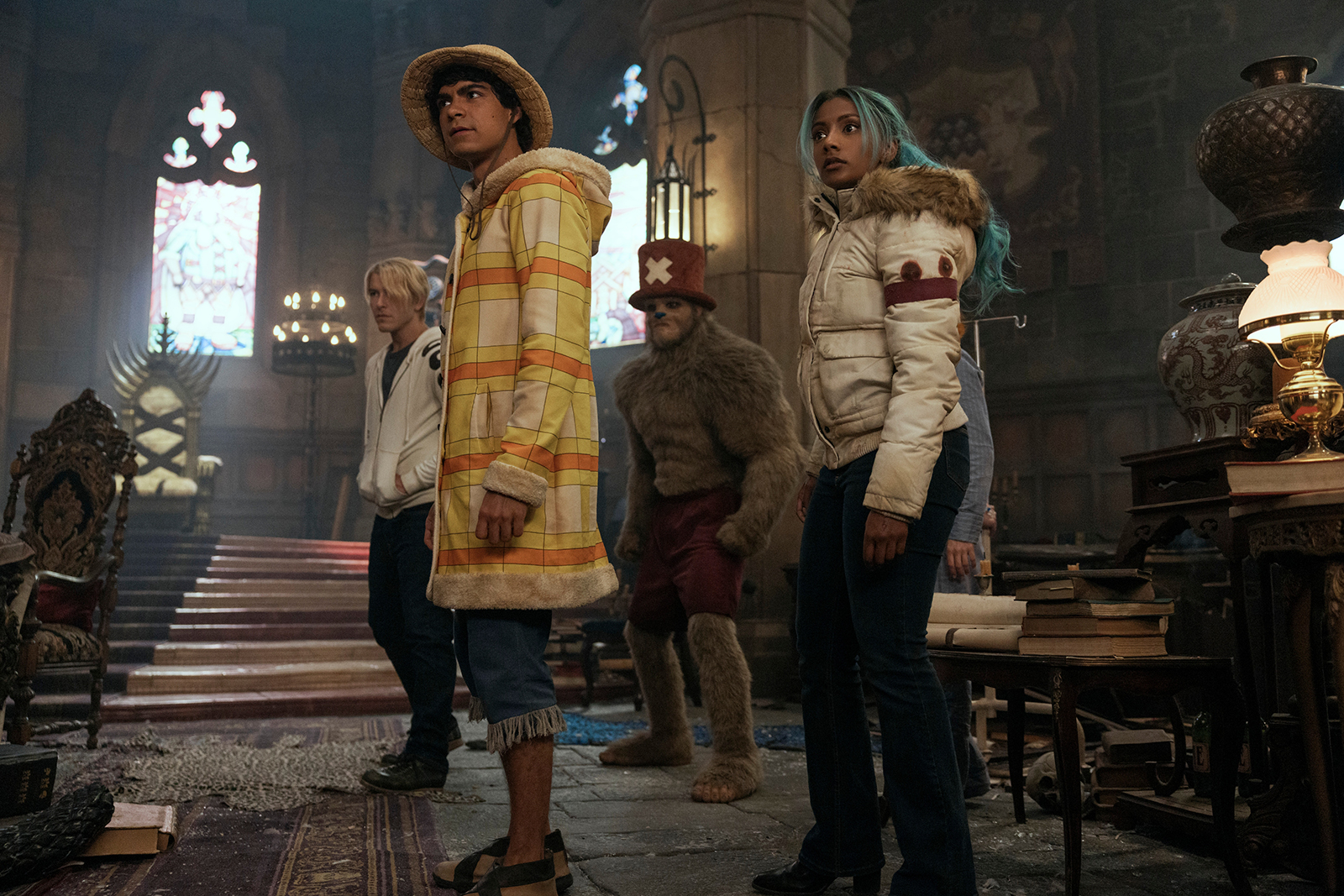
One Piece. (L to R) Taz Skylar as Sanji, Iñaki Godoy as Monkey D. Luffy, Gavin Gomes as Tony Tony Chopper Heavy Point, Charithra Chandran as Miss Wednesday in season 2 of One Piece. Cr. Casey Crafford/Netflix © 2026
What Track Could It Take Instead?
If 12 seasons isn’t the plan, what is?
Instead of adapting the entire manga until its final, yet-to-be-written chapter, the more logical (and satisfying) end-goal for the live-action series would be the legendary Marineford Arc and the subsequent Time Skip. This serves as the perfect, natural midpoint for the One Piece saga.
A highly plausible roadmap that has been floating around the community maps the live-action series through this midpoint into a much more manageable 8-season run. Here is how that estimate breaks down:
- Season 1 (2023): East Blue Saga (Shell Town to Arlong Park)
- Season 2 (2026): Logue Town, Reverse Mountain, Whiskey Peak, Little Garden, and Drum Island
- Season 3 (Est. 2027): The Alabasta Arc
- Season 4 (Est. 2029): Jaya and Skypiea
- Season 5 (Est. 2031): Davy Back Fight and Water Seven
- Season 6 (Est. 2032): Enies Lobby and Post-Enies Lobby
- Season 7 (Est. 2034): Thriller Bark and Sabaody Archipelago
- Season 8 (Est. 2036/2037): Amazon Lily, Impel Down, Marineford, and Post-War
While this roadmap still demands a monumental 13-to-14-year commitment from the cast and crew, an 8-season plan aligns perfectly with Becky Clements’ 2023 comment that six to eight seasons would “use up half the chapters of the manga.” Ending the live-action run right before the time skip would give fans a spectacular, definitive conclusion to the era of the story that is most beloved, without forcing the actors into their 40s.
For now, fans shouldn’t stress about what the show will look like in Season 12. With Season 2 doing more than OK in the Netflix Top 10s and Season 3 already cameras rolling in South Africa, the live-action One Piece is in the healthiest spot it could possibly be in. Let’s just enjoy the voyage one island at a time.