



Photo by Vincent Feuray / Hans Lucas / AFP via Getty Images
It has been a couple of days now since the news broke, and it’s still hard to process. The announcement that Netflix—the company that famously swore by a “build it, don’t buy it” philosophy—has acquired Warner Bros. and HBO marks a seismic shift in the landscape and Netflix’s strategy. The deal places some of history’s most lucrative intellectual property, from Harry Potter to DC Comics, under the control of the world’s largest streamer.
But beyond the shock waves and the headlines, does the math actually work? To cut through the noise, I reached out to the Entertainment Strategy Guy. Known for his anonymous, data-driven deep dives into the business of Hollywood (including many readers within Netflix, I’m told!) and for having spent many years of his career within the machine, he has become essential and perhaps even sometimes controversial reading for anyone trying to understand the modern-day realities of the entertainment business, telling it how it is.
ESG has already written a piece on the new merger, but we had a few more questions, so we had to reach out and discuss why Netflix finally entered the M&A ring, the “awkward fit” of merging HBO with the algorithm, and why—despite the staggering price tag—this deal might be more of a defensive maneuver than a victory lap.
It’s been a wild day after several months of speculation, bidding, and mudslinging – early on, were you skeptical Netflix would even want to bid for the asset? What’s your immediate reaction to the news today?
I was skeptical Netflix would bid on Warner Bros. assets, simply because Netflix has always had a “build it, don’t buy it” strategy, which Netflix co-CEO Ted Sarandos reiterated on the call with earnings analysts after this deal closed. And frankly, I agree with them. They’ve had great success doing it their own, the Netflix way, by building things internally. Plus, I thought they may be worried about the antitrust implications compared to other Warner Bros suitors.
So I was surprised they entered the ring, and surprised by how much they paid for it overall. My immediate reaction, though, was that I like the strategy for Netflix, as both a defensive ploy and as an asset acquisition strategy. For all the skepticism, Warner Bros. still has a stellar content library.
The worry, which has been growing on me, is summed up as, “Damn, that’s a lot of money.”
Why does Netflix want Warner Bros. Discovery?
To quote my first article on this, “IP, IP, IP”. Buying a legacy studio has a lot of benefits over another pure play entertainment company, but access to franchises like Harry Potter, Game of Thrones, DC/Batman/Superman, and more, and a library catalogue with shows like Friends, The Big Bang Theory, and Gilmore Girls is an even bigger deal. They’re also preventing a rival from taking control of Warner Bros., which, as a defensive strategy, has some merit.

Picture Credit: HBO
You’re now in and out of the data all the time from the outside – how well has HBO and HBO Max been performing? Are they on an uptrend in viewing time and hits or a downtrend?
In 2024, they started to have an uptrend in the streaming ratings in the US.
They’ve been able to put more library titles into the top ten, but it’s been hit or miss with their big shows on the charts. House of the Dragon and The Last of Us did very well, but they haven’t had many hits that big in 2025. That said, The Pitt ended up growing its audience throughout its weekly run, and it may be a strong performer in 2026. The film side has been much better in 2025, with films like Sinners and Superman doing great numbers for HBO Max. Though when it comes to streaming, even their best films lag behind Netflix due to Netflix’s much larger usage.
I expect that if this deal closes and Warner Bros. theatrical films come to Netflix in their first window, we’ll see some of them smash records.
If the deal does go through, what do you think the biggest issues will be with integrating Warner Bros, whether that be its movie division or TV division, including HBO?
The most awkward fit will be the HBO streaming/subscription service and how it fits with Netflix. Do they put all the HBO content on Netflix, but still keep an HBO subscription? Or do they sell HBO as a premium tier? There are a lot of potential options, but no perfect solution.
Also, never sleep on the difficulty of merging two tech stacks together. (Tech stack being the jargon for all the IT/infrastructure/cloud computing required to support streaming operations.) Merging two completely different tech stacks seemingly never goes as planned.
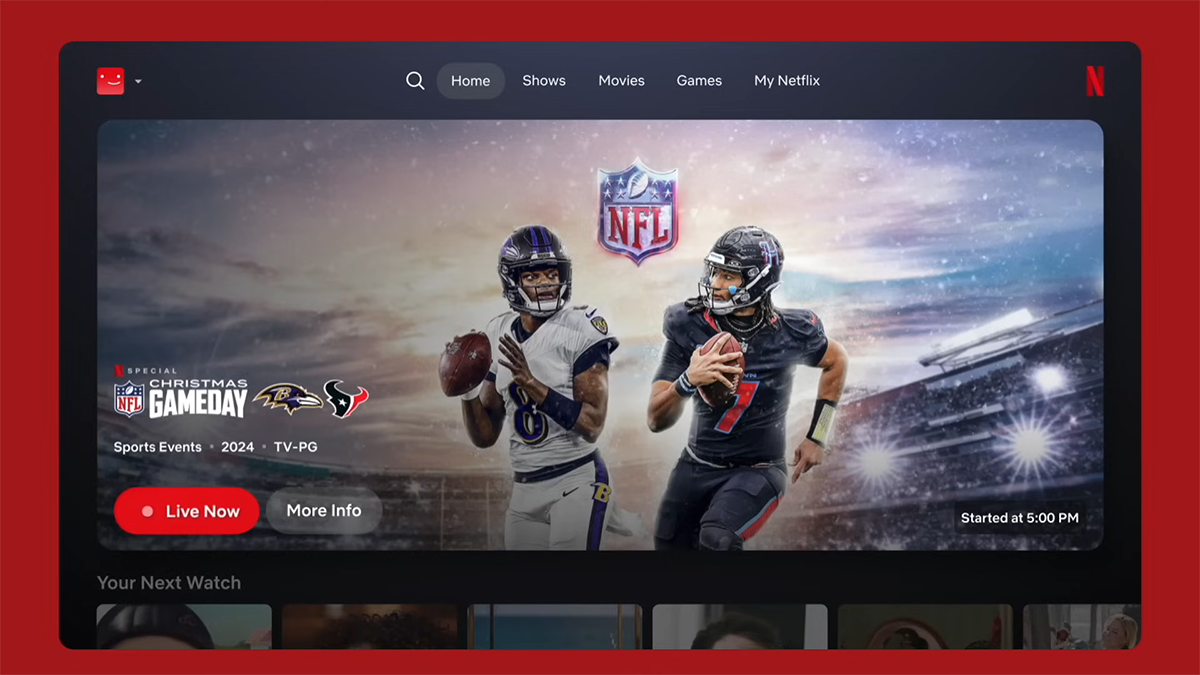
Picture: Netflix UI – could a HBO button be coming?
What does this acquisition mean in the short and long term for consumers?
In the short run, you’re likely to see positive outcomes for consumers, since businesses often want to drive a quick uptick in consumer sentiment (as well as avoid angering antitrust/competition authorities). But often the impacts aren’t immediately obvious.
Long-term, losing a major streamer in the US and globally will decrease the pricing pressure on Netflix. Netflix and other streamers have already increased prices significantly in the last five to ten years. But competition keeps those prices in check somewhat, and this removes that.
As for the total amount of content—films and shows—I just can’t see it decreasing after a merger like this. Of the synergies touted, that’s the biggest.
What does it mean for talent, producers, etc?
In general, more bidders means higher prices paid to talent. The TV ecosystem probably saw a peak of most bidders splashing the most cash circa 2018 to 2022, and the loss of another truly independent bidder in Warner Bros. will hurt talent.
You’ve long been a proponent of theatrical – will Netflix come to realize the value in the distribution method? Will they stick to their word for the short term and abandon it, or do you think they’ll lean in over time?
Haha, yeah, I doubt Netflix gives up on straight-to-streaming, frankly.
Even as Netflix has said positive things about sending Warner Bros. films to streaming, the actual language has been fairly soft. More along the lines of “honoring commitments” than seeing true value in it. Sarandos even said he wants windows to be “more consumer-friendly,” which means more straight-to-streaming.
However, as I think Amazon saw with MGM, when you have these big-budget films, you need theaters to really generate a full financial payoff. So, potentially, we see a Warner Bros that sends films to theaters and a Netflix film team that does not.
Lastly, if you had to put some odds on it, how likely is the transaction to go through?
At this point, I think it’s likelier than not that the deal goes through. While I do think the deal would lessen competition, if the American antitrust authorities don’t actually try to oppose it, then it has a much easier time getting approved. In general, after losing previous cases against Warner Bros./AT&T and not challenging deals like Disney/Fox and Amazon/MGM Studios, competition authorities have been hesitant to challenge deals.
Though multiple actors from the US federal government to even international competition agencies could try to stop it, if Republicans in the US decide Netflix is left-coded (and founder and former CEO Reed Hastings is a big-time Democratic donor), they could challenge it and have a strong case. Same for Democratic Attorneys General, since media consolidation became a political issue after ABC/Disney suspended Jimmy Kimmel.
So I’d say somewhere between 60-80% likelihood it goes through.
You can find more on the Entertainment Strategy Guy on Substack, LinkedIn, Twitter, and his website.


