Picture Credit: Netflix / Marcelo Zarvos
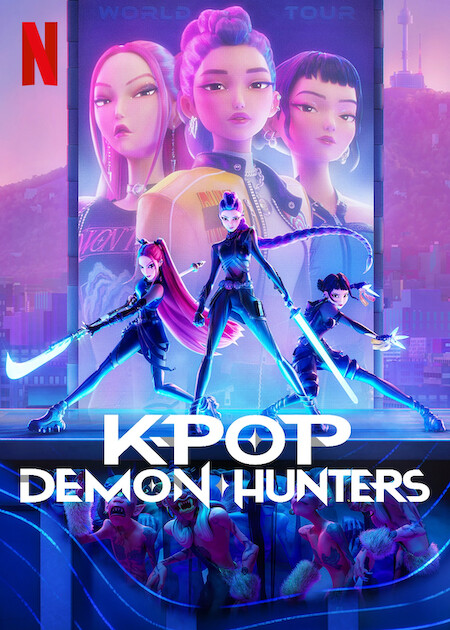
The composer behind KPop Demon Hunters was proud after the film’s success at the Academy Awards. Maggie Kang and Chris Appelhans’ international sensation won Best Animated Feature, as well as Best Original Song with “Golden.” The movie struck a chord like few movies do these days, in no small part due to its celebration of art and music.
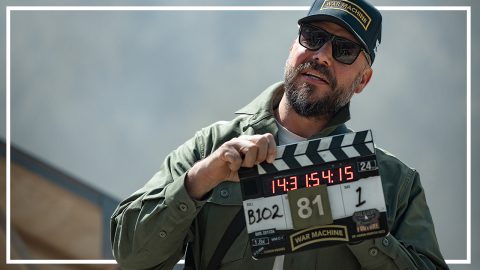
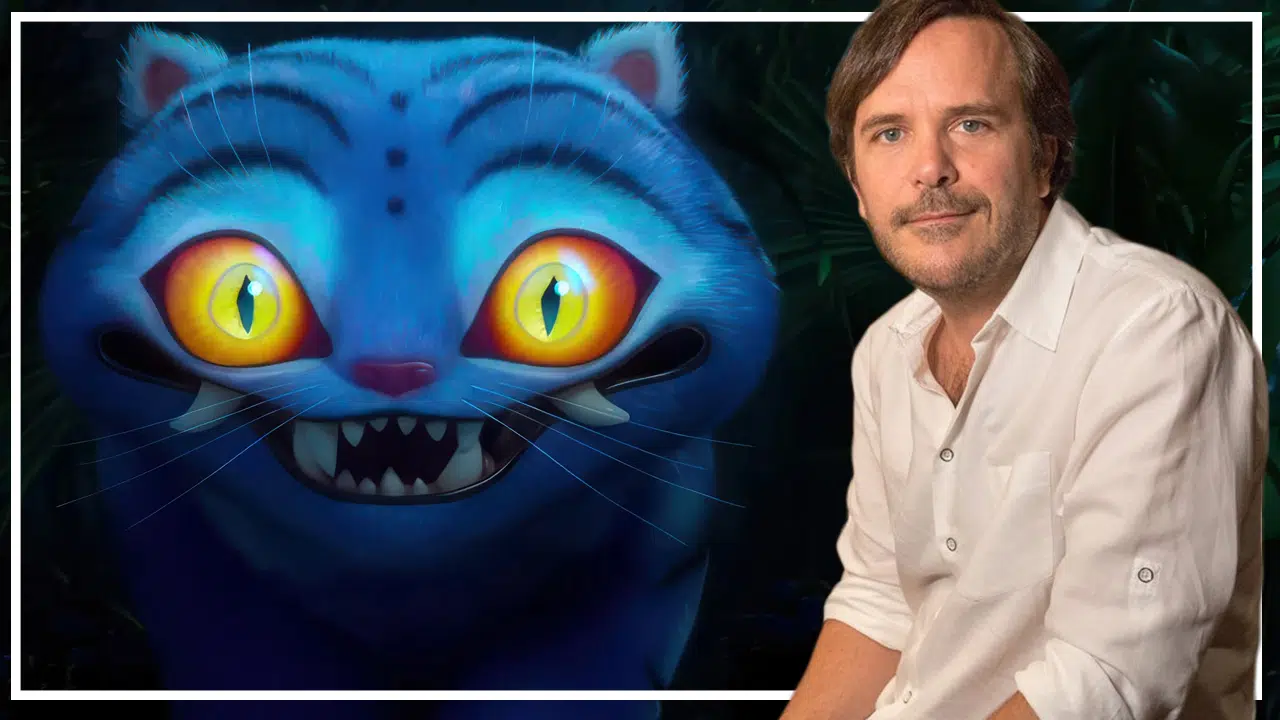
Marcelo Zarvos, who previously composed The Equalizer 3, Enough Said, and Nonnas, brought his ear for action and drama to KPop Demon Hunters. The movie is an audible, not just visual, feast for audiences. In telling the story of Rumi (Arden Cho), Mira (May Hong), and Zoey (Ji-young Yoo), Zarvos got to fulfill a dream himself: scoring his first animated movie.
The composer completed his work on the film at Air Studios in London. From the beginning until the end, “there were really good vibes in the air the whole time,” he told What’s On Netflix in a conversation about scoring some of the film’s pivotal moments and themes.
As a composer, did the film’s celebration of music really speak to you?

Absolutely. The superpower is the music. There’s no gamma rays, flying, or Superman stuff. It’s music. Of course, when I began to work on it, I was struck by how powerful it was, but at that point, I was just thinking, okay, this is a great project and story, and let’s go. But I’ve been doing this for a long time, and I never experienced so much love for a project. Not even close. I mean, it’s out of this world. It’s wonderful to experience and to witness.
I’ve been trying to do an animated movie my entire career. I’ve done over a hundred movies. I’ve never gotten an animated movie. I had basically given up until KPop Demon Hunters came along, and they’re like, “We want you to do it.” And then this happened. Wow, definitely worth the wait.
What was your main interest in scoring an animated movie?
Animation, along with dance, are the two art forms that are the most closely related to music. It’s very hard to imagine a piece of dance without some music, as it is hard to imagine an animated film without music. From the beginning, from the early Disney stuff, the music was part of it.
When you think of Snow White, when you’re thinking of “Let It Go” or The Lion King or Up or whatever it is, you’re thinking of music. I think music is the magic potion for an animated film. It kind of brings it to life in a way. And this one, of course, the music was baked into the actual subject of it all. So when I watched it the first time, I was blown away.
I was very moved by it, too. The last time I watched it was when I listened to “Golden” for the first time. I came in quite late.
That’s surprising since you use some of the “Golden” melody in “You’re a Demon.”
The directive was to use as much or as little as you want. First, I scored the whole thing without the songs and got it to the place where they were working dramatically and emotionally. Then the directors and I talked a lot about it. I kind of scored it twice, in a certain sense — and it was fast.
How fast?
We had six weeks. It was a very, very fast train. Chris and Maggie were like, “Well, how about if we try a little bit of this – a little bit of ‘Golden’ there.” We started to place it in a very determined, very story-centered way in spots. We knew how we could make the songs be a part of the story and how the score could wrap it up. I had never actually worked in a musical, either. It was two firsts for me.
With “The End Credits Suite,” you get some rock and roll in there — which there’s a bit of in the score — but what feeling did you want the final suite to leave audiences with?
It was about revisiting that story with the final suite. It was, first of all, let’s keep the audiences there. How can we make that happen? In the case of the final suite, as with the soundtrack score, the score-only soundtrack, I try to replicate the experience of the film in a certain sense, in a small way. We can revisit some of those moments, like “The Prologue” and “The Bathhouse Fight.”
Were you proud to hear “The Prologue” at the Oscars?
It played before “Golden” at the Oscars. They did a version of the prologue, which was really fun to revisit that music and be a part of that. They wanted to set up “Golden,” but instead of doing another song, they decided, let’s do “The Prologue” with the original voiceover explaining who Huntrix is.
When you listen to “The Prologue,” you really feel you’re invited into a new world. How did you want to set a tone with that first piece of music audiences hear?
Well, how do you tell 500 years of history in a minute and a half? It was about establishing the legend of them. Once you cut to the hunters through the ages, the score goes from a much more orchestral score over, like a few bars, then we’re introducing more electronics. It becomes more and more modern as the Huntrix.
The thing about animation is that every second has been conceived of in such a detailed way.
Did you have a lot of completed footage to score?
They worked on that animation for years, and every shot, every line of dialogue has been really thought of and gone over and over. By the time it was all set, and then when I started, the structure was pretty much there.
Some of the animation was not ready. Sometimes you had just animatics, or sometimes you had just a picture of what it was going to be, but every week it got more and more detailed. And then even as we were recording, the animation was still not completely done, but the timelines were done.
But we knew what we were trying to hit. “The Prologue” was really how to set up this whole story so you can see the scope of it. Part of the score is about the mythology of it. How could we really squeeze that in that short amount of time?
A good track that gets at the heart of a character is “Rumi’s Signs.” How’d you want the cello to reinforce her inner-conflict?
It was always a matter of large and small. We go from a big orchestra to like the cello playing the melody. And of course, that’s the real-life Rumi singing. It’s Maggie’s daughter. She must have been six or something, for “Rumi’s Signs.” But then when we get to the end, when Rumi goes to meet Celine and she’s like, “It’s all over,” that’s again real-life Rumi.
We brought her again to sing the lullaby in a transformed way. The key pieces for the score were “Golden,” the lullaby, and “This Is How It’s Done,” which we used a little for the bathhouse fight and the setup in the plane [fight] in the beginning. And then also “Free,” the ballad and love song, made its way into the score in this very organic way.
Your score can really contrast the lightness or the fun of the tracks, too.
Exactly. The “Golden” melody lends itself to strings. It’s such a difficult melody to sing. It’s very virtuosic, but for cellos, it’s beautiful. It really works on the string. It was not a hard sell for them when I said, “‘Golden’ is the one that we’re going to try to incorporate into the score.” Of course, it’s in many ways the heart of the movie. “Golden” captures everything, so it’s no surprise that it’s had the impact that it has outside of the film.
A very dramatic track that could be in a horror movie is “Underworld.” It’s just a case of the composer attacking with strings. How did you want to define the underworld musically?
Well, the interesting thing was, it was almost kind of the absence of music. We use throat singers, Tuvan throat singers. It’s the lowest note a human being can sing. The throat singing was like, what’s the lowest voice, the furthest away from Huntrix that we can have?
So in the middle of it all, there is this throat singing, plus strings, a lot of electronics, and a lot of trippy sounds. But “The Underworld” was kind of like a negative picture, right? You see everything upside down in a picture, and that’s the absence of music, the absence of joy, and the absence of love, which the underworld represents.
On the other side of the spectrum, you go very joyful, very rock and roll with “Bathhouse Fight.”
I was thinking of fun anime there. I was thinking a little bit of a wink to Kill Bill and that whole thing of slaughtering tons of people. In that case, it’s sort of a dance. It really feels like they’re dancing with the choreography of it all. And then eventually, because we started with rock and roll, how can we go higher?
How did you?
When there’s a tear in the dimensions and the demons start to come in, then we raise the temperature even further to this full-on action slaughter music with tons of percussion. We had a rock band going along with this percussion part and tons of energy and tons of sound.
What about Derpy? How’d you want to give him a voice in the story?
Derpy is my favorite character. I don’t know why. When I saw Derpy at first, I just kept saying so much that in the credits, when they give everybody credits, they put one of the characters next to their name, and they put Derpy next to mine because they knew how much I love Derpy.
[Laughs] What is it you love about him so much?
There’s something about him. I have a fantasy that one day they’ll do a standalone Derpy movie because… He’s so expressive, but at the same time, his eyes don’t close and his mouth doesn’t move. There’s just something so magical about that character.
And of course, towards the end, we also see Derpy in the underworld, which is very cool, and he’s a lot more spooky. And that was a character I just fell in love with immediately. When I saw him, I was like, oh my God, if I was a kid, I would want a giant Derpy stuffed animal in my bed with me at all times [Laughs].
[Laughs] I hope you get the call if they ever make that movie.
I hope so too.
What was the thought process behind scoring “Jinuth’s Death”? What did you want the score to express there?
I think it was more about the drama. It was about the sacrifice. He decides to sacrifice himself in order to save Rumi and the world out of love. We wanted to make it scary, but not too scary. It still is a tragic thing, but there’s also hope that comes with it. It took a lot of tuning, a lot of layers, a lot of sound design, synthesizer, very electronic, and trying to capture this otherworldly death, in a way.
What I liked about this project is also that we were never looking down at the audience. There was no point that they were like, “Oh yes, it’s little kids.” We knew that the primary audience was going to be children, but we didn’t want to become condescending to the audience ever. In that scene, it’s about real human adult themes of love and sacrifice. It’s making the right choice that might be personally the worst choice for yourself, but the best for humanity.
 Rating: N/A