Chris & Martina: The Final Set. (L to R) Martina Navratilova and Andy Mill in Chris & Martina: The Final Set. Cr. Courtesy of Netflix © 2026
In Chris & Martina: The Final Set, tennis legends Chris Evert and Martina Navratilova get candid about their decade-spanning rivalry and reflect on the full arc of their professional careers. Though the film captures them in raw, unfiltered interviews, director Rebecca Gitlitz sheds light on the players’ inner personal lives and details that even many devoted tennis fans likely never knew. Here are 10 things we learned from Chris & Martina: The Final Set.
Chris & Martina: The Final Set is now available to stream on Netflix, so we’d recommend watching the powershot of a doc before reading below.
1) Chris Evert was alienated by her older tennis peers due to the media’s overwhelming focus on her.
When Chris Evert made her debut at just 16, she instantly became a media darling. A Newsweek cover story centered on her, the public’s perception of her as “sweet” and “cute,” and the fact that she was beating them on the court all fueled resentment among her older professional peers, who, in turn, were not kind to her. Over time, however, Evert’s successful run inspired a new wave of women to take up the sport, and the player count grew. In the documentary, Billie Jean King recalls telling her fellow competitors that they needed “Chrissie” in a superstar role. That her inclusion would usher in the second generation of talent required to bring greater visibility to women’s tennis.
2) Martina didn’t feel the pressure to be outspoken.
Unlike Evert, Navratilova struggled to secure sponsorship throughout her career. But that very struggle freed her to be outspoken about her views without caring what anyone else thought. For her part, Evert admits in a conversation with Navratilova that she actually admired her willingness to speak her mind, even as she herself was cast in the more guarded “girl next door” mold. While Navratilova was bummed that her agent couldn’t land her comparable deals, she ultimately realized she didn’t have to carry the burden of being silenced. She let her racket do the talking.
3) Evert traces her competitive fire to a childhood spent on the court.
So much of Evert’s drive and concentration to being the top playing was forged in solitude, not support as a kid. Evert discusses how she mostly played tennis for her father, Jimmy Evert, driven by a deep desire to impress him. She never really had the chance to make friends as a kid. In her words, “friendship was never encouraged.” Her brother John adds that she didn’t have sleepovers or go on dates in high school, instead remaining more reserved and focused. “Having success at a very young age wasn’t for emotional or mental growth,” Evert reflects.
4) Martina was a player off the court as well.
Navratilova had a string of girlfriends throughout her career. Everyone on the tennis tour circuit knew, and for years, they kept her sexuality a secret — at least until the prying media eventually outed her. Pam Shriver shares in the documentary that Martina had more than your average number of girlfriends. For her part, Navratilova explains that with no family in America, she was always emotionally dependent on whoever she was seeing at the time.
5) Martina and Chris didn’t speak for years during the height of their rivalry.
The documentary reveals that once Evert and Navratilova turned icy toward each other on and off the court, they stopped talking entirely for a good number of years. Part of the rift is attributed to Navratilova’s then-girlfriend, basketball player Nancy Lieberman, who encouraged her to view Evert as the enemy if she truly wanted to become number one. Navratilova recalls Lieberman telling her, “You need to not be friends with her. You need to kick her ass.” That killer instinct, which she once lacked, finally kicked in. But the cost was a deep chill between the two—one that extended even to the locker room, where they wouldn’t exchange a word for years.
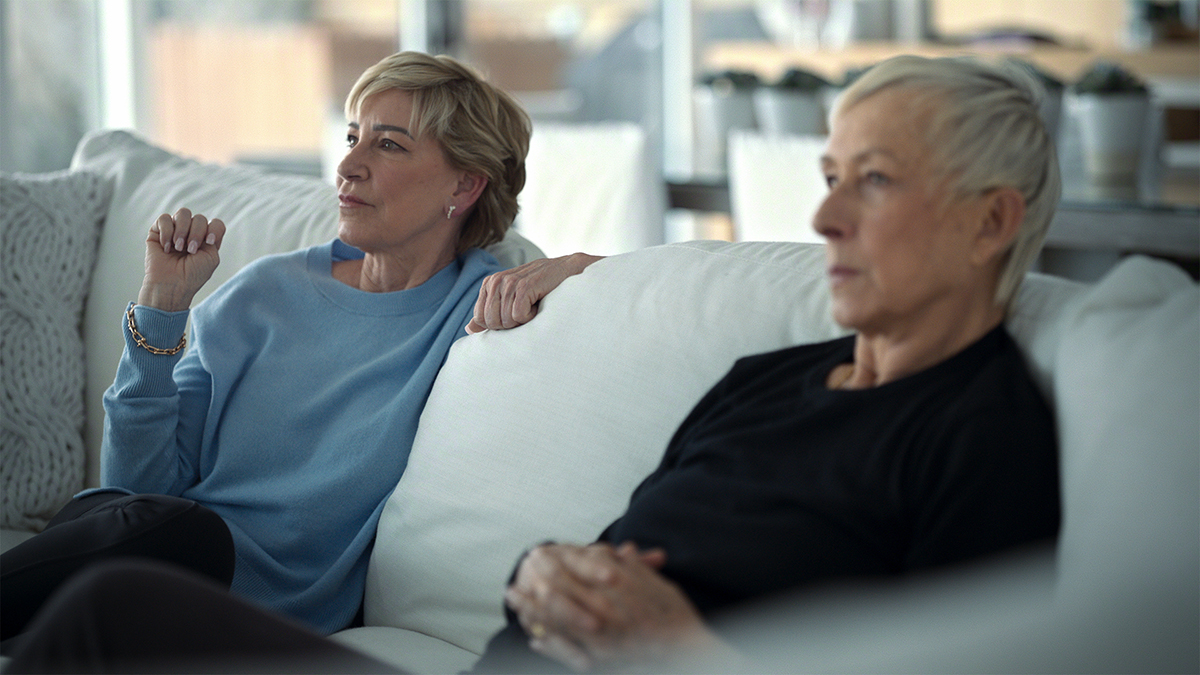
Chris & Martina: The Final Set. (L to R) Chris Evert and Martina Navratilova in Chris & Martina: The Final Set. Cr. Courtesy of Netflix © 2026
6) They still joke about that one SNL skit.
While discussing their cancer journeys, Martina and Chris break into a playful riff on a 1989 sketch from when Evert hosted Saturday Night Live. In the bit, Navratilova (played by Nora Dunn) comically follows Evert through every career endeavor, desperately trying to one-up her at every turn. Decades later, the two legends reprise the bit in the documentary, this time joking about their shared experience with cancer, laughing about what their “shared career” looks like now compared to back then. It’s a lighthearted moment that shows just how far their rivalry has evolved into genuine friendship.
7) When outed, women tennis players would use “bisexual” as the default—even if they identified as gay.
Navratilova discusses how a New York Daily News reporter lied about having her permission to reveal her sexuality, effectively outing her in the process. To make matters worse, the report identified her as bisexual when, in fact, she was a lesbian. Though Navratilova went along with it publicly, it was only because “bisexual” was considered more acceptable than “lesbian” at the time. Tennis legend Billie Jean King adds that bisexual was always treated as the “backup” label, in relation to her outing in 1981. It was a safer, more palatable option for players who needed to protect themselves in an era far less forgiving towards homosexual athletes.
8) The trip to Czechoslovakia with Martina was “one of the most unbelievable trips” of Chris’s entire life.
In 1986, Navratilova and Evert traveled together to Czechoslovakia—a historic homecoming for Martina, who was returning for the first time since defecting to the United States a decade earlier. Evert shares that, for her part, the journey was revolutionary for their friendship. She witnessed firsthand the loving impact Navratilova had on the people around her and the deep, caring relationship she shared with her family. In that moment, Evert understood her rival on an emotional level like never before, a turning point that transcended their relationship entirely.
9) Martina learned about Chris’ cancer diagnosis unbeknownst to her own.
The friends’ concurrent cancer diagnoses became a pivotal moment for them. Evert told Navratilova that she had to get a breast mastectomy, and Navratilova cried for her friend, unaware at the time that she herself had cancer. Shortly after, she found a lump in her throat and learned she had throat cancer.
10) Chris and Martina believe their friendship extends far beyond their singles wins.
When asked during the credits if their friendship would be the same if they hadn’t won 18 Grand Slams each, both Evert and Navratilova look baffled. Evert goes on to say that’s not what the foundation of their friendship is about, while Navratilova acknowledges that she’s perfectly fine with the even wins they have.