Picture Credit: Netflix
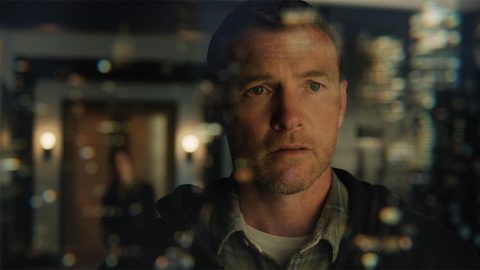
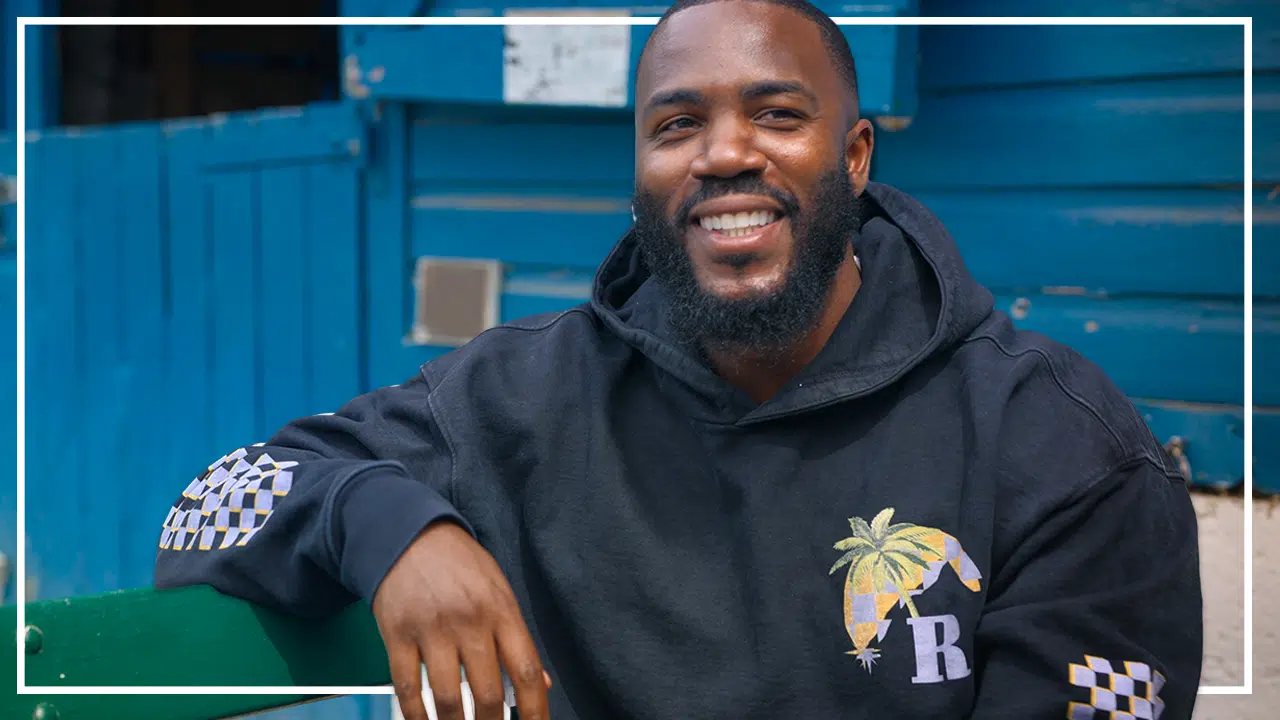
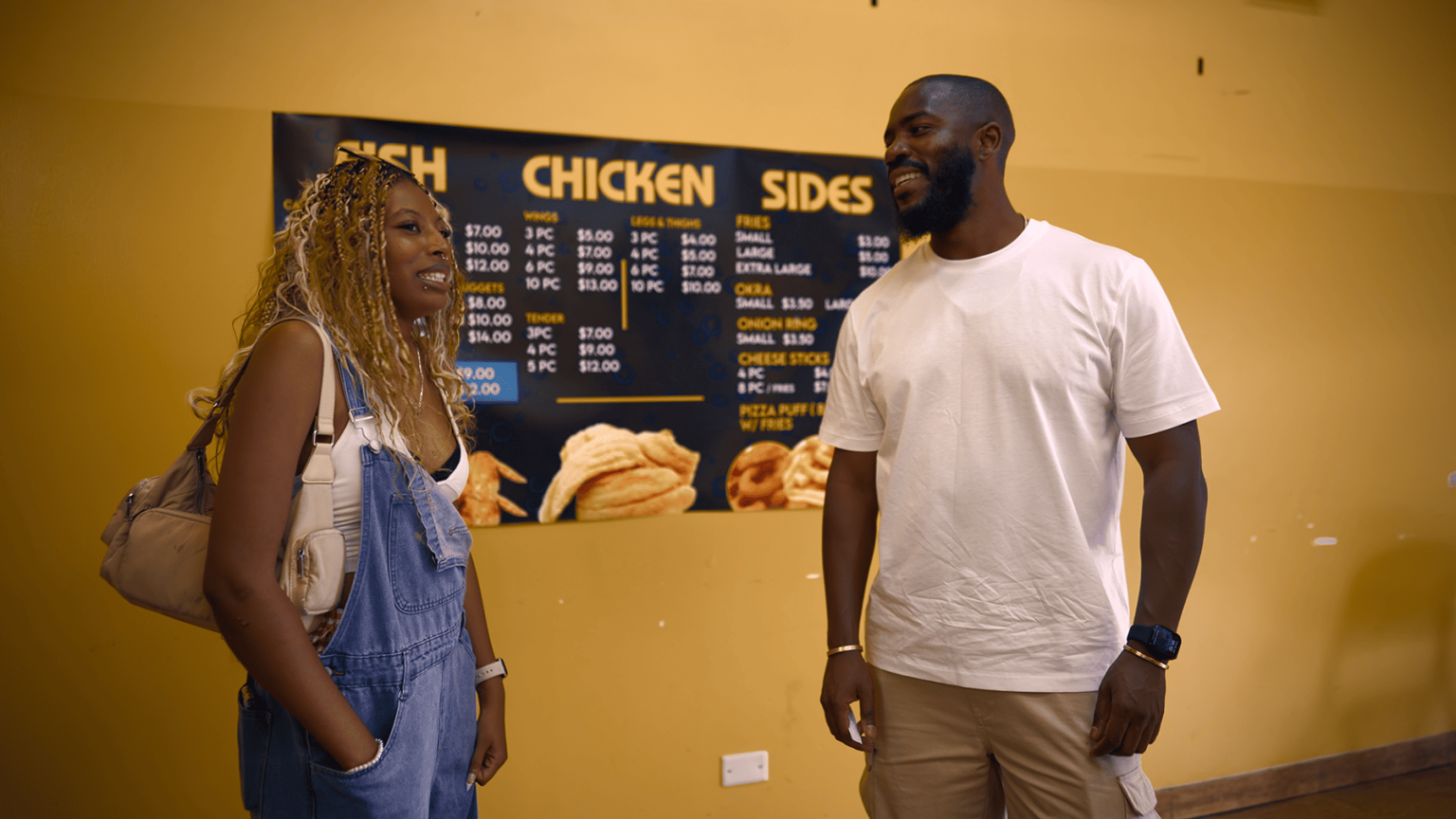
Nobody could ever question comedian Mo Gilligan’s dedication to the task at hand. Look no further than Big Chicken: A Fast Food Conspiracy. For 30 days, Gilligan eats nothing but chicken for breakfast, lunch, and dinner. A whole month of the fried chicken diet from the UK to America.
The Liana Stewart-directed documentary is practically body horror – watching Gilligan’s body and mind descend into lethargy and sadness.
As the fried chicken does a number on his state of being, he investigates the terrors of the chicken industry. From the mistreatment of chickens and employees to the targeting of low-income communities, the chicken business is a nasty one. Gilligan goes on a dark journey, almost a classical hero’s journey, that shines a light on dark corners.
This movie will probably change a few minds about consuming chicken. When you screen the film, what’s the reaction?
We had a screening for it recently and a lot of close friends, a lot of family there, a lot of people that are in similar fields, whether they be actors or musicians. For a lot of people, it was like, oh wow, I didn’t know fried chicken had this attached to it. Whereas the environmental side, whether it was the ownership side of the food, because one chicken can create so many pieces of chicken, whether you’re talking chicken breasts, chicken wings, the waste, then that gets made into dog food and then it’s the waste that gets distributed and can pollute people’s rivers and surroundings.
I think for a lot of people that I’ve been able to meet who are quite close to me, I think for them it was the initial shock of like, “I didn’t even know the real deep history of KFC.”
I’ve got a friend who came to the screening and he was like, “Bro, I feel like I’m seeing this everywhere now. Since I’ve seen your film, now I’m just seeing advertisements for advertisements.” Everyone has something slightly different that they are gravitating to, which for me is great because for my own journey, I went into this very, very blind, I think, as you can see from it. I was like, “Well, it’s fried chicken.” But a lot of people that have already seen it are like, “Oh wow, I might actually choose when I am going to have a late night meal. I might just make something at home or if I’m going to make this for my kids, I might just make it homemade.”
How is it for you experiencing the film? What do you feel as you see yourself go through this emotional and physical decline?
It’s like an out-of-body experience, really. I was so naive, I’ll be so honest with you. I was just like, “Well, I’m quite healthy. I’m quite fit. I go to the gym, I run. I’ve got an active lifestyle, but also I eat, from what I feel, really healthy food.” Also, with my relationship with fried chicken, I was like, “Well, it’s white meat, really. It’s not like I’m eating steak every day. How bad can it be?”
I stuck to that task. It was like, “I’m going to eat this for breakfast, lunch, and dinner.” Even when it got as hard as it did, I just had to see it through because it just felt like I had to do it. There were some times in the films you can see, but I think once I realized I was addicted to it, I was like, “Well, I got to let the addiction just be an addiction.” Do you know what I mean?
If you don’t mind me asking, how is your health today? Are you doing okay?
Much better. Once we had finished eating it and the cameras were off and there was no need to do any more of these diaries, it was really, really hard just to get back in the gym, get motivated, go for a run. And that’s not really like me. I travel a lot and I can be anywhere in the world and go for a jog. I take my running shoes everywhere.
But I didn’t have the energy to do that. I knew that’s when, once it had finished, it was like, “Oof, I’ve got to really push through to get my body back to how I feel.” Even my eating habits in the morning of having my banana, an oat bar, and a coffee. Again, I was so far removed from it because every morning I’m having fried chicken with fries and a sweet drink, which is not really like me. Even as we speak, I’m still drinking vitamin C.
Happy to see that.
It definitely made me think more of my health once we finished. I wouldn’t say I went into an overdrive, but definitely as I travel a lot for work, we’re doing shows and comedy after a gig, I’d rather just sometimes go to bed hungry. I remember what it was like a year ago having to eat this three times a day.
Picture Credit: Netflix
Stopping this experiment comes up a few times in the doc. When you started to meet people trying to hold the chicken industry responsible, fighting good fights, was that a part of the fuel to keep going?
Yeah. I think as well as what I was going through, there were people in much more difficult situations than I was really. I had the opportunity to stop eating this food whenever I wanted. Where sometimes when I was going through Chicago and you’re seeing nothing but liquor stores, fast food, fast food, fast food, fast food, and you’re like, “Well, some people don’t have this choice that I get right now to stop saying.”
Some people live their reality and they don’t know it. Whether it’s people that work in the chicken farms as catchers or people that work in Tyson, they don’t have the opportunity to stop. When you hear these stories, you’re like, “Well, I haven’t really got the hardest job here telling my story. I really want to tell other people’s stories.”
I was counting down the days towards the end, but at the same time I was like, “Yeah, their stories live on.”
When you were in Arkansas walking around with labor rights activist Magaly Licolli, did you feel like you were being watched as well?
110,000%. I’ve traveled to a lot of places in the world. Some are really safe, some extremely dangerous. But when I was in Arkansas, I genuinely was scared. So backstory, I told the director and producer not to tell me where we’re going. I didn’t know we were going there until we were at the airport and they’re like, “We’re going to Arkansas.”
This is the day before [going]. I was like, “Arkansas? Where does this story lead to us going to Arkansas?” But again, me being me, I was like, “My job is just to really understand and I want to learn on the ground in the moment.” I don’t want to, again, have any preconceived notion of, oh, this is what happens in. The director pulled me aside and she said, “Look, this is why we’re going to Arkansas the day before.”
I’ve never really felt fearful of doing the job that I do. But at that moment in Arkansas, I did feel very fearful. I felt like I was being watched. I felt like everybody knew we were there. I stand out like a sore thumb being a Black British guy in Arkansas. Anyone I speak to, they’d hear our accent. “Oh, what are you guys here for?” I couldn’t really tell anyone. I went around telling people we were doing a wildlife documentary.
In case they worked for the industry?
Real talk. Honestly, Jack, it was that because once you start realizing how powerful this is, then there is a part of you that’s just like, oh, I don’t feel like my paranoia has come out of nowhere. If a road is owned by Tyson Complex or again, flying in, you can just see nothing but chicken coops and barns. I’m a very small fish in a very big pond in Arkansas.
But just doing this film as well was the one time I was like, “Ooh, this is serious stuff that we’re getting into.” And meeting people that don’t want to be seen on camera. Again, that’s another reason where you’re like, “There’s people’s livelihoods and stuff that could be in danger as well.” It’s not just me, it’s the crew, it’s the people, it’s the contributors as well.
I actually put my suitcases up against my door at night. I’ve never done that in my life. Yeah, that was when it felt like it got real.

Picture Credit: Netflix
You also have that oddly chilling phone call with KFC’s HQ, too. You call the number and there’s dead silence on the other line, just as they listen to you.
At that point, it felt like the closest part of maybe getting in contact with someone and maybe getting a conversation because I was like, “Oh, will anyone? Maybe they might.” With me being who I am and being a comic, I’m not an investigative journalist. I’d just love to just meet you and just see if I can just have a chat really. I wasn’t ready to meet someone and be like, “You are this person, you do that.” I was like, “I’d just love to meet someone. How can I get to meet someone?”
I thought maybe because of the job I do, people might be more inclined. I think that’s what I generally felt. I thought, oh, because it’s me and you might have seen my work before, then there might be a, “Oh, okay. We’ll meet Mo. He’s not some investigative journalist writing this expose piece on us.” The fact that nobody [from the chicken industry] did, I was like, “Bra, not a single person.” But then having a number, I was like, “Well, okay, someone will probably pick up.”
I knew someone was at the other end of the line. I think that’s what makes it more difficult. To this day, I know someone was at the other end of the line. It’d be different if it went to voicemail, but someone picked up. It didn’t go to an answering machine and you press one or you press two. Somebody picked up and waited for me to speak until I said, look, filming something for Netflix and decided no, we’re not going to go any further. But even for me, me and my friend David, we were like, oh, that was real. There’s someone there. It’s a bit like the Black Phone. Have you ever seen the film Black Phone?
I have.
Yeah. It’s one of those kinds of moments.

Picture Credit: Netflix
[Laughs] How would you say the film changed you?
When I am buying food, I do look where it is from, where it’s sourced. I’m quite fortunate that I can shop where I want to get the best food possible. One thing I have done since finishing the doc is I do look at the packaging a little bit more than I used to. I was quite naive and just like, “I’ll just pick up that one.”
I’m able to say I’m going to get organic chicken or grass-fed. My friends don’t have the same job I have. And they’re like, “Well, I hear that, but I’m just trying to feed my family and get. I feel like I’m doing the right thing by already buying fresh meat from the supermarket anyway.”
So yeah, it’s just being understandable and reading the room a little bit as opposed to being like, “Guys, let’s all buy from the right vendors. Buy from your local butchers.” You’d be like, “Yeah, all right, brother. We’ll wait till I get a Netflix documentary.” Do you know what I mean?
[Laughs] By the way, as a comedian, you see your sense of humor hurting with the more chicken you eat. So much joy just dies. At the same time, I also thought it was respectful you knew when not to make a joke in the doc to soften any edges.
Jack, as it went in that first couple of weeks, I was like, Netflix, are you sure you got the right person to tell this story? Because I like this food and one, I’m not picking a team. I’m going to be very honest about my experience.
When I was meeting food scientists and putting in the chicken, I was like, “Well, yeah, but if they found the thing that works, yes, it’s bad, but they found a thing in it. I can’t pretend I don’t like the food. I’m not really against it.” I had to be so transparent and honest in some of those moments.
But yeah, no, you see the decline. When watching it back, it’s halfway through when I’m sitting there eating Chick-fil-A for breakfast. It was like, I don’t know…

Picture Credit: Netflix
The chicken and coffee moment got me. I just thought, God, how’s the stomach going to take that?
Yeah, man. As you eat the food, it was really fun at first. Day one especially to know that I was like, “Wow, all right, action.” I’m getting that chicken burger, dipping it in gravy. It felt wrong, but I was like, “Well, if it’s going to be like this every day, it can’t be that bad.”
Again, nobody told me.
I felt like it was really interesting because once we were finished filming, all the crew knew. They were like, “Yeah, we knew this would happen. We couldn’t tell you this, but we kind of knew.” Everyone knew apart from me.
But that naivete really paints a strong arc for you in this doc. It works in the story, which gets bigger. When did it click for you that the story was way bigger than what you expected, that you were also telling a story about capitalism, class, and race?
Probably once we left Arkansas was that moment. Again, I didn’t really know why we were going to Arkansas because throughout the journey, I did tell the execs and the producing directors that I need to go into this with a real thought process. If you give me loads of books and things to read, I’m going to know who the bad person is. I don’t want to go into this journey with that.
But leaving Arkansas was, for me, one of those moments. I’d also say Chicago as well. I think being in Chicago, this is a place where you have to be amongst the people and meeting people and you see it for yourself, what a food desert was. I didn’t really know what a food desert was. I just thought it would be a place in the middle of nowhere and all they have is free, fast food places and they don’t live amongst maybe the city or whatever it is. It was hard to see.
But once you’re in such a heavily desolated place and you can’t unsee it, because now after I’ve met everybody, I was just in the car just counting like, okay, well, there’s a Chick-fil-A there. Okay, there’s a Taco Bell there. There’s got a McDonald’s. There’s a Wendy’s. I’ve not seen any fruit outside. There’s no liquor stores with… In the UK, we do have, we call them corner shops, but they would still be some tomatoes and eggs.
Another moment was once I really started understanding about the chicken coops and the barns and the catchers – I didn’t know what a catcher was before I started this as well. If someone would’ve told me what a catcher was before, I might’ve been like, “Oh, you catch chickens, man. It’s not really a cool thing to do.” I just had this, this is what all chickens all came and all ran into the truck. I didn’t know.
But you meet someone that has to do this job and you’re like, “Oh, how hard can it be?” You see it – where his hands and fingers are deformed and he can’t lie down because it hurts. But if he stands up too long, it hurts. Or people that work on the line in a factory and they can’t go to the toilet. I’m like, “Wow, that’s such an extreme.”
I know we have to make food for everybody to eat, but does it have to come at the extreme of someone having to wear a diaper because they don’t want to break the chain? And that is for the chicken wings that you might eat. I think it’s those things that stick with you. I can’t unthink that.