In golfing comedy The Hawk, Will Ferrell plays yet another obnoxious narcissist, who is just about charming and charismatic enough to have us (mostly) root for him. This sports satire is loud, chaotic, hilarious — but a little too familiar.
With a career spanning over three decades, it’s hard to believe that Will Ferrell has never headlined a scripted series before. Sure, he’s appeared in Saturday Night Live, and he followed that up with guest cameos and short multi-episode arcs in various shows. But Netflix’s The Hawk marks a career first, being the only time he’s headlined a series. We know of Ferrell’s outstanding run on the big screen, but when he takes those same comedic beats and translates them to television, is it a hit or miss?
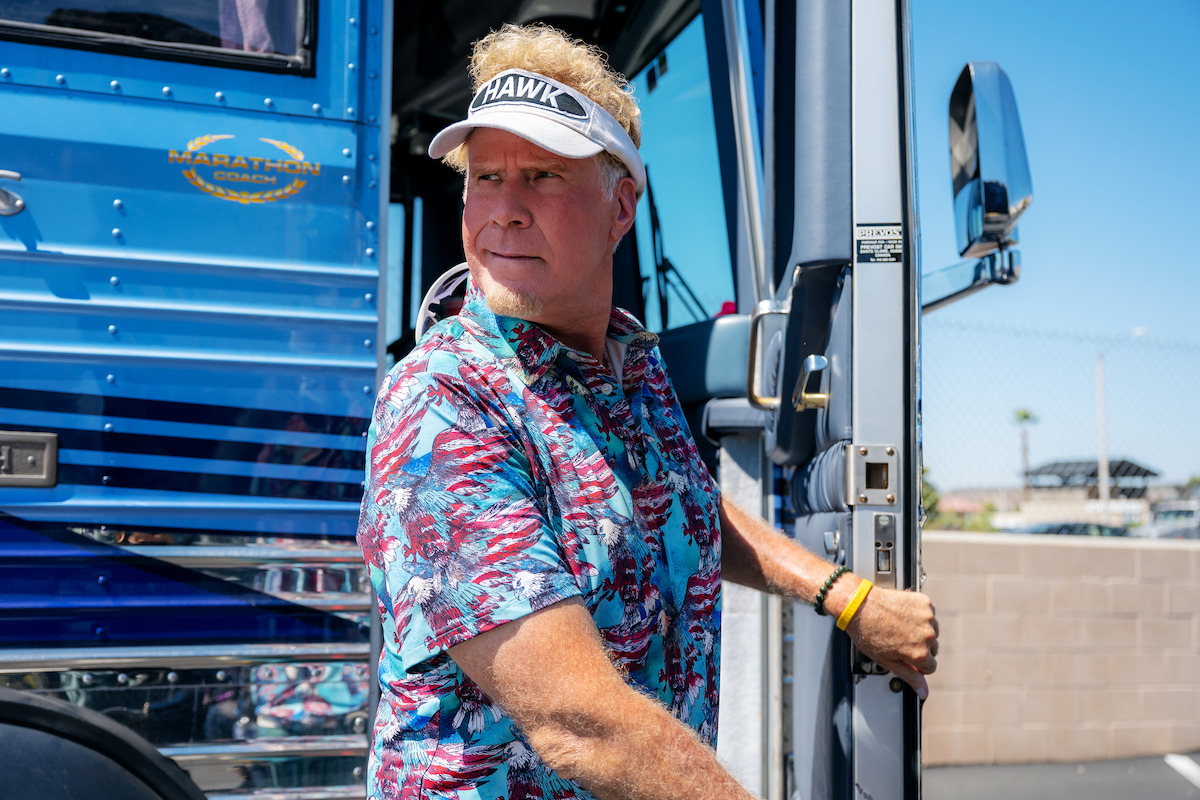
The Hawk is created by Ferrell alongside his frequent collaborators Harper Steele and Chris Henchy. Also serving as producers are Jessica Elbaum and Alix Taylor from Gloria Sanchez Productions, and Rian Johnson and Ram Bergman from T-Street. The series follows Lonnie ‘The Hawk’ Hawkins, who was formerly one of the number-one golfers on the planet. However, in the twilight of his career, Hawkins has one regret: he never won the Grand Slam, and it weighs heavy on his mind. He came close once, losing out to Golden Fisk (Luke Wilson). Now, years later, the itch for success has never gone away. He remains as competitive as ever, especially with his son Lance Hawkins (Jimmy Tatro) threatening to overshadow his golfing legacy.
Fuelled by jealousy, competitiveness, and an insatiable need to never give up, Lonnie takes it upon himself to chase the PGA tour once more, setting his sights on the elusive Grand Slam win — even if it means ostracising the ones closest to him.
Picture Credit: Netflix
It sets up a clichéd fish-out-of-water story, but the writing and acting are just about strong enough to make it work. It takes a proven formula and sticks with it: Ferrell doesn’t stray far from the characters he’s best at — whether that’s Ron Burgundy, Cam Brady, and so on. In fact, he doubles down on it, and for those who can’t get enough even after decades, The Hawk is a triumph and a culmination of all Ferrell has learned in the art of eccentricity, absurdity, and narcissism. We’re watching a master at work.
Like pretty much all of Ferrell’s other characters, Lonnie is ostentatious, obnoxious, and over-the-top arrogant and narcissistic. There is a sense of pity — this is a man who craves attention, and his insecurities manifest in social stunts and an all-consuming need to be liked and respected. He’ll stop at nothing to be admired, even if it means betraying his loved ones. In his mind, there’s only one way to vindicate himself: winning at golf.
Picture Credit: Netflix
The TV format should allow Ferrell to delve deeper into developing a character than ever before, and playing Lonnie ‘The Hawk’ Hawkins gives him — at least from the outset — enough scope to broaden his horizons slightly more than usual. That said, over the course of 10 episodes, I expected to see a broader emotional journey for Lonnie himself; the story was well-positioned for further emotional arcs, from his son and ex-wife, to his newfound caddy, and his rise from obscurity. The closest the show comes is Lonnie’s relationship with his son Lance, but it never gets too sentimental before making either the butt of a joke.
It could’ve offered a sentimental arc in the same vein as Apple TV+’s hit sports-comedy Ted Lasso, where Jason Sudeikis takes viewers on a genuinely heartfelt and touching journey. The Hawk doesn’t end with the same rewarding payoff, but it will have you laughing, which, of course, is the winning job of a comedy.
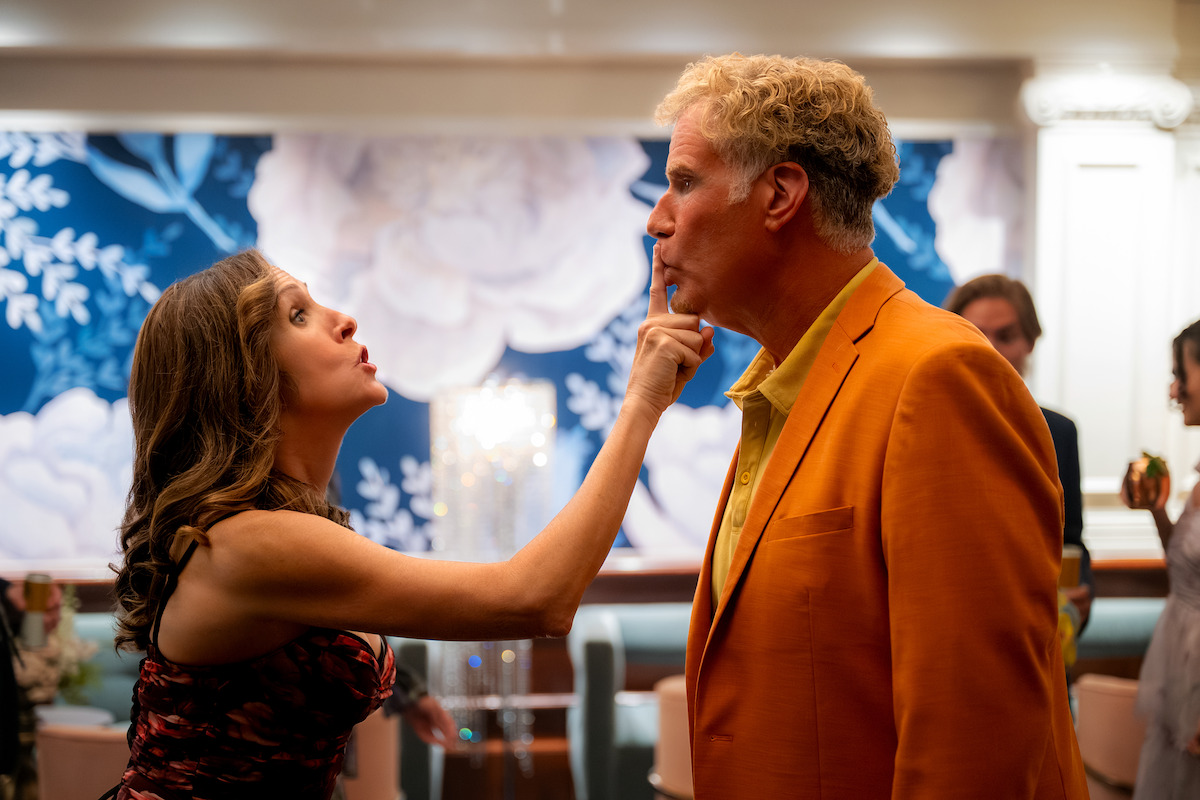
Besides Ferrell, the serialised format gives extra voice to the supporting cast, which is where it shines the most. It’s easy to be impressed by Molly Shannon as Lonnie’s ex-wife turned tea businesswoman, Stacy, who’s outspoken, high-tempered, and unequivocally pushed into the world of golfing through both her ex-husband and son. Of course, Shannon has worked with Ferrell for decades, dating back to Saturday Night Live in the 1990s. Their chemistry was never going to be an issue.
Picture Credit: Netflix
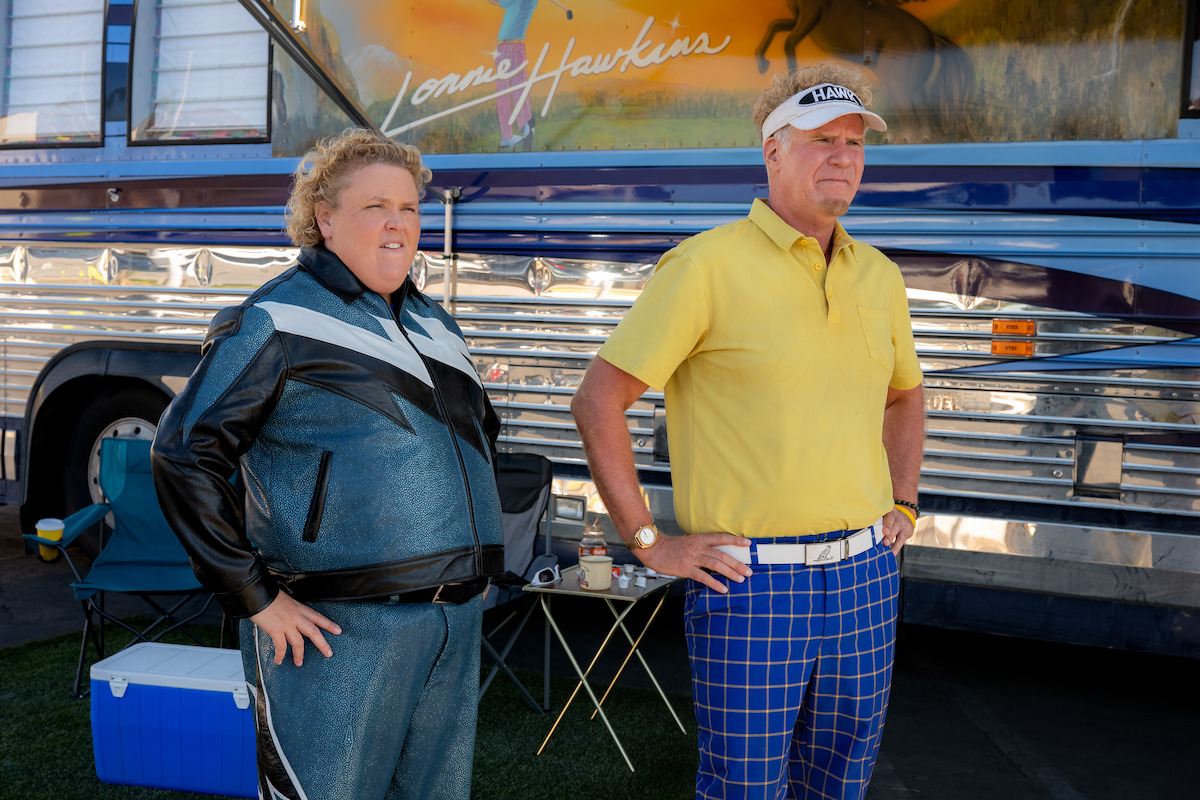
Perhaps the biggest triumphs to come out of the series are Jimmy Tatro’s Lance and Fortune Feimster’s Sam. Tatro brilliantly plays Lance, the overlooked son of Lonnie, vying to play his way out of his father’s shadow, but the pressure he faces lends itself to rebellion and substance abuse. Meanwhile, Feimster is a joy as Sam, a lady Lonnie finds in a Walmart parking lot and hires to become his golf caddy (a glorified assistant).
At 10 episodes, each one is clocking in at around 30 minutes. The series moves forward at a quick pace. The creative decision to chop up episodes into 30-minute instalments feels like a slight misfire; a few of them would feel better-paced being bundled together. There are some minor detours, such as a trip to Vegas, but nothing that constitutes a total filler story.
Ferrell’s films usually hinge on his central character, but The Hawk manages to develop its supporting cast more effectively than we’ve seen in the time constraints of his movies. Most significantly, Lance Hawkins’ journey of confidence, self-doubt, and fight is undoubtedly the most engaging aspect of the series. He’s the most grounded and self-aware character in the show.
Naturally, the comedy isn’t subtle. It favours absurdity, surrealism, physical comedy, and comedy by repetition. Additionally, it could’ve been easy for the show to get lost in myriad golfing jargon, but it keeps the sport completely accessible (with a few puns and nuanced jokes for golf fans). I went into it with little knowledge of golf, and I was never lost.
Verdict
The Hawk easily achieves the minimum requirement for any comedy-drama: it’s really funny. It’s a step above your typical background, time-waster comedy, but a far stretch from a prestige comedy-drama.
This series is not a hole-in-one, nor a birdie. It falls right on par with most of Ferrell’s other movies, undeniably fun and hilarious, but totally forgettable. At this point, his signature style is stretched a little thin, and this series proves that.