Survival of the Thickest is more than a love letter to NYC. It’s an accurate, vibrant portrait of the city. Over the course of three seasons, the series, which was co-created by star Michelle Buteau and writer-producer Danielle Sanchez-Witzel, puts an array of characters and neighborhoods under the spotlight.
But creating a show that feels so lived-in requires a crew that deeply understands the assignment. We spoke with numerous below-the-line talent who made the magic happen—costume designer Keia Bounds, cinematographer Dagmar Weaver-Madsen, and production designer Lisa Myers—to unpack the visual storytelling of the series. Alongside insights from producer Willy Friedman, they break down how deliberate fashion choices, grounded lighting, and intentional set design worked in perfect harmony to capture Mavis’s emotional journey and champion the real New York.
Here’s our comprehensive breakdown on the making of A24 and Netflix’s Survival of the Thickest:


Wardrobe with a Voice: Styling Mavis’s Evolution
As the costume designer Keia Bounds (Okja, Remember Me, She’s Funny That Way) put it, the final season was about “leveling up” and giving “costumes a voice.” Mavis’s character arc spoke to Bounds from the beginning; she had worked as a stylist in NYC in the early 2000s. Since then, she’s been the costume designer for shows such as BMF and Rap Sh!t.
Bounds always wants her costumes to tell the full story. “Mavis’s wardrobe was always about reflecting where she was emotionally rather than simply making her look fashionable,” Bounds said. “Early on, her clothes often leaned toward what felt familiar and safe, but as she grew more confident, I wanted her style to become more intentional and expressive.”
Look no further than the green and blue look Mavis wears for her Essence interview. “It’s not a color pairing people typically expect, which is exactly why it felt right,” Bounds added. “As Mavis became more secure in who she was, she was no longer dressing to meet expectations—she was dressing to express herself. Those richer colors, stronger contrasts, and more fashion-forward combinations mirrored her willingness to take risks and own her individuality.”
Bounds—who’s from Philadelphia but lives and works in NYC—is always ready to dig deeper into characters or through a thrift shop. Given the series is set in the world of New York fashion, the world of colors, shapes, and patterns the costume designer presented was seemingly endless. There was an Afropunk event, Paris Fashion Week, and Mavis’s very own show and wedding, all calling for a variety of styles.
To keep the costumes authentic and true to Mavis, Bounds took the same approach as the character by supporting Black-owned businesses, including Telfar, Fe Noel, Fenty, Brother Vellies, Dungeon Forward, and Haus of Swag, along with size-inclusive brands such as Bacaal, Good American, and Ulla Popken.
[Side note: When Mavis graced sidewalks, cinematographer Dagmar Weaver-Madsen wanted the sun highlighting the beauty of her shape, her costumes, their colors and patterns.]
Character, not style, drove Bounds’s creativity. Marley (Tasha Smith), for example, saw her impeccable attire as “armor.” “Marley’s wardrobe complements that by feeling more polished and grounded,” Bounds explained. “She has a strong sense of self from the beginning, so her clothes communicate confidence through consistency rather than transformation. Her look provides a visual balance to Mavis’s evolution.”
The artist Khalil (Tone Bell) is on a journey of self-reflection, therapy, and discovering himself through his work. Hence, layers. “Khalil’s wardrobe is understated but intentional,” Bounds said. “I wanted him to feel authentic and effortless, allowing his personality to come through without his clothing competing for attention. His palette and textures often anchor the group, creating a subtle harmony between all three characters.”

Cr. Courtesy of Netflix © 2025
A key note in that harmony: the costumes reinforcing their relationships and the energy they bring to one another. “Although I approached Mavis, Marley, and Khalil as individuals first, I also wanted them to feel visually connected because they represent different parts of each other’s lives,” Bounds added. “Their wardrobes weren’t designed to match—they were designed to be in conversation with one another.”
It’s the type of storytelling applauded by producer Willy Friedman, who noted Bounds’s tireless work. “On a show about a stylist and plus-sized fashion, she managed to make every outfit sing and feel unique,” Friedman said. “Pleasing a bunch of fashionable female EPs, and the actors, and staying on budget, and having everything look great—it’s quite a feat.”
When it comes to saying goodbye to Mavis, Bounds left the character in a good place—fitting for a show with serious heart. “By the end of the series, Mavis’s wardrobe wasn’t about perfection or following trends,” Bounds concluded. “It reflected a woman who understood herself, embraced her voice, and had the confidence to wear pieces because they made her feel powerful. That journey was just as important to me as any dialogue she spoke, because costumes can communicate growth before a character ever says a word.”
Framing Empathy: Capturing the City’s Textured Beauty
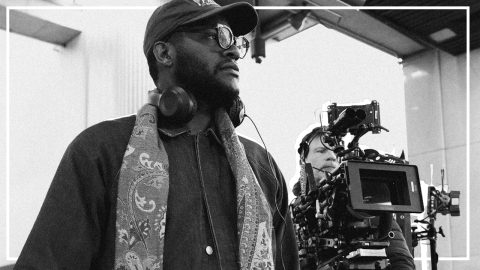
Cinematographer Dagmar Weaver-Madsen (A League of Their Own, Only Murders in the Building) was with the series from the beginning and goes back even further with Friedman; they worked on High Maintenance together. Weaver-Madsen shot almost every episode of Survival of the Thickest—which tapped into her natural interests as a visual storyteller.
“I’m interested in empathy and intimacy,” the cinematographer said. “You want to make work that inspires people to have empathy for others.”
To achieve that level of humanity, the world needed to feel textured, which she captured with the Sony Venice and Zeiss Master Primes. “I felt they were appropriate for this show as we talked about clothing and fashion being so central in the story—sometimes you can ‘feel’ the sweaters and various items of clothing because of the way the lenses render the details and their sharpness. Texture is important in fashion and also in capturing New York in all its complex, grimy beauty, and the Master Primes were wonderful for capturing all of that texture.”

Cr. Greg Endries/ Netflix © 2025
A perfect example is Khalil’s apartment. Blue light washes over his space, inspired by ’80s and ’90s warehouse apartments inhabited by NYC artists. It’s melancholic—just right for Khalil.
“We joke that she’s an emotional sponge—she picks up whatever is happening around her in the most intuitive way,” Friedman said. “The way she created angled sunlight, streaming through the windows of our stage sets, is something I’ve never seen before. Mavis’s apartment looked like a real New York City apartment, with shadows, sunlight, depth, and texture.”
The apartment was the main setting for a defining episode of the series, titled “Good Grief, Bitch.” In the episode, Mavis suffers a miscarriage. To tell that story, Buteau stepped behind the camera and directed her first episode of Survival of the Thickest.
“With the bottle episode,” Weaver-Madsen said, “Michelle and I were focused mainly on Mavis’s emotional journey so that the audience could empathize and experience it with her as much as possible. In designing the lighting and shots for the scenes, we looked more to the tone of each scene and also thought of the need to illustrate the passage of time since the episode all takes place in one location. When her friends appear, they bring a breath of fresh air and light into her world. When she’s going through some of the tough moments alone, the lighting is a little more subdued and there is some cyan in the shadows.”
Weaver-Madsen was fulfilled telling stories, including “Good Grief, Bitch,” with candor that she could always deepen through lighting. “Letting sad moments happen in plain day feels more real and grounded,” she added. “This experience happens to many people and its normalcy is part of its tragedy, so we wanted to reflect that in the lighting and shooting.”
Designing Safe Spaces: A New York for Everyone
“I love New York,” production designer Lisa Myers (Bros, The Life List, Lost Girls) said. “I love to showcase my city.” She’s portrayed the city before, having worked on Bros, The Last O.G., and Awkwafina Is Nora from Queens. “There’s no other place like it in the world,” Myers added. “Especially as a queer woman of color, I’ve found so many opportunities here, in terms of connecting with communities and the type of work that I get to do. I’ve been living and working here for 20 years, and every show I do here, I get to see things I’ve never seen before.”
For season three, the city expands with Mavis’s dreams. “We shot on the Circle Line to do Mavis’s wedding,” Myers said. “We got to see the Statue of Liberty and be out on a boat, which was so unique. When she’s at the Essence magazine release party, we shot at a really beautiful space that’s at the top of the old Domino Sugar Factory. You got this panoramic view of Manhattan from Williamsburg.”

Cr. Jocelyn Prescod/Netflix © 2025
While exploring more of the five boroughs, Myers also delved deeper into Mavis’s home life. “Through the three seasons, we see her really start to take it over and put her stamp on it,” Myers said. “We changed the wall colors to some beautiful teals and mauves. We also leaned into showcasing a lot of Black artists. A lot of the artwork you see on the wall is legit artwork that we reached out to artists and had conversations with about including. You get to have these layers that people might not pick up on at first.”
If there’s one location everyone involved in production relished, it’s CC Bloom’s. The drag club was a dream space not only for Mavis and her friends, but also for Weaver-Madsen and Myers. Whether it was the chili pepper lighting or deciding how best to illuminate the actors, both of them knew they wanted to create a safe and inviting set within Survival of the Thickest.
“We knew right from the start that [iconic drag queen] Peppermint was going to be in the show,” Myers said. “We created not only a visually stunning place for her bar and be this hub for Mavis and Khalil, but also, I wanted to represent the community. I wanted it vibrant and full of life. I wanted there to be clear messaging. This season we have a very clear ‘protect the dolls’ sign.”
Behind the scenes, the community was represented, too. “I was looking around and saw so many people of color and so many queer people,” Myers said. “I was like, ‘Wow, am I ever gonna get to do this again? Am I ever gonna get to work with this group, where the diverse people are not the diverse people? We’re the majority here.’ The way that opportunities get handed out has historically been not for women, not for people of color, and not for queer people… To bring those new voices in, I think that’s what made the shows so rich.”

Survival of The Thickest Season 3. Michelle Buteau as Mavis Beaumont in Episode #307 of Survival of The Thickest Season 3. Cr. Vanessa Clifton/ Netflix © 2025
Producing with Purpose: Leading with Vulnerability
Willy Friedman (High Maintenance, Search Party, Flatbush Misdemeanors) couldn’t be prouder of this crew or Buteau, whom he credits with leading not only a diverse but creatively open space in which all ideas are welcomed. “It all comes down from Michelle,” he says. “Some [on other projects] will say that’s how they want to make a show, but that’s how she did it.”
How they did it was often nothing short of miraculous. Friedman produced season one during the pandemic. Once restrictions opened up, though, that meant not only more scope for the series—but more local businesses to support. While crew members still struggle post-COVID and strikes, Survival of the Thickest supported local artists as well as businesses.
For the producer, it’s a part of what makes the series a feel-good story. 130 days of production for the series had over 525 cast and crew members working, plus 2,900 extras and daily hires. All in all, 900 New York-based local vendors partnered with the series.
Survival of the Thickest – Filming Locations Tour
Guided tours of 10 filming locations across Manhattan and Brooklyn, plus the iconic NYC landmarks seen on screen.
- 1
-
2
Circle Line – Pier 81 83 North River Piers (W 43rd St & 12th Ave), New York, NY 10036 Hell's Kitchen Directions
- 3
-
★
Netflix Studios Brooklyn Main filming location 333 Johnson Ave (@ Morgan Ave), Brooklyn, NY 11206 Bushwick Directions
-
2
Drink Lounge & Café 768 Franklin Ave (St John's Pl & Lincoln Pl), Brooklyn, NY 11238 Crown Heights Directions
- 3
- 4
- 5
- 6
-
7
Richard Beavers Gallery 408 Marcus Garvey Boulevard (Halsey St & Macon St), Brooklyn, NY 11216 Bedford-Stuyvesant Directions
- 1
- 2
- 3
- 4
-
5
Stonewall Inn On-screen backdrop — 53 Christopher St, Greenwich Village Greenwich Village Directions
- 6
-
7
The Circle Line Sightseeing boat cruise — filming location for Mavis’s wedding · Pier 81 Hell's Kitchen Directions
- 8
-
9
The Old Domino Sugar Factory Williamsburg shooting location for the Essence magazine release party Williamsburg Directions
-
10
CC Bloom’s Key set — drag club hub for Mavis and her friends (fictional venue; filmed on production stages) Bushwick Directions
- Alias Costume Rental
- Cooper Film Cars
- Gotham Sound
- Independent Studio Services Props
- Moving Pictures Transportation
- Sourcemaker
- Henry’s International Cuisine
- Technological Cinevideo Services (TCS)
- Go Green Generators Corps
From beginning to end, Friedman admired how much Buteau gave of herself to the project. “One thing that stands out from the episode she directed,” Friedman recalled, “was the tracking shot of Mavis in her apartment, on different days, in different rooms, which we stitched together: it was a great example of an idea on the page sparking something, Dagmar pitching ideas, Lisa figuring out how to create the exterior of the set build so we could achieve the shot, and Michelle focusing on what she wanted, refining it. Ultimately, it was beautifully executed and incredibly narratively efficient.”
On the set, Friedman saw the same qualities fans embraced in the series itself: depth, humanity, and—a hallmark of Buteau’s work—a fearlessness at sharing all of herself. Survival of the Thickest always championed thoughtful self-expression, on- and off-screen.
“I will never forget watching Michelle perform and direct herself having a miscarriage, which is based on her own personal experience,” Friedman shared. “Her performance was so deeply affecting—just watching one take I was completely floored and emotionally drained. And to think she had to do this in front of her co-workers, and then get up, and direct the rest of the day, and act, and be the same kind human and bold leader that she was every day.”
Survival of the Thickest seasons 1-3 are now streaming on Netflix.