Picture Credits: Netflix / BBC
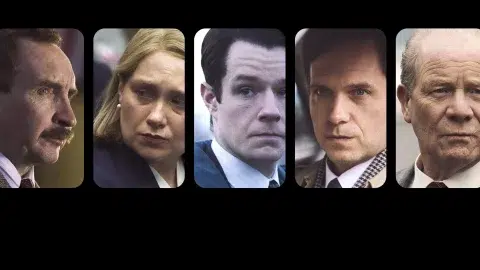
In making The Bombing of Pan Am 103, Scottish-born director Michael Keillor was tasked with portraying one of the most devastating aviation terrorist attacks in history. How did he manage it? We recently had the chance to interview him about his work on the series, which is now streaming on Netflix.
Netflix’s latest drama, The Bombing of Pan Am 103, deals with one of the heaviest and most devastating acts of terrorism ever: the Lockerbie bombing. The attack dates back to December 1988, when 243 passengers and 16 crew members boarded Pan Am Flight 103 at London Heathrow Airport — and none of them returned home.
The aircraft was bombed to the ground over the quaint Scottish town of Lockerbie. Everyone on board died, and 11 Scottish locals were killed in the fallout as the wreckage caused an inferno, destroying a neighborhood. Known as the ‘Lockerbie air disaster’, it remains the deadliest terrorist attack ever on UK soil, and the deadliest act of aviation terrorism ever prior to September 11.
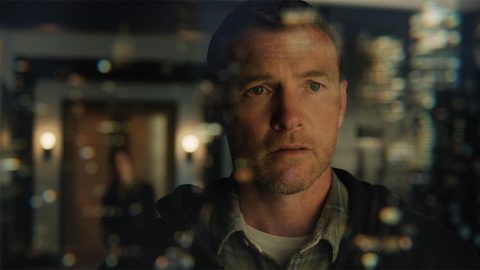
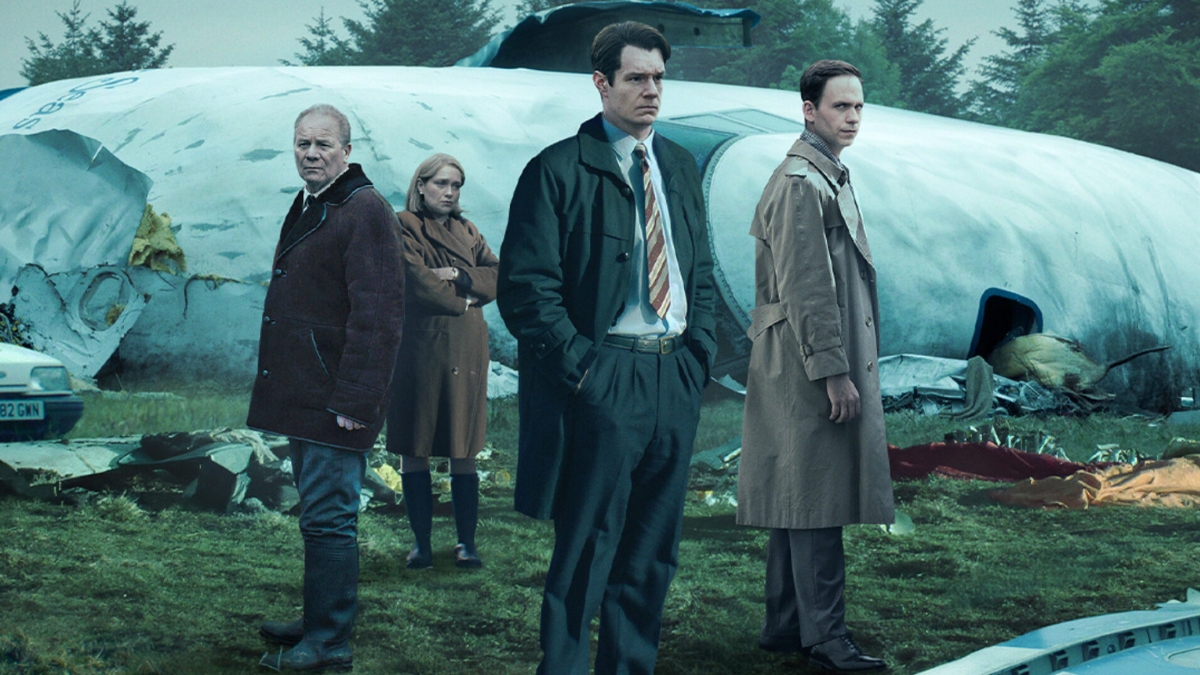
6-part drama The Bombing of Pan Am 103 aired at the BBC in 2025, and the series has now found a permanent home at Netflix. Over the course of the series, we see a terrifying reenactment of the bombing and the devastating fallout, before the show then focuses on the immense, international investigation that followed.
What goes into showing such a devastating attack? How did director Michael Keillor work to make it both authentic and respectful? We recently sat down with Keillor to discuss his work directing the series.
Going back to the early development of the series, as a Scottish director, how did it feel to be given the responsibility to work on this story?
It is a big responsibility. It’s the biggest story to happen in Scotland in the last 40 years. I was about 15 when it happened, so I remember it really well. Obviously, when you’re that age, you don’t realize how big it is at the time. But over time, it comes back to you. I talked to World Productions, the company that made it, about making a big Scottish show. Obviously, being Scottish, you want to tell Scottish stories. They came back to me with Lockerbie and said, ‘We think we can make it.’ It was quite easy to say yes.
There’s a massive responsibility, mainly because there are living families, all the victims, their children and grandchildren, and they’re very active. All the police and the FBI who were involved, most of them are still alive. There are a lot of people to engage with. That was a huge responsibility.
Picture Credits: Netflix / BBC
How early in the process did you, the writers, and producers begin consulting with the families of the victims and the eyewitnesses in Lockerbie? How did those conversations directly shape how you directed the actors on set?
The conversations began before I joined. Anna Griffin, one of the producers, had been working on it for about six years. She had the contacts with the people in Lockerbie, the police in Scotland, and the FBI. I came on about a year before principal photography, so I spent about six months working on the scripts and meeting people as part of that process. As soon as you meet the real people and you go to shoot something, in the back of your head is, that person’s representing someone who’s out there or someone who’s known, which I hadn’t really done before. Sometimes we’d have the actual family on set beside us and we represented their son on screen.
So that carries a hell of a weight. At the same time, you’re trying to make a dramatic story and you’re trying to direct actors and you’re trying to get the best out of actors. So it’s a little bit of a balancing act. But thankfully, all the families that we spoke to came back incredibly positive about our representation of the event.
You mentioned that you were 15 when it happened. What were your initial, personal reactions to the case back then, and how did your understanding or opinion of it evolve as you dove into making this incredibly comprehensive dramatization?
When you’re that age, you really think about yourself and what’s happening in your little world. So the fact that it was happening on the other side of Scotland, and this was a time when there was quite a lot of big disasters happening, I wasn’t so engaged with it. I knew it was a terrible thing going on, but I had my own world going on.
It was more over the next ten years, as the case developed and went on, I became more and more interested in it as a story. I think when 9/11 happened, it really threw back to this was the first time there had been a massive terrorist event which had killed Westerners, non-military personnel on Western soil. So that was quite a big thing to take in.
During the research, we were going back to 1988: the clothes they’re wearing, the TV shows, the music, everything, was incredibly front of mind. And even the actors who were often my parents’ age, it was very easy to say, this is how they should act, this is how they should be, these are the cars, this is the drive, the world. So that did give me quite a lot of help to reflect back on my childhood.
When you show the destruction of the explosion in the opening episode, how did you approach it creatively?
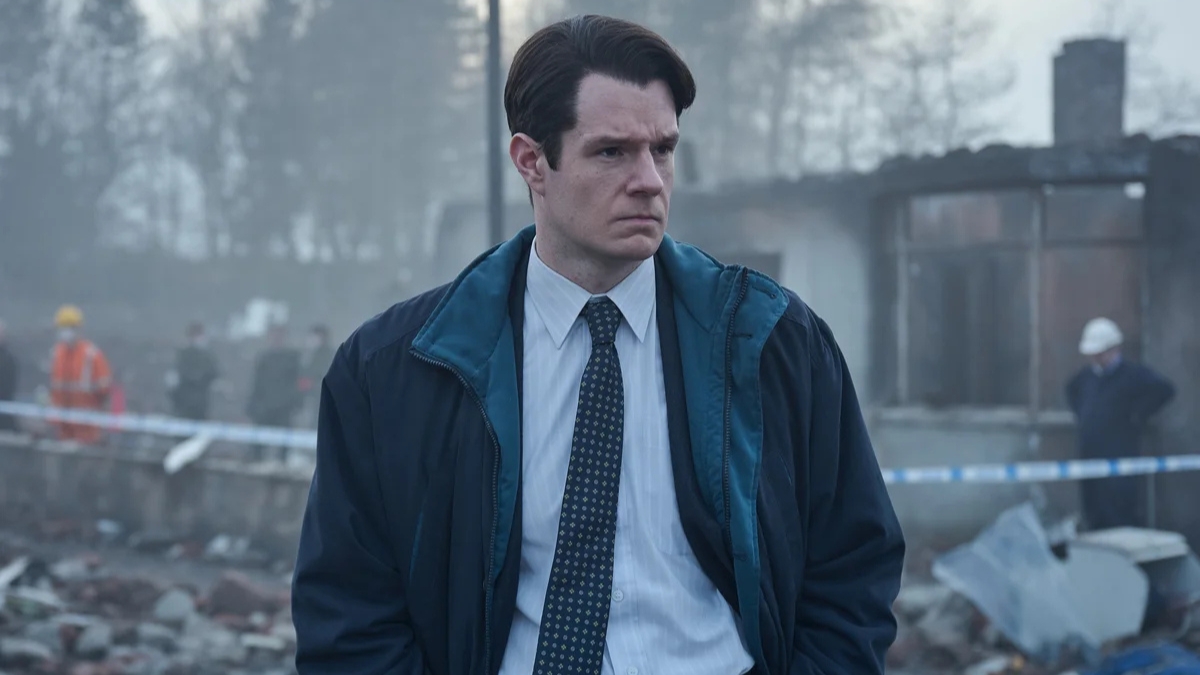
The real event was the plane landing on this one street, the very last street in Lockerbie. And that was part of the reason why this story hasn’t been told for a long time. It’s so big, it’s so expensive to do, and no one is finding a way to do it. We basically built a street on a disused shopping centre, away from public and press eyes, and then destroyed that street, and then that’s what we shot on. And when we shot the show, there was no lights at all, it was only the fire that we created to light it. So the fire was all controlled, it would go on and come off.
But when the fire went off in between takes, it was completely pitch black. We all had head torches on to find our way around, because we couldn’t see where we were going. There’s quite a lot of footage of the real street on that evening, and I wanted to capture a real sense of the horror that was involved with that; the smoke, the bad weather, the fact that there were people around as well. So hopefully we did that in the show.
Picture Credits: Netflix / BBC
Since you’re dealing with an explosion that physically tore a plane apart and devastated a town, how did you choose what to keep off-camera?
That’s a good question actually, because definitely as the story went on and I spoke to more and more people, even when I spoke to journalists after we finished filming, I think the horror on the ground was much, much worse than any of us ever realised, and even when we spoke to people at Lockerbie, you only got a sense of how bad it really was. I think because again, this is not a thing that happened 100 years ago, it happened 35 years ago, so we wanted to be respectful. So we didn’t feel the need to show in great detail the horror that was going on, because we realised that if you showed the possessions, the store of luggage and things like that, you get a sense of the people that were lost anyway.
That was something I was very keen on; I didn’t need to see bits of bodies. We see a little bit of one chap who we contacted the family and we made sure they were happy to see him on screen and depicted that, but we were very careful.
On a practical level, what were the biggest challenges of filming a sequence like that?
Well, the biggest physical challenge was shooting in Scotland. We shot it in March, so we had to get the most night time. It was before the clocks changed. It was terrible weather, really cold and wet and damp, and we could only shoot really between 7 and 1 in the morning, so it’s quite a short window each night. We prep for 4 hours a day and then we shoot for the other 6 hours that were left, so you’re quite compressed into shooting, and because it was such a big area and we couldn’t see anyone, we ended up having multiple cameras placed all over the place, and trying to work out the action.
I had 4 monitors up on my quad machine, and yeah, it was a little bit of a bumfuck of shooting, but I think it kind of added to the energy of the piece as well. On the night no one really knew what was happening, they thought it was a petrol station. You’ve got to remember, going back that time, no one had any concept that a passenger plane would just land in a small town in Scotland, so it really shook people up. We had a sense of the difficulties they faced with bad weather and cold and you know, a difficult working environment.
You chose the Scottish band Mogwai to score the series. Talk me through that choice? And how did their atmospheric music help you capture the immense weight to the series?
I was really thinking hard about what kind of music to use and who’s going to be the right composer for it. I’d always thought Mogwai would be great for a certain kind of film or TV show, I approached them and asked them if they’d be up for it. They’re very slightly younger than me, and they remembered it as well, it was much closer to when they were in Glasgow, and they pitched in with an idea of being incredibly atmospheric, but also thoughtful and melodic, which is kind of their modus operandi, melodic tunes, really sensitive heartfelt tunes, but also with a technical feel as well, which goes back to the 80s, so they actually worked without any picture at all to start with.
They were slightly ahead of us with their schedule, so we would just send them notes and they would make music, and then send me over clips of music. We would start to put them into the edit and see what was working, and they just created a huge palette of tunes and bits of music and soundscapes. We patched it all together over the six episodes. Having Mogwai was a huge lifelong thing for me. I’m a massive fan of them, back to when they started 30 years ago, so that was a great moment.
What’s next for you?
Right now, I’m developing a few different projects. Trying to match Pan Am is difficult because of that emotional journey you go on, so it’s just trying to work out whether we end up back in that emotional space again with a real-life tale, or we take something that’s more fictional to grab the audience.
Would you like to go back to real-life tales?
They take a certain sensitivity, which can be a challenge on top of the filmmaking at the same time. What you need is just the right team, and the right actors to make something cinematic and at the same time, telling a truthful story. Hopefully, that’s what we did with Pan Am.
My thing was to not make it homework. It should be a cinematic journey and a story for people who don’t remember.
The Bombing of Pan Am 103 isn’t the only of his projects now streaming on Netflix. He also directed British drama Best Interests (2023), created by Adolescence writer Jack Thorne and starring Niamh Moriarty and Michael Sheen, which is now streaming on Netflix UK.
The Bombing of Pan Am 103 is streaming on Netflix globally from July 30th.