Picture Credits: Netflix / Shawn Peters
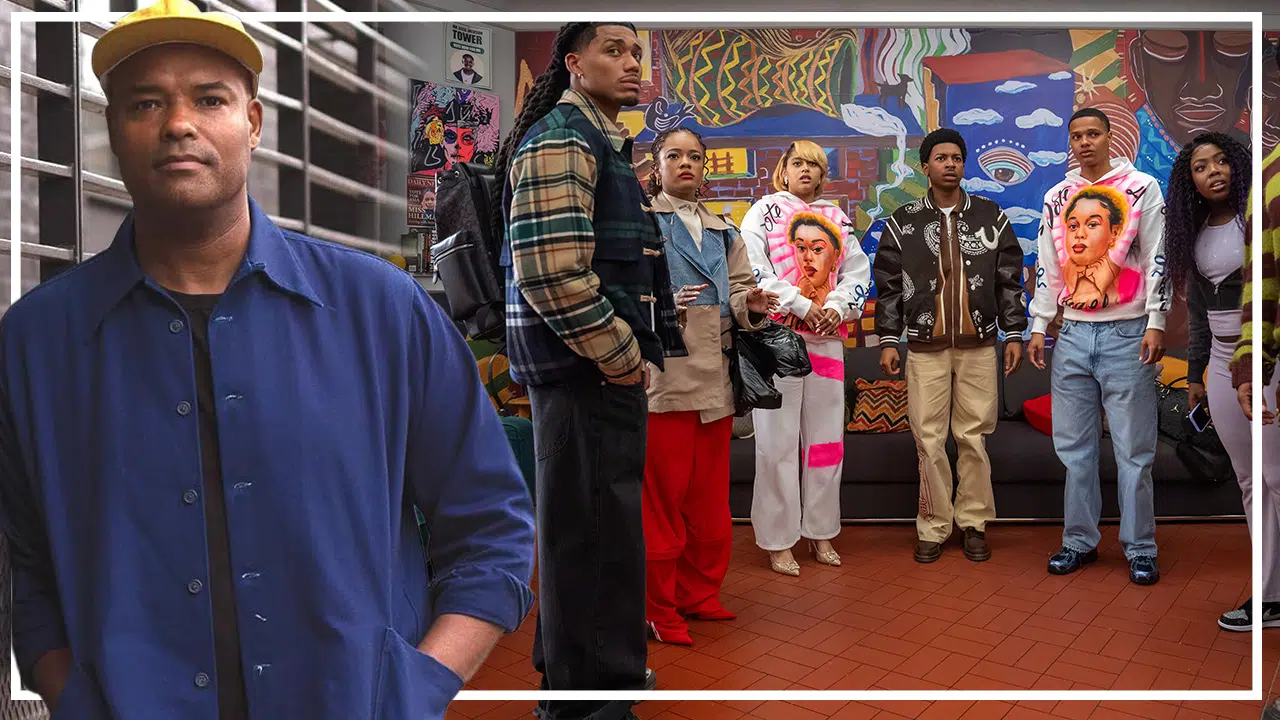
If a university needs a guest speaker – or a professor, for that matter – for a class on cinematography, they should call Shawn Peters. As a cinematographer and still photographer, Peters is attuned to the power of an image. He knows what he wants it to say and just how to say it.
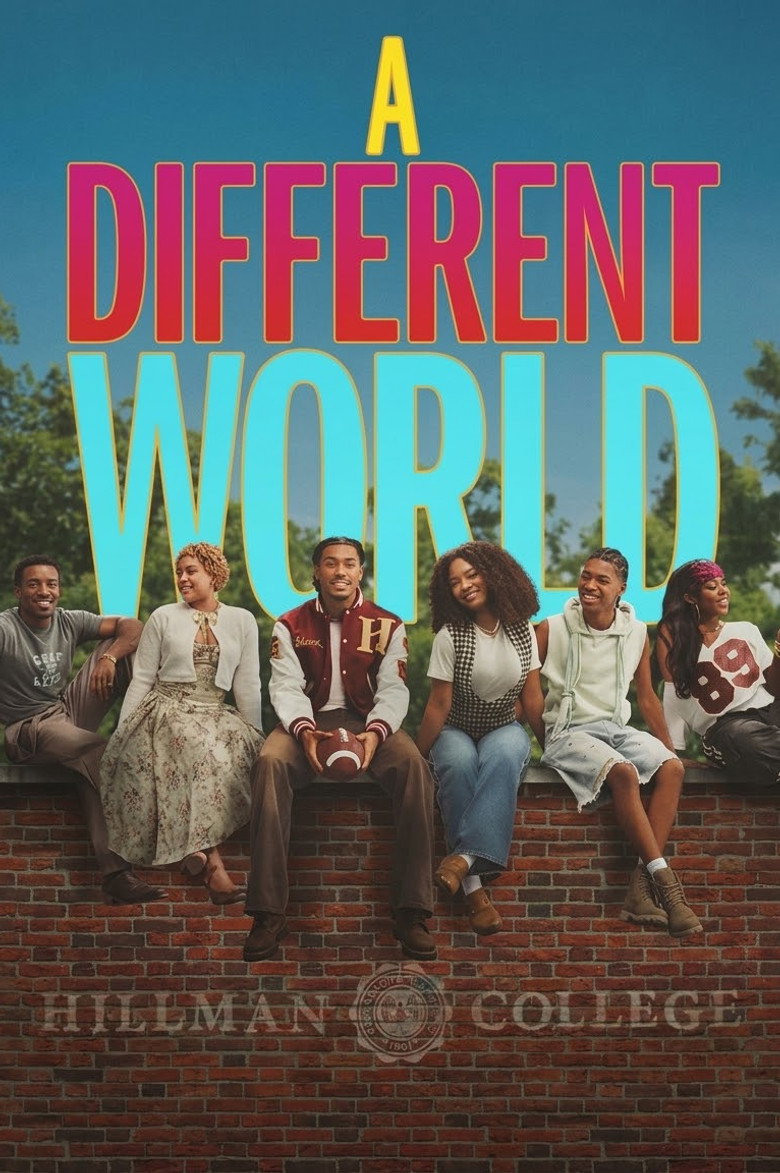
Peters’ eye not only for composition but for people, and how to tell their stories, comes through in A Different World. The reboot is a character-driven college drama, once again set at Hillman College. Peters presents an authentic and charismatic ensemble through his lens.
Recently, he spoke with What’s on Netflix about how he sees characters and the role of a good cinematographer.
You wanted to make A Different World cinematic, so where were some of the creative decisions made to ensure that?
One of our comps was School Daze. We wanted it to feel very naturalistic, very motivated by natural sources. Even though we’re filming a lot on sets that we’re building, we want it to feel like a real world. We really dug into what it would feel like if you were really in these spaces with sunlight. And it’s a single-cam shoot as opposed to a multi-cam sitcom now.
The cinema thing is also a little bit difficult to do in a half-hour because I think a lot of what we shot, the first edits were like 45 minutes to an hour because we were shooting it with longer takes and sometimes one-ers. We were trying to lean into the film style. But then when you’ve got to do a half-hour cut, a lot of times those shots get chopped up, unfortunately.
If A Different World was an hour, you’d really be able to see all of the intentions of the camera and the director. If you were able to get it to take an hour, you’d see all the shots in full, at least close to in full.
Do you miss some of those moments?
Yeah, definitely. It’s a compromise. One of the first interviews I did for this series, the interviewer had said, “When I look at your work, whether it’s still photography or it’s moving photography, it always feels a little like there’s something of your DNA on it.” And I was like, “Probably because I’m not chasing perfection.” I like a human residue. Sometimes I don’t mind if something’s a little out of focus for a second. It doesn’t take away from its energy for me. If the shot is better and there’s a little bit of a buzz, I’m fine with that.
For an emotional scene or maybe just two characters connecting, how do you try to best service the performances and the material?
Well, it really just depends on the connection of the characters. If I feel like the characters aren’t connecting, then I may do two separate shots for a conversation that goes back and forth. If I want to connect the characters more directly, I may do an over with a longer focal length, so over the shoulder of the character, maybe with a 60 or a 75, and bring them together in some ways, maybe a tighter two-shot.
Or it might be a French over, which is more casual. It’s more connected in a different way if you’re sitting on a couch together as opposed to standing up and facing each other. There’s just different ways to do it. I may even play with how much of the person I have in the foreground over the other person in terms of their connection.
It might be their neck that you’re looking through, which gives the person opposite them more height and different gravitas. I might put them on the same exact level, eye to eye on the over, and that’s a different connection in terms of the conversation.
Or if I do the back-and-forth thing, I may do overs and then do one single, and maybe the singles are really high above the eyeline, and that’s maybe more of a judgmental thing.
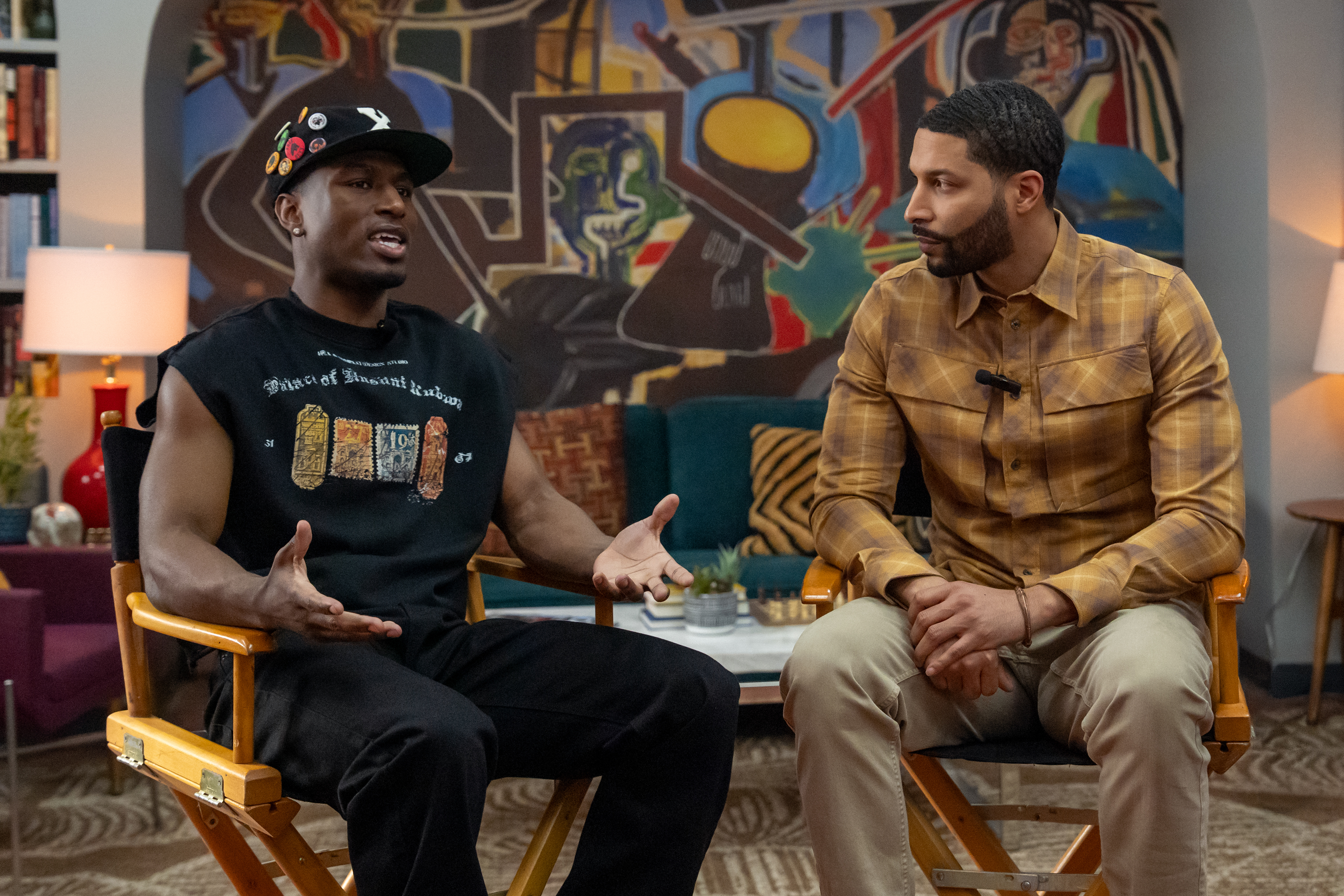
A Different World – Season 1. (L to R) Dasan Frazier as Xavier and Norman Nixon Jr. as Prof. Isaiah Baptiste in Episode 101 of a Different World. Cr. Quantrell Colbert/Netflix © 2026
On a project like A Different World, what are you usually looking for in prep when shot-listing with the director?
So during prep, I’m usually shot-listing with a director on the sets if they’re already built. If I have access to the set, I don’t shot-list in an office, a production office. I’ll shot-list with a director on the set. I’m able to think about the shots spatially, which already means if I’m looking at the shots, if I’m sitting in a set having a conversation with a director, I’m thinking about the shots.
I’m also thinking about what the sources of light are going to be. Sometimes I’ll do a little quick sketch of a lighting diagram after the shot list because I know where the people are going to be. And so, it’s that kind of thing where you have a little bit of forethought.
As fast as a television production is, commercials are way faster. You’ve shot a lot of them, so how does that prep help you fully visualize a series on a tight schedule?
In commercials, you’re working so fast. Most commercials, the day you show up, depending on the time they fly you in, you could be tech scouting that day and you’re seeing the location for the first time in real life. You may have seen iPhone photos from the location scout, but that doesn’t give you any real spatial sense.
You’re literally seeing the location for the first time, and you’ve got to make lighting decisions before the tech scout is over because now you’re communicating with your gaffer and your grip about what order they’re going to make, what lights they’re going to bring to the shoot, which may be not the day after, but two days after you’re shooting.
And so, that trained me. Commercials really trained me to look at a location very quickly and see my sources and see where I’m going to shoot with the director and find angles and think about lighting immediately. It is really helpful for streaming or TV, as you call it. I’m not even sure if it’s TV, streaming – is there a difference?
With your still photography background, how does that maybe influence your portrait shots and how you want to capture an actor’s face?
Thank you for asking that. It does tremendously. I think still photography, obviously, is the foundation of any kind of moving image. You could tell a story in many ways. It could be a play, it could be a novel. There’s many ways to tell the story of human existence and have drama. But once you make it cinema, then you’re introducing a camera, and that’s the main difference between the other types of storytelling.
The camera is the one complete change because in every other thing you have actors — maybe not actors in novels — but you have dialogue, you have all the things that would be in cinema. Once you make it cinema, once you insert the camera, it’s a different medium.
And so knowing, understanding still photography and understanding the camera and the power of the camera and the power of the one shot and how that can be emotional, that definitely informs you of how the shot can be emotional and a series of shots can be emotional.
That practice – and I shoot exclusively on film – also trained me to be super selective. Film is expensive and processing is expensive. And so, I wasn’t out there just willy-nilly. I was grabbing things with intention.
And so, thinking about what the frame is in a portrait, a still portrait, you have time and you meditate on that. What am I trying to say about this person? How do I want to light their face? How much light do I want in their eyes? How much light do I want to extract from their eyes? I only got one shot to do it. And so, that is definitely a huge training ground for a cinematographer, I think.
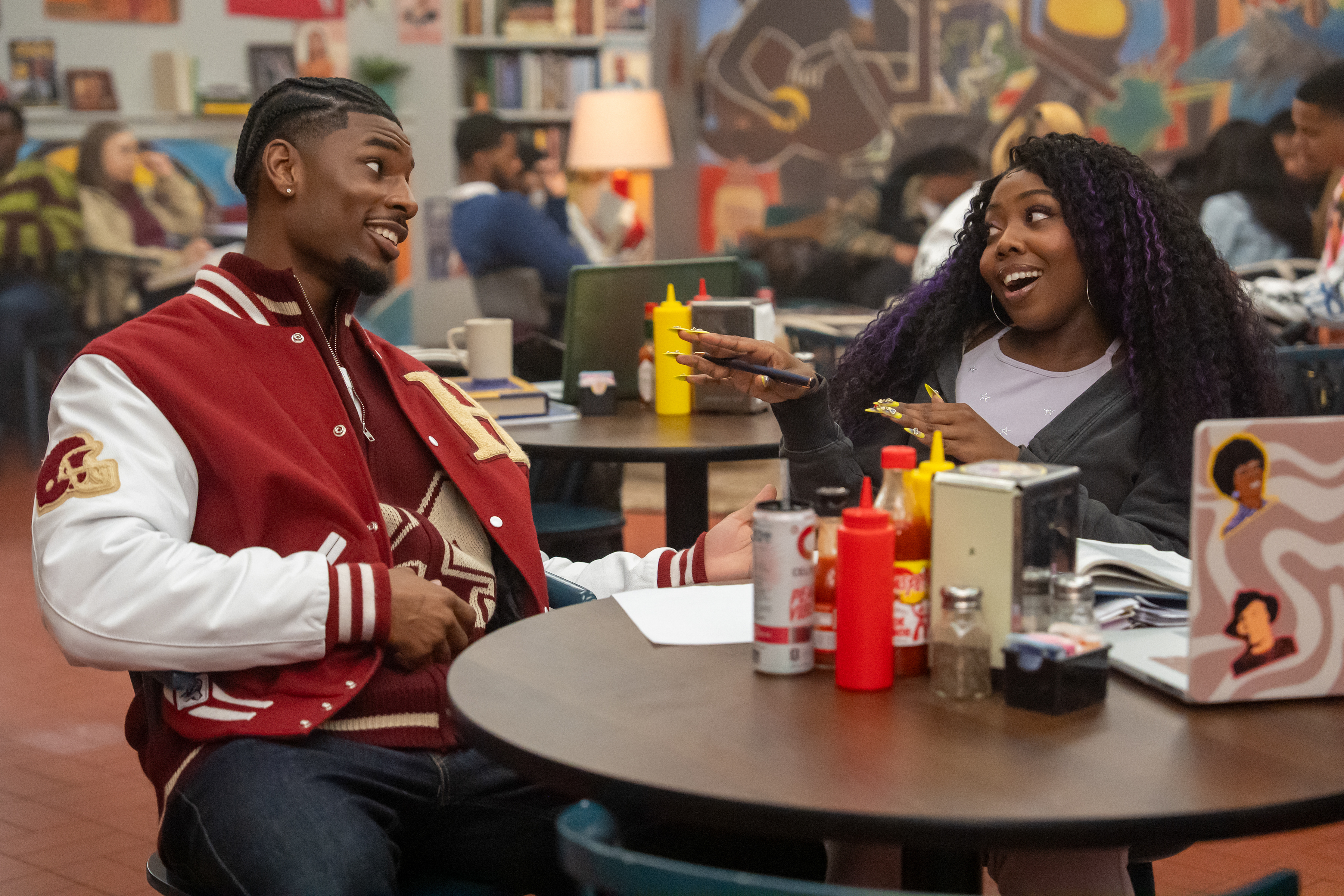
A Different World – Season 1. (L to R) Joshua Suiter as Andre Tilsdale, Alijah Kai as Rashida in Episode 105 of a Different World. Cr. Quantrell Colbert/Netflix © 2026
The eyes, too. Every cinematographer has their own relationship with how to light eyes. What’s yours?
I do it based on the drama. It’s hard to do it because, like I said, if I was in a movie… If you look at something like Birth, Harris Savides shot Birth. I often reference these in a lot of my presentations.
If you look at some of the dialogue scenes in Birth – not just the dialogue – if you look at the Nicole Kidman scene when she’s in the theater and she finally realizes who this little boy is, you see these dots of light in her eyes in the center.
I remember that kind of yellow, intense glow.
It was like, boom, and that gave that intensity of the eyes and realization. There are other times when they put light at the top of someone’s eyes and they look dishonest or duplicitous. There are times when the lines are sharper. There are times when their eyes are soft and the light that’s in the eyes and reflections are very soft and open. That person feels softer and open, and they’re crying or they’re being emotive.
There are times when there’s no light in the eyes and that person feels very sinister or hiding something. So the use of eye light is very crucial because you’re dealing with – you’re not on stage, it’s not a theater piece – so the camera’s up on their faces.
Human beings, we’ve been watching faces and looking at things and looking at body language and those things for our whole lives, since we’re babies. Even if we don’t remember, we’ve been registering that. And so, we know if you’re that close to a person’s face, we’ll recognize the subtlety.
By the way, it’s great to hear you talk about Birth. I love that movie. Even though it’s been reappraised, I still don’t think it gets enough credit.
Cinematographers use it all the time. It’s sort of almost a cliché reference at some point, but it’s a beautiful film around lighting and the eyes and naturalistic lighting. Even though the camera’s profoundly present, especially those shots when he’s running in Central Park, most of the interior scenes, they’re very subtle. The lighting is very naturalistic. It doesn’t get in the way of things.
I think nowadays, unfortunately, with the advent of Instagram and social media, everything’s so photographic because you want to frame-grab now. And it’s like, okay, okay, everything’s photographic, but that wasn’t. In that way it was, but it was subtle. You were entering into a real world. You weren’t looking at someone’s photography in the real world. It’s different.
Cinematographers will usually say that they want the cast to look good, to feel good. The ensemble on A Different World looks beautiful. How do you best support a cast to look as good as they do on the show?
Well, I think that was a concern, only because the subject matter didn’t require the cast not looking good. If it was a movie about a heroin addict and they looked good, I’d be ashamed. Maybe they had a perfect key light or whatever the shape, but in this situation you’re dealing with young actors, primarily women, and they’re coming out to the world for the first time. You want to strike a balance between realism and some graphic beauty for them.
So, I’m really thinking about how to accentuate skin tones. I used a lot of chocolate filters on skin tones, which is very small. I would use a half or a quarter filter. It would just be subtle on brown skin. It would enrich the tone levels, but it wouldn’t do much to the white light around them. You didn’t see a chocolatey white light come in the window, unless it was nighttime and you wanted that. Because even in daytime I would use it, but it would be so subtle that it would really mess with the mids or the skin tones.
I do things like that, just thinking about their faces and getting to know their faces and what works well for them, what sides and what type of lighting works well for their faces. Being really sensitive about that was something that I thought about.
I mean, the actors would come up to me, the actresses specifically would come up to me and be like, “Did I look okay?” Some of them, it’s their first time. Some of them come from the theater. Some of them come from smaller shows. It’s their first time doing a big show, and they’re still young people. They want to make sure they’re okay.
The internet’s brutal, the trolls and the way people – especially the standards of what female beauty has to be – it’s really brutal. There’s a whole thing around Jasmine Guy’s aging. There’s a whole debate. People are talking about her, and it’s terrible, and people have to defend her.
This whole double standard for women around being young forever is really sad. It’s a burden. I try to at least do my best to mitigate some of that if I can without it feeling like a fashion shoot, and ground it in a world that could exist.
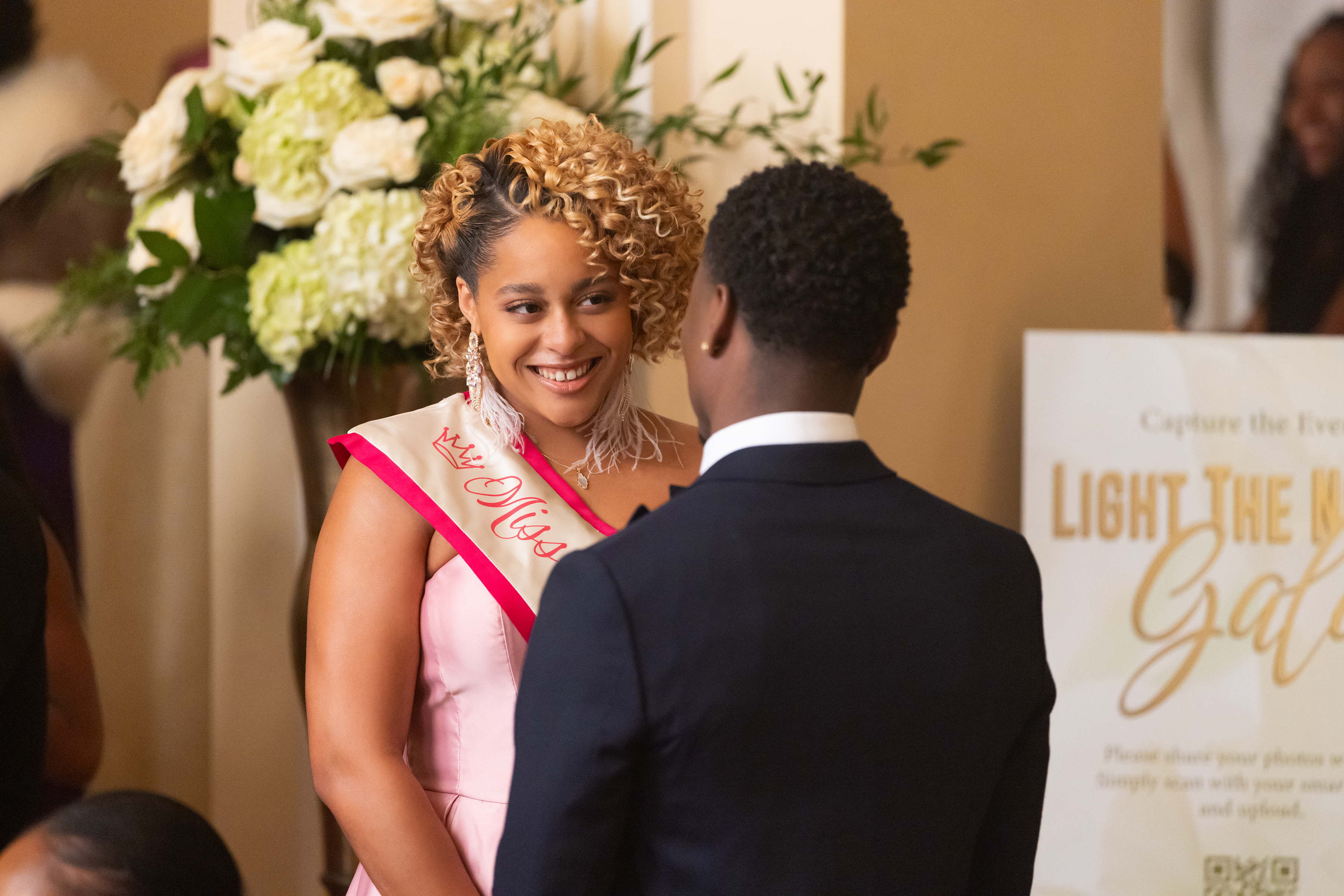
A Different World – Season 1. (L to R) Kennedi Reece as Hazel in Episode 110 of a Different World. Cr. ELI ADE/Netflix © 2026
Usually people think of a cinematographer as being so technical, but the way you just broke it down, so much of it is about sensitivity and understanding people. How important is reading people compared to composition and lighting?
I think it’s 90%. Because I think even the way you treat your crew, even the way you operate as a cinematographer – this is my voice, and this is always my voice – I practice kindness. I demand it from my crew as much as humanly possible. We’re all acculturated in different ways, depending on how old you are, what ethnicity you come from, what family you grew up in, or religion you grew up with, we can come to places with a lot of hangups and judgments.
And so, on my first day on the set, I’m always like, “I won’t tolerate any sexism, any homophobia, any transphobia, any cruelty of any kind on the set if you’re working for me.” I also say that we have to generate an ethos of kindness. There’s no screaming or yelling. It’s unnecessary. It doesn’t help. It doesn’t rush anything.
It just makes people become less sensitive and they move into survival mode, so they make less creative decisions.
The first thing as a leader in the department is how you show up. And then also, once you feel that way in general, then actors feel that way around you, and they’re giving you more. I’m able sometimes to, if I ask the director, “Hey, can I make a suggestion?” And then they say yes, then I can approach the actor and make a suggestion. There’s a warmth there, and they know that they’re safe.
All this stuff boils down to safety in any relationship, and filmmaking, just like anything else, is a relationship. So, what’s your care practice in a relationship? Is it extractive or are you in a relationship?
I live my life that way with my friends. They don’t have to be romantic, non-romantic, work. I try to be in a somewhat romantic relationship with anyone I encounter.