Picture Credit: Netflix
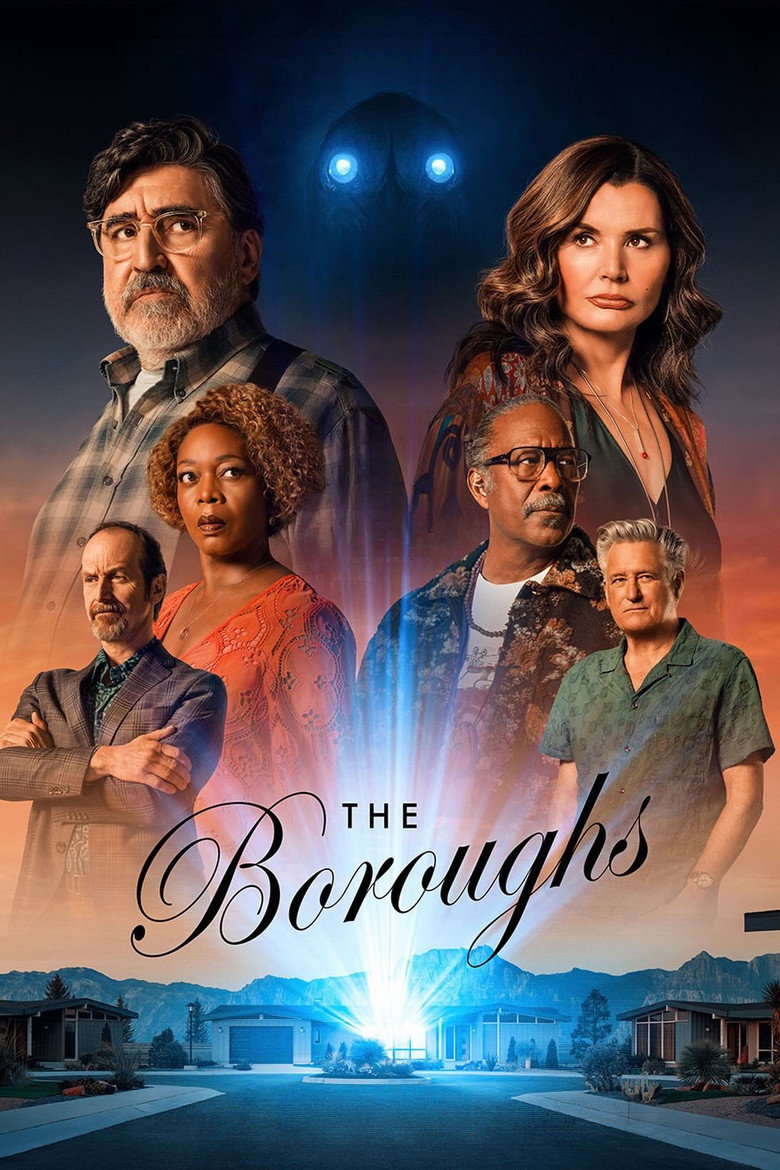
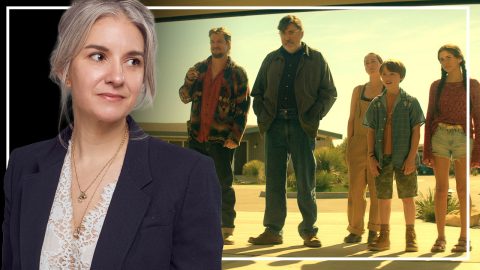
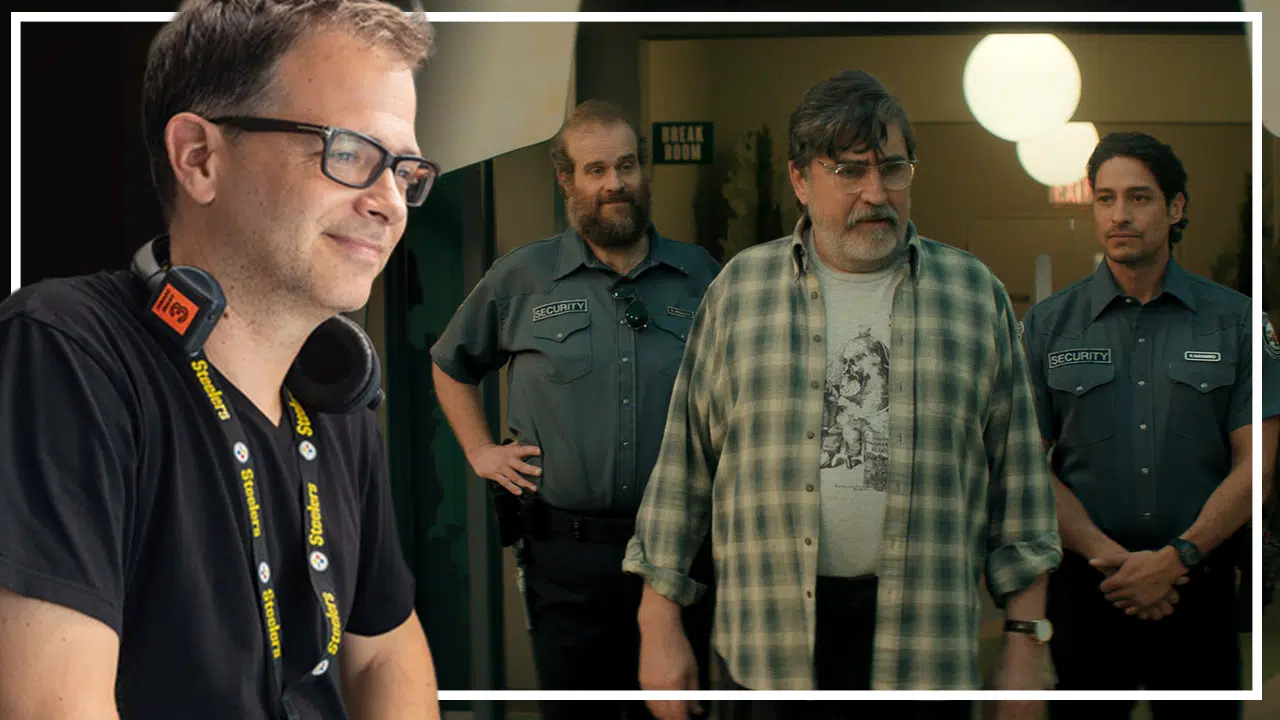
The Boroughs is a throwback show. It’s a science-fiction story about community and mortality, told through a lens akin to ‘80s adventure classics. Given its wide-eyed view of the boroughs itself and sweeping adventure, It’s no surprise Raiders of the Lost Ark is such a pivotal film for cinematographer Matthew Jensen (Wonder Woman).
Jensen shot multiple episodes of the now sadly cancelled series. He got to introduce viewers to a new and familiar world from the beginning. “The big idea, in the first two episodes, was to introduce you to the world of The Boroughs, and particularly on the cul-de-sac, give you a sense of where everybody lived in space,” Jensen told What’s On Netflix. “We were always trying to connect Sam to other houses and who lived in those houses. In the first two episodes, we’re constantly tying in Art, for example, getting into his truck and driving off, and then whip panning to Sam, who’s standing by his door. Geena starts her car. We observe her from Sam’s window. All based on Sam’s movement through this new environment.”
Since The Boroughs is retro, modern, and a little futuristic, what were your visual references?
With The Boroughs, it was so firmly rooted in the movies of the ’80s. We were trying to establish a very Spielbergian tone, so the spine of the influence came from all those movies that I grew up with.
I did look at some photography, some of the work by Stephen Shore of the time period, like ’70s, ’60s. Basically, anything looking at America and the deserts and a kind of retro palette just because the design of The Boroughs was very much based on this mid-century sort of aesthetic. Stephen Shore’s, Uncommon Places and some of his On the Road photography did also contribute to the look, particularly of day exteriors.
Were there any cinematographers of those ‘80s movies you grew up with that really inspired you?
Certainly, Spielberg’s collaborations with Allen Daviau (Empire of the Sun) and Janusz Kaminski (Munich) and then his early stuff with Vilmos Zsigmond (The Sugarland Express). Jaws, Close Encounters, and Raiders were the biggest touchpoints in terms of how he moved the camera in those days and how he blocked.
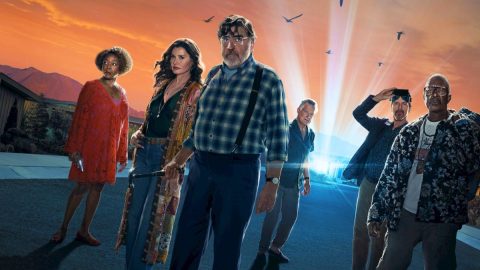
The cinematographers of those eras used a lot of hard light, which had kind of one foot in the past and then also one foot into sort of the changing world of cinematography. It’s not necessarily how a lot of films or TV shows are shot now. They’re mostly shot with soft light, and the tools have changed.
For me, it was about modernizing some of those techniques that they used. But primarily, I was interested in how the camera moved and how Spielberg blocked his actors in relation to the camera and how the camera would reveal information.
Picture Credit: Netflix
How did you want to modernize those techniques?
It’s still using shafts of light that you see throughout those early works, still with backlight and heavy use of the sun. And then always trying to set a key light as opposed to doing ambient lighting, which you see a lot today because of the use of multiple cameras and how small some of the lighting tools are.
But for me, it was more about bringing back bigger lights and bigger sources and having a definitive key light on the actors and then building off of that. Even though that key light might now be an LED through a 12 by full grid as opposed to an arc light or a 10K with multiple flags in front of it.
How did you want the light to define the characters in the series?
It’s all about bringing out their character and also helping the actors feel confident that how they are looking and how they’re photographed, they feel protected so that they can do their best work. A lot of it is just watching them and watching how they perform and then seeing where the light should not only come from in the room, but also, how it relates to their performance.
What about Alfred Molina?
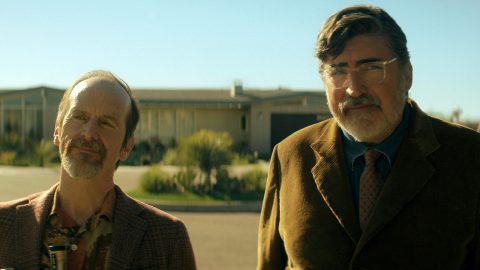
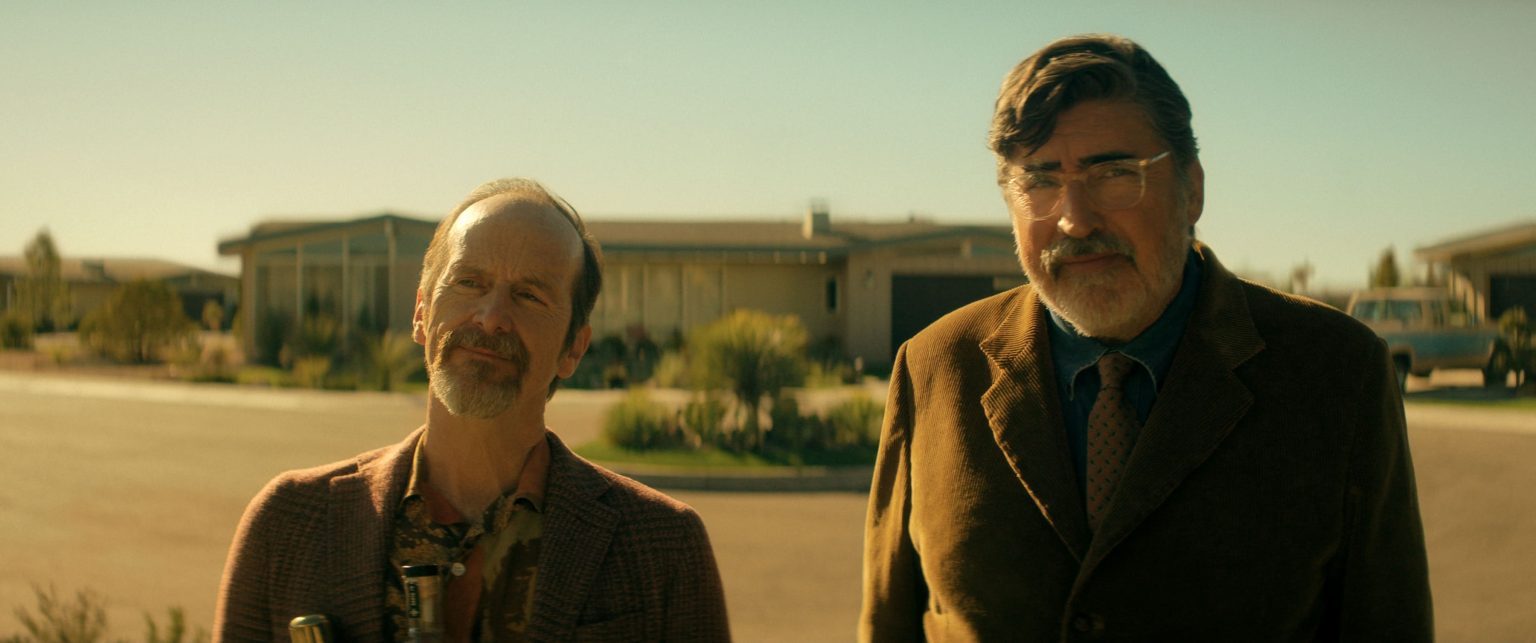
With Alfred, I was putting him in half light quite a bit. It was mainly because I saw his character as wrestling with his own cynicism and dark side a little bit. He was a little bit veiled in shadow, and it seemed to work well with the design of the house. And he tears out his lights and removes all the practicals, and then he’s kind of left only with window light. I was trying to find ways to incorporate the desert sun on one side of the house; the sort of ambient skylight on the other side. The way Alfred would ping-pong across the room seemed to work very well with that kind of lighting scheme. It’s watching how they move, where they put their eyes, and then working from there.
Are the actors’ eyes a big part of cinematography for you?
The eyes are everything. I’m constantly trying to figure out if my key light brings out their eyes, or am I trying to put an eye light more in the direction of where they’re looking or if they’re looking down and away from the key light a little bit? Do I augment? Do I not augment? Are they wearing glasses? Is my lighting going to get in the way of their glasses and then affect their performance a little bit?

Picture Credit: Netflix
Considering how much Raiders of the Lost Ark means to you, did you ever have days with Alfred where you asked them, “Hey, how’d they shoot that opening?”
One of the first things that I talked about with Alfred was Raiders, and that it was his first movie. He was speaking with Douglas Slocum, who was the DP, and he said, “At first, I was moving around, sort of hyperactive and moving my hands and my face.” Dougie pulled him aside and said, “We really love what you’re doing, but we want to make sure that you’re in focus. So, could you just kind of hit your mark?” He said it was a light bulb moment for him, and he was very polite about it, but was just telling him to stand still, basically.
Because some of the stuff we were doing or they were doing in the show was very reminiscent of Indiana Jones going through a cavern or something like that, Alfred started doing his lines from Raiders. And so, then not to let that moment pass, I started doing Barranca, his partner in the movie’s lines back to him. And he got a big kick out of that. And it was a huge moment for me. It was just like meeting one of your boyhood idols.
That must be one of the greatest days someone could ever have at a job.
Completely. It was fantastic.
You do adventure really well as a cinematographer. What is it about the genre you really appreciate?
I think because I grew up with it. My father was a big fan of the Errol Flynn movies of the ’30s and ’40s. It’s in the fabric of how I understand movies. There’s always some element of danger and travel and action and all of that stuff kind of frees the camera up in many ways. You’re creating environments that are either supposed to be scary or dangerous or thrilling. There’s a lot of, I think, expression that a cinematographer can bring to that kind of project.
Did you revisit or think about Howard Hawks and John Ford – Spielberg’s influences – for The Boroughs?
Well, the thing that I get from most of their work is the way that they kind of perfected and that Spielberg really kind of lifted or learned from, I would say, or was influenced by the 90-second oner, the master shot that does multiple things. It starts in close and pulls out to a medium shot, and then pivots 90 degrees, and you’re in a wide shot, and trying to do as much as you can in that move before you go in and cover it. It does many things. One is it gives the performers a real chance to interact. If you do it well, you can create a sense of pace without getting too cutty. So the masters were excellent at that kind of thing.
Were there many one-long takes in The Boroughs?
We did a few of them. They’re pretty subtle.

Picture Credit: Netflix
What was the longest one?
I think there is one bit with Alfred and Denis O’Hare outside of the party before he goes into Jack’s. There is some coverage there, but it mainly plays in a one. Alfred’s entrance to the party is largely built off of one steadicam shot. There are some cuts in it, but very few. So , t’s built on a oner.
Did you shoot on the Alexa for this?
ALEXA 35, yeah.
What is it about the color rendering that engages your eye?
I think all camera systems have slightly different color science, but all can be kind of manipulated in the digital intermediate to get really good results. When I’m on set, the color of the ALEXA sort of performs how I envision color to perform. I don’t have to struggle with it or with the LUTs that we make, I don’t know, get more color out of it or greens don’t respond a certain way or reds don’t respond. I just don’t have those issues with the ALEXA. It’s so easy to grade, easy to separate complementary colors or opposing colors on the color wheel.
I just find it very user-friendly. I’ve always felt this way about ALEXA, but now, it’s got even more dynamic range. Because I came up on film, the ALEXA has always had more range in the highlights, much closer to how film responds when you expose it. There was a very intuitive process for me when I was dealing with the ALEXA.
Do you ever miss shooting on film?
I do miss shooting on film. We did a film emulation on The Boroughs to add a little grain and texture back into it and to add a little layer of halation and softness to it. The project should determine the medium that you shoot on. Whether it’s digital or film, it’s largely dependent on your response to the story.
But I miss the discipline of film. I miss the smell of film. I miss hearing it run through the camera. I love working with the lab and seeing the dailies the next day. I do miss the grain. I find that I’m often adding grain now to the digital cameras. It still tends to render faces a little more pleasing to my eye, at least initially. I think you can get the digital cameras there, but it’s not like right out of the box the way that film is. So yeah, I do miss it. I do wish there were more opportunities for it, but it’s not always possible.

Picture Credit: Netflix
As someone who loves adventure movies, you got to make one that really had a cultural impact with Wonder Woman. It was such a great theatrical experience. How fondly do you reflect on that experience, making the kind of adventure you watched growing up?
It was an extraordinary time, something that I’m so glad I got to experience once. The most that I remember about it is all the emails that I got from friends and colleagues from over the years saying that they had seen the movie and they were knocked out by it, and congratulations and, “We couldn’t believe we saw your name at the end of the movie,” and that kind of thing. It was the feeling of community because you had put something out there that seemed to have touched a lot of people. I think that’s becoming harder and harder to achieve.
It’s that great thrill of making movies is making movies for an audience. When I was a kid, I saw Raiders of the Lost Ark, and it changed my life. But the thing that I remember the most about it was sitting in a packed theater and everybody laughing and cheering and gasping and feeling the communal experience. So, that’s pretty unique. It was a great thing to have been a part of.