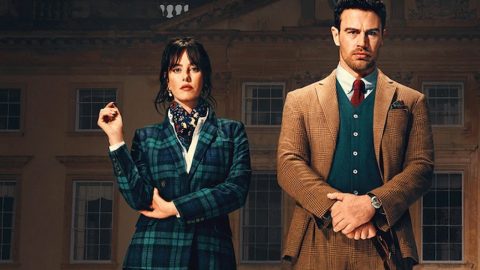
The Gentlemen is impeccably stylish – a reminder that style is substance. There is grand drama and stakes to support the posh visual storytelling in the Guy Ritchie-created series. But there’s also plenty of entertainment value in simply watching the show’s ensemble look spectacular while sporting dashing clothing in the comfort of five-star sets.
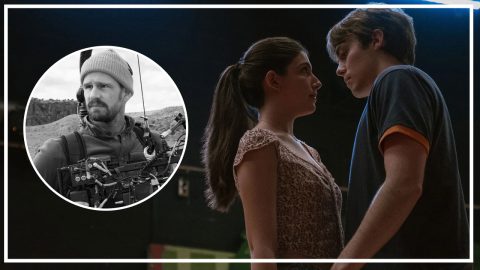
For season two, cinematographer Stephen Murphy gets to craft the bloody yet lovely eye candy on display in The Gentlemen.
Murphy has shot a wide range of projects in his career. He’s worked on Atlanta, Mr. & Mrs. Smith, and Hanna, not to mention two of the most enjoyable studio horror movies of last year, Heart Eyes and Primate. For The Gentlemen, Murphy worked closely with one of the strongest voices on the show, director Eran Creevy (Welcome to the Punch).
Recently, the cinematographer spoke with What’s on Netflix about shooting episodes four and five for the latest season of The Gentlemen.
Episode five is visually packed. Such a wide range of locations and styles.
Yeah, it’s a good one to ride, isn’t it? Between the opening, that beating at the opening, that night shoot, which I loved, and the end of it, which has that sort of airport, big romantic airport scene.
It tapped into some of your horror instincts a little bit, too.
[Laughs] Yeah, it probably did. Because certainly the arc of the series gets darker as it goes on. So it did suit me a little better, the material driving that way.
The scene at the airport gives off Tony Scott vibes – the smoke, the strong use of red, and the drama of it all. How did you decide on that level of boldness for the scene?
When I met Eran Creevy, who was going to direct my episodes, we bonded straight away over Tony Scott movies. We’re both huge fans of Tony Scott. We weren’t necessarily talking about that with specific scenes in mind, but that was just a shared aesthetic that we loved.
As we were working through the episodes and watching the scripts come in and seeing where the stories were going, we were looking for opportunities to sort of expand the palette visually where we could. That airport hangar scene was a space that we thought looked amazing. We knew it would look great at nighttime. It was one of the scenes where we decided to change from the normal spherical format that we shoot into anamorphic.
We brought in some Panavision C-Series anamorphics, which is very much a trademark of Tony Scott’s early work in the ’80s. Yeah, we went for it.
The show is big on style. When you’re reading the scripts, is it exciting as a cinematographer knowing, “I can be very expressive with a lot of my choices here”?
For sure. Really, the person who sort of liberates me the most is actually Eran, because it’s Eran saying, “I really want this to look as good as it can.” Obviously, like every other show, there’s a time limit, there’s a budget limit, but Eran is great about encouraging me to go full Tony Scott wherever I can. He wants to be as brave with the visuals wherever we can. He still wants it to look and feel like it’s in the world of the show, but he’s very encouraging about us trying to push the visuals whenever the opportunity arises.
Picture Credit: Netflix
The world of the show keeps expanding, too. Did you and Eran feel you get to continue to define what The Gentlemen aesthetic is?
I would look at season two as an evolution of season one rather than a continuation, which is kind of how I treat everything TV show-wise. I get asked a lot about when you join a show and you’re on the middle episodes or the last episodes, how strict you have to be about adhering to the visual style that’s been set up.
What I normally tell people is you have to be respectful of what’s been set up, but you’re always servicing the story. If your scripts are demanding a certain level of visual drama, then it’s better that you serve the story as best as you can rather than trying to feel that you are beholden to something that’s been set up that maybe doesn’t suit what you’re doing at that moment.
An especially grand moment is Theo James and Vinnie Jones simply sitting under a tree and talking, but they’re surrounded by these extreme colors in nature. It is painterly.
That scene was originally going to take place in a totally different location. For a variety of reasons, we had to pivot at the very last minute and say, “Hey, let’s just do it in the garden. We’re in this big stately home.”
We ran around the corner and set up. We found this tree, found a beautiful frame for us, dropped in on the bench, and the clouds started rolling into the background. I dropped in a few filters to help accentuate the contrast of the clouds in the background. Then I brought in quite a lot of big lights in the background to help light them with a warmer light.
It’s all done in-camera. I think no one believes that it’s done in-camera because it looks so, as you said, painterly. But it is. It was just us being very fortunate to take advantage of the weather elements that were right in front of us and figuring out how best to do that.
Then there was a conversation about, was it too beautiful? Was it too pretty? But actually, in the context of where it drops in the story, it works for Theo James’s character and where his head’s at.
How were you responding to Theo James and Vinnie Jones’ performances on that day? What was really catching your eye?
For me, I’m so tuned into what’s going on with the lights, the quality of light, the amount of time we’ve got to get the scenes. I’m sort of playing mental chess two, three steps ahead, knowing that, okay, if we spend this long on the wide shot and this long on this close-up, then how long is it going to take us to get that close-up? How much is the sun going to change? How much is the weather going to change? Is it going to rain?
I don’t get a chance to really focus on performance. Obviously, Eran is totally focused on that. But I’m watching what they’re doing, and I’m very tuned into what they’re doing physically and how subtle their performance is or isn’t. I can tailor what the camera’s doing based on that.
Picture Credit: Netflix
What’s your take on defining characters through the environment?
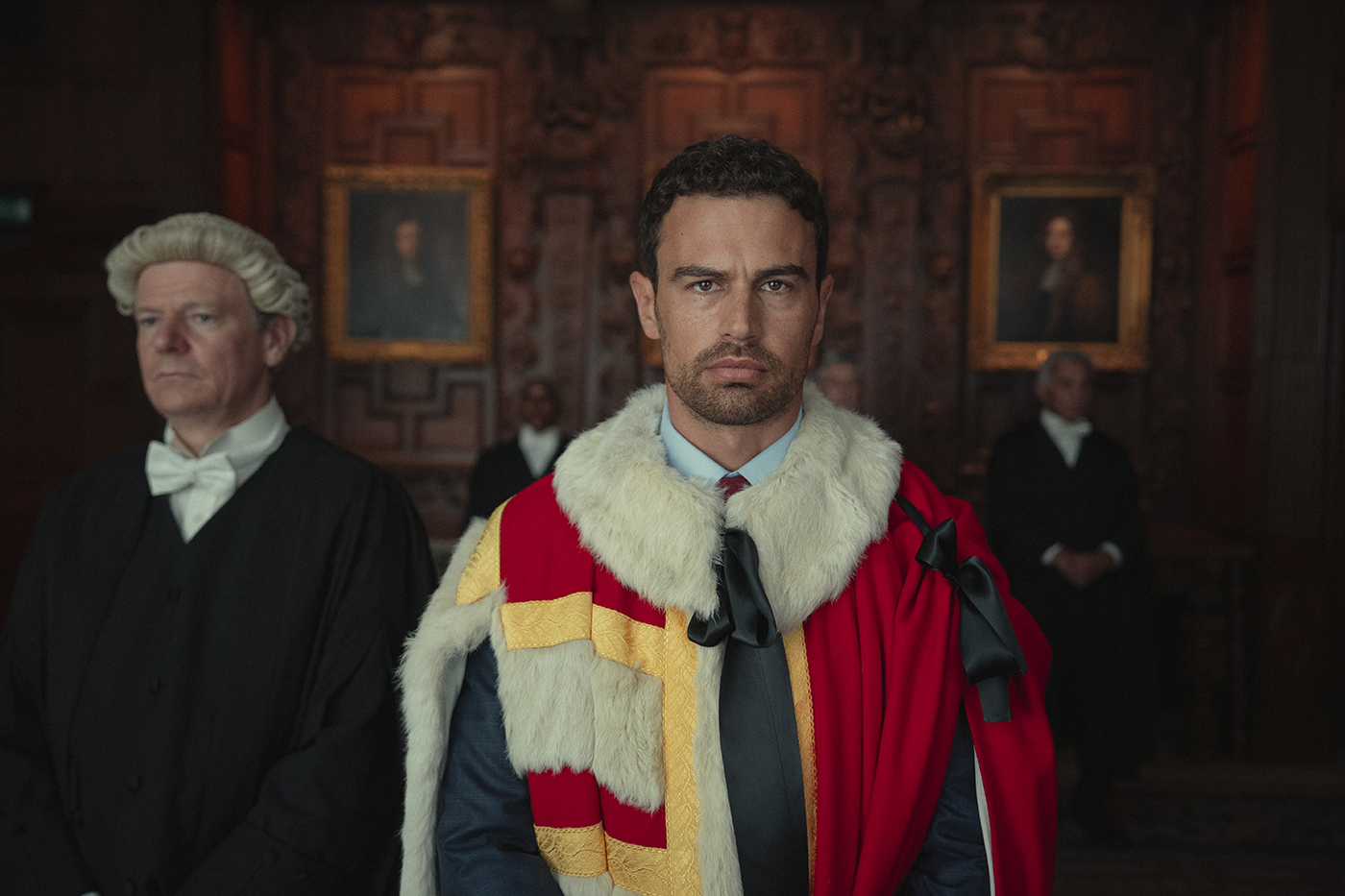
Usually for me, it’s about how the characters sit or fit in their environment. I love wide shots. I love silhouette wide shots, semi-silhouette wide shots. The character of a space often informs the audience about the character itself – whether they’re comfortable in the space, uncomfortable, things like that.
A lot of the time when I’m watching the rehearsal of a scene, I’m always thinking about that wide shot. I’m thinking about how we place these characters in this space to help describe character and to help give us a mood. It’s from a pragmatic physical blocking side of things as well.
How do you usually relate Eddie to his spaces?
If you’re in some of the stately homes, it’s great to be able to see the scale of the stately homes and see where he is positioned in that space. If it’s something like the beating at the beginning of episode five, that’s a much more subjective-feeling space. He’s got no control there. It’s all about everyone else in that space at the time. It’s not about him.
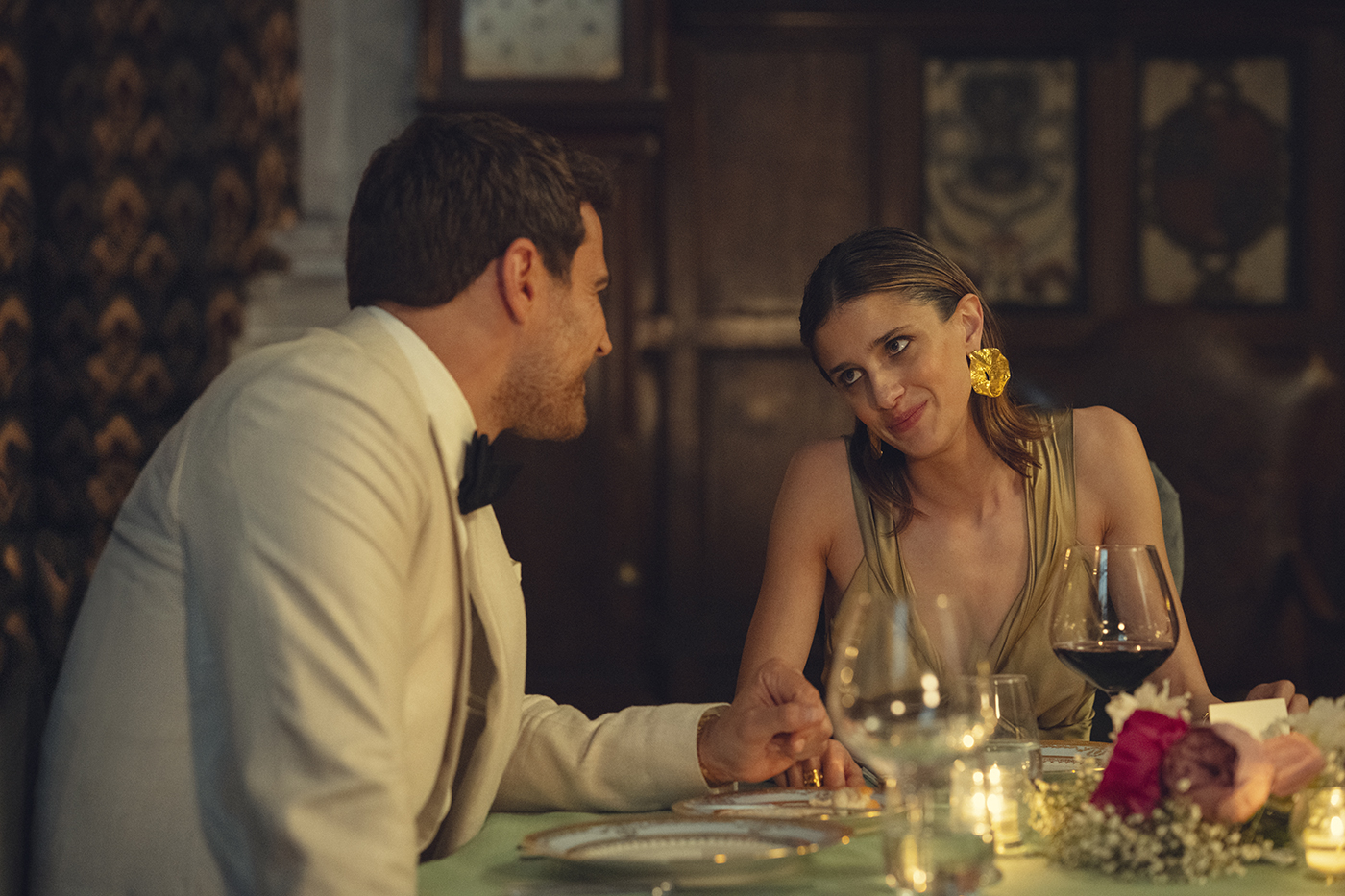
It depends on what effect you’re trying to do. A lot of the stuff with Eddie in his home or his comfortable spaces is about finding strong frames with him by the windows, at his desk, where he’s dominating and he’s in charge. It’s very classically composed to take advantage of all those beautiful straight lines and the shapes of the desks and the big leather couches and stuff like that.
Then when we can break out of that world, that can get a little looser, and we can sort of subvert that a little bit.
With those wide shots, you really get to appreciate the production design – as well as Loulou Bontemps’ costume design. In what ways do you want the glamorous costumes to pop in frame?
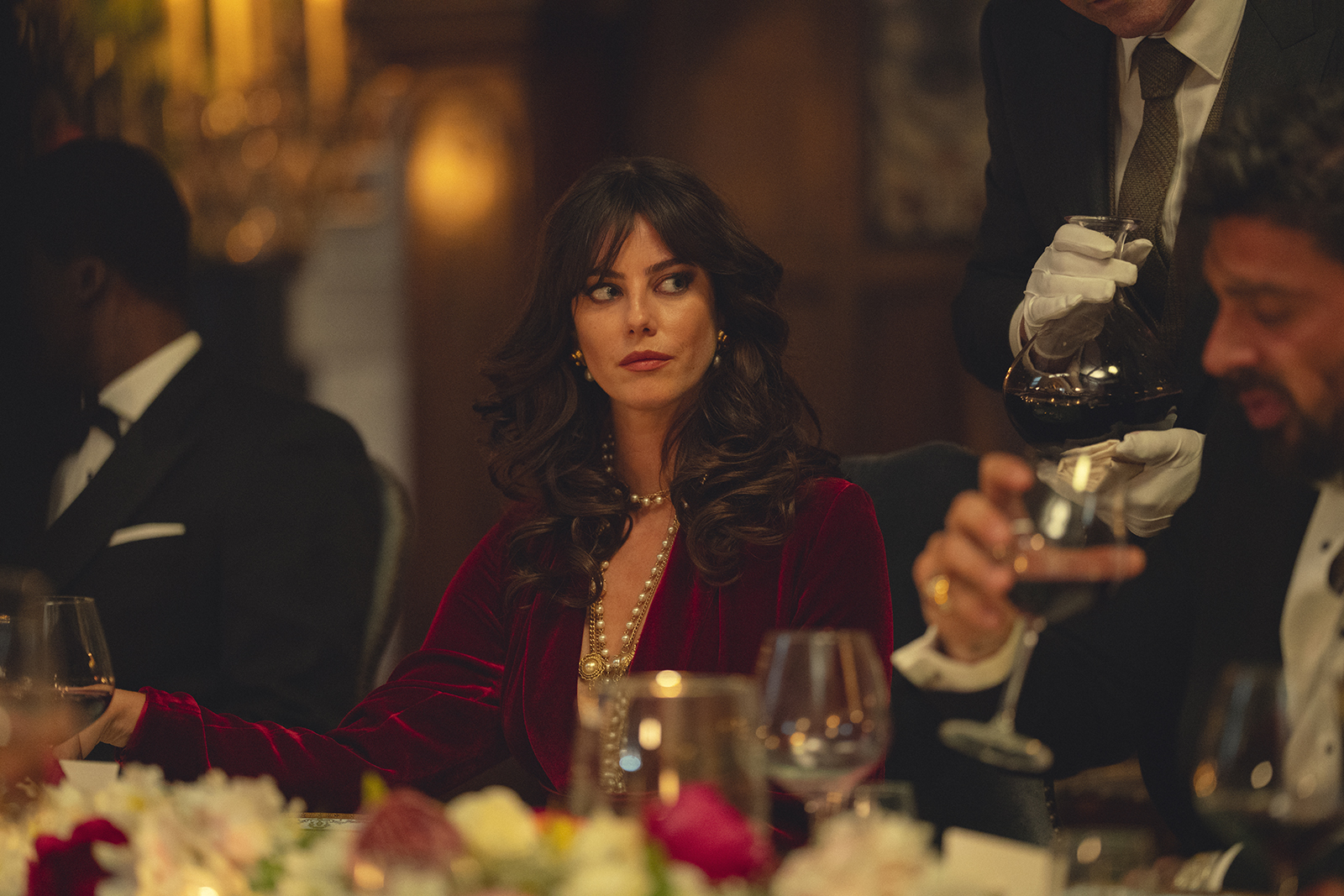
There’s a huge emphasis placed on the costumes. The costumes are beautiful. They were beautiful in season one; they’re beautiful in season two. A lot of modern cinematography trends are all about super-soft focus and things like that, and I would much rather see the depth of the sets that we have and be able to see all the lovely colors and shapes in the costumes and the hair. It’s a very luxurious canvas for us to play with. I do my best to try and see it or suggest it and still have shape and mood in the images.
How do you try to do that for more dialogue-heavy scenes? It’s such a verbose show.
A lot of the time it’s about the blocking and where you try to stage people. You try to stage them in their best light. You’re trying to favour the windows, so that means all the key lights are coming from outside and you’re having a lovely drop-off, so you can have faces play in half-silhouette or half-light. It just gives you a lot of shape.
When you’re in somewhere like Eddie’s office, which is a dark-walled space, the more you can have big, strong lights outside and let the light drop off naturally inside, the more dramatic it looks. The costumes take the light better. Everyone’s face takes it better, and the dark wood takes it better.
It’s really about trying to stage scenes to take best advantage of the natural light that’s in the space or the light that should be in the space, favouring the windows or the light sources, whether they’re practicals or, like I said, huge windows.
Then I’m amplifying that. I’m pounding lights through the windows from outside. I’m cheating in extra practicals so you have a lovely kind of contrast of the warm practicals and the cooler light outside, stuff like that. But really, it’s just about taking advantage of those spaces.
Another moment where you really tap into Tony Scott is when you go overseas to meet the cartel. Any specific visual references there?
We talked a little bit about the opening of Casino Royale. That was a reference for that particular sequence, primarily because we were cheating that and shooting that in a forest in the UK. How do we make this feel like we’ve gone to another country without having to actually go to Colombia to do it? We were looking at other movies that had done a similar cheat, had shot not in Colombia but were cheating things.
A lot of those conversations end up becoming, well, we’re doing something warmer in the UK or in Italy, and we’re doing this kind of colour in the UK, so how do we contrast that? Okay, well, let’s maybe make it a little cooler. Let’s add a little bit more grain.
We shot that sequence mostly handheld, so we just changed the visual language of that a little bit to help it feel a little looser. We made sure everyone was nice and hot and sweaty. It’s not as conventionally pretty or as glamorous, maybe, as some of the other stuff we were doing, but it has the right feel and the right texture to it. So just little choices like that help add up to make it feel like it’s a different place.
Picture Credit: Netflix
As a cinematographer, how’s lighting the great Ray Winstone?
He’s amazing. It’s riveting watching him. So when we did that scene, the confrontation between him and Theo, and he exploded at the end — that was a masterclass for all of us to watch. It was absolutely riveting.
He’s such a lovely guy. Outside of that character, he’s such a softly spoken, lovely guy. To see that transformation happen in real time was fascinating.
What’s next for you?
In two weeks’ time, I will go off to another country to start my work on the third season of The Gentlemen.
That’s great. Are you already thinking about how to expand on the work done in season two?
There’s definitely a plan in place from last season about where they’re going and what they’re thinking about doing. I’m going to join Eran again for a couple of episodes. Not quite as many episodes as we did last year, I don’t think, but it will be a good one for me to do. It’s nice to come back to the show and revisit it with Eran.