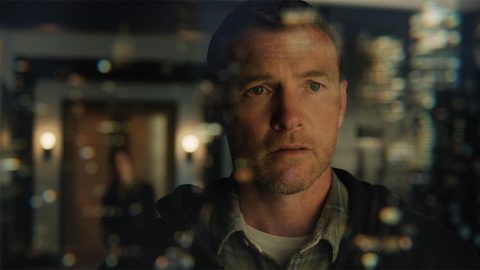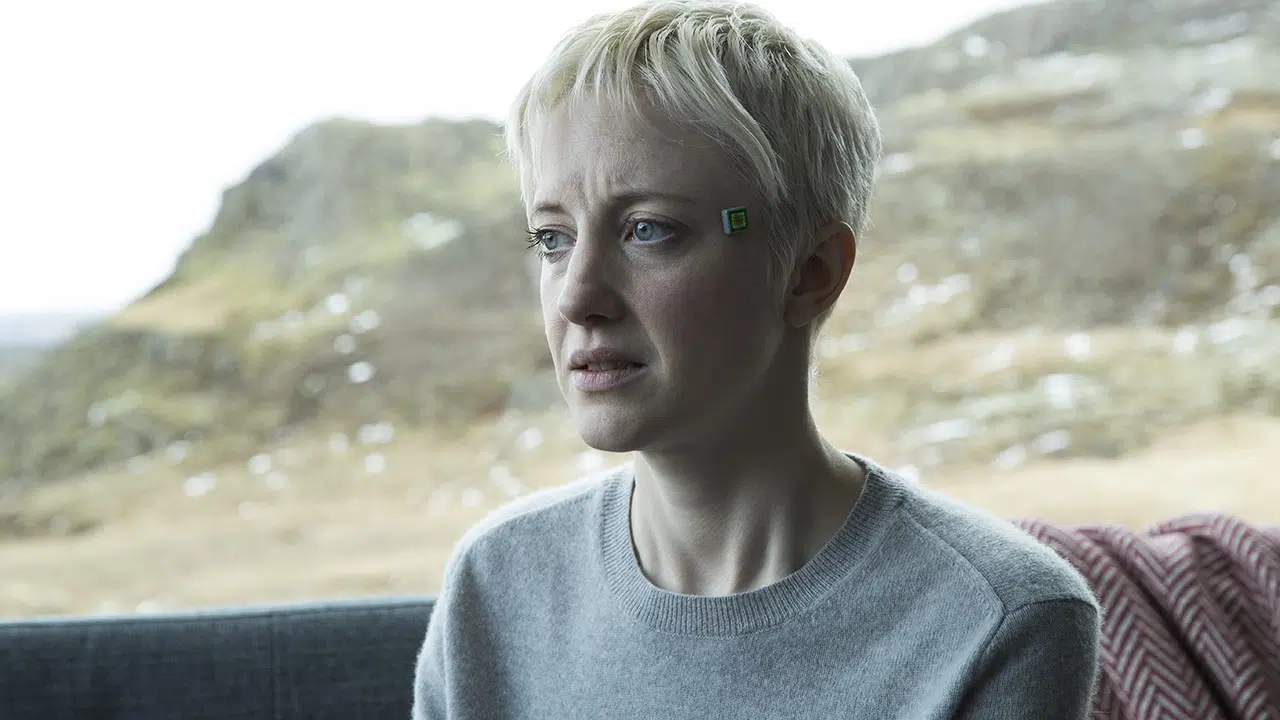
Picture Credit: Netflix / Banijay
Black Mirror has seen many of its dark and dystopian predictions come true. Here’s everything that the series has correctly prophesied, from futuristic technologies to gamification, streaks, and digital personas.
Charlie Brooker’s award-winning sci-fi anthology Black Mirror reflects the darker, more sinister potential of life, fuelled largely by advancements in technology. Brooker’s drama holds a mirror up to society, showing us what the world could look like if we continue to harken down a dark and ignorant path, such as mindlessly letting technology and Artificial Intelligence (AI) infect and control our daily lives and habits. The series presents dozens of dystopian ideas — many of which are absolutely plausible, oddly prophetic, and have even foreshadowed real-world events.
Black Mirror first aired way back in 2011. Suffice to say, the world has moved on tremendously since then; society has embraced technologies and ideas that Brooker prophesied in the show’s early seasons. How many of Brooker’s chilling and disturbing visions have actually come into fruition? Allow us to take you on a tour of every time Black Mirror has correctly predicted the future (and also how it missed the mark).
When did Black Mirror Predict (or Echo) Real-Life Events?
Season 1, Episode 1: The National Anthem
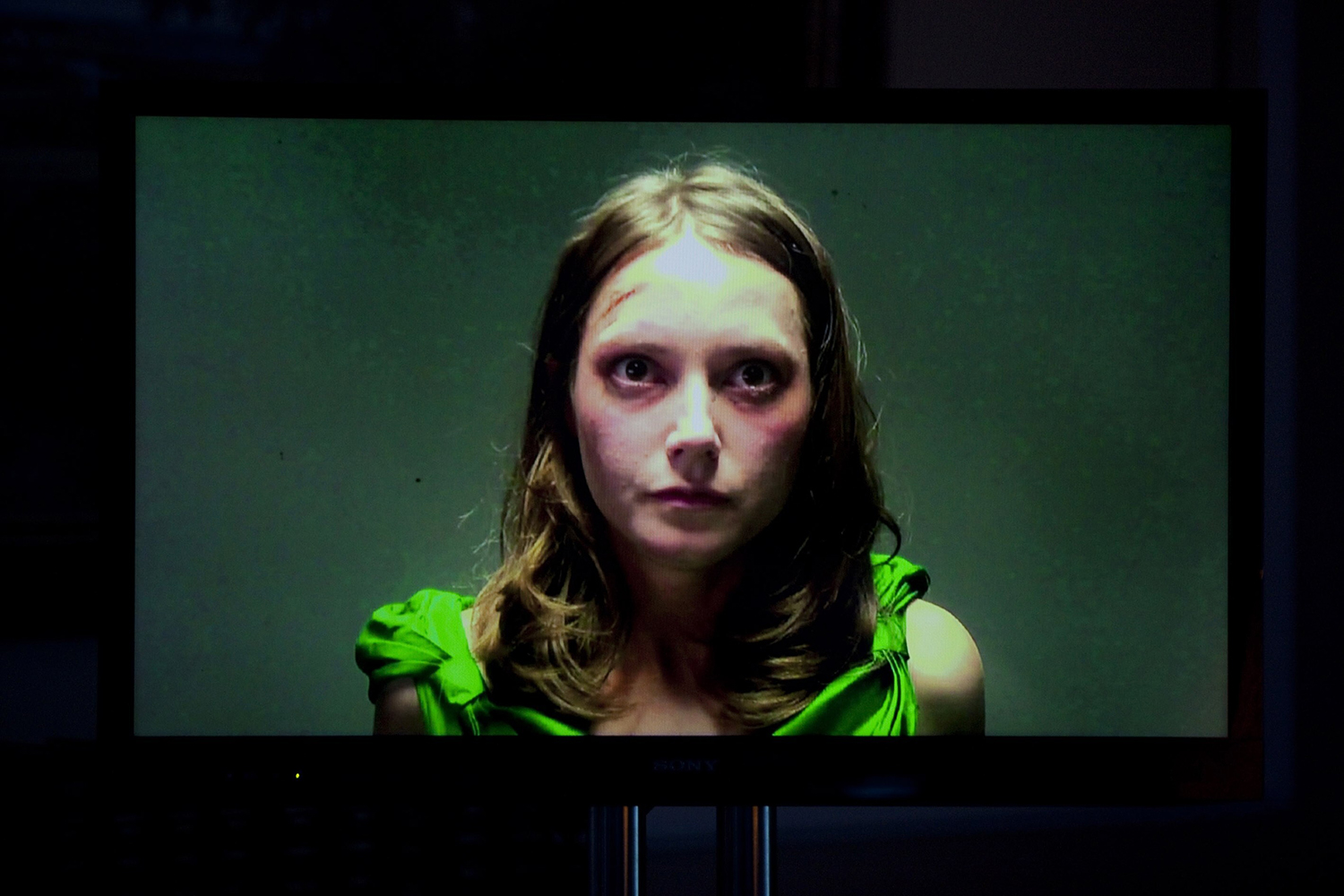
The National Anthem follows UK Prime Minister Michael Carrow, who faces the ultimate dilemma when a beloved member of the Royal Family, Princess Susannah, is kidnapped. Carrow faces the ultimate case of blackmail. The kidnapper demands that in order for the princess to be freed, he must perform a live sexual act with a pig on national television.
The real event:
Now, of course, this has never been directly reflected in reality (and the world is better for it, no doubt), but bizarrely, years after it aired, the episode drew comparisons to the ‘Piggate’ scandal surrounding former British Prime Minister David Cameron. The scandal surfaced in 2015, when a biography of Cameron alleged that when he was in university, he participated in an initiation rite for an Oxford society that involved him placing a private part into a pig’s mouth.
When the ‘Piggate’ scandal happened, people drew instant comparisons to the Black Mirror premiere. So much that Brooker himself had to clear up that he had no prior knowledge of the ‘Piggate’ scandal before penning the episode. “The first question people were asking me was, Did I know anything about it? And the answer is no, absolutely not,” he told The Guardian in 2015. “I probably wouldn’t have bothered writing an episode of a fictional comedy-drama if I’d known. I’d have been running around screaming it into traffic. It’s a complete coincidence, albeit a quite bizarre one.”
The fact that Black Mirror episode 1, which depicted an unthinkable public act, could draw comparisons to real life — it set a precedent for the rest of the series. Nothing, no matter how far-fetched, could be beyond the realm of possibility.
Picture Credit: Netflix / Banijay
Season 5, Episode 3: Rachel, Jack and Ashley Too
In this episode, we’re introduced to Miley Cyrus’s character Ashley O, whose soul is trapped inside a doll. Later, as Ashley Eternal, the CGI hologram of Ashley to perform flawlessly on stage.
The real event:
It’ll come as no surprise that soul-trapping has never happened (thankfully), but holographic concerts are not only a thing, but they’re growing in popularity. For instance, the ABBA Voyage is the most commercially successful holographic concert. Other musicians who’ve seen holographic and digitally re-enacted concerts include Whitney Houston, Tupac, and Ronnie James Dio. There’s even a purpose-built virtual pop star, Hatsune Miku, who regularly sells out venues.
Season 4, Episode 5: Metalhead
Metalhead sets the scene in a bleak, post-apocalyptic landscape. In a warehouse, a group of scavengers searching for supplies encounter a ruthless robot dog, primed and conditioned for battle. The dog is equipped with near-perfect mobility and deadly aim.
The real event:
The first case of a hunter-killer robot dog occurred back in 2016, where a bomb-disposal robot was used by Dallas Police to kill a sniper. “We saw no other option but to use our bomb robot and place a device on its extension for it to detonate where the suspect was,” Dallas police chief David Brown said (per The Guardian). It was the first-ever use of a lethal, armed robot in the United States.
That’s not to mention that Boston Dynamics robots look eerily similar to the one in this episode.

Picture Credit: Netflix / Banijay
Season 2, Episode 3: The Waldo Moment
In Season 2 episode The Waldo Moment, a fan-favorite children’s cartoon bear attempts to break into politics and become an MP.
The real event:
The UK has a very interesting way of having citizens exercise democracy. Look no further than Count Binface, a satirical, self-proclaimed ‘independent space warrior’ who participates in elections. These novelty characters have been around for many years, such as Lord Buckethead. Its’s most likely that Brooker may have been inspired by these. People have also compared Waldo to US President Donald Trump, for obvious reasons.
Which technologies from Black Mirror have been developed (and what’s still sci-fi)?
Technology: The ‘Experiencer Disk’
The idea of imaginary worlds was not dreamed up by Black Mirror; they’ve been a sci-fi concept for many decades. Black Mirror has explored the concept, implementation, and flaws of living in virtual spaces in great detail. The series even invented a fictional technology called the ‘Experiencer Disk’ — a neural-interface technology developed by TCKR Systems. While each episode is a self-contained story, the Experiencer Disk is a ubiquitous object and catalyst that spans several episodes across the series. Episodes include: USS Callister, San Junipero, and Striking Vipers.
The Experiencer Disk is placed on the subject’s temple, sending them into a trance. They find themselves inside a hyper-realistic virtual world, where they’re able to experience environments in five senses.
Does it exist? No (but we have similar immersive technologies)
In 2026, science and technology is not close to providing an experience nearly as sophisticated and immersive as the ‘Experiencer Disk’. However, modern technology has progressed enough to provide technologies that allow similar immersion. While primitive compared to Black Mirror, immersive, commercial virtual-world devices include the Apple Vision Pro and the Meta Quest headsets.
At the moment, we are able to read data from Brain-Computer Interfaces (BCIs), but actually writing data is infinitely more difficult. Brain implants are already in development for medical assistance; for entertainment purposes, the concept is still sci-fi. What’s more, the ethical implications of impacts for entertainment use remain in a moral grey area.
Technology: Robotic Surveillance
Season 4 episode Metalhead features autonomous, agile and lethal dog-like robots. In the story, the robot-dog is deployed to hunt down attack. It’s a dystopian, black-and-white instalment, and one of the only times that Black Mirror goes full-on post-apocalyptic.
Does it exist? Yes
Robotic dogs do exist, and they’re actually in operation today. The most significant example is Boston Dynamics’ Spot, which is agile and able to autonomously open doors and climb stairs. Naturally, it’s not equipped to attack, but almost 2000 units are in active operation. They are used in industry for public safety.
Technology: Drone Swarms
Season 3’s episode Hated in the Nation predicts that autonomous swarms of drones will be ubiquitous in the future. It depicts a world where honeybees have died, and since been replaced with swarms of drones that pollinate. Outside of their core function, they are also used for government spying, and hacked for use in crime.
Do they exist? Yes (with caveats)
Drones are everywhere these days, and they have been for several years. Moreover, semi-autonomous drone swarms also exist. We’re not quite there with the pollination aspect, but patents on pollinating drones already exist, dating as far back as 2018.
Technology: Grief Bots
The technologies Brooker imagined and cautioned us about in Be Right Back are somewhat active in society today — in a sense. In Be Right Back, we’re introduced to a new service that lets people stay in touch with the deceased.
Does it exist? Yes
In real life, these are called griefbots, and they track a deceased person’s digital footprint and allow users to get simulated responses, accurate to the person who has died. Companies powering griefbots include Replika and HereAfter AI.
“We know that AI is being used to create intimate experiences,” University of Virginia School of Data Science, Renée Cummings said of griefbots. “These systems can recreate patterns of communication from texts, emails, voice recordings, and social media. For some people, that feels like continuing a relationship rather than remembering one.”
Be Right Back is a perfect example of a cautionary tale from Brooker that has become completely feasible — and even implemented — in modern society.
Picture Credit: Netflix / Banijay
Technology: ‘the Grain’
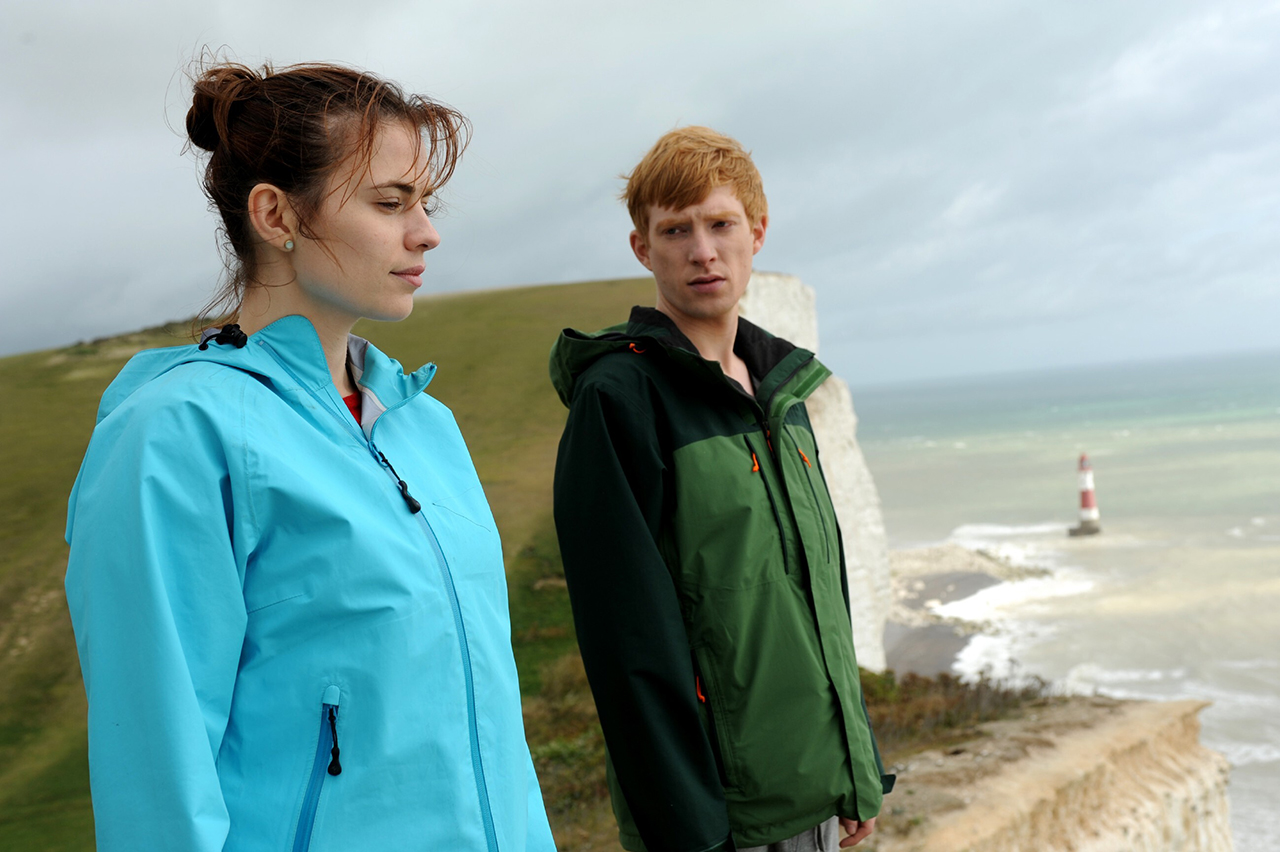
In Season 1 episode The Entire History of You, Brooker tackled a subject that was starting to rise to the top of digital concerns at the time: the weaponisation of memories. It introduces a future where everyone has access to a memory implant that records everything they see, and can be played back anytime. Nothing can be done in secret. The gadget is known in the show as the Grain, a rice-sized implant that records whatever the user sees and hears.
Does it exist? Not quite
While the technology behind this episode is still non-existent in 2026, we’re much closer to it, and the fear is amplified. From wearable electronics that can trace our lives, to smart glasses that are able to record our surroundings. The horror of this episode is not in setting, but inside our characters minds. Such smart technologies, and their implementation, can amplify traits such as jealousy and insecurity.
The closest we have to the memory implants today come from wearable AI memory assistants, which capture conversations through bone conduction headsets. These tools, such as Memoro are utilised today with the main focus of assistance to the elderly. Plus, there is also an implant technology from Neuralink, which focuses mainly on translating neural signals into physical actions.
Technology: Algorithmic Dating
2017’s Hang the DJ introduces a dating application that runs thousands of simulations in order to determine compatibility — and places an expiration date on all relationships. We follow couple Frank and Amy, who ultimately begin to question the system’s logic.
Does it exist? Yes
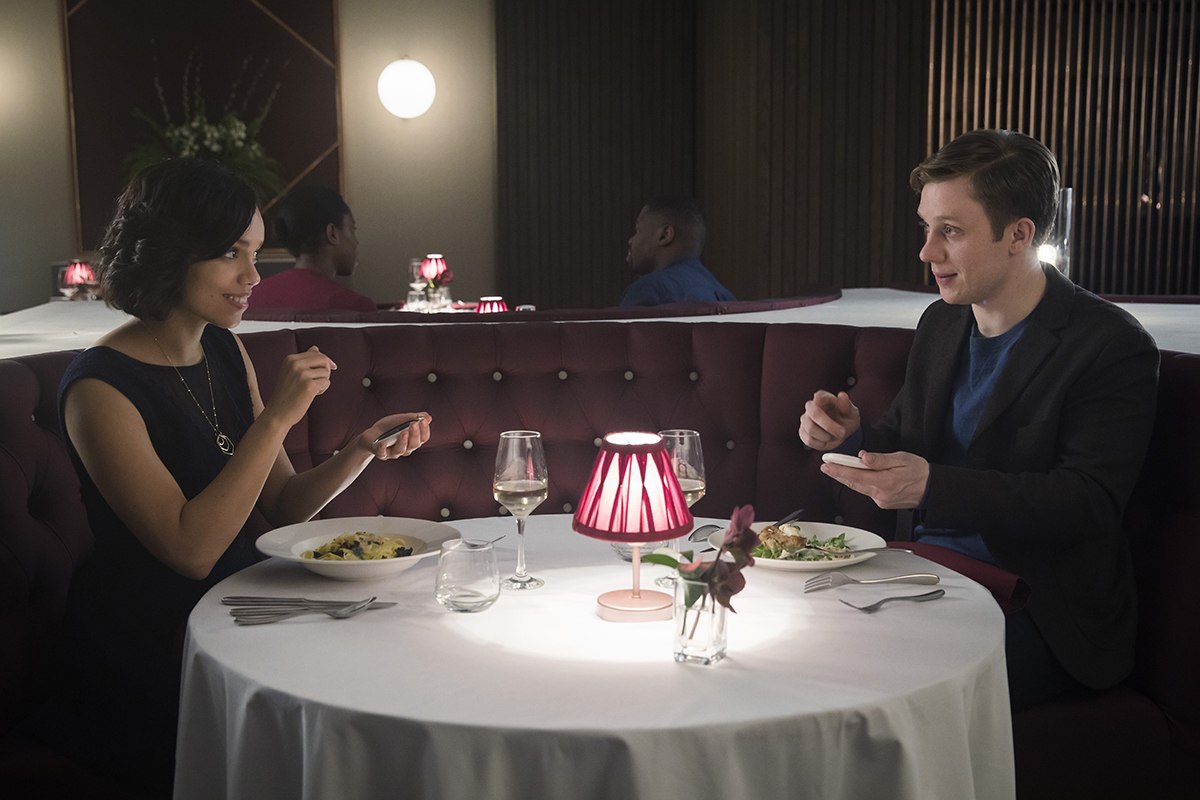
In reality, dating applications have been using immensely complex algorithms for many years now. They use data-driven algorithms to keep users engaged for as long as possible (as do all social media sites), and they prioritise data over real human connection. Our modern day apps, such as Tinder and Bumble, are not quite as sophisticated as what we see in Black Mirror, but they’re not far away.
There are some specialist applications like Ditto AI that are pushing forward the way we connect. Ditto, for example, shifts away from swiping, instead using artificial intelligence to match people.
Picture Credit: Netflix / Banijay
Technology: DeepFakes & AI-Generated Figures
The advancements in AI have been monumental in recent years. In fact, it can be difficult to distinguish nowadays what is AI-generated and what isn’t, at least at first glance. Black Mirror has explored DeepFake and AI technology a few times. There are a few episodes to exemplify, including That Waldo Moment, but Season 6’s Joan is Awful is probably the most poignant. In Joan is Awful, we follow Joan, who learns that her entire life is being algorithmically monitored by a quantum computer and subsequently dramatized — airing as a hit TV show on Netflix. The episode stretches the reality of DeepFake tech a little far, but the core concept is entirely possible.
Does it exist? Yes
Out of all the technology and gadgets featured in Black Mirror, this is probably changed modern society the most. Every day we see videos circulating on the internet of real-life people being depicted in entirely artificial scenarios.
Technology: Consciousness Alteration
The biggest example of consciousness alteration in Black Mirror happens in 2016’s Men Against Fire. Set in the future, we follow soldiers Stripe and Raiman, who must protect a village from an infestation of vicious, feral mutants. They are given a neural implant (which the show calls a MASS system) that serves as an augmented reality filter, overlaying the enemies with more terrifying exterior visuals.
Does this exist? No
The idea of changing human perception in warfare is not feasible.
Technology: Digital Cloning
Black Mirror uses digital cloning in a few episodes, but it’s perhaps most interestingly utilised in USS Callister, where game developer Robert Daly takes samples of the DNA from his colleagues and uploads then to his computer, creating digital copies of them to serve as characters in his game — a space adventure similar to Star Trek.
We also saw the concept of digital cloning in White Christmas, where the technology ‘Cookies’ allow for digitally replicated human consciousness.
Does it exist? No
Digital cloning remains a sci-fi concept. While we can create virtual, AI-powered replicas of voices and appearances, actually uploading consciousness not possible.
Technology: The ‘Z-Eye’
The Z-Eye is a smart gadget introduced in White Christmas. A neural implant, it allows humans to effectively block, blur, and filter real-life people around us. Beyond that, they also have several features of mobile phones, allowing users to take calls and view notifications.
Does it exist? No, but we can mimic some features
While the Z-Eye technology is far-fetched, modern-day gadgets can mimic many of its features. Look no further than smart glasses, which can display notifications using augmented reality. Furthermore, consumer devices like the Apple Vision Pro offer features like photos, phone calls, and web browsing.
Predicting Gamification, Ratings, Digital Streaks
Season 1, Episode 2: Ten Million Merits
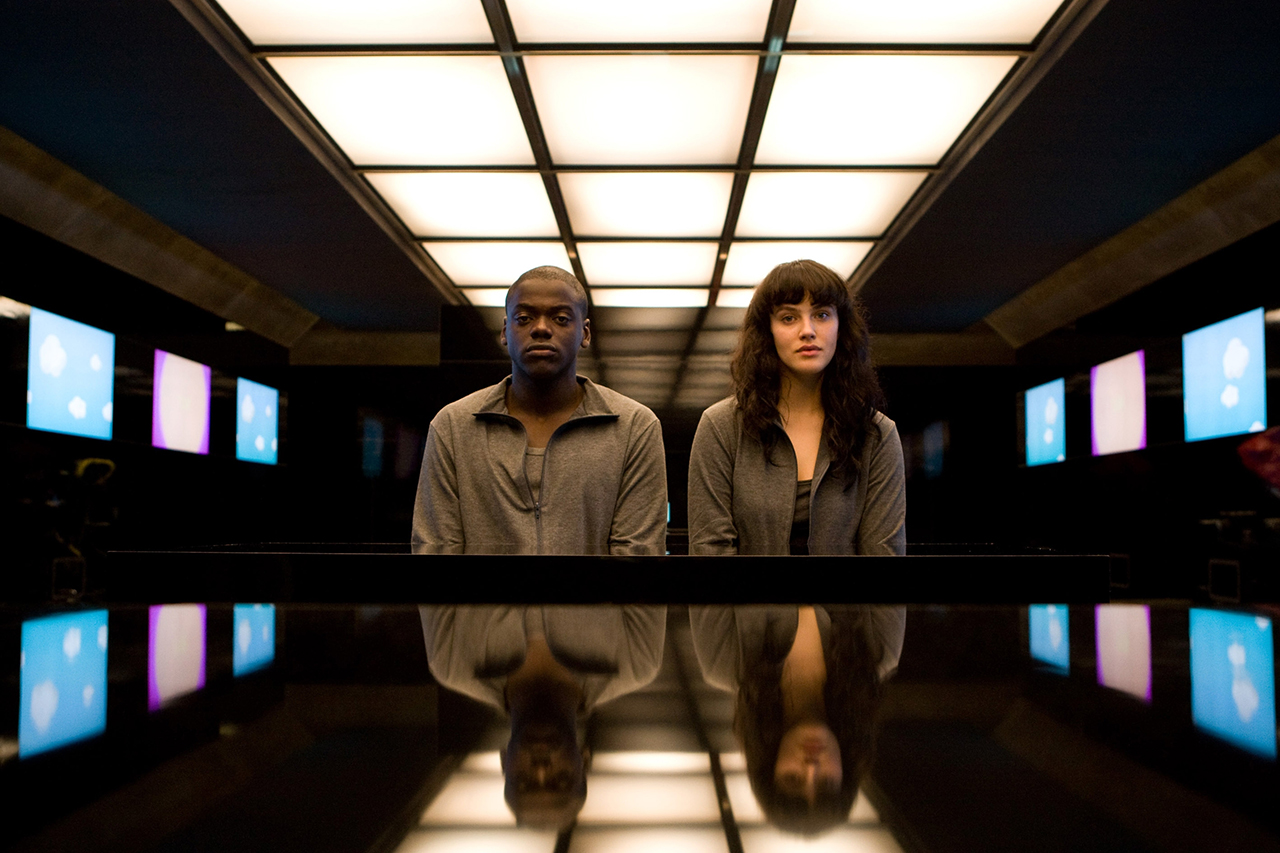
Ten Million Merits is one of the most enduring episodes of the entire series, set in a world where people’s lives consist of riding exercise bikes to earn credits.
At its core, it explores the idea of turning human existence to a single, quantifiable score. Brooker’s vision is highly dystopian in setting, but the structure and idea behind the story has been reflected in modern times. For instance, it predicts contemporary business models — one where to remove ads and annoyances demands a monthly subscription service. Brooker has explored this path several times throughout Black Mirror, most recently in Season 7’s Common People.
It gamifies basic human needs, such as exercise and nutrition. There’s myriad applications out there today that help gamify life — look no further than calorie counters and step goals. For many, days feel incomplete if goals haven’t been reached and logged. Look no further than Peloton.
The episode also explores the idea of digital identities, with the characters using their Doppel to represent themselves; their digital fashion masks a bleak outside. At 2011, this ‘Avatar’ culture existed, but it wasn’t nearly as ubiquitous and sophisticated as it is today.
Picture Credit: Netflix / Banijay
Season 3, Episode 1: Nosedive
Set in a future society, every citizen has a public social standing glowing above their head, visible to everyone with eye implants and phones. The ratings range from 1.0 to 5.0. It makes everyone’s reputation a currency, forcing fake personalities and compliance to maintain high ratings.
While an exaggerated implementation of the idea of ratings, this episode is echoed in how we live our lives today. We’re rated on everything from taxis (Uber) to hotel bookings (Booking.com).
Predicting Subscription Models
Season 6, Episode 1: Common People
In Common People, Charlie Booker makes it abundantly clear what he’s providing a commentary on.
We a follow working-class couple, Amanda and Mike, who are both deeply in love and trying for a baby. However, when Amanda suffers a medical emergency and finds herself hospitalised with little hope of recovery, Mike meets Gaynor, who presents an interesting proposition, in the form of a newly developed operation.
The “free” operation comes from a company called Rivermind, which essentially creates a backup consciousness and replaces the tissue in the brain with its own, ‘smart’ tissue to kickstart cognitive function. This allows Amanda to return to consciousness… but not in the way it was beforehand. Instead, Rivermind forces Mike and Amanda to subscribe to their expensive ($300/month) plan in order to live normally. However, like literally every subscription plan nowadays, it forces the customer into tiers: ad tier, ad-free tier, Lux tier, and so on. Humans themselves turn into walking advertising boards and have their freedom restricted, unless they purchase a better plan.
In the modern age, capitalism hasn’t stretched to far as to place life-saving treatment behind subscription models, with people spurting out advertisements on lower tiers. But we are seeing subscription models as the most ubiquitous model of payment across industries, most jarringly in the entertainment sector.
Did we miss anything? Tell us in the comments down below!