Picture Credit: Netflix
The Beast in Me earned nine nominations at this year’s Emmy Awards. Two of those nominations are for screenwriter and executive producer Daniel Pearle: Outstanding Anthology or Limited Series and Outstanding Writing For A Limited Or Anthology Series Or Movie. The latter of which is for Pearle’s premiere episode, “Sick Puppy.”
Pearle effectively paints a picture of the show’s opponents: Author Aggie Wiigs (Claire Danes) and the subject of her new book, suspected killer Nile Jarvis (Matthew Rhys).
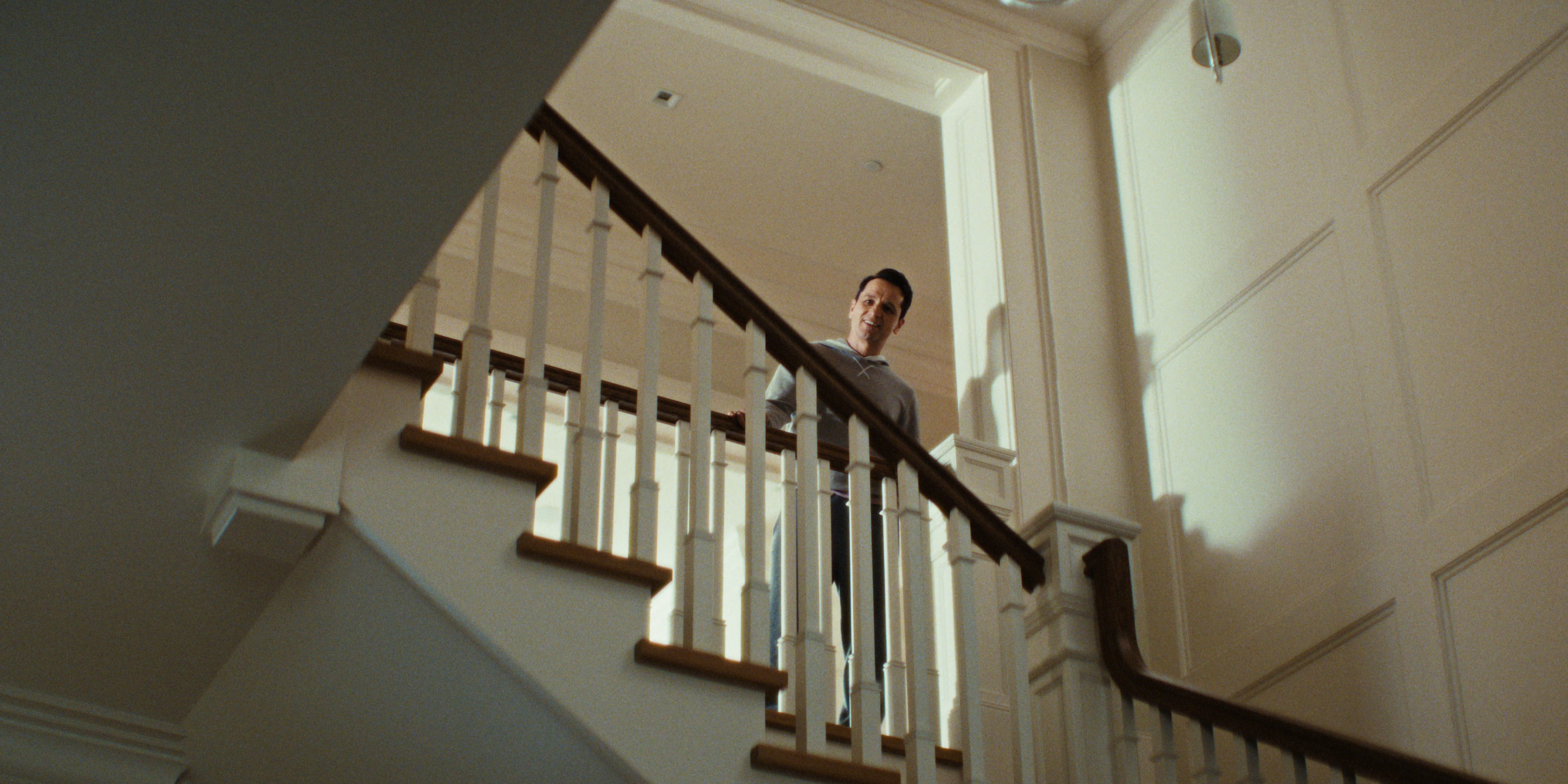
When the two meet, Jarvis is above Aggie – staring down at her in his castle. She follows him down a dark hallway, a bleak rabbit hole, to his office. The two verbally spar, already revealing their strengths and weaknesses. In a matter of minutes, Pearle helps create a rich relationship and lay the tracks for the blood and conflict to come.
Recently, the Emmy-nominated screenwriter spoke with What’s on Netflix about the Emmy-nominated series.
When you look back on the early days on the show, what comes to mind immediately about the early days of working on Sick Puppy?
Many of those conversations were really about situating Aggie emotionally, financially, logistically. The audience was having to catch up to where she was, and she was in this state of isolation and stagnation, and that’s a hard thing to dramatize. How do you make being stuck as a state of being compelling for an audience? I knew we were writing for Claire at that point, and it was exciting to know that it was going to be her. It gave us permission to really spend a lot of time with her alone and knowing that that could work.
Finding Nile and his voice and their initial dynamic, that was really the crux of it. It was this kind of perverse rom-com setup of these two unlikely people meeting. It’s not romantic, but something happens.
The lunch scene I remember well. We were working on an outline at one point, and it was just like, yeah, this is not a scene that can really be outlined. We just have to let it rip and see what happens because I went in knowing, okay, these are the things that I have to get accomplished in that scene. But so much of the whole inciting incident for the series was whatever excited him about her and vice versa. It was of a leap of faith that we’d find it in the writing.
Not to mix metaphors, was there a lightbulb moment there? When did Aggie and Niles’ voices fully click?
With Nile, there were some different iterations. Obviously, there’d been a lot of different reference points. There was Durst, there was Donald Trump, there was Alex Murdaugh as far as real people that we were drawing inspiration from. There was an earlier draft where he was much more loquacious and found moments where he talked a lot more. At some point, we pulled some of that back and looked for moments where he was actually okay with an uncomfortable silence in the way that maybe Aggie wasn’t and how he was using language and how he was using silence to hold power.
Also, figuring out he was sort of unabashedly an asshole and how to make that character still fun. Don’t make him just purely repellent or just obnoxious, but a character that we still kind of perversely want to hang out with and she perversely wants to hang out with.
Cr. Courtesy of Netflix © 2025
Why do you think audiences and writers are attracted to characters like Nile Jarvis?
It’s what Howard and I both sometimes call “high behavior.” It’s fun for actors and their audiences, people who live in extremes. With Nile in particular, and it’s certainly true about a lot of people in pop culture, it’s the fantasy of what would it be like to live completely unfiltered, uncensored, without any apparent shame or self-consciousness. There is a fascination, I think, with characters who are sort of unburdened by the old shame and restraint that we tend to put on ourselves.
As a contrast, you had your author. Did any authors influence Aggie?
Janet Malcolm was a big one. She wrote a book called “The Journalist and the Murderer.” It was a real touchstone because it was all about this question of the relationship between author and subject. It was Janet Malcolm, Joan Didion, and Susan Sontag.
You got your artist, and next door, you got Nile, a killer businessman. Did art and commerce living next to each other, combating one another strike you as a fun subtext?
[Laughs] Oh God, yeah, in terms of executives and studio culture? That’s funny. I don’t think that was conscious. What we were conscious of very early on, early conversations with Claire, we had talked about the way as a country we’d been frankly held hostage to the Trump psyche and how one man’s, I would call it severe pathology, can sort of hold a whole country hostage.
But that’s interesting. The business side of it, no, it was not conscious, and I’ve not heard that angle on it before, but it’s true. I think we were very aware of the story was so much about the pathology of narrative and the shadow side of writing and creativity, that we think of that as very aspirational and cool because we’re writers, but how dangerous a story can be in it, the stories we tell ourselves and the stories we put out in the world and the stories we cling to and escape.
Also, the intersection of art and capitalism was not lost on any of us that in terms of Aggie’s first big hit being this memoir that took down her father and then this book she’s writing about Nile, that there is something. It’s not an accident that her book about a nice friendship between Ginsburg and Scalia didn’t scratch that itch for her. You kind of need a body…
Cr. Chris Saunders/Netflix © 2024
Right. Where’s the conflict? Where’s the juice?
Yeah, where’s the blood in some way? Aggie says in episode five at some point when she’s appealing to her ex-wife, something about, “Maybe I don’t know how to write without having someone to fight.”
In the context of when you are making a living as a writer, is it a zero-sum game in some way? Can you have creation without some sort of violence or scapegoating? Obviously, Nile’s ethos, his theory or his grand philosophy was that, yeah, it’s a zero-sum game. It’s winner takes all, it’s dog eat dog, and don’t feel bad about it. Obviously, Aggie is someone for whom she has that ruthlessness and ambition in her, but also has a lot of conflicted feelings about it and a lot of haunted neurotic guilt.
They have both very different outlets, basically…
Yes, exactly. They both do love to hunt in some way and entrap, they both stalk their prey in different ways. And that was where that book, “The Journalist and the Murderer,” was really incisive, was it dove into how potentially pathological writers can be when luring a real subject to talk and then betraying them.
There’s real fear in the show, too. How scary it is for a journalist to see even a small part of themselves in an unsavory subject.
Totally. Again, you’re looking at the other and you’re projecting your own stuff, you’re seeing parts of yourself. These two characters recognize themselves in the other and what they actually don’t want to look inward to see, but have to look outward to. That was always what felt really juicy and fun about this premise.
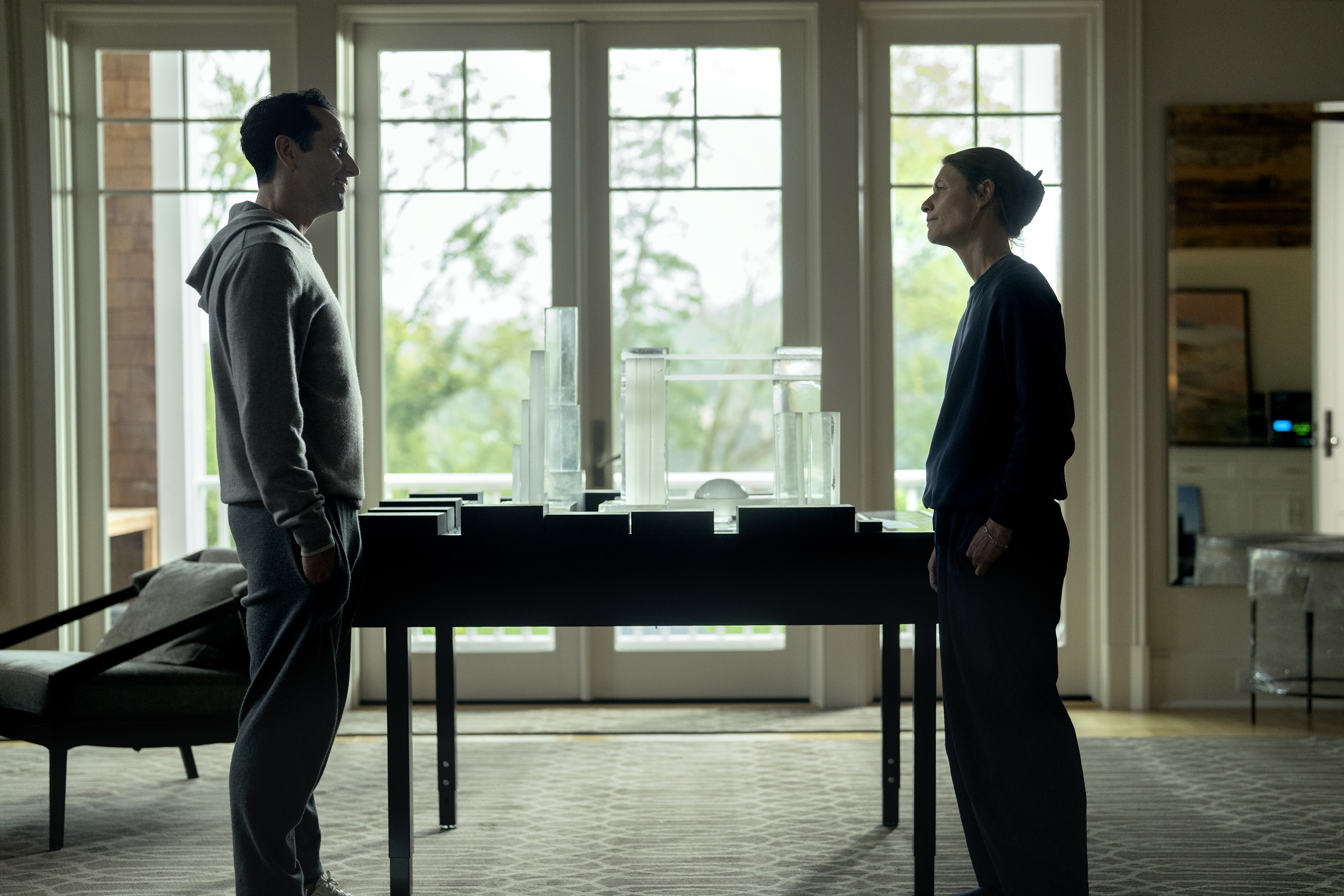
Very worthy opponents. As you said earlier, too, it’s this weird kind of romantic but platonic relationship. I do think Nile is attracted to Aggie. What’d you think?
Yeah, a worthy opponent is absolute. I think that was one thing that we found, especially with the Nina relationship, that it was important to me. It’s funny, there’s a moment in the flashback episode where we see before Nile and Nina were involved and she was his ex-wife’s assistant. There’s a moment in that episode where she actually really stands up to him and tells him to fuck off. I had the feeling, if I had to analyze it, it was like, oh, I think that’s the moment Nile probably was suddenly interested, that I think he does like a worthy opponent, someone who fights back. It’s catnip to him.
Certainly Nile, in his voraciousness and his appetites, was he physically attracted to her as well as interested? Maybe, sure. You could ask Matthew how he was playing it. I think what was more interesting was whatever pull they both felt that was not traditional or not, you couldn’t just call it sexual. There was some dance happening that was very mutual.
And so, even if she wasn’t physically attracted to him, there was certainly something intriguing.
Including putting on The Talking Heads’ “Psycho Killer” as a mood setter, almost.
[Laughs] Yeah, he likes it. I mean, that was the funny thing about reading up on Durst and some other serial killers. One thing that I found most interesting as a throughline was they were like, sociopaths are not plagued by guilt or remorse, but the really big drawback to being a sociopath is that you’re almost always bored and restless. You don’t get the same kind of dopamine rush from real emotional connection. What that means is there’s always this need to entertain yourself.
I mean, you look at Robert Durst, who volunteered to do this documentary and sit down for an interview. There’s this kind of need to press your luck as a thrill, to come this close to confessing without confessing. Not that you’re trying to get caught consciously, but you’re trying to keep things interesting.
It’s very true of Nile – that they do tend to like to get right up to the edge. They don’t actually want to get caught consciously, but there’s something about if it’s too easy, it’s not fun or interesting, which again, for drama is convenient because you need these guys to make some interesting mistakes. These guys can be so smart in some ways, and they make really dumb tactical errors because they just can’t resist or they can’t help themselves.
Cr. Courtesy of Netflix © 2025
Did you know Aggie and Nile’s fate when writing the pilot? How much did the ending influence the beginning of The Beast in Me?
We really did not know. We were still breaking the finale as we were in production. We did not have all the late scripts written. As it happened, Howard and I were also doing the second season of Accused simultaneously with Beast. It was crazy. As a result, we were not able to have all the scripts written.
We were writing up until the very last minute. As far as the pilot goes, we knew the shape of it was going to be this kind of cat-and-mouse. We knew that she was going to write a book about him as a way of getting closer to him, as a way of finding out the truth. We knew that presumably there was going to be snake-and-mongoose reversals.
That’s the one time there are times when you just have to say, “Okay, I’m trusting that there’s something unconscious going on that hopefully we’ll be able to tie this up together.” I mean, that’s the crazy thing about television. You got to schedule, and it’s like, “All right, we got to start shooting. I hope it all comes together.” It was a little unnerving. I wish I could say we knew everything and we were just working backwards, but no, we were definitely finding our way.
Never would’ve guessed. I think a lot of people would want to see Aggie cover other subjects in The Beast in Me or follow similar dynamics with other characters. Has there been any talk of making more of the show?
Yeah, there’s been talks. I agree. I think it’s possible. Obviously, if given the chance, I’d love to explore that. I think the show did well. It was really exciting to see so many people connect with it. We’ll see what happens.