

Picture: Getty Images
It’s been one of the most turbulent 48 hours in Netflix’s history (and year, for that matter). Just a day after the streamer confirmed it’s cutting around 1,000 jobs — the biggest layoffs (but not the first this year, contrary to belief) the company has ever made — Netflix has now announced that Bela Bajaria, its Chief Content Officer and one of the most powerful executives in Hollywood, is leaving the company after nearly a decade.
Her replacement, as now confirmed by Netflix, is Peter Rice, the former chairman of Walt Disney Television and a Fox veteran, who will take the reins of Netflix’s entire global content operation from October 26th.
The news was first broken by Puck, which described the exit as shocking but not entirely surprising given where Netflix currently finds itself, but will it be enough?
Netflix’s biggest-ever layoffs
On Wednesday, October 14th, co-CEOs Ted Sarandos and Greg Peters, after nearly a month of speculation from the media, with Too Much TV first covering potential layoffs, told staff in an internal memo that Netflix would be letting go of roughly 1,000 employees, around 6% of its workforce. Netflix had about 16,000 full-time employees at the end of 2025, so this is a significant chunk of the company. Variety reported that most of the cuts hit product, technology, legal, and HR, but they’ve also extended to PR and communications, marketing, and, sadly, more gaming division cuts. It’s also impacted content on both the TV and movie side. The cuts, from what we’re told and have seen, have impacted staffing worldwide.
In the memo, Sarandos and Peters said the company’s mission requires it to be disciplined about where it puts its people and resources, while insisting Netflix will keep investing aggressively in high-impact areas. Netflix also says it remains on track to hit its full-year forecast.
For context, the last time Netflix made cuts on anything like this scale was 2022, when roughly 450 staffers were let go across two rounds. This week’s layoffs are more than double that.
The timing is notable, too. Netflix reports its Q3 2026 earnings next Tuesday, October 20th, so expect plenty of questions on the call.
Looking back at Bela Bajaria’s decade at Netflix
It’s hard to overstate just how much of the Netflix you know today was shaped by Bela Bajaria.
She arrived in 2016, a few months after leaving NBCUniversal, where she’d been president of Universal Television, and initially ran Netflix’s unscripted slate. By 2020, she was leading all of Netflix’s global TV operations, and in January 2023 she was named Chief Content Officer, the same reshuffle that made Ted Sarandos and Greg Peters co-CEOs. That put her in charge of Netflix’s roughly $20 billion annual content budget across series, film, unscripted, and live.
A quick look at what happened on her watch:
- The era-defining hits: Bridgerton (2020) and Squid Game (2021) arrived as she took over TV, with Squid Game becoming Netflix’s most-watched series ever. Wednesday, Arcane, One Piece, Baby Reindeer and Adolescence followed, along with the final season of Stranger Things, although arguably Netflix’s TV slate is more reliant on quick-hit limited series than ever, and there’s a real lack of shows and franchises that will be Netflix’s bread and butter for the next decade.
- Seriously, go down the current drama list here and give me a list of series that aren’t coming to an end or will soon be coming to an end.
- Going truly global: Bajaria was the champion of Netflix’s “local for local” strategy, putting Korean, Spanish, Indian and other non-English series front and center rather than treating them as filler.
- The unscripted explosion: From Love Is Blind and Selling Sunset to Squid Game: The Challenge, reality TV went from a sideshow to a pillar of the Netflix slate. Sarandos specifically credited her with this in today’s announcement.
- Live events and sports: This is perhaps her biggest structural legacy. The Roast of Tom Brady, the Jake Paul vs. Mike Tyson fight, NFL Christmas Day games and the ten-year WWE Raw deal all came under her leadership, turning Netflix into a place you’d tune in to at a specific time.
- Film, too: As CCO, the movie side also reported up to her, which means the record-breaking run of KPop Demon Hunters — Netflix’s most-watched film ever — happened on her watch.
That’s not to say her tenure was without criticism. Puck notes her preference for broad, populist programming, which was a deliberate move to widen Netflix’s audience beyond its House of Cards prestige roots, but it’s also an approach that’s drawn accusations of quantity over quality. Netflix has made changes to address this over the past year, but it’s perhaps most evident in Netflix’s worst run at the Emmys in a decade.
The bigger problem has been getting viewers to stick around. Back in July, we assisted Bloomberg’s Lucas Shaw on a report showing just how many viewers are abandoning Netflix shows after one season. One Piece lost more than 30% of its audience for season 2, Beef season 2 dropped by more than 70%, and The Night Agent shed half its viewers in season 2 and another 35% in season 3. The latest season of Avatar: The Last Airbender fell more than 60% in its first week, while Running Point and The Four Seasons were both renewed despite losing over half their audiences.
As Sarandos put it in today’s announcement: “She led enormous changes at Netflix.”
Who is Peter Rice?
If you’ve watched TV or film over the past 30 years, you’ve almost certainly seen something Peter Rice had a hand in.
Most recently, he was Chairman of Walt Disney Television and Chairman of General Entertainment at Disney, overseeing everything from ABC, FX and Hulu to National Geographic and 20th Television — more than 300 shows a year. The Bear, Shogun, Abbott Elementary and Only Murders in the Building all came out of his empire. Before that, he spent decades at Fox, including running the Fox Searchlight arthouse label behind Slumdog Millionaire, Juno and Little Miss Sunshine, and he was the supervising creative executive on the very first X-Men movie.
He was fired from Disney in 2022 by then-CEO Bob Chapek and, according to The Hollywood Reporter, has more recently been overseeing content for the LA28 Olympics but also producing movies such as 28 Years Later and its sequel, The Social Reckoning, Warfare and Saturday Night.
Sarandos called him “one of the most effective at-scale operators in the entertainment industry” in today’s announcement, and Rice himself said Netflix has shown it’s willing to take chances on distinctive voices and fresh ideas.
Per Puck, Rice brings a notably different sensibility from Bajaria. He’s known as a talent-friendly, prestige-leaning executive, which could signal a shift in what Netflix greenlights over the next few years. Perhaps more intriguingly, he managed the integration of Fox into Disney, a skillset that would come in very handy if Netflix makes another run at buying a studio, something we’ve heard consistently from insiders and others, after losing Warner Bros. to Paramount Skydance, with NBCUniversal undoubtedly the biggest target. Others predict Netflix now fully pushes into theatrical releases, although I’m less convinced on that – 2027 will be make or break for that happening.
There’s also the question of what happens to film chief Dan Lin. Puck reports Lin is expected to follow Bajaria out the door, though that decision will now rest with Rice.
Echoes of 2022, but with no obvious levers left to pull
Long-time readers will remember spring 2022, when Netflix reported a net loss of 200,000 subscribers in Q1, its first decline in more than a decade. The share price cratered, layoffs followed in May and June, and there was a lot of talk about the streaming bubble finally bursting.
The big difference back then was that Netflix had obvious untouched levers to pull. Within months, it launched its cheaper ad-supported tier in November 2022, and in 2023 it began its paid sharing crackdown on the estimated 100 million households borrowing someone else’s password. Both worked spectacularly well, and Netflix went on to its strongest subscriber growth in years.
In 2026, those levers have been pulled. The ad tier is mature, password sharing has been squeezed, and prices have gone up repeatedly. Netflix even stopped reporting subscriber numbers, choosing to focus on revenue and engagement, though even engagement is shifting, with Netflix now citing a “quality-of-engagement” metric that nobody gets to see.
And engagement is where the cracks are showing. According to Puck, engagement grew just 2% in the first half of 2026, and Nielsen data for July had Netflix at 7.8% of all connected TV viewing in the US, compared with 14.2% for YouTube. Sarandos admitted at a Bloomberg conference last month that Netflix is “not growing as fast as I want us to.”
Where it really started to unravel: Warner Bros.
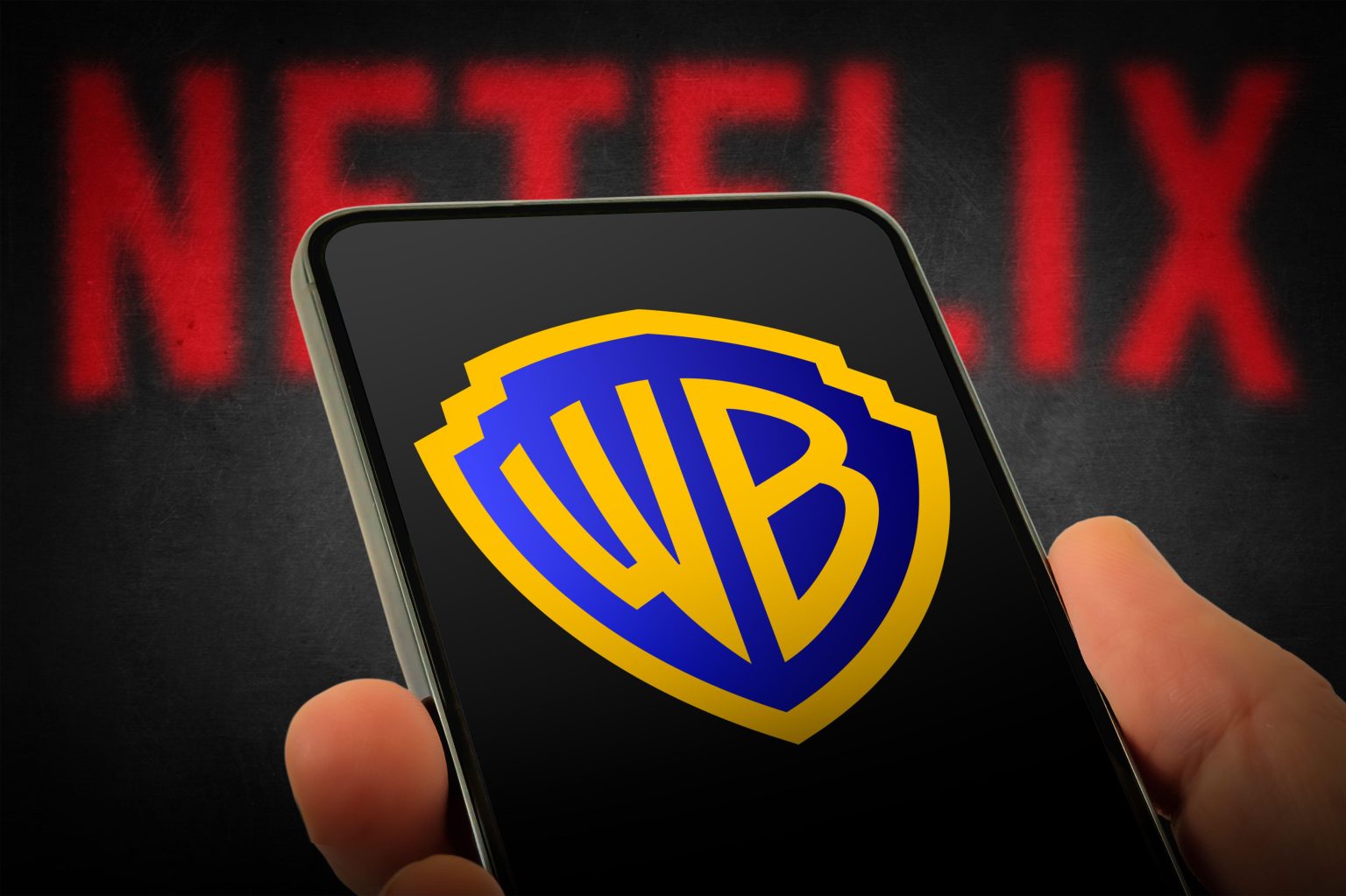
3DD8GHN Netflix and Warner Bros Studios – Global Entertainment and Media Production
If you’re looking for the moment things began to go sideways, a lot of Netflix’s current problems can be traced back to last December, when Netflix agreed to acquire Warner Bros., including HBO, HBO Max and its film and TV studios, in a deal valued at around $82.7 billion. At the time, we called it a make-or-break acquisition that would fundamentally reshape Hollywood.
It never got that far, despite that email that got sent (rightly or wrongly, I won’t debate the merits here) to every single Netflix member around the globe. Paramount Skydance launched a hostile bid for the whole of Warner Bros. Discovery just days later, kicking off a months-long, very public bidding war. In late February, after Paramount raised its offer to $31 a share (roughly $111 billion), Netflix declined to match, saying the deal was no longer financially attractive. It walked away with a $2.8 billion breakup fee.
While there’s no doubt it was a good transaction to chase down, those sort of libraries do not come around often; it consumed months of leadership attention, and it told investors, intentionally or not, that Netflix’s own leadership felt it needed a century-old studio to keep growing. When the deal fell through, there was no obvious Plan B and, sadly, most of the innovation beyond a normal cadence of new TV shows and movies has been focused on the push into creator content from YouTube and podcasts, something that generated so little viewership they swept it up into the “other category” in the Engagement Reports. Other areas of growth like gaming and in-person events like the Netflix House are also not very convincing of long-term growth, although in the former, I’d make the case they’re at least now on the right path.
Do all those problems land solely at Bela’s feet (or those of Netflix’s head of film, Dan Lin, who has had briefings against him for several days and whose position also looks perilous with rumors pointing out that Cliff Booth and Narnia will make or break his tenure — if he lasts that long), or do we have to go further up the food chain? We’ll leave that to you.
To be fair, Netflix’s core numbers are still heading in the right direction, and the roof isn’t caving in just yet. The problem is the wider entertainment business, which looks shakier than ever. Theatrical has recovered somewhat, but attendance is still down, and cable fees, the shrinking ice cube that’s subsidized much of Hollywood for the past two decades, keep melting away. Netflix has been largely insulated from both, but its story has always been about growth, and right now it can’t say what the next catalyst is. They’re not comfortable in their own skin, and the constant flip-flops and particularly bad messaging on engagement (I’m told they weren’t able to put up any initial defense to Bloomberg’s piece – not good!) makes them look like they’re in a boat without a paddle.
The human cost
Netflix’s future will be the subject of debate for months to come, but the biggest story of the week is the roughly 1,000 people who found out they no longer have a job at Netflix. Many of them built and currently maintain the very products and services you use every day, and they’re entering an industry already reeling from shrinking production slates and cuts at Disney, NBCUniversal and beyond.
We’ve spoken to and worked alongside many people at Netflix over the years, and we want to pass along our thoughts to everyone impacted by this week’s layoffs. We wish you all the very best with whatever comes next.
We’ll be covering Netflix’s Q3 2026 earnings next Tuesday and will keep you updated on any further changes under Peter Rice. What do you make of Bela Bajaria’s exit and Rice’s appointment? Let us know in the comments.