![Léa Seydoux Shines In Marie Kreutzer’s Uneven Netflix Movie ‘Gentle Monster’ [Tiff]](https://www.whats-on-netflix.com/wp-content/uploads/2026/09/gentle-monster-tiff-netflix-review.jpg.webp)
We’re in a time when, because of how digital-oriented our lives are, it’s becoming increasingly challenging to spot the transparency of a two-faced person’s dark-sidedness. This affected Austrian writer-director Marie Kreutzer and her crew on her 2023 feminist feature Corsage when actor Florian Teichtmeister was convicted for possession of child pornography, which nobody was aware of at all until he was found guilty. The experience led Kreutzer to inspect that aspect of being a public figure dealing with the reckoning of someone of proximity who was found for a deplorable crime. Hell, or in the case of the unsettling, patient, yet disappointingly surface-leveled family drama Gentle Monster—one of Netflix’s many Cannes acquisition titles I screened at TIFF 2026—how does the blast of this revelation come for a wife when her unsuspecting partner is found to be a child predator.
The film follows Lucy (Léa Seydoux), a renowned experimental musician who shaped her life around her less-than-successful German filmmaker husband Phillip (Laurence Rupp) and their kid Johnny (Malo Blanchet). She upends their city life and moves to the Bavarian countryside after Phillip experiences an intense creative burnout. Life is fine and hunky-dory; married life is alive and well. One day, the Munich’s Criminal Investigation Department (CID) raid their home, with a warrant to seize all of Phillip’s computers. At the base, investigator Elsa (Jella Haase) informs Lucy that her man has been on sexual sites and engaging in dark-web forums, all involving child sexual abuse. To make matters worse, they suspect he’s also been soliciting them.
Shocked, stunned, shattered, and everything in between, Lucy tries to navigate herself and her relationship. How does one grapple with this revelation, not only having to tell others as a public figure but also the fractured belief system when no red flags have ever come up with him? Meanwhile, Elsa, in her off time, must tolerate her outward, perverted, wheelchair-bound father (Sylvester Groth) that she lives with, as his constant sexual harassment towards their live-in nurse raises concern.
An Anchoring Performance by Léa Seydoux
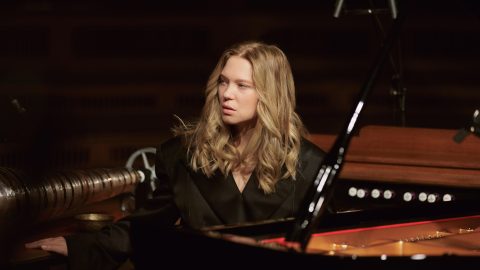
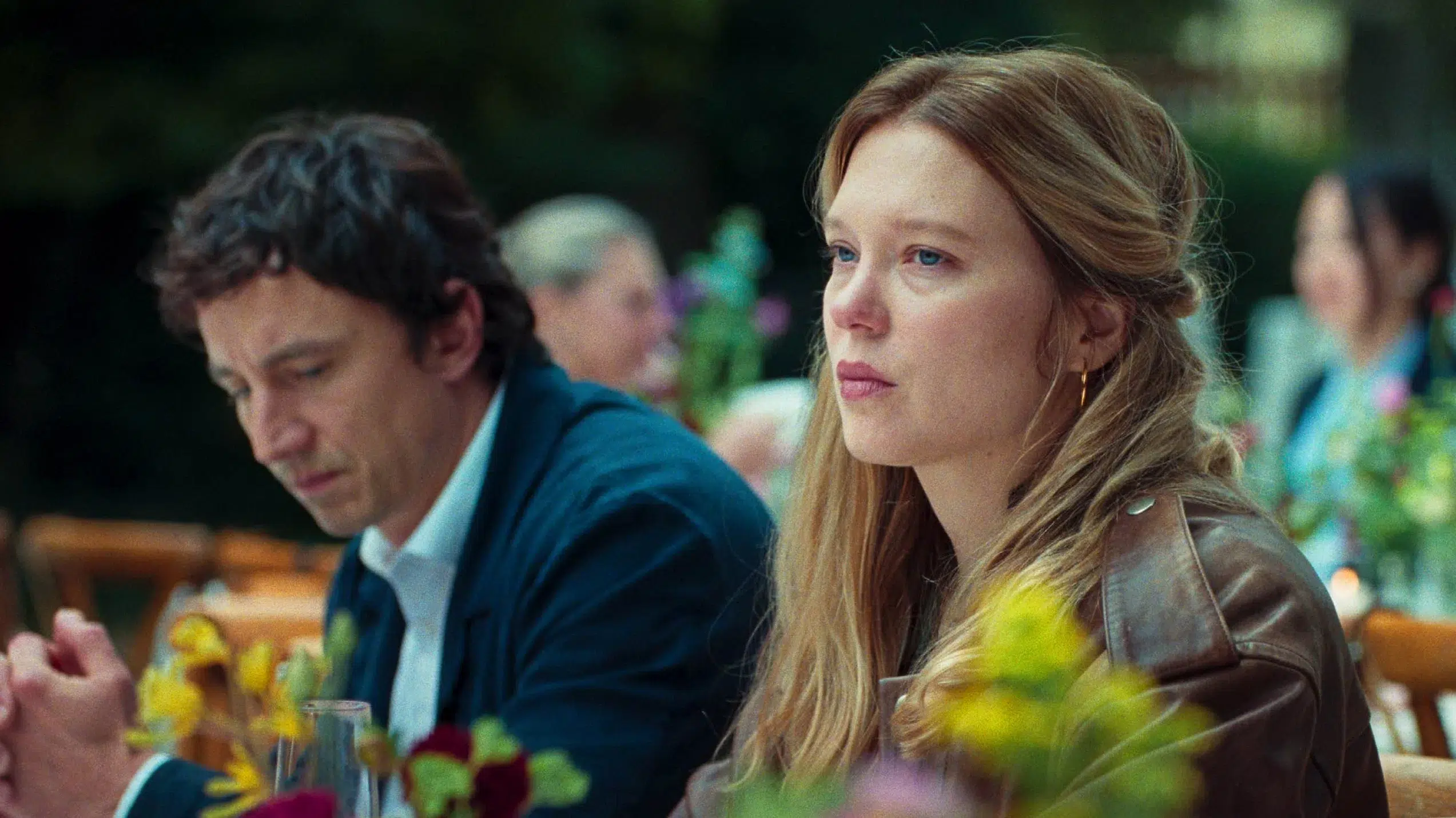
Gentle Monster is primarily anchored by Léa Seydoux’s lived-in, visceral performance, reminding the masses of her immense abilities. She conveys the flurry of Lucy’s internalized emotions—traversing intense confusion, deniability, stress, paranoia, and rage—with a naturalistic display. Kreutzer’s grounded, gentle slice-of-life approach allows Seydoux to completely camouflage into the character and for you to connect with her too. As you feel the burgeoning, stomach-churning agony as she does upon each detail.
Though one might think it’s an easy black and white and go “Girl leave him” or “Girl, kill him,” Kreutzer tackles the reality of love’s gray area. It’s graceful in how she elaborates on the psychological challenges from the domestic, female lens. The inclusion of other female characters such as her dynamic musician mom Eloise (Catherine Deneuve) attempts to give her advice as both something of an avatar. Small details that texture the cycle of women having to carry gross information on a generational scale, like Eloise advising her daughter to puke, an urgent anxiety response, because she hasn’t yet after taking that information, add great weight to it.
Picture Credit: Netflix
Where the Film Falters
That said, the film grinds to a halt each time it switches its perspective to Elsa and her B-plot with her dad. When her and Lucy’s paths intersect, it makes for some of the film’s stronger scenes, and Haase is pretty good as well. But her character is uninteresting when isolated. The subplot addresses the generational cycle of sexual abuse of men against the contemporary era in that contrast, but it doesn’t have as much punch as it thinks it has. If anything, it disrupts the film’s pacing. It’s completely unnecessary and pads out an overlong, nearly two-hour runtime. The Lucy A-plot is enough to sustain itself at least on a plot front.
On the other hand, Kreutzer doesn’t mine much substance. It has the hook but doesn’t impress in reeling you in beyond Seydoux and the supporting cast’s performances. However, it enacts on its premise in the most straightforward direction, with the often distracting, heavy-handed subplot leaving little to say outside the obvious “Hey, men are perverted freaks.” Point blank, that’s the statement.
That same sentiment applies to its music choices in performance scenes where Lucy is playing on her piano, harmonium, and glass harp, like Charles & Eddie’s ‘Would I Lie To You?’ and deconstructing the lyrics and compositions. The directness leaves so much potential to be desired. Granted, it was a delightful surprise to learn Seydoux got a set of pipes. I would listen to her cover of Coldplay’s “Yellow” on Spotify (please, Netflix).
The Verdict
Nevertheless, Marie Kreutzer’s Gentle Monster is the Léa Seydoux showcase. It’s thoughtful in prose but doesn’t have much to offer beyond her performance, which is a damn shame because a movie of this topic in 2026 should be more than your hollow, meditative slice-of-life. Perhaps a decade prior it would’ve felt fresher, and not to knock the real experience that inspired the film’s meat, but it should have as much remarkable command as Seydoux’s portrayal.
Watch Gentle Monster If You Like:
- Anatomy of a Fall (2023)
- Corsage (2022)
- Tár (2022)
- The Tale (2018)