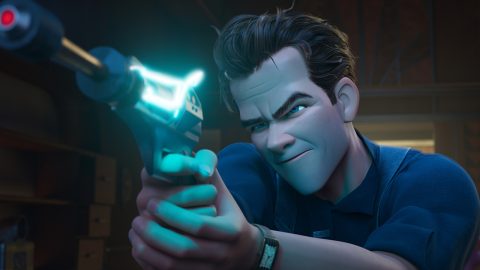
Picture Credits: Netflix
In every artistic medium, there are projects that take on a legendary status for almost happening. Titles like Dr. Dre’s Detox or Stanley Kubrick’s full vision for A.I. feel mythical, things meant to be speculated about rather than actually experienced. In the animation industry, Ray Gunn was one of those titles for a long time, but instead of being lost to history, we finally get to see it.
Initially developed as a Warner animation back in the ’90s, director Brad Bird has never stopped thinking about Ray Gunn and, in his eyes, it was always going to happen. What was once a fully hand-drawn feature with some computerized elements is now a fully CG film coming out on Netflix later this year. Bird’s career has taken an odd route since the turn of the decade. Still regarded as one of the defining voices in Western animation, he has kept fans waiting on the edge of their seats for his next film. And it’s not just any film—it’s Ray Gunn.
We caught up with Bird about the long process to get this thing made, the recurring themes of his work, and why he decided to work with John Lasseter again.
For fans of your work, this feels like one of those projects lost to film history finally coming true. Does it feel as surreal to you as it does to the fans?
No, because I always thought it was closer to happening than it actually was. It was like a mirage; you keep walking toward it, but you’re never getting there. Even when I resurrected it and got it out of the catacombs at Warner Brothers, it happened too slowly for me. I kept thinking, “This is going to go faster,” and so I’m very grateful that it’s finally done and that it is pretty much the movie I want it to be, but I viewed it as, “Why is this taking so long?”
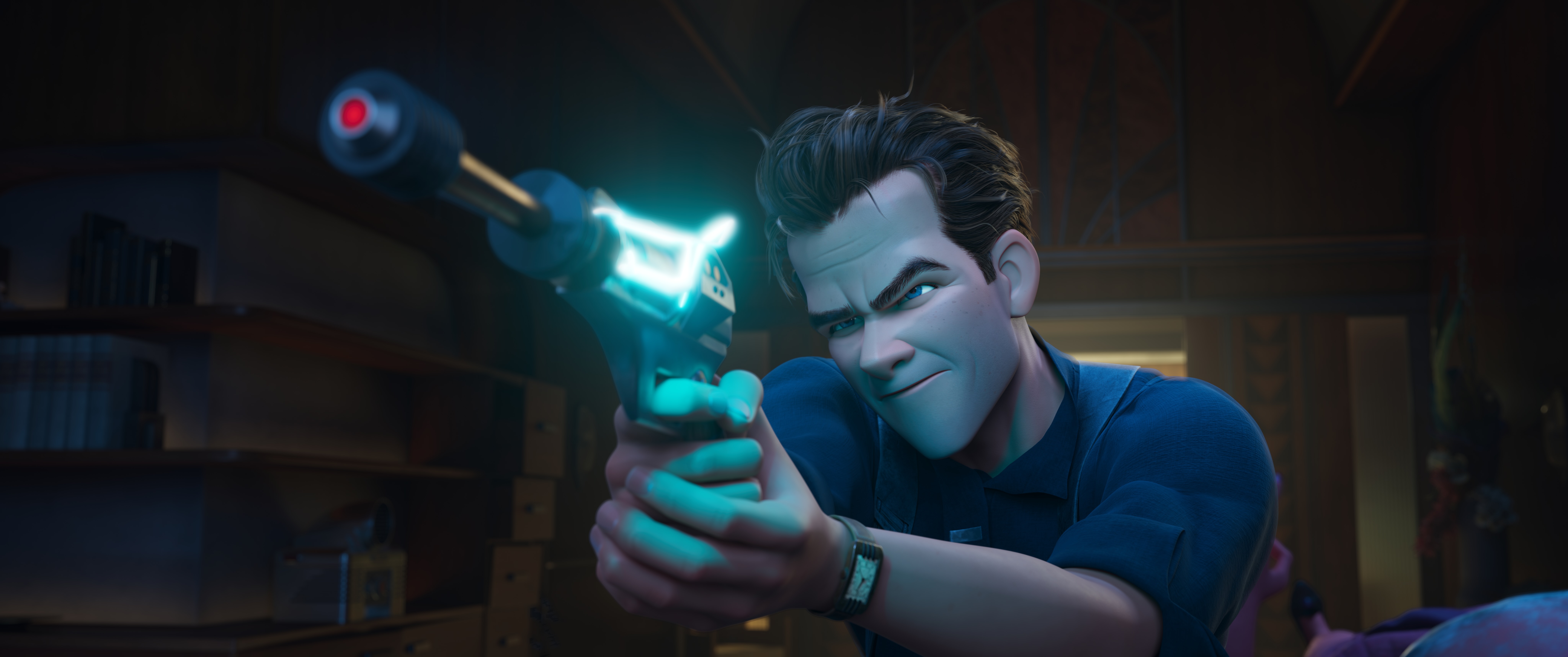
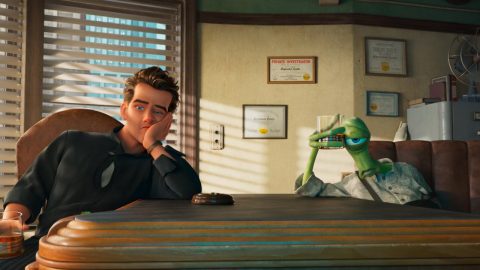
RAY GUNN – In Metropia, a gigantic city in an alternate future as seen from 1939, private eye Raymond Gunn is drawn into a case involving aliens, murder and a multimedia star named Venus Nova. Cr: Skydance Animation/Netflix © 2026
At what point did this flip into being a fully CG feature?
I couldn’t get support for doing it hand-drawn. One company offered to do it with half the budget, and because the scope of the film is so big, that wasn’t the movie that I was setting out to make either. CG ended up being a better solution. They felt confident in the investment, and I’m comfortable with 3D, obviously; it was just an adjustment.
What were the other big differences in how the film shaped up between then and now?
Not that much in terms of the story or anything like that. The technology has changed, so that was nice to be able to light the film and get it to look a certain way. I remember at Pixar, there used to be these tremendously complicated rigs on the characters to light them, and they were invisible until you pressed a button and saw all this scaffolding that was imitating how light worked, rather than being more true to life. When they got it to where you could have one light bulb and the light would bounce off things, that was this huge breakthrough.
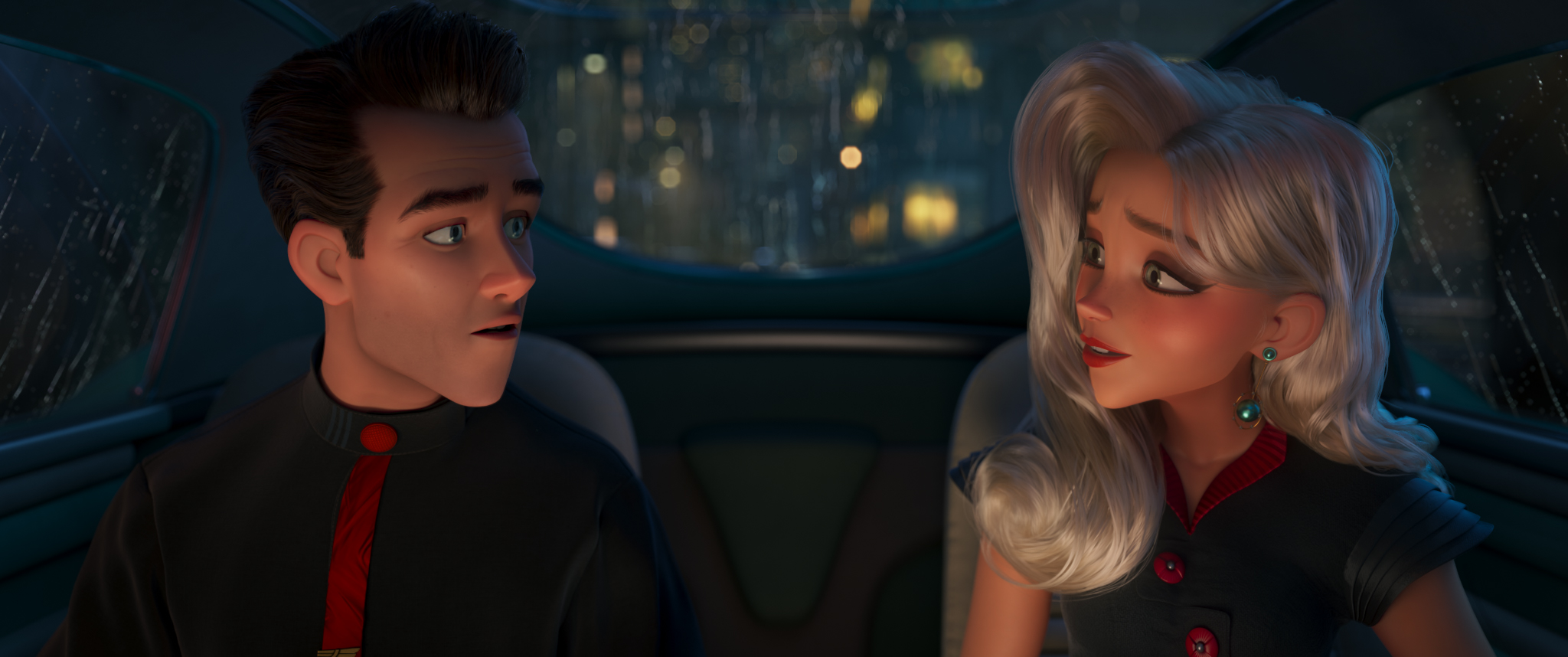
RAY GUNN – Raymond Gunn (Sam Rockwell) and Venus Nova (Scarlett Johansson). Cr: Skydance Animation ©2026
You once said, “Pain is temporary, film is forever.” What were the moments of pain you had to push through on Ray Gunn?
The painful moments had to do with where the financing was going to come from; it wasn’t really until Netflix stepped up and believed in what we were trying to do.
There were production bumps and pipeline issues where things weren’t ready in time, and we had this big, complicated movie that we wanted to do, so we ended up moving to Cinesite in Montreal. It was big, it was complicated, and it needed really good acting in the animation, and they absolutely stepped up and did unbelievably good work. So I have nothing but compliments to give to Cinesite. It helps that we were in roughly the same time zone. When you’re working with people on the other side of the world, your morning is their late night, and that becomes another problem. So, when it moved to Montreal, it became easier in some ways to manage, but we tried not to lean on Zoom too much and made sure that we made trips to Montreal and saw people in front of us.
In a lot of your films, there’s this theme of escaping your circumstances and fulfilling your potential: Hogarth having The Iron Giant be his escape, Remy looking beyond being a regular rat, Bob Parr not fulfilling his potential as a hero. Is that yearning for something more a feeling you had to experience in your life?
That doesn’t really go away, because your point of view changes when you move, and then you see something somewhere else that makes you think that’s where you want to be. There’s some of that in Ray Gunn. The things that it was discussing 30 years ago when I first had the idea are relevant now. Some people are going to think that they’re new additions, but they’re actually not. There’s a lot more to the movie than what we’ve been able to show.
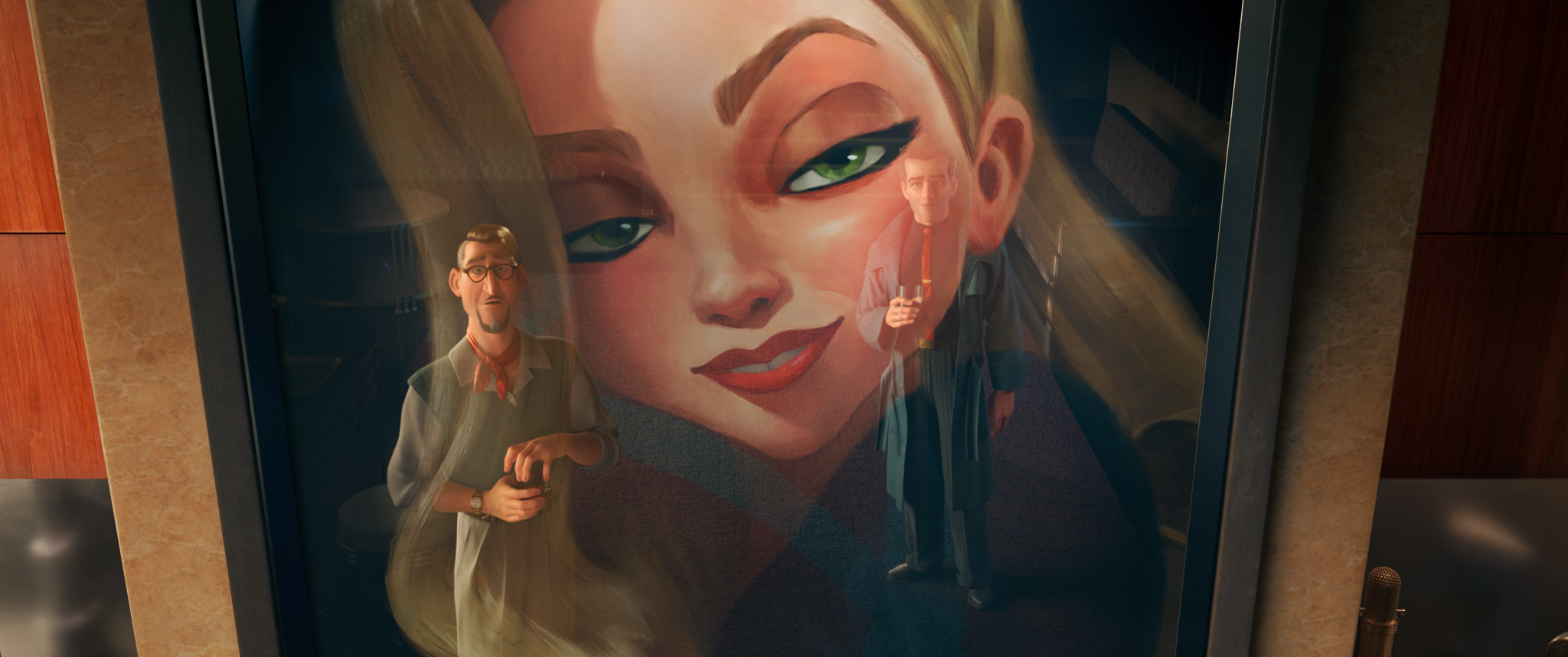
RAY GUNN – In Metropia, a gigantic city in an alternate future as seen from 1939, private eye Raymond Gunn is drawn into a case involving aliens, murder and a multimedia star named Venus Nova. Cr: Skydance Animation/Netflix © 2026
What went into the decision to work with John Lasseter again?
It was serendipitous. I worked with Skydance on Mission: Impossible – Ghost Protocol, and I worked with John on all the Pixar films, so it was really just finding a good home for the movie and taking it from there.
Given his reputation in the industry and the allegations against him, did you have any pause about working with him again?
Well, I mean, a lot of these stories are more complicated, and there are many different ways to discuss it. I think everyone just wants to make a good movie. I think the most important thing to focus on is the value of storytelling, and that’s what I’ve tried to stay focused on.