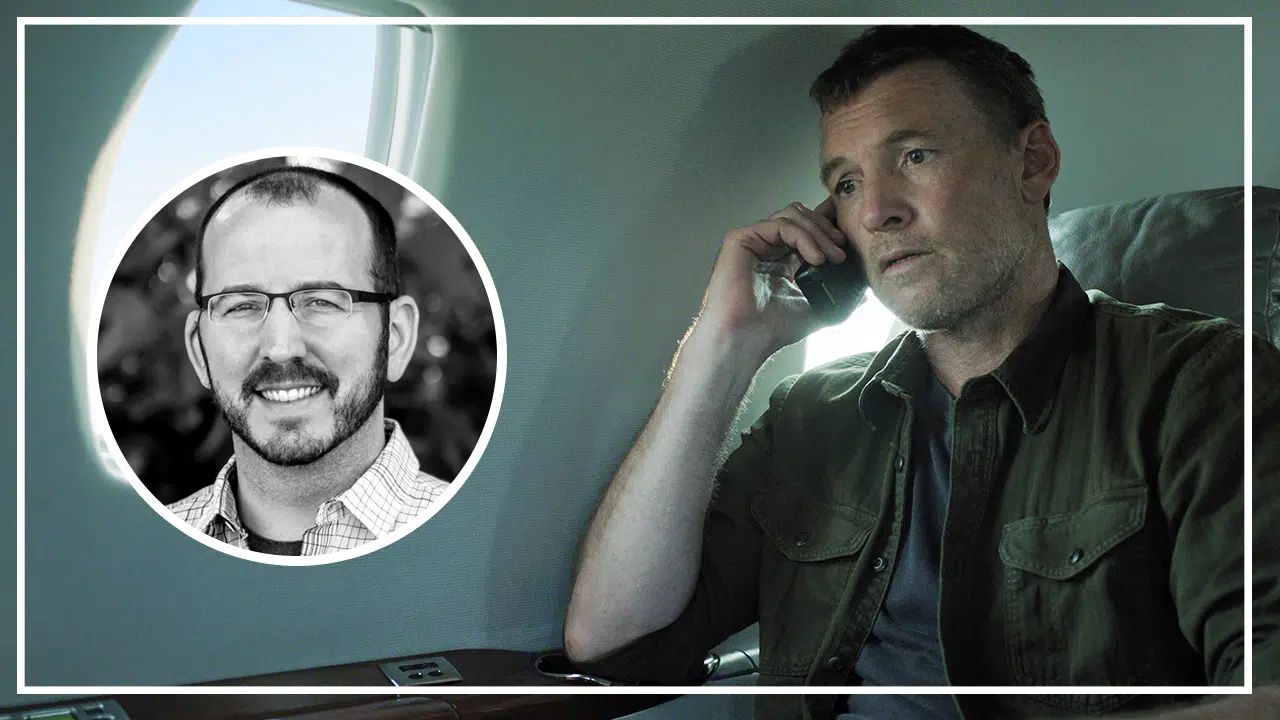
Picture Credits: Netflix / Benjamin J. Bumgarner
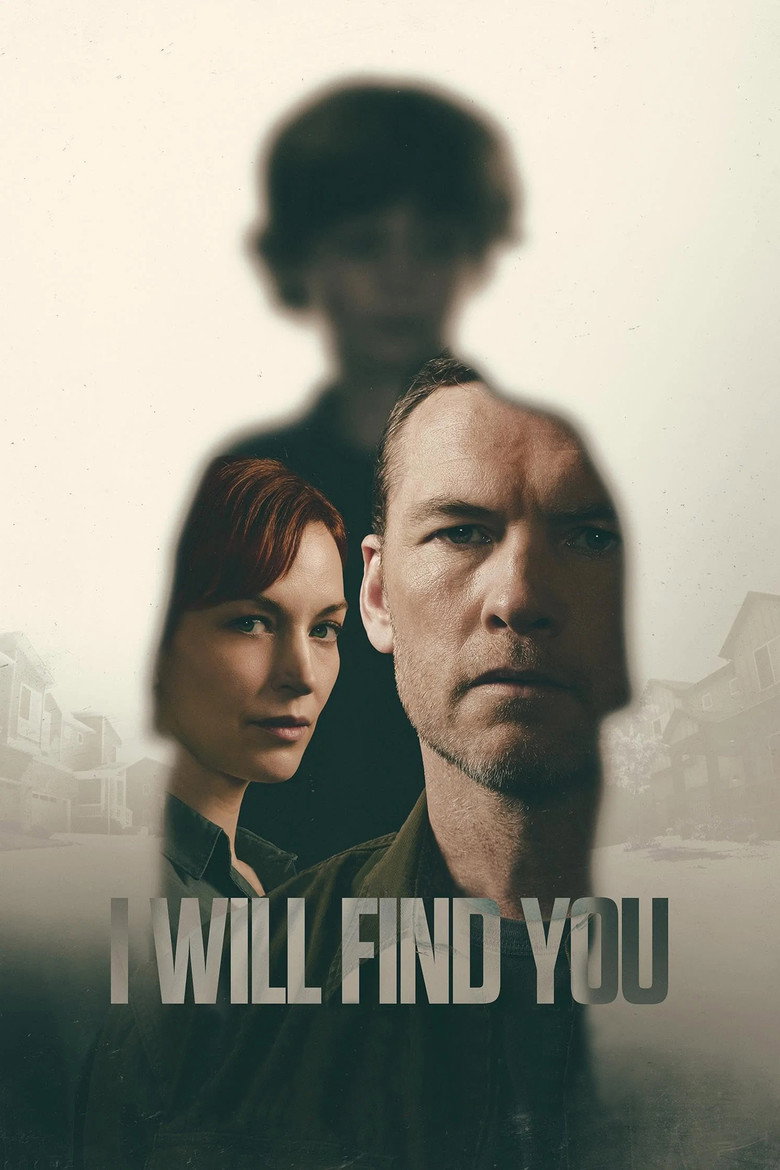
Editor Benjamin J. Bumgarner helped piece together the murder mystery that has Netflix subscribers hooked. I Will Find You, based on the Harlan Coben novel, is a lean thriller that Bumgarner wanted to keep propulsive without sacrificing character. There were a lot of puzzle pieces to put together in David’s (Sam Worthington) search for his son.
For the editor, cutting the series actually wasn’t that different from actually sitting down to craft a big puzzle piece. “There are parallels to it,” he told What’s On Netflix. “Editing sometimes it even hearkens back to when I used to do puzzles at my grandma’s house. You have these pre-designed pieces and you’re putting them together. Sometimes editing is like doing a puzzle in that there aren’t pre-designed sides, any shape you can move anywhere to create the whole.”
Recently, Bumgarner – who edited episodes one, four, and seven – spoke with What’s on Netflix about how the characters always connected the pieces for him in I Will Find You.
With a murder mystery like I Will Find You, you have a lot of moving pieces to help put together. Is there much flexibility in post in how the mystery unravels?
Robert Hull, who was our showrunner and our other two writers and co-showrunners, Brian [Wynbrandt] and Steven [Lilien], they’re phenomenally talented writers and they write great scripts that really dial into what they think is the best way to tell that story. Now, as far as us shifting and shaping things around, there’s a lot that we do, I would say, scene by scene that we’re maybe taking a different approach that was on the page.
As far as I would say for I Will Find You specifically, we didn’t do a lot of shifting things. A lot of that stayed similar. We did a lot of play and experimentation, especially in one-on-one with the opening. I put together at least six or seven different versions of the opening.
How’d that go?
It’s one of those things that this industry’s, as you’re very well aware, such a subjective minefield that I feel like everybody responds to things differently and everybody has certain things that they want to get out of the show. The studio maybe wants to lean a little bit more into the mystery elements, whereas Robbie, Brian and Steven – we called them RBS, what I called the holy trinity – may want to restrain from some of those elements till later in the show.
Definitely something we experimented with in the opening in certain versions having the juxtaposition of feet running through the woods, somebody burying a body with a shovel. I think there were a lot of conversations earlier on of holding back and restraining on showing some of those elements. You know, keeping it about this father who’s put in this tragic position and the loss of hope and not necessarily already throwing these red herrings at the audience early on.
That’s where our current version of that opening sequence came from. It was about engaging the audience with Sam as a father who’s put in this tragic situation who believes he’s innocent and the world’s given up on him. So, those were definitely some elements that we shifted around or kept in later.
How about setting up potential suspects? How to paint characters and their motivations early on, like, is a shot of a character too suspicious or not?
We pulled out a lot of scenes that overly complicated the first episode. Cutting moments that weren’t really adding anything or introducing red herrings at points. We didn’t feel like we needed to have the audience distrusting certain characters or feeling a certain way about them either negatively or positively.
As far as experimentation, I will say we did a lot in episode one with having, there were a lot more prison elements that were shot. There were a lot more sequences showing Sam’s progression in the prison. Prisoners that are accused of something related to children – prisoners are not very receptive to that.

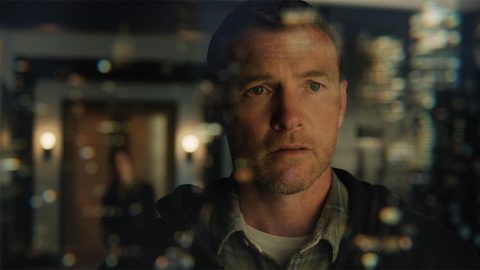
I Will Find You. Sam Worthington as David Burroughs in Episode #101 of I Will Find You. Cr. Christos Kalohoridis/NETFLIX © 2025
Were there more scenes about that?
We had sequences where Sam was being kind of beat up in this over and over again. You saw humanity basically being removed from him over this period of time. So there definitely were things that we experimented with in those sequences of how much do we show Sam’s prison life? How much do we get into the A story?
It was inherent to the pacing that what we feel like is enough to lock the audience into Sam to where they can engage and relate to his experience and where he’s at. It’s just really about setting what kind of a tone we want to set. Brad Anderson, who directed one, did an amazing job of really bringing these visceral kinds of tonalities to the prison and how just a caustic and unenjoyable experience it is.
What about handling flashbacks? How tricky are they in post-production?
Brad brought some amazing kind of ideas to the table with the photos coming to life. That’s a big thing. We experiment a lot with those types of elements: how stylized the flashbacks, what elements we ground in them, what sonic elements we play with and what do we have or tease to the audience with Matthew.
A big thing, especially with episode one, is it really Matthew? Is it not? So I think a lot of the experimentation was with the opening, a lot with the flashbacks. We didn’t really shift because Harlan and Robbie, Brian and Steven, they had a great template and roadmap to where the story was going.
The big decision that we were having was just not spending too much time away from the A story, David’s story. It’s why certain scenes we pulled out of episode one. We had more scenes with [the prison guard] Bert Cardozo.
He just sweated desperation on the show.
We had scenes in episode 101 where you saw him with his family and his daughter. You saw that he’s not some one-off goon. He has stakes – a family. But we ultimately felt it took away from the A story and wasn’t something that needed to be serviced in episode one.
You got so much story to set up. During that process of serving the A story – David and the search for his son – when do you know you got the right pace for it all?
There are two approaches that I take. There’s scene-based pacing, how each scene paces out. And then there’s the pacing that’s inherent to the episode. I have a lot more control and am doing a lot more work on the scene pacing. Once I’m assembling these things together, then you’re watching it as a whole and deciding how each one of these scenes affects the scenes next to them and what is a hat on top of a hat.
With the murder mystery, as far as the pacing, a lot of it is how we’re reacting to the episodes, what information we want to tell the audience at certain points and what we want to hold off on. A lot of the pacing to me, it’s so funny because I feel like a lot of times in how I approach pacing is it all kind of comes back to inherently my approach to scenes to begin with.
Which is?
It’s all about the emotion, all about the story and then what services that the best. Usually, a lot of my pacing decisions come out of that, especially on a scene-by-scene basis. Once we have the bigger picture, especially with the showrunners deciding overall show pacing, we ask, what’s slowing down the episode? What do we feel like is not adding to the story? Whereas I feel like pacing on the scene basis, it’s more about the performance and what’s enhancing the performance and what choices we’re making to enhance those performances. We’re always focused on character, pathos and story.

I Will Find You. Christopher Redman as Wesson in Episode #101 of I Will Find You. Cr. Christos Kalohoridis/NETFLIX © 2025
Are there time restrictions for episodes or is there flexibility with runtimes?
It wasn’t forced into these network timing restrictions that we had. It wasn’t like, oh, we just need to pace up this scene or we don’t have the time for this. That’s one thing that was really enjoyable about working with Netflix, having a little bit more control over this. We could slow things down more than we would traditionally with certain narratives where we’re restricted within certain timeframes.
It is a fast-paced show. Clearly, based on I Will Find You’s success, a lot of people binged it. Does that affect the edit at all, knowing audiences will likely watch the story in one sitting or two?
I don’t think we really approached it as far as someone being able to consume the entire series in one setting. We always knew that was the model and how the show was going to be presented. The reason that I feel like you can binge the show pretty quickly is some of the episodes were only 30 minutes long.
Robbie was definitely, I think, very protective about not overwhelming the audience with too much of the mystery box, red herring elements and keeping it grounded in this human story. He kept it about the loss of hope, gaining of hope, what family represents and what family’s willing to do and how important family is. To RBS’s credit, they didn’t bloat the episodes.
We were aware that most people are going to watch one, two, and three. They’re probably not going to watch one and stop at one. The goal was always to make sure that there’s an inherent desire to push through. I think the other thing that was wonderful about working on a Netflix show, and something that’s serialized, is that we were dealing with arcs that go across the whole basic season and weren’t having to necessarily look at things just episode to episode. To the showrunner’s credit, they approached this story and the script as one entity that you could watch, whether it be one through five or one and two, I think.

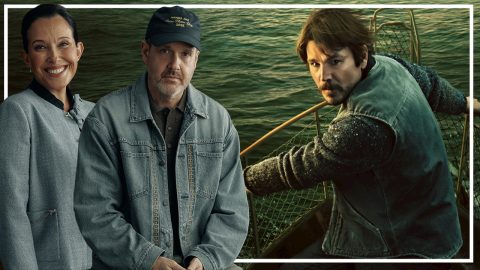
I Will Find You. (L to R) Hugh Thompson as Lenny, Erin Richards as Cheryl Dreason, Britt Lower as Rachel Mills, Jonathan Tucker as Adam Mackenzie and Peter Outerbridge as Warden Mackenzie in Episode #101 of I Will Find You. Cr. KERI ANDERSON/NETFLIX © 2025
Is cutting exposition ever daunting?
It’s one of those things that I don’t even look at that way. I initially do scene-by-scene breakdowns. What are the beats that are important in the scene? What’s the emotional truth?
Especially in our industry, there is this negative connotation like, “Oh, it’s just some silly exposition scene.” I don’t look at scenes like that like, “Oh, this is the exposition scene. This is the chase scene.” To me, I look at it just as, “Okay, what are we doing with this scene? What are we gaining from the characters? What are we gaining from the plot?”
There’s this inherent thing with, especially TV, it’s like, “Oh, this is a necessary evil.” That’s one thing I think was great about the show is, and to the writer’s credit, there never felt like there were scenes that were like, “Oh, this is just some pointless exposition scene where we just have to dump information.”
Plus, you got some very good actors delivering exposition here.
We were blessed with a lot of great talent. I would say the big thing for me is, and it’s a good problem to have, it’s always being spoiled with choice. It’s like, “Oh, this is a phenomenal performance and this is a phenomenal performance, but which one do we choose from?” It’s like the anvil on the ankle that can be crippling sometimes when you have so many phenomenal performances and it’s like, “Well, which one do we choose from?”