Picture courtesy of Netflix / Dan Romer
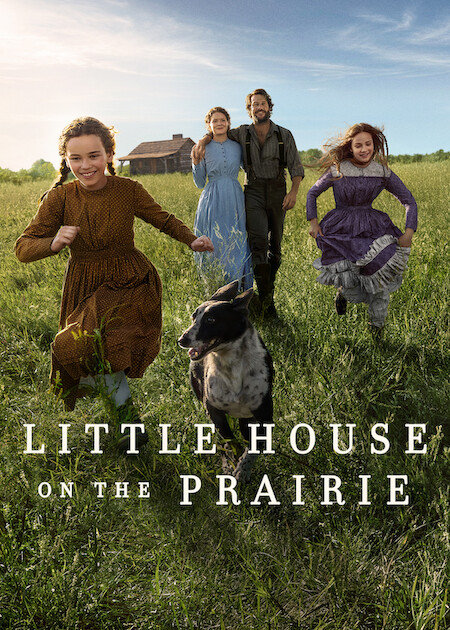
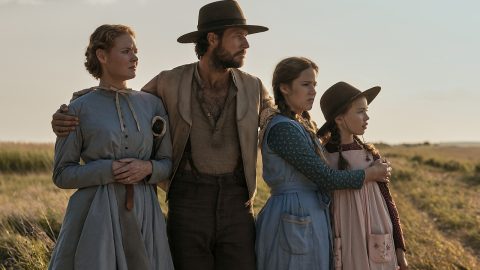
Dan Romer knows how to create scale in his film and television scores. Over the years, he’s scored many tall tales: Beasts of the Southern Wild, Station Eleven, A Knight of the Seven Kingdoms, and now, Little House on the Prairie. For showrunner Rebecca Sonnenshine’s remake of the television series, Romer wanted an elegant momentum for the story of a family moving out west.
If there’s one common thread through Romer’s eclectic scores, including Digging for Fire and The Woman of the Hour, music history is a part of it. The composer always keeps himself curious and inspired by delving into the history of his medium. Recently, he spoke with What’s On Netflix about his passion for music history and, of course, his love of David Bowie.
“A Giant Sky” opens the show. How’d you want that track to set the right tone for the series?
It came from a lot of back and forth with Rebecca with our showrunner of just saying, how do we introduce this world in a way that feels like emotional, pastoral, but also moving, having momentum? Because we didn’t want to give the show a slow start. We wanted to make it feel like we’re catapulting into this new world.
Stuff like percussion that actually had a lot of drive to it traditionally felt too forceful. Other things that we tried that actually ended up in other episodes and other cues. Nothing was going to waste with doing that.
What we landed on at some point was this fast viola line, which became our north star of the show for forward momentum. Other instruments would mark time behind that motor, and that’s how we would create momentum on the show.
What were some of the other ideas that you tried that ultimately became cues in other episodes?
The opening cue of episode three, I believe, was the first thing we tried over the beginning of episode one. We had had a couple versions of that cue. They threw that music over the beginning of episode three and it was like, oh yeah, this vibe worked for here.
I did some tweaking and additional writing to get that kind of cue wrapped around that moment. But these two cues both have the same melody. Actually, in the show’s opening cue, we never actually hit that main melody in the strings. That doesn’t happen until later. But both those vibes of cues can contain the same melodic information and chordal information.
What was it about that opening cue that really crystalized what the score for the show needed?
It doesn’t feel actiony at all. It doesn’t feel like a tension action movement. It just feels like something you accept as momentum. It’s not repetitive or tense, just sort of floats. You can put other stuff underneath that pushes more slowly, but feels faster because they have that underlying motor of what we call the shred viola.
Does the shred viola appear a lot in the score?
In episodes one and two, it’s over a lot. In episode eight again, too. I don’t want to say we took a break from it, but there were less opportunities that really needed to be there in a bunch of the episodes. We were just bringing it in and out and saying, “Oh, here’s where these moments need that sound.”
You’ve said setting is always a big influence on your scores. How’d the land in Little House on the Prairie inspire your music?
A way that you could score Little House on the Prairie would be a full out Americana score. You could do fiddles, banjo, mandolin, accordion, harmonica, acoustic guitar, that kind of thing. In my first meeting with Rebecca, we were talking about if we wanted to do that or not, what kind of a score we wanted to do. Rebecca wisely felt that we wanted to have a clear delineation between the music they’re making in the show, diegetically, the music that Pa is playing on the fiddle versus the score. We settled on this more romantic golden age, Hollywood strings vibe, which I feel like has the ability to wrap around Americana in a really nice way without having to be Americana.
Were any scores with that Hollywood strings vibe an influence for you?
One of the scores that I was listening to a lot was Lawrence of Arabia a little bit before, because I’ve been working on the [film] Promised Land over in Denmark. Something about that score just drew my ear. Even though it’s so totally different from the Promised Land, there was something about that score that I knew I needed to internalize as much as possible. But a lot of it was instinctual, just sitting and playing piano, playing with that harmony, and seeing what I could find.
Do you like to surround yourself with relevant scores or albums when scoring a project?
When I was doing Luca, the Pixar film, I was listening to nothing but Italian music for months and months before doing that score. If someone was to say, “Oh, what composer influenced you on Luca the most?” It would be impossible to say. And the same thing with Lilo & Stitch, similarly where it’s listening to nothing but Hawaiian music for months beforehand. I was listening to so much Hawaiian chant and trying to internalize that melody. There’s not really specific composers or specific artists that necessarily become your like, “Oh, this is what’s influencing me.” I find it a lot more helpful to do it through osmosis.
Americana scores, Hawaiian chant, and Italian music – is a part of the appeal of composing for you getting to explore music history?
There’s a thousand ways to answer this question, but let me just go stream of consciousness a little bit on it. Growing up, CDs cost minimum $15.99, and a lot of them were $19.99. And so, when you started getting really into David Bowie, but you didn’t have that many friends who were really into David Bowie, you were like, okay, I know “Ziggy Stardust” is amazing. Now what? There was no internet, really. I have to ask people, probably older people, what the next David Bowie album to buy is. And then someone’s like, “Buy ‘Station to Station’.” And you’re like, “Okay.” And then you buy “Station to Station,” you’re like, “This is nothing like ‘Ziggy Stardust.’”
Now here we are, and it’s 2026, and we have these computer programs where we can listen to any piece of music that’s ever been made. Obviously, there’s some stuff that you can’t find. There’s a lot of stuff that’s on Spotify and not on Apple Music, but so much that is. And so right now, if it’s like, “Hey, I need to learn everything I can about German folk music, I can just go on Spotify and type in German folk music and have so much to listen to.” You find an artist that you like, you’re like, “Well, that artist is awesome.” You click on them and you listen to their album and you’re like, “This is amazing.” Then you get more referred stuff from them. The amount of research you can do on other cultures’ music in 2026 is unparalleled. It’s just incredible.
What you start realizing after listening to all this music is traditional music is this unwavering, incredible thing where it’s just like when you hear the traditional music of different cultures, you’re like, “These songs have been around some of them for hundreds, maybe thousands of years or who knows.” It’s just so amazing to say, “I’m going to listen to this music that I’ve never heard before, that other people have been singing for an ungodly amount of time.” It’s just so incredible that we can delve into this stuff.
Your love of Bowie is very clear, plus Station to Station is truly amazing. Even on Little House on the Prairie, does a quintessential artist like Bowie inspire you in any way?
I ultimately come from producing bands. That’s what I went to college for. That’s what I did in my 20s. When I got out of college, I was producing bands and solo artists. And so when I started scoring, it was with Benh Zeitlin, the director of Beast of Southern Wild. The first feature I did was with him. I didn’t come from a film scoring background, neither did he. We were both figuring out how to make a film score together. He’s a big Metallica fan.
I can see that in his movies.
Yeah, a huge Metallica fan. He had these ideas of how the guitars were going to work and this was sort of like, these quick triplet things. We would do those on bells and strings instead of guitars because we didn’t want to use guitar in the score. There’s never actually straight up acoustic guitar in that score because, in our minds we’re like, oh, we don’t want to use acoustic guitar on this score because then it just sounds like your roommate made it or something. This is not true at all. I just did A Knight of the Seven Kingdoms where I used a lot of acoustic guitar. But for Beasts, everything was strings and bells and pianos and so on.
My ideas of score and the artists that I think about no matter what are Tom Waits, Kate Bush, David Byrne, David Bowie, Joanna Newsom, Joni Mitchell, Flaming Lips, and Granddaddy.
Those are some great influences.
That was the music I was trying to make in my 20s. Kate Bush was a later in life thing for me. I heard Kate Bush for the first time in college. I’d never heard, but all those other artists I got really into in high school. But it was a friend in college who showed me Kate Bush and I was just like, oh my God, this is unreal.
Those artists you list are so great at creating worlds through sound. It makes sense you, as a composer, gravitate towards the likes of Kate Bush or Tom Waits.
I don’t think I can pick up a piece of percussion without thinking about Tom Waits.
OK, so if you were to build a playlist of artists for an unofficial Little House on the Prairie playlist, what would go on that list?
Oh my God, that’s a tough question. Songs or score or anything?
Anything.
It’s such an amazing world where we can just, as I was saying before, just go onto Apple Music or Spotify and just type in Appalachian folk and you’ll just find just so much incredible music. I mean, the thing is that our modern brains just need a little time to hook into the thing. Sometimes if we’re very used to listening to very compressed, very fed to you on a plate kind of music, you’ll hear some older stuff and be sort of like, my brain is having a hard time sifting through what’s happening musically.
But yeah, I mean, I would just say go listen to old folk music – and not just from American culture. Go listen to traditional music from any country, from all over the world. You will just find amazing stuff from anywhere that’s lasted for centuries.
It’s really incredible that we have it. If I had this when I was 14 years old, oh my God. What a world it would’ve been. If I could have just sat down and listened to every David Bowie song when I was 15 or 16, oh my God, what an amazing life-altering thing that could be.
I appreciate your love for Bowie. Always good to meet a fellow “Station to Station” fan.
I was a little shocked the first time I heard “Station to Station.” I think that album was 1976 versus “Ziggy Stardust” in ‘72. They’re just four years apart. But you’re like, “This is a completely different beast. Okay, all right… This is really different, but you spent $20 on this CD, so you have to listen to it because you just bought it with money.”
I would sit with it. I had an hour train ride to school, and then an hour train ride back. And so, every day I would listen to at least two albums on the way there and two albums on the way back. It was just listening to “Station to Station” every day. Eventually I was like, “Oh my God, this is one of the greatest albums ever made.”