Picture Credit: Netflix
There is a visual detail in My Life with the Walter Boys Season 3 that viewers may not have consciously noticed. As Jackie and Cole finally allow themselves to be together, the camera starts getting closer to them too.
“The closer they got in the relationship, the closer the camera got to them,” cinematographer Jarrett Craig, CSC, explains.
After their breakup, he did the opposite.
Craig joined My Life with the Walter Boys for Season 3, shooting Episodes 1, 2, 5, 6, 9 and 10, while Derick V. Underschultz served as cinematographer on Episodes 3, 4, 7 and 8. Despite alternating cinematographers and a season that moves from quiet hospital rooms to the Walter ranch and eventually the much faster world of drag racing, the visual identity of Silver Falls remains consistent throughout.
We spoke with Craig about creating that world in Season 3, how the camera followed Jackie and Cole’s changing relationship, the evolution of Cole’s racing storyline, what went into the contrasting sides of the finale, and some of the behind-the-scenes work viewers were never supposed to notice.
Here’s our conversation with My Life with the Walter Boys Season 3 cinematographer Jarrett Craig, CSC:
Season 3 opens in a very different place for the Walter family, with everyone waiting to find out whether George will recover. It’s a quiet and emotional way to bring us back into their world after the Season 2 cliffhanger. Was there a deliberate visual approach to slowing everything down at the beginning of the season?
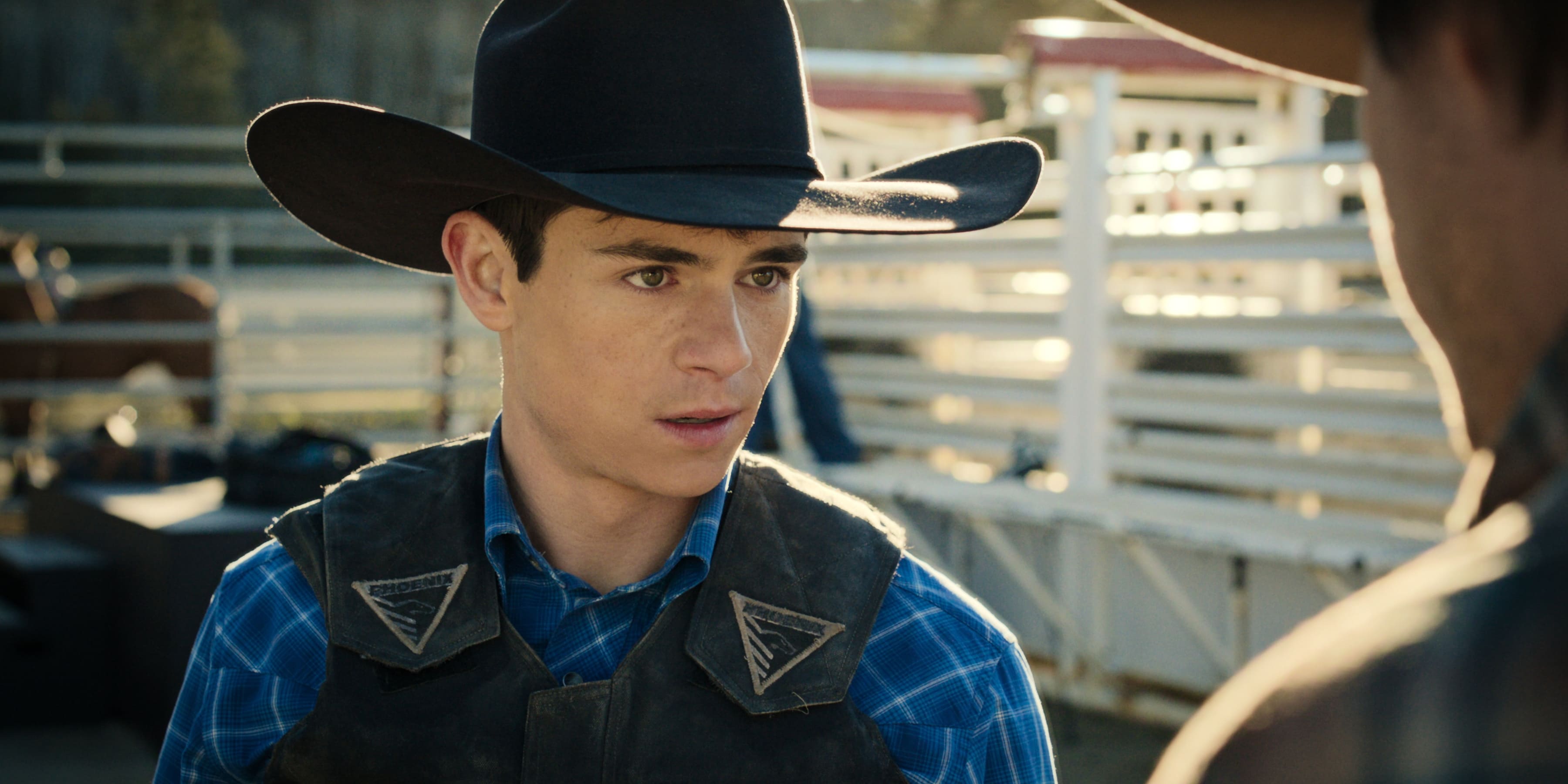
Jarrett Craig: The season actually opens with a lot of energy, with the ambulance lights flashing and the rush of the gurney through the emergency room into the ER. But that gets tempered once the family arrives into something much calmer. We move into a montage that shows time passing as the whole family waits, holding their breath for George’s recovery. The whole idea was to let the audience sit in that helplessness with the family, that feeling of waiting when there’s nothing you can do but be there.
After the initial shock of arriving at the hospital, we find Jackie alone outside the emergency department, emotional. Once George starts to wake, we shift the color of the light in the hospital room from scene to scene, a subtle way to show the hours and days going by. We also let the camera settle and sit longer in those quiet moments with the family, so you feel the time passing and everyone waiting patiently.
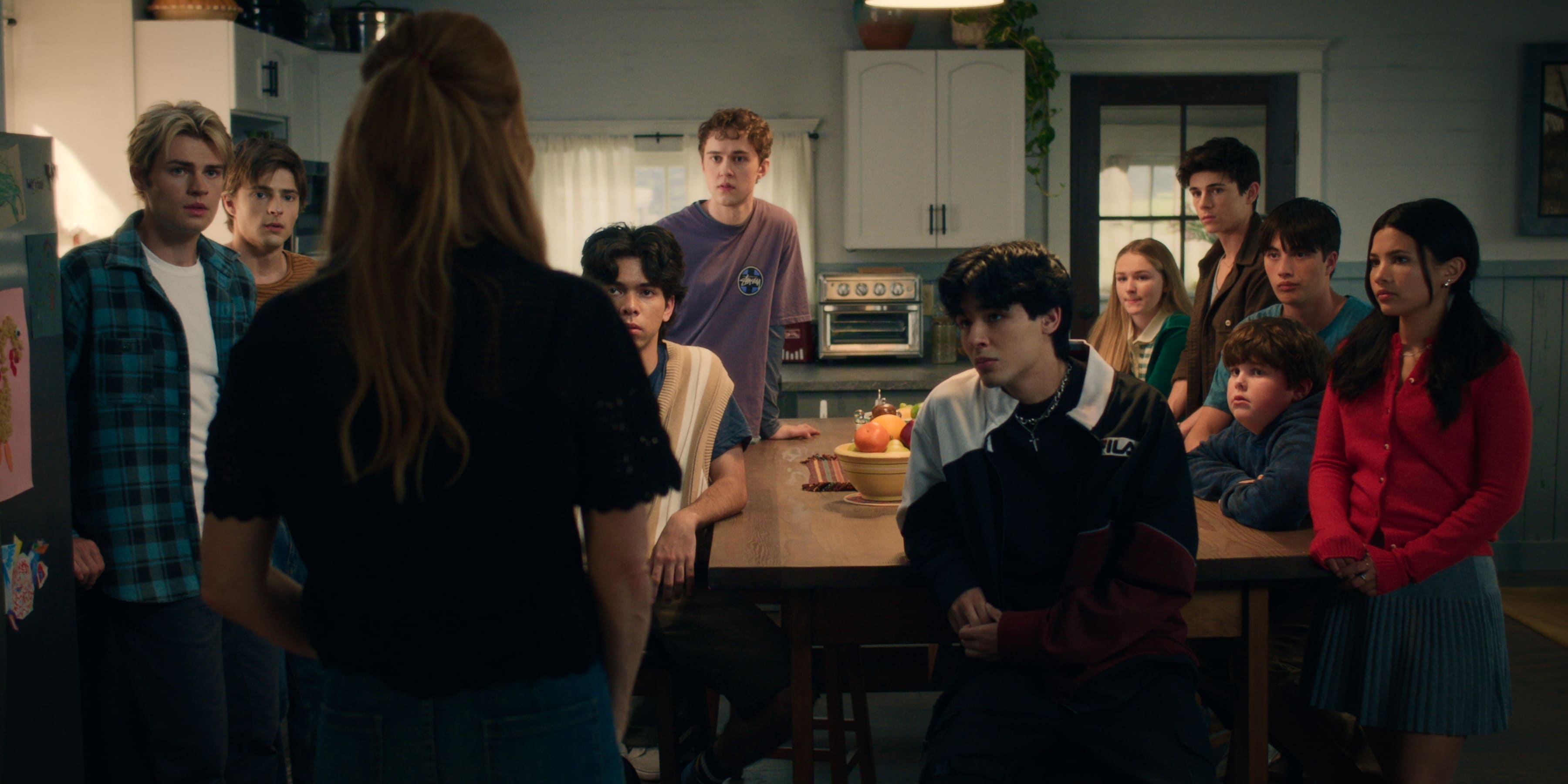
The camera stays in a moving wide shot across the waiting room on all the kids, hanging in the emotion as they wait for news. Even the house goes quieter. After the kids go back to school, you’re left with Katherine alone, doing some of the chores George would normally do.
Picture Credit: Netflix
This season moves between very different worlds: hospital rooms and medical scares, Jackie and Cole stealing moments together, the open spaces of the ranch, and eventually full-throttle racing. How do you make those different parts of the story look distinct without ever making them feel like they belong to different shows?
There’s a throughline across the whole show that stays consistent, and that’s the town of Silver Falls, the places, the characters, and the slightly heightened reality of the world that’s been built. All of that stays the same, so no matter where our characters go, into new locations and new storylines, there’s always that consistency, that foundation that brings the viewer home to Silver Falls.
And that actually gives us a lot of freedom to build new looks. A new environment that might serve only one season or one storyline can have its own distinct texture because, ultimately, it’s the same characters playing in those spaces, and the viewer is always grounded by them.
It’s also the same team behind the camera throughout. Even though we have alternating cinematographers, myself on Episodes 1, 2, 5, 6, 9, and 10, and Derick V. Underschultz on 3, 4, 7, and 8, the crew on set and off, including camera, grip, lighting, set decoration, props, art department, is the same all season. That crew is building the world right alongside us, so that foundation stays consistent, along with the look, the lenses, the colors.
Each new environment might get a different treatment, but the underlying feel is the same. And whatever the setting, the camera’s job never changes: capture the emotion, stay with our characters and their feelings, and be true to the script. That consistent approach holds everything together and keeps one visual language, no matter where we are in the world of Silver Falls.
Jackie and Cole finally get together this season, but their relationship changes quite a bit, from those early stolen moments to being openly together and eventually breaking up. Did the way you filmed the two of them change as their relationship did?
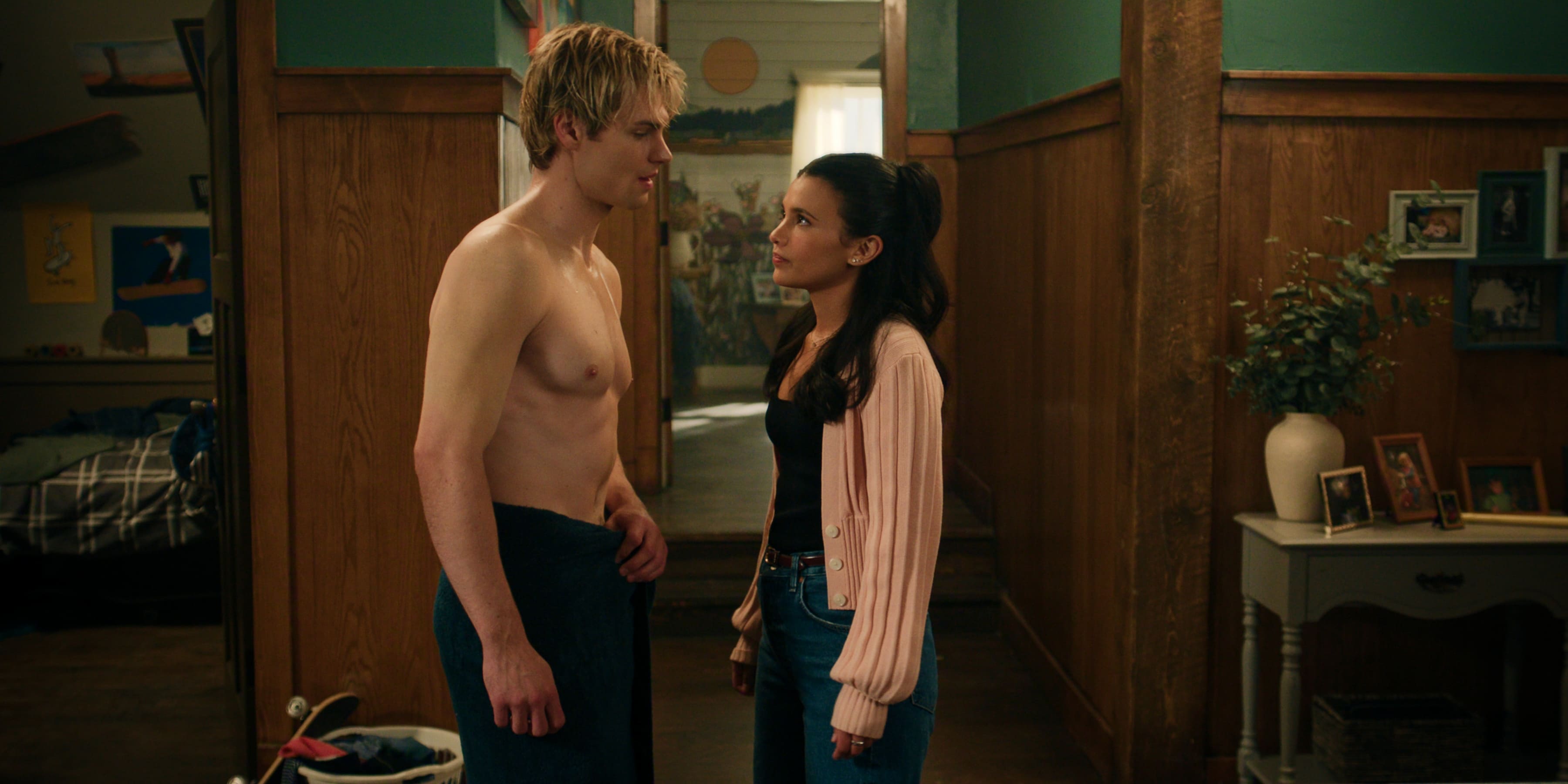
Early on, Jackie and Cole are secretive, hiding in plain sight, at school, in the art room, at home behind the barn, and in the garage. In those stolen moments, the camera is close, and it got closer as they did. We used a calm, intimate handheld or jib-arm approach, floating with them and letting the camera move softly so the moment felt alive instead of staged. The closer they got in the relationship, the closer the camera got to them.
Then, after the breakup, that flips. They’re rarely in the same room at the same time, and even when they are, the distance becomes visual. When Grace quietly calls Cole in to help repair the electricity in the community space, they’re in the utility room together but on opposite ends of it. When Cole comes home from Dylan’s after Jackie’s project gets flooded, he stays in the kitchen, and she stays in the dining room. You rarely see them share a frame anymore, and that distance is palpable, heightened by how far apart we keep the camera from them.
Picture Credit: Netflix
Racing becomes its own story for Cole. At first it gives him something he’s been missing since football, but later driving becomes tied to some of his lowest moments, eventually leading to the crash in the finale. Did your approach to those sequences evolve as Cole’s relationship with racing changed?
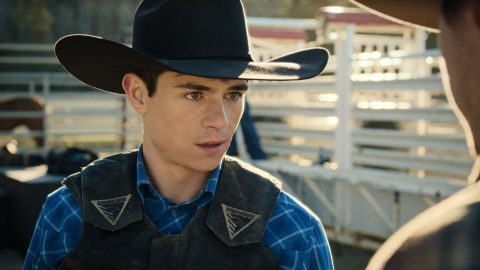
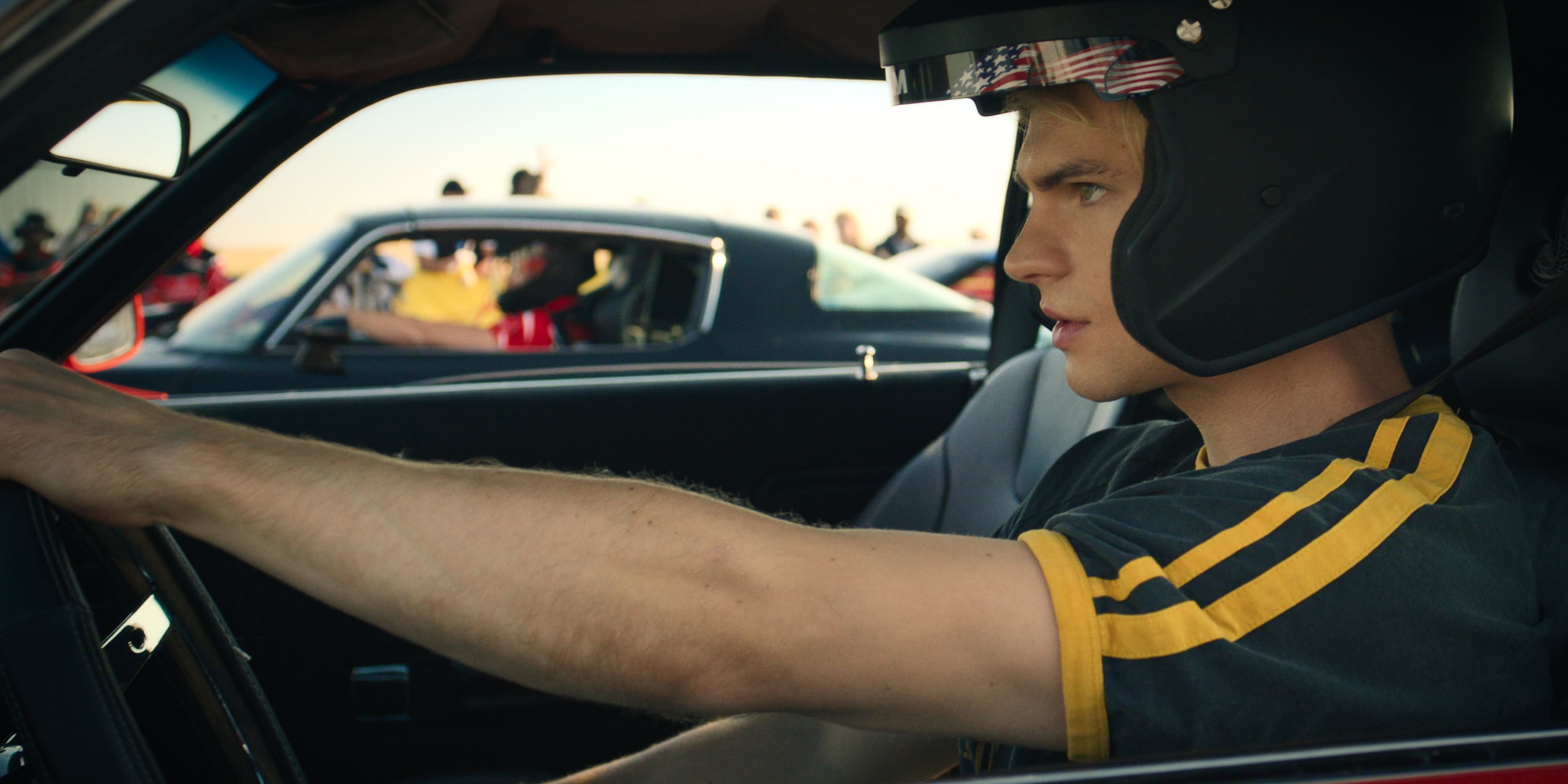
When we first introduce Cole to the dragster, it’s a solo thing: wind in his hair, his first time in the seat, adrenaline pumping. Director Monika Mitchell and I were capturing the excitement he lost after his football injury. But there’s a shadow under it, too: at that point, Cole is Jackie’s boyfriend, so even in that hopeful, exciting beginning, the environment means something else to Jackie. The potential for a crash is a reminder of the tragedy that took her family. The audience feels the thrill for Cole, but it’s shaded by what that danger means to her, and by the fact that it’s pulling the boy she loves toward it.
From there, once the world of the track comes to life, director Felipe Rodriguez and cinematographer Derick V. Underschultz lead those middle episodes and create an electric, high-energy world: crowds and fans, the roar of drag cars, everything fast and alive. That’s racing at its best for Cole: camaraderie, competition, a healthy kind of winning, almost that football-team feeling again. But the danger is always there.
Then, when it takes its dark turn after the breakup with Jackie, Monika and I come back to close out the arc: the illegal street racing, Cole abandoning the drag final, and the finale on the highway. There, we put him in stark, desolate environments, away from the public eye, almost like he’s doing something he shouldn’t, and by the end, he’s alone in the cold on the highway. Racing starts as a fresh, exciting thing Cole latches onto, and it slowly turns into something isolating and self-destructive. What was dangerous all along finally catches up with him as he gives it up on his way back to Jackie.
The locations are such a big part of My Life with the Walter Boys. This season moves between the ranch, the waterfall, the drag strip, the mountains, and the community center, among others. When you arrive at a location like that, how much does the place itself determine how you want to shoot a scene?
Before we film at a location, we usually visit a few options, and one of the most important things that determines where we land is the story. Does the place fit the script? Does it match the descriptions we’ve read on the page? After a lot of consideration and finding spots that work, we start with a motto: capture the pretty. If there’s a beautiful angle or a visually stunning environment, that’s how we want the scene to look; we’ll put our characters into it.
But one thing viewers might not realize is that every location also has to work logistically and practically. We have to actually get in there, film the scenes, and get back out with all our equipment. That takes an army, a hardworking crew who’ll haul gear into sometimes very extreme places to get those beautiful visuals.
The waterfall in Episode 1 is a good example. That was a hike in, hike out. Everything had to be carried in by hand and carried back out by hand. Without the crew, it would’ve been impossible. The people who carry gear into a waterfall one day and work a drag strip the next adapt to whatever gets thrown at them. They’re some of the best technicians I’ve worked with, but what makes them special is they’re storytellers and film lovers at heart, and it shows in how they work.
Picture Credit: Netflix
Jackie’s argument with Richard at the banquet is one of the season’s biggest confrontations, while some of the most emotional scenes elsewhere are much more restrained. Does your approach to the camera change when you’re shooting a big argument compared with a scene where the emotion is much more contained?
A private confrontation in a public space always gives the camera something to work with: the quiet whispers of onlookers in the room, everything surrounding Jackie as it flares up. What Richard intends to be a hushed argument turns into a blowout that draws the whole crowd’s attention.
The instinct for a scene like this is big energy for a big argument, but often the opposite works. You let the performance drive it, keep the camera and the lens disciplined, and the conflict lands on the actors instead of on camera movement. The camera stays patient and lets the cast bring the energy.
For the quieter, more contained scenes, it’s the reverse. We get closer, hold stiller, and let the intimacy do the work, so we don’t intrude on something fragile. Either way, we let the actors carry it.
This show has a huge cast, with stories that can move in very different directions within a single episode. How closely are you working with each director to keep the visual identity consistent throughout the season while still giving individual stories room to feel distinct?
Every director comes in and works on top of a foundation that’s already there: the town, the family, the feel of the show, so their episode always belongs to the same world. That foundation gives them freedom. They don’t have to reinvent the look, so they can put their focus where it matters: on story and performance.
My job is to help each of them tell their version of the story within that world. Some come in with a very specific visual point of view, and we build toward it together.
Some lean on us more to shape it, but there’s always room for a director to leave their fingerprint on the episode. The collaboration is different every time, and that’s the fun of it.
Was there a scene or sequence in Season 3 that looks relatively simple on screen but was actually much harder to pull off than viewers would ever realize?
The funny thing about a sequence that looks simple on screen is that it’s often the hardest work of all. You just can’t see it. When something feels natural and easy to watch, it usually took the most planning and problem-solving. That’s the whole point. The audience never thinks about how it was made, and the crew is the reason it disappears.
A good example is in Episode 10. Cole pulls up to a stop sign in his car, and Danvers pulls up beside him. We shot the actual vehicles on location, at night, at a real stop sign. Then we had to recreate that whole night-road world back in the studio for their car-to-car conversation, weeks later.
Our grip and electric team rigged and built the backdrop and strung up a bunch of mini Christmas lights to look like the night horizon, with the town off in the distance. We used some old studio techniques there. We lit the cars with the same direction and color of light as the full-scale road exterior.
On screen, it plays as a small, simple conversation on the road at night. In reality, we built it indoors, weeks after we shot the location. That’s the kind of invisible work that makes a show like this. It looks effortless, but behind the scenes, it takes a lot more.
Picture Credit: Netflix
The finale keeps moving between Jackie at the community center, surrounded by people and celebrating something she’s spent the whole season building, and Cole alone on the road trying to get back to her. Jackie and Elliot kiss just as Cole’s situation becomes increasingly dangerous. From the cinematography side, how did you approach those two halves of the ending so they could ultimately work together?
I think the ending works because of the contrast. Jackie is in a vibrant, warm, glittery environment, surrounded by all her friends and everything she helped build. Cole is on an isolated, dark, tense drive, trying to get back to her. This is Jackie’s high point of the season, and it’s set against one of Cole’s lowest.
Cole realizes where he needs to be and leaves the drag strip to get back to Jackie. The miscommunication drives the contrast: he decides to go to her, and they end up like two ships passing in the night. Warm versus cold. Community and friendship versus isolation.
The two halves work together because of that contrast. We let the visuals tell the audience to feel both things at once. Thanks to the editing, Jackie and Elliot’s kiss lands at the exact moment Cole’s situation turns dangerous.
Some of that contrast came down to the lighting choices I made for each side, the setting, the time of day, the color, and saturation. I kept Cole’s half cool, with blues, greys, and blacks, the night and the open road. I kept Jackie’s as a warm, bright, party atmosphere, with even some hints of gold in the back and edge lights. The two scenes never touch in color and tonality, and that’s what makes the ending hit harder.
By Season 3, viewers already know what My Life with the Walter Boys looks like. Does that make it harder or easier to try something new visually? Were there things you wanted to do this season that you might not have done in Season 1?
I came into the show at the beginning of Season 3 with fresh eyes. It was a new show to me, so I could bring my own interpretation to the material. I could look at what had been set up in the first two seasons and then pitch any aesthetic changes to our showrunner, Melanie Halsall. We collaborated early, before the season started, sharing frame grabs and reference material. That helped me shape a visual approach that fit the show, something that felt new but wouldn’t disorient the audience.
The question for me wasn’t really what I’d have done differently in the earlier seasons, because I wasn’t there for those. It was more about what the established look would let me introduce now. Because the audience already trusted the show, I could bring in changes without them feeling jarring.
A good example is the lenses. I moved us to a softer-contrast set of lenses this season. On faces, in the backgrounds, and in all the familiar places, they gave everything a slightly warmer, more grounded feel. It’s the kind of change you can only really make once people already know and trust what the show looks like.
We found ways to push in subtle areas that wouldn’t change the overall feel. We could add movement, texture, color, softness, but always keep the structure, the things that keep viewers connected to the show. You can evolve and advance without breaking the feeling the fans come back for.
So overall, I’d say it’s easier to try something new, not harder. The prior seasons aren’t limiting. There’s enough of the familiar there that you can still keep people engaged and evolve the visual language, mostly on a subconscious level.
Picture Credit: Netflix
Looking back at the finished season, is there a shot or sequence you’re particularly proud of, or perhaps something you put a lot of thought into that viewers might not immediately notice?
I’m really proud of the school sets. It sounds funny, but we jump back and forth between our real school, which is a location, and a school we built indoors on the stage. If viewers watched the whole season and couldn’t tell which was which, I take that as a win. It was a full-company effort to bridge that gap, from set construction to the grip and electric crews, to make it seamless. That’s really where the pride is. The crew makes the show, and I get to do this with people who care about it as much as I do.
I’m also proud of where we took the Walter house interiors. It’s built in a studio, but we pushed it to feel like it’s in a real location. A lot of that is under the radar: the little artifacts you get in real life, sun on a desk in the background, light hitting dust in the air. Those are the things you actually see in a real home that sometimes get missed on a set, where everything can feel a little plastic and curated. Sometimes those small imperfections bridge the gap between what’s real and what we build indoors.