Pictures courtesy of Netflix
South African productions continue to make a strong impression on Netflix. After hits like Fatal Seduction, Kings of Jo’burg, and Blood Legacy, another series is quietly building a worldwide audience. The Polygamist has now spent four consecutive weeks in Netflix’s global Top 10, picking up 188.8M viewing hours globally equating to just shy of 20 million views.
While Netflix has not officially announced a second season, the show’s international momentum makes a renewal seem increasingly likely. As fans wait for news, we spoke with several members of the cast about what makes The Polygamist resonate with audiences around the world.
Wonder Ndlovu on the Power of a 22-Episode Season
One of the most striking aspects of The Polygamist is its length. The first season consists of 22 episodes, something that has become increasingly rare in the streaming era, where most Netflix dramas run for six to ten episodes. We asked Wonder Ndlovu, who plays Menzi Gomora, about this unique approach and his experience on the show.
With 22 episodes in the first season, how did this extended format allow the series to tell a richer story?
A longer format gives you the luxury of truth. In eight episodes, characters often have to arrive at major emotional destinations very quickly. With 22 episodes, we were able to sit in the uncomfortable spaces, the silences, the contradictions, and the gradual evolution of these people. As actors, we weren’t just portraying moments in our characters’ lives. We were living seasons of their lives. We got to explore their flaws, their growth, their regressions, and the small decisions that ultimately shape who they become. It allowed us to build characters that feel less like television characters and more like real human beings. Life doesn’t happen in eight episodes, and neither do the journeys of these characters.
(Note: That approach appears to be paying off. Instead of rushing through dramatic twists, the series gives viewers time to truly understand every member of the Gomora family. Emotional investment grows naturally over the course of the season, making each revelation carry greater weight.)
After spending months portraying the same characters across 22 episodes, were there any scenes that became surprisingly difficult to film?
The most difficult scenes were not necessarily the loud or dramatic ones. Sometimes the hardest moments were the quiet goodbyes, the betrayals, or the moments where a character had to confront a truth they had been avoiding. After spending so much time with a character, you begin to understand them beyond what’s written on the page. You know their fears, their hopes, and the wounds they’re carrying. So when the story asks them to make a painful choice or experience heartbreak, it affects you differently because you’ve walked that journey with them. There were days when it felt less like acting and more like witnessing someone you care about go through something difficult. That’s the gift and challenge of long-form storytelling. You stop performing the character and start understanding them.
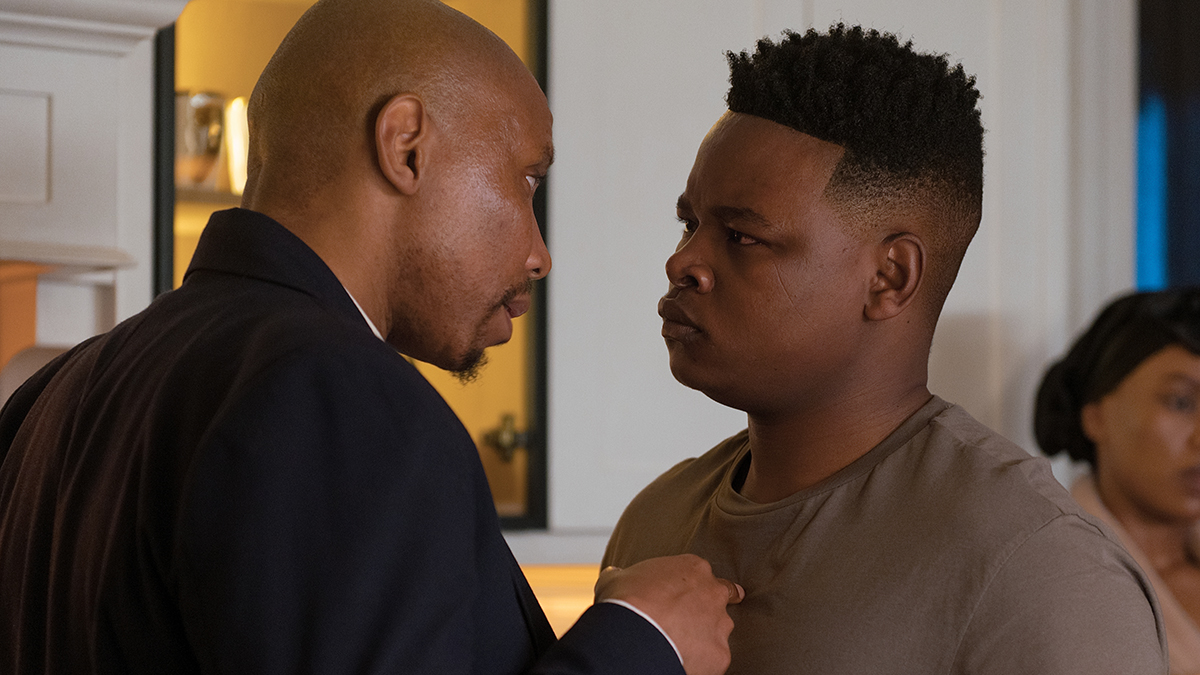
The Polygamist. (L to R) S’dumo Mtshali as Jonasi Gomora, Wonder Ndlovu as Menzi Gomora in The Polygamist. Cr. Courtesy of Netflix © 2026
International audiences often associate South African television with crime dramas and thrillers. What do you hope viewers take away from The Polygamist regarding the country and its people?
I hope audiences leave with a deeper understanding that South Africa is not a single story. Beyond the headlines and the crime dramas, there are millions of families navigating love, tradition, faith, identity, ambition, and belonging every single day. What The Polygamist does beautifully is place human relationships at the centre. It shows people trying to balance modern life with cultural heritage, personal desires with family expectations, and individual freedom with communal responsibility. Those are deeply South African conversations, but they’re also universal ones. I hope international audiences see the richness of our cultures, hear the beauty of our languages, and recognize themselves in these characters. At its core, the show reminds us that regardless of where we come from, families are complicated, love is messy, and human beings are constantly trying to find their place in the world. That’s a story that belongs to all of us.
Lwazie Keith Tsebesha on Joyce and Jonasi’s Marriage
We also spoke with Lwazie Keith Tsebesha, who plays Sarah Gomora, about the central marriage that drives much of the story.
Could Jonasi and Joyce have saved their relationship if they had sought professional help before the events of Episode One?
They wouldn’t have worked because Jonasi would have still lied and cheated, leading their relationship to its downfall.
Did filming ever make your sympathies shift between the two characters?
My sympathies never shifted; they remained with Joyce because, through it all, she loved Jonasi.
Noluthando Shabalala on Female Power and the Rise of the “Supernovela”
Next, we caught up with Noluthando Shabalala, who plays Mpume Gomora, to discuss the gender dynamics at play in the series and the future of African storytelling on global platforms.
Although the title suggests that one man stands at the center of the story, who is the true driving force behind the narrative?
While the title suggests male dominance, the true architectural power of the narrative lies entirely in the hands of the women. The central character may be the gravity around which everyone pulls, but he is merely a catalyst. The women are the ones who must navigate, dismantle, and rebuild the reality of his choices.
Where does that real power come from? Is it about authority, or something else?
In my view, power in this story is not defined by who commands the room, but by who survives the fallout of the secrets. The women possess the ultimate emotional and structural endurance. They hold the keys to the truth, and in a psychological drama like The Polygamist, the person who controls the truth holds the real power. The show is less about the man himself and more of a masterclass in how women reclaim their agency within systems designed to contain them.
What do you hope international viewers walk away with when it comes to South African storytelling?
I would hope they ask: “How does a nation with such profound cultural complexities manage to produce stories that feel so universally human?” Often, the Global North looks at African cinema through a singular lens of struggle or historical trauma. I want an international viewer to finish binge-watching our show and realize that South Africa is an avant-garde hub of modern, psychological, and high-stakes storytelling. I want them to ask a question that shifts the perspective from viewing us as a developing film industry to recognizing us as creators of world-class, globally competitive narrative art.
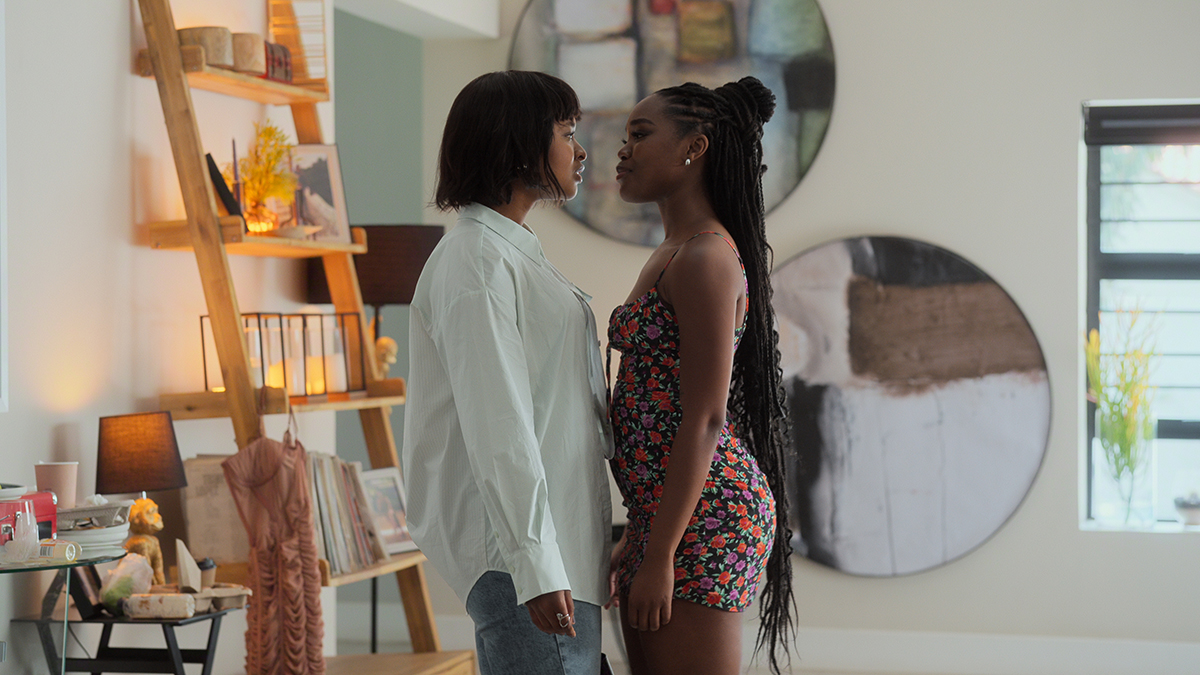
The Polygamist. (L to R) Noluthando Shabalala as Mpume Gomora, Luyanda Zwane as Lindani in The Polygamist. Cr. Courtesy of Netflix © 2026
Does a 22-episode season mean The Polygamist is simply a comeback for the traditional soap opera?
I don’t believe it is a passive comeback; it is a calculated evolution. The traditional telenovela format has always held immense cultural real estate in the Global South, but streaming platforms like Netflix have elevated it into the “supernovela.”
What makes The Polygamist distinct is that it marries the addictive, high-stakes emotional pacing of a telenovela with the high production values, cinematic lighting, and tight structural writing of premium global miniseries. Audiences are experiencing fatigue from ultra-short, detached streaming series. They want characters they can live with, obsess over, and binge-watch intensely. The Polygamist proves that long-form, deeply layered cultural drama is not a relic of the past; it is the future of international streaming engagement.
With millions of viewers and weeks in Netflix’s global Top 10, The Polygamist has become one of South Africa’s biggest streaming success stories. An official renewal has yet to arrive, but if its worldwide performance continues at this pace, a second season feels less like a question of if and more like a question of when.