Picture via Netflix and Nora Kroll-Rosenbaum IMDb
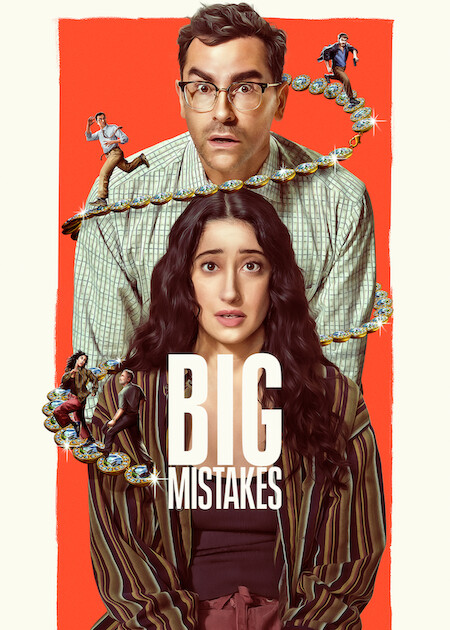
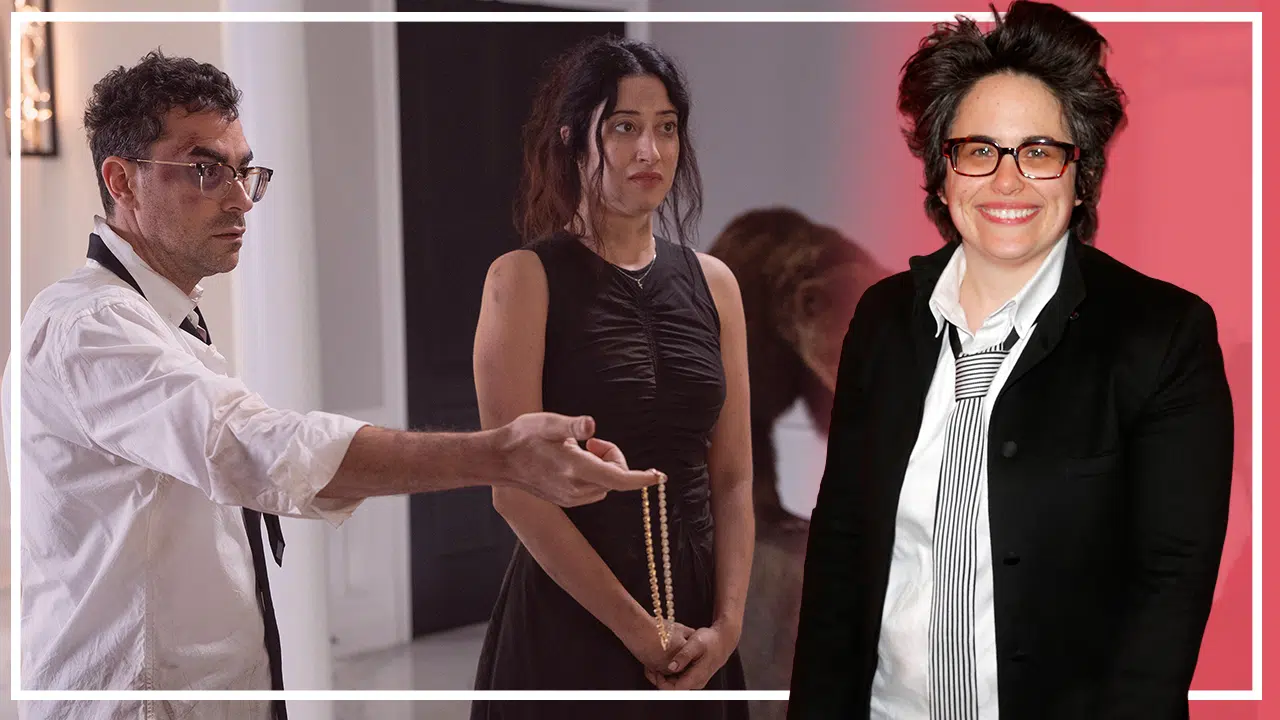
Nora Kroll-Rosenbaum and Peaches stir the chaos of Big Mistakes. The series is a sweet genre-blender of comedy and crime. As siblings Nicky Dardano (Dan Levy) and Morgan Dardano (Taylor Ortega) descend into a dangerous yet hilarious criminal underground, Kroll-Rosenbaum and Peaches score their anxiety-ridden thrills.
The score makes Big Mistakes an inviting party. “Dan was welcoming of us going for it,” Kroll-Rosenbaum told What’s on Netflix. “We did not have a showrunner who was like, ‘I hate the oboe.’ It was like, ‘Try it, try it, try it, try it. Let’s see.’ It was a lovely situation where everybody could be their best selves.”
The composers are in contention for Outstanding Music Composition for a Series (Original Dramatic Score), so Rosenbaum took the time to speak with us about the literal heart-pounding Big Mistakes score.
What were some choices made along the way to really stress the show’s sense of anxiety?
Dan wanted to lean on that because he was always like, “Build the heartbeat first, build the heartbeat.” That was his mantra at the beginning, his marching orders for Peaches and myself. Anxiety from the beginning.
With that heartbeat, when did you want to go high and low?
It’s funny because you can’t give it all up too quickly. From that first bad mistake, you got to save it a little so that you have somewhere to go. The stakes keep ramping up and ramping up, so that by the end of the first season it’s like, oh shit, life and death, what’s going to happen here? And so, figuring out that ebb and flow, that was definitely a dance.
We kept using the word “thrill.” That was the word we went back to, because it has to be thrilling, fun, and can’t get too scary too quickly. We really rode that. Honestly, I think that a lot of the art in this score is the spotting – where the cues come in, come out, and how the mechanics of it work. You’re hopefully unaware of that while you’re watching it, but it’s fun and thrilling and those ebbs and flows, you’re riding them.
What’s some of the trial and error in the spotting?
The scene that had a ton of breakthroughs for us was 101, and it’s why we entered it in the Emmys too. There’s a cue called “Graveside,” and they’re wheeling the casket in and Nicky’s about to give the sermon for the funeral. All of a sudden there are all these flies. And so, the cue goes from scoring anxiety and losing control to then physical comedy. It was a real experiment with, how far can we take this? How can we change functionally how the score is working with the show? It’s not just transitions between scenes. How can we go psychological and then have it suddenly shift into physical comedy?
With spotting, there are laughs or crimes you either want to telegraph or not to an audience, right?
And how can it not become just this corny slapstick kind of thing, which it isn’t, you know what I mean? So also when he goes flying out, when Nicky decides to take it upon himself to jump out of the truck, the cue drops out and we just let his body just fall and take it to sound effect. We wanted it to feel really effortless in a way, like you’re just on a ride, but it had so much quilting. There was so much embroidery going on in the background of if we move these 10 frames, this is so much funnier.
When working on episode one, are you thinking about episode seven? Are you planting seeds?
Oh, yeah. We did custom end credits for most of the episodes. In the end credits of 101, that is the necklace theme, and then it gets revealed in the closet in 108. I kept saying, “If you are a musicologist in prison—so you have just so much time on your hands—you would notice the theme in the end credits of 101.” Yes, there are all these things that we’ve planted as little seeds, waiting for them to water them and then have them flower.
Also, there is this way in which the timing of the music changes. As the show gets darker, Morgan is finding her identity is weirdly comfortable for her, while Nicky is getting more twitchy and anxious. The score splits. It’s one thing at the beginning, but it starts splitting and you end up with all this kind of twitchy, ticky music. You have all those clocks in the main title, all those sounds that get baked in at the end. And then you have this much more throbby, heartbeaty sound for Morgan, too. Then there’s more music as the show goes on. 107 is wall-to-wall music, and 108 has tons of music in it. More music as the stakes are elevated, as the guns come out.
As you said, you planted that big seed at the end of the credits for episode one, but how did you want to immediately set that tone, that heartbeat, that thrill ride?
Dan started as a huge fan of Peaches’ music. It’s an iconic sound, that electroclash sound, but it’s tricky because he definitely wanted it to be grounded in her world. Her voice is such a part of her music, and a part of the way she subverts her work as an artist. I thought, “How are we going to do this without that? How are we going to take elements of vocals but weave this into a score?”
How did you do that?
We wanted it clean, angular, and structural. It’s clean outs, hard outs; it never fades out. Everything is very, very angular and clean. We also wanted a fun listen, something that you could hear in a dance club situation, in an electronic concert. We wanted those sounds.
Still, there’s something very warm about it and soft and it lulls you in. It had heart to it. There’s something very tender and warm about the necklace theme, even though it is the problem. It is the crux of the problem – that mistake that takes us all the way through all of this domino effect.
Writing warmth and familial relationships – how delicate are those scenes as a composer?
This is a really interesting question because every show and every family’s different. In terms of finding that warmth, we found it in synth edges. A lot of it has to do with timing and where we let things land. Whereas in other situations, I might instinctually want to put strings in where we are being held in warmth—something that just holds people together—but we didn’t need to do any of those things with this. This show was all about, I would say, this loving banter between people that is what makes a family a family. It was almost like the warmth happened. We could underscore certain scenes.
Even scenes that go a little wilder?
Even in the scene where they have to go get the bulls. When Dan told us about that at the very beginning, I was like, “You’ve got to be kidding me.” Of course, when there’s cocaine in the bulls’ balls, we had to take that totally seriously. The music is not funny for one second in that, even though it’s absurd. I was like, “That’s a real thing?” Dan was like, “Yes, we researched it and everything.”
There’s a track that could easily rock a club: “Big Mistakes.” For you and Peaches, how did you approach that track?
It wasn’t effortless, but we wanted it to feel effortless. We would cook in this kitchen with a lot of ingredients, then take things away and strip it, strip it, and see how far you can go. A tricky thing, too, is in Peaches’ music, if you’re familiar with Peaches’ music, she’ll repeat a lyric enough times so that you accept it. It starts taking on another meaning, then you start feeling the groove more than listening to the groove. You accept it into your body and it becomes yours almost. She gives you this gift in her music. But it’s tricky in this, because these cues are really short. You’ll have a seven-second main title, then you’ll have a short period of time to get an audience to accept and take this rhythm.
Any other examples, say with Nicky, where you and Peaches really wanted to communicate his dilemma within the score?
The first cue I think you hear in the whole show is when Nicky’s in the church, then he’s going home and his boyfriend’s there. We brought the queer household music into the church instead of waiting. You know what I mean? It wasn’t like we’re in a church, we’re going to transition into—surprise—there’s his boyfriend and now there’s a problem. We brought that queerness into the church space immediately. I think that part of it, too, is like there’s this beautiful dissonance between what they’re experiencing and the reality of their identities and the reality of their lives. You’re setting up this narrative of like, “Oh, there is friction between his queer identity and him being a pastor—and that’s going to become an issue later in the show.”
How did you and Peaches first connect as musicians?
It was instant, mostly because she’s such a good person. We chatted first. She lives in Berlin and was about to go on this massive world tour. And so, she was working in Berlin and I was working in LA, and we met on Zoom.
One of the cool things about the collaboration, too, is that we are really different musicians. Peaches comes out of all of the worlds that she comes out of, and I very much come out of Juilliard, classical music, building film music, and writing music for Marvel stuff. We were totally honest and transparent with each other.
How so?
When you don’t know something, when I don’t know something, we’re going to say so. We’re going to tell each other when we love these cues and when we hate them. We’re going to come at this from a place of love and transparency—and we had a blast.
I love electronic music, but I hear it differently than she does. We hear timing differently. It’s cool. Because we had this honesty, it was, “Let’s try a cue here. It may not work, but let’s try it.” Peaches hasn’t done a lot of scoring. She has had tons of placements of her songs, but it’s another beast, another animal. And so, she was open to trying stuff.
You can hear that in the score, absolutely. Any final words on making the score for Big Mistakes?
One more thing I want to say about Peaches is that she’s a real icon. She is a brave artist and puts herself, her body, out there. She’s passionate about embracing a queer identity that is so important. It’s more important now than it ever has been, especially politically with everything that’s going on in the world. And so, there’s a way in which her disruptive, bold self was such a wonderful inspiration constantly with the score. It was always, “Let’s go for it. Let’s be bold. Let’s try something radical and crazy.”