Picture Credits: Getty Images / Netflix
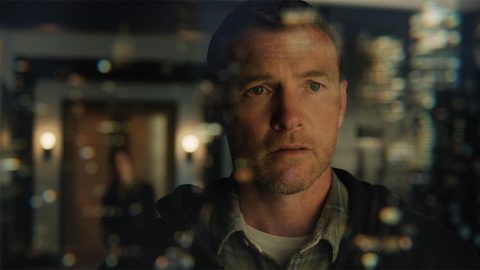
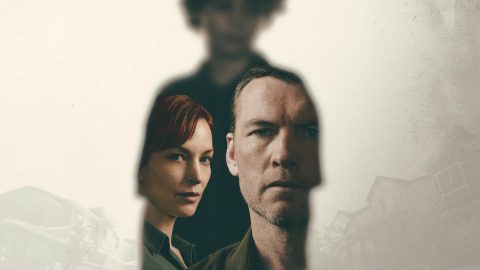
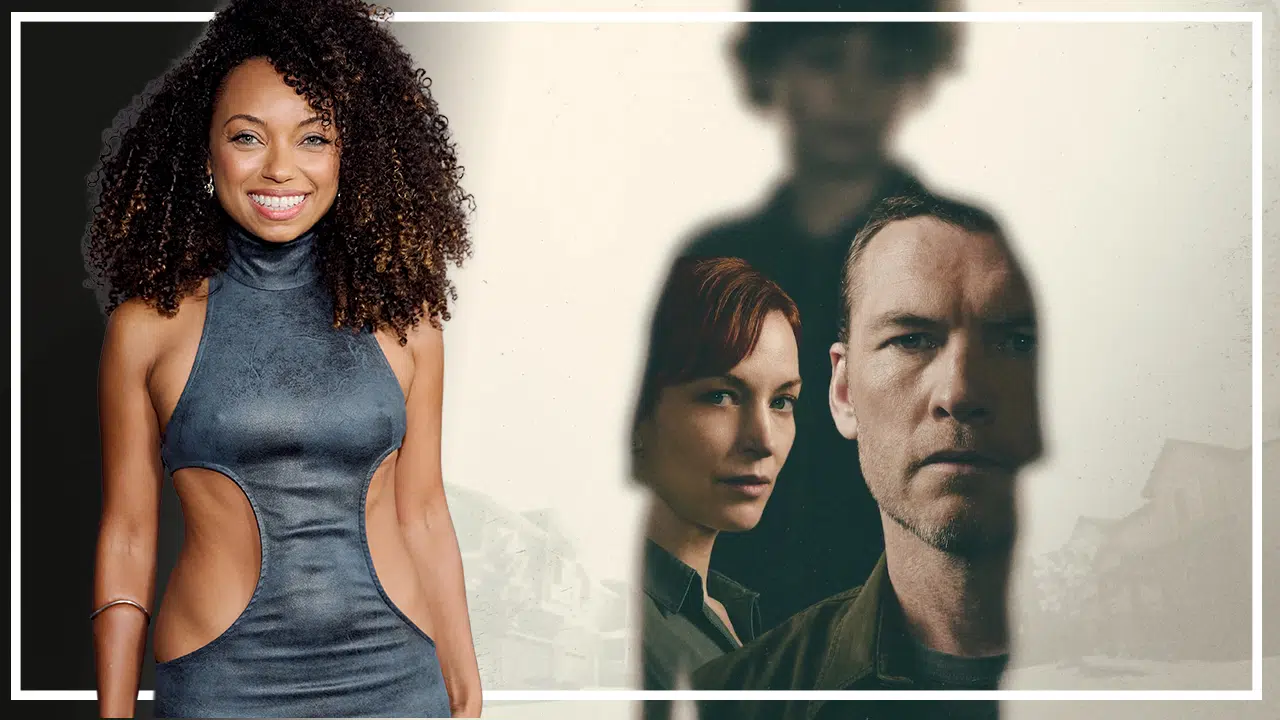
Logan Browning is ready to lead again. In the case of I Will Find You, she plays a formidable supporting role as Agent Greer – tasked with chasing down a convicted murderer on the run. Paired with the always-great Chi McBride (Pushing Daisies), who plays the agent’s father and partner, Browning brings an immediacy to a role and project that calls for a page-turning pace.
Browning is no stranger to Netflix viewers. For years, she played aspiring filmmaker Samantha White in Dear White People. The actress also helped bring some genuine terror to the streaming service with The Perfection. Now, she’s not only back on Netflix but in school as well.
The actress is currently studying film and media. During a break from university and following the immense success of I Will Find You, Browning spoke with What’s On Netflix about her role in the Harlan Coben adaptation and why she’s ready to top the call sheet again.
You’ve said before that these types of thrillers aren’t your go-to, so being newer to performing in this sort of story, what were some learning experiences about acting in a ticking clock, plot-heavy murder mystery?
On set, Chi was really helpful because he’s such a vet. I spent a lot of my time with him, watching his presence, how he moves, and how he thinks as the character. Just because something’s on the page doesn’t mean he necessarily will do it that way. He told me a story about a show he did where his character is supposed to be a veteran cop or detective and they wanted him to open a trunk and see a dead body and give a [shocked] reaction. And he’s like, “I’ve been doing this for 30-something years. You want me to gasp when I see this dead body and I’ve seen it a million times?” No, he’s like, “The audience should gasp.” And so, things like that really informed my understanding of where my character is in her tenure, her trajectory, and how that would affect how I behave.
There’s also this huge generational gap that I think is evident between Sarah and Max. He says, “We just cook them. We don’t catch them,” which always makes me think of fried fish. He’s like, “That’s how it is. This is by the book. This is how we do it,” whereas Sarah, the younger generation, any younger generation is always going to challenge the authority, challenge the system, and go, “Well, but isn’t this justice? Isn’t this the truth? Isn’t this what we should be doing if this is what’s right?” All of that really informed how I played.
At the end of the day, I felt it was important to be true to who I am because I wanted my own curiosity about the genre, a curiosity about the script, and interest to inform how Sarah moves as well. She’s like, “Well, what is going on? What if he’s innocent? What if Matthew’s alive?” And that’s how I feel as an actor. I’m like, “Well, what if this? What if you know Sarah’s this way?”

I Will Find You. Logan Browning as Agent Sarah Greer in Episode #102 of I Will Find You. Cr. AMANDA MATLOVICH/NETFLIX © 2025
By asking questions – is that how you usually approach roles?
My whole life is like that. I’m a Gemini, too. I ask a lot of questions. I’m a curious person about everything in life; it just spills over into my work. I want to know not just what my character had for breakfast, but I want to know her ethos. I want to know what her dream of life is. One of my acting coaches would always teach me about dreams of life. How does she believe life can be?
You know the foundational elements of what you’re supposed to do when you approach a character. Basic things, like my objective and my super objective, what is my place and character. But beyond that, what do I do? And that’s the fun part because it’s a little bit of what that character is asking me to do.
Is finding the answers to those questions a part of satisfaction you take in acting?
It’s like a house. You know how a house is built. It needs walls, and it needs a ceiling, and it needs a floor and doors. But beyond that, you can do whatever you want to do. Everyone’s going to build a house differently or decorate a house differently. Approaching roles does feel like that and is fun.
I think that’s why I really enjoyed playing Sarah. I’d be open to playing another FBI detective at some point. I always want to explore other potential roles, but I would never want to get stuck doing something because then I don’t feel like I’m getting to explore as much.
When you act on a show like I Will Find You, does knowing the show might be binge-watched affect a character or the storytelling?
Well, this genre can be expository. You have to get people to the goal. The truth is, with streaming, people are multitasking while they’re watching things. The difference for me in this performance is how to disseminate information to the viewer that feels authentic to me and my character, even when I’m really just trying to get them to the finish line with whatever I have to share. So, that’s a bit different. It’s a new skill that I’m having to work on. How do you take exposition and turn it into something? Chi is really good at it. How do you turn it into a meaningful scene?
You two do have to carry a lot of story with your roles. Like Chi, how do you try to turn an exposition-heavy scene into a meaningful scene?
Well, one of the funny things is the producers, showrunner, and writer all kept having to tell me, “This is not necessarily about exposition,” but every time there was a question mark in the script, they had to tell me to stop reading it as a question mark. When the detectives say, “What if this, this, and this happened?”, it’s more of a statement but they’re all question marks.
Imagine you’re getting the script and it’s a bunch of question marks. Now I’m asking all these questions, and now I almost sound clueless because of the tone. So, that was something I learned to drop: all the question marks.
There is something to just believing in the exposition. You can see it on the page and you’re like, “Oh my gosh, I’m stumbling over how to deliver this.” But it’s like, “Just believe in it. Really, believe in it.” I have to believe that my character needs to deliver all of this information, that the information is that important. That’s what I had to really tell myself.
As a curious person, where’d you take inspiration from for playing Agent Greer?
Silence of the Lambs is something I’ll always go back to. She’s a detective. She’s new. Clarice is new, and she’s figuring this thing out. I watched The Fugitive. And then I saw myself as the peregrine falcon. So, I watched a lot of falcons flying around [Laughs].

I Will Find You. Logan Browning as Agent Sarah Greer in Episode #108 of I Will Find You. Cr. AMANDA MATLOVICH/NETFLIX © 2025
[Laughs] Which is a unique process, so I gotta ask, how did the peregrine falcon influence you?
Well, the peregrine falcon is the fastest animal on the planet. Think about that. The whole planet, you think about a cheetah, you think about whatever else, but it’s the fastest animal. It’s a predator, but it’s smaller. The movements that it’s making with its head and the body, any bird, really, how they beat their wings in order to soar. All of that affects movement, affects behavior.
Then I thought of Chi. This has nothing to do with his process. It’s how I thought of him. I thought of him as the Eurasian eagle owl, which is a very big, large bird. I’m pretty sure they’re predators as well. My bird is always seeking to be like his bird. But at the end of the day, you can only be the bird. You can only have the wings you’re born with, right? So using your personal strengths. In a very practical way, moving my body like the peregrine falcon really opened up my chest and the back of my shoulders, which, as a performer, was so helpful.
That makes sense. A lot of actors look at animals. What else has been satisfying your curiosity lately?
I went to see a lot of Broadway plays recently. I went to see Proof, Fear of 13, and The Balusters, which closed. I love going to the theater. It’s getting so expensive that it feels like a luxury. I do rush tickets. I just think in a world that’s already moving in AI-kind-of society, it’s so important to go to the theater and to support that kind of performance and to immerse yourself in it. I think I cry at every single play I go to. There’s something about it that brings me to an emotional state.
I think it’s integral to connect to that human part of you to play. I get on swing sets a lot if I work out there [in NYC]. I’ve never seen a swing set I don’t like [Laughs]. I swing. I play. I have nieces and nephews and friends with kids. I play with whatever they want to do with the monster trucks or whatever I’m going to imagine with them. I just think that’s so important in the world that’s gone with digital and artificial intelligence.
You’re also exploring at the moment. You returned to school to study film and media. Plus, you directed a very good short not too long ago.
Oh, you watched it? Thanks for watching it.
Is returning to school and studying film a part of maybe one day stepping behind the camera more, telling more stories you want to tell?
The short film was part of the Hartbeat’s Women Write Now program, and it was written by an awesome young writer, a comedic writer, Danielle Solomon. I would love to tell my own story and write my own short film and direct it. I want to do more directing. I do want to produce more.
What studying film and media is doing for me right now is teaching me the history of film and media. It’s bonkers that I can have been in this industry for 20-something years and not know the true history of it, from radio to television to the question of, what is TV now? Is this the TV I’m looking at? Is it this iPhone screen? What is it? It blows me away as I look into that.
When you talk about generations, there’s the balance of what do you hold on to in terms of what’s timeless and classic, and where do you evolve? What’s maybe a little bit too much evolution? I find all of that fascinating with film and media.
As you study film even closer in school, what’s standing out to you?
I get to watch so much film and television. I even learn about music videos, and I learn about misogyny in music videos, and I learn about so many different things that definitely affect how I want to present myself. I realize the impact of every image on a culture and especially television. Television is in the home, and it’s deeply embedded into our culture and how we see ourselves and how we see other people. It was once a piece of furniture in our homes, and to some extent, still is.
I’ve always known this, but I even more so realize the responsibility that I have being in people’s homes as someone that represents a group of people in the world, but also, as someone who they might feel they know. I always say I feel like a citizen of the world when I walk around, when I’m at the airport and someone’s like, “I just watched you in I Will Find You.” I get to have this conversation. I feel a responsibility, personally. Every actor is different, but I love that connection out in the real world.
Dear White People must’ve spoken to your interests there as well, given how much that show was about the power of a camera and a microphone.
Dear White People was stunning to be a part of. I loved the writing on the show. I loved the cinematography. I loved all of our directors, my cast. We got to do a bottle episode. John Patrick and I, we did a bottle episode in season two that I had never done before. Watching that process and being a part of that process was special.
Yeah, you’re right, it’s the power of the voice, the power of the medium. The message is the medium, right? When you talk about the message is the medium, it makes me think about streaming and how we view things now. I Will Find You is literally going into our fourth week. I think we’re still number one globally. I mean, that’s insane.
Congratulations.
And that’s part of the message also, right? The reach that these platforms can have is part of the message to me. I won’t go much deeper than that. That’s for other people to interpret. What does that mean to them?

DEAR WHITE PEOPLE
What are some meaningful stories you want to tell going forward? Whether as an actor, producer, or filmmaker, what kind of movies or shows interest you these days
I feel really good. Uranus is in Gemini. I just feel really good about the next seven-ish years. I’ve spent a lot of time absorbing, learning, watching, etc. I really do feel ready to be back in the center of something, ready to be back in a leadership position. When I did Dear White People, that was my first time being number one on the call sheet. I loved it. I loved being the captain of that ship in a way, in my way as an actor. I want to continue to be a leading lady.
I also want to add on directing. My North star is Salli Richardson-Whitfield. She directed “Dear White People.” She’s someone who’s an actress who has successfully parlayed her way into directing and being an Emmy-nominated director multiple times. She’s very good at it and still shows up as an actor. I still see her act in some of her projects.
I sincerely believe that I and everyone are capable of every single thing that we put our minds to. We are what we believe. I believe that I’m capable of so much.