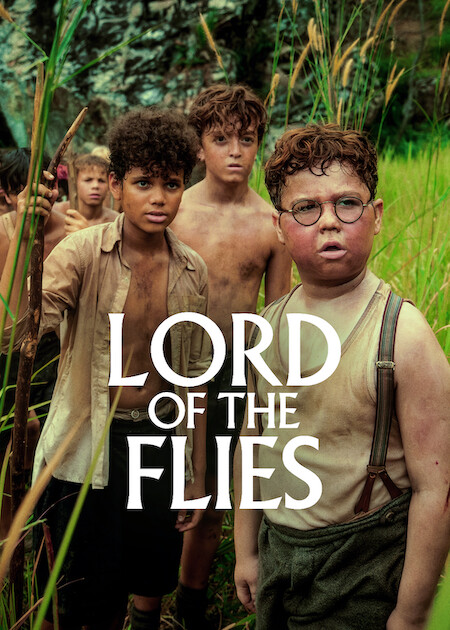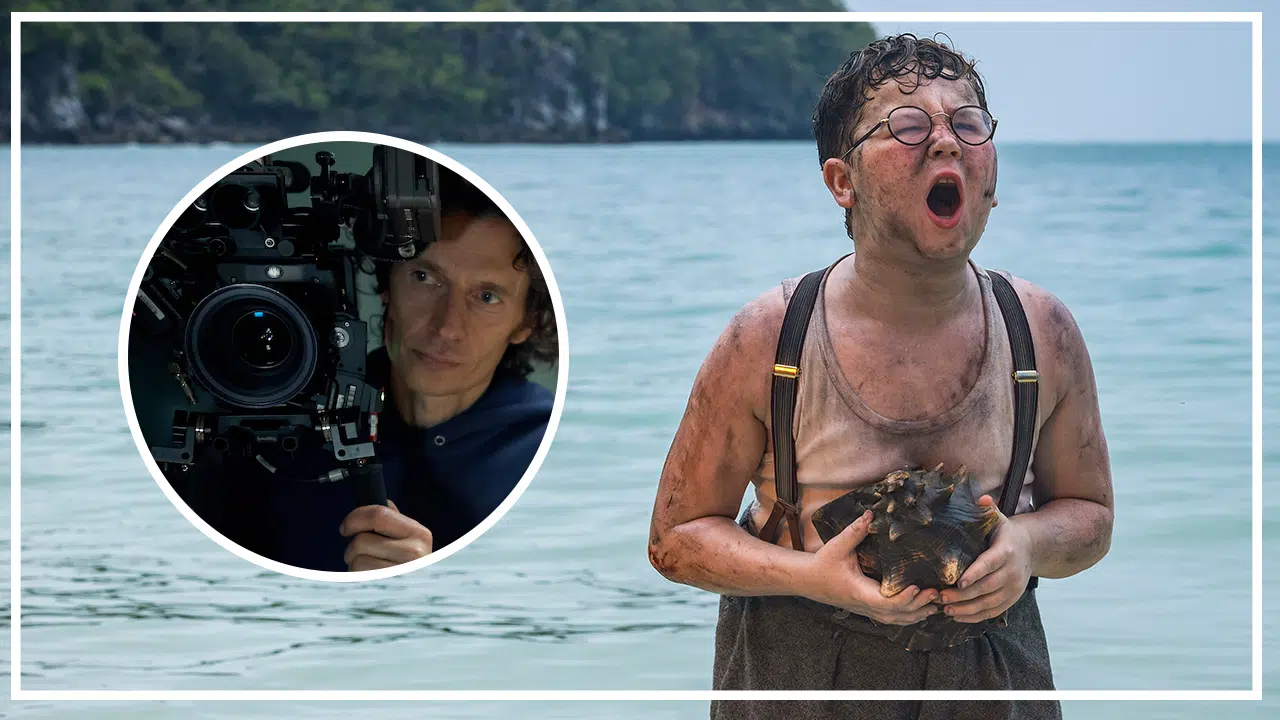
There’s a pervasive madness to the Emmy-Nominated Lord of the Flies. The nightmarish visuals couldn’t be more apt for the William Golding adaptation handled by screenwriter Jack Thorne (Adolescence). A major eye engaged in shaping the madness is cinematographer Mark Wolf.
Wolf had read that book as a boy, so he wanted to tap into some of the original text’s subjectivity and terror. Additionally, the cinematographer wanted beauty and horror in unison for Lord of the Flies.
“As a cinematographer, I’m always drawn towards beauty and try to show beautiful things,” Wolf told What’s on Netflix. “It’s a good juxtaposition with things that are ugly in the sense it heightens whatever the children are feeling. They could be in a beautiful spot, but they’re imagining something incredibly ugly. That’s a good sort of juxtaposition, an uncomfortable feeling. You’re somewhere where you think, oh, actually this is quite a nice place to be. But in fact, on the surface it might be, but in reality it’s very threatening.”
The show is such a vivid nightmare. In realizing that nightmare practically, where did your work begin?
It’s a very slow process and it’s not like, oh, one day you don’t know what you’re doing and the next you figured it all out. My experience of it has been it’s a very sort of iterative process, tiny little steps, some practical decisions, some aesthetic decisions. We were going to film in Malaysia.
All the locations were on remote islands. So then you start thinking about, well, how are you going to practically do this in the time allotted? You’ve got kids, children who only you can shoot with five hours a day. So you have minimal time to shoot with them. How are we going to shoot at night? So then that was another whole thing.
How much time did you have to shoot with the main cast?
Well, we only had four hours to shoot with the children at night because they couldn’t shoot past 11 PM. So, that’s not really enough time for a whole shooting day or night as it were. Then it turned out we weren’t allowed to travel to the locations at night because it was across the sea.
I was thinking, okay, a lot of it is in forests, so how do I light a whole forest at night? Because there’s a lot of traveling through the forest. There are lots of different forest locations.
Is lighting the massive scale of a forest or beach tricky?
My experience of lighting forests or woods is that you can only really light small patches at a time. You can’t hope to light a whole forest. It’s way too dark. Also, big beaches, some of the beach locations were vast. So then I started to think about infrared day and night.
I’d just recently watched a film called Nope and they had some amazing day for night scenes – and they’d shot in infrared. I sort of got led down that path. I was lucky that the production company had quite a good budget for the research and development of infrared.
I tested lots of different cameras, lenses. I went to Germany to test some 3D rigs, and they were great, but they were just not appropriate for the remoteness of the locations. They were too sensitive, too finicky, not reliable enough.
And then at the same time, Mark had shown me some pictures by a photographer called Richard Moss, who had gone to Africa to shoot child soldiers. All the pictures were shot on an infrared film called Aerochrome. It made all the foliage red, but it kept the skin tones.
Lord of the Flies – Season 1 – Episode 101
I read they discontinued that film.
This film called Aerochrome was originally designed for American military intelligence services. It changed all the foliage red. Anything that was organically green would be changed to red. So, obviously if there’s a tank hiding in the middle of a forest that’s green, but it’s not an organic material, that tank would show up as a big dark blob amongst all the red.
Anyway, there’s this duochrome film, but we weren’t shooting on film, we were shooting digitally. I thought, how am I going to do this digitally? I looked into it further and I found out that there’s a way of emulating aerochrome film shot digitally. I went down that path and that led us to that day for night look. I mean, there’s lots and lots of tests, film tests and grading tests to get to that look, but essentially it’s in camera, which I thought was amazing that you can actually produce that looking camera.
What was some of the trial and error of trying to replicate that very distinct looking film on a digital camera?
First I tested some 3D rigs which had two cameras. One was an RGB camera and another was an infrared camera, and you’d mix those two images, which was brilliant because then you could choose the amount of infrared and the amount of RGB so you could bring out the skin tones in the picture, but still create a day for night look.
Each camera had to be pixel matched. If you were out by one pixel, you’d have all these weird artifacts and it’d be soft, just wouldn’t look right. And that rig required two technicians to come out to Malaysia, which we just didn’t have the budget for. Essentially the filter that I found… I converted different infrared cameras. All our equipment came from Asian film equipment in Kuala Lumpur.
They’d very kindly just got hold of a red camera, ripped it apart and converted it to infrared. Meanwhile, as a sort of backup, I’d bought a little cinema pocket camera and I took out the infrared filter or blocking filter. Once you take the filter out, it’d have to then put another piece of glass in which has the same refractive index, otherwise nothing will focus onto the chip. Anyway, I figured out how to do that. We ended up with two infrared cameras, one as a kind of backup.
How satisfied were you with the result?
When the light is right, it can just look incredible. There’s some very, very flat days because there was heavy cloud cover, but the weather changes there so quickly that you can go from beautiful crisp sunshine to very soft or diffuse light.
Actually, the diffuse light was quite good for the infrared stuff, but under the canopy looked a bit flat. But then there were amazing rainstorms, which were brilliant. We filmed in the rainstorms, which really gave that whole element of just the difficulty that the kids would’ve had in that kind of environment.
It was quite tricky because as a cinematographer, you want consistency within a scene in terms of lighting, but the weather would just change within minutes there, going from sun to overcast to rain back to sun.
I had to give up all those intentions and just go with it, really. In fact, there are some scenes that obviously you can see the sun’s out one minute and the sun’s not out the next, but I don’t think that’s a great drama, really.
Lord of the Flies – Season 1 – Episode 103
Well, that feels a bit mad, but that feels right for the show, too.
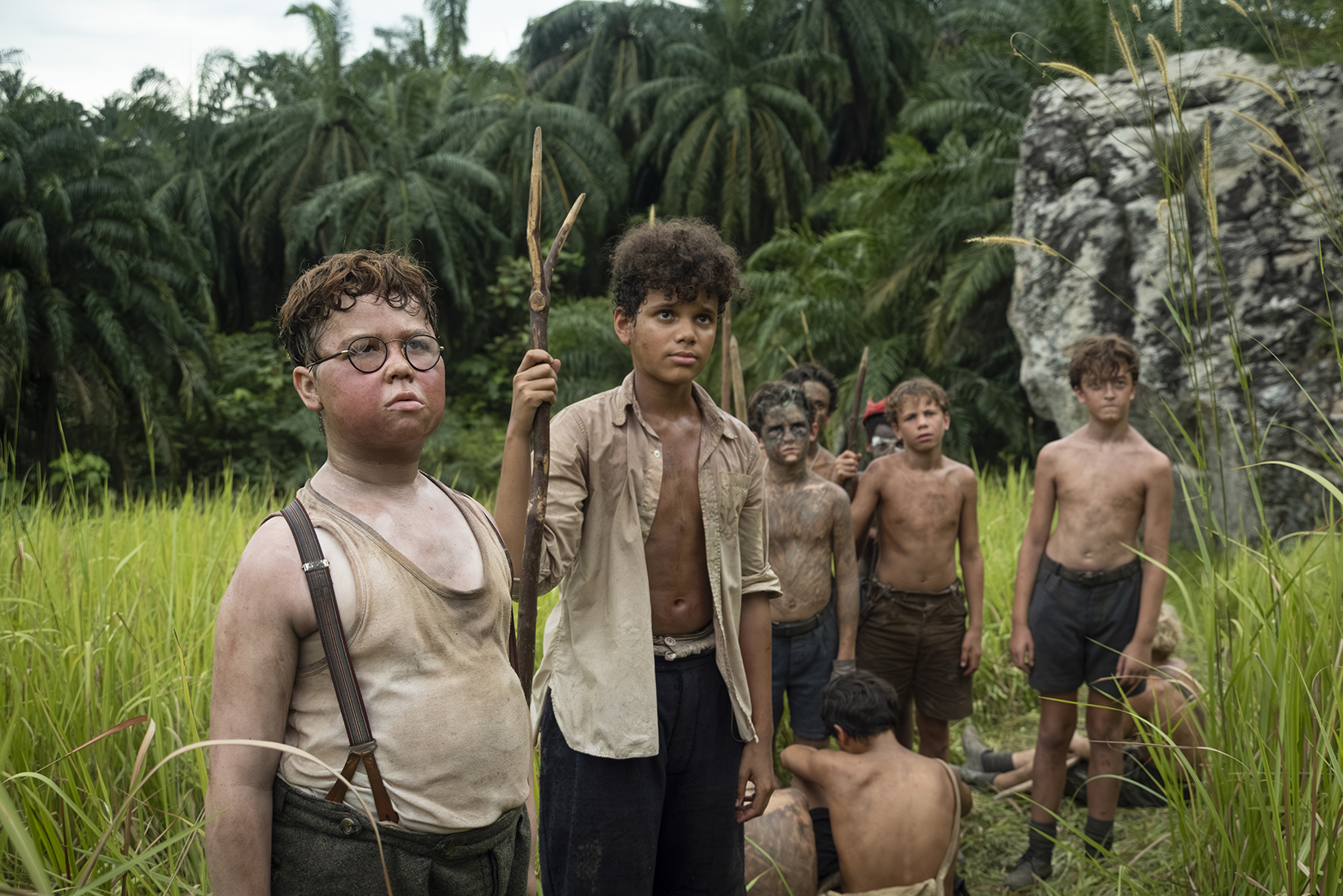
Exactly. I mean the whole story is complete… It doesn’t make sense. I mean, how do 35 kids survive an air crash on an island? Not one of them has a bruise or even a little cut or anything. How do they really feed themselves? How do they survive? So I think that infrared night look is very interesting. In the ’60s, a few photographers found Aerochrome film and they used them to shoot Jimi Hendrix album covers. There’s one in particular because it created that sort of psychedelic look, which was actually really appropriate for this because it gave us a sort of hallucinatory look to the night.
How did you approach this character and setting? Visually, how did you want the forest, the island, to consume the kids?
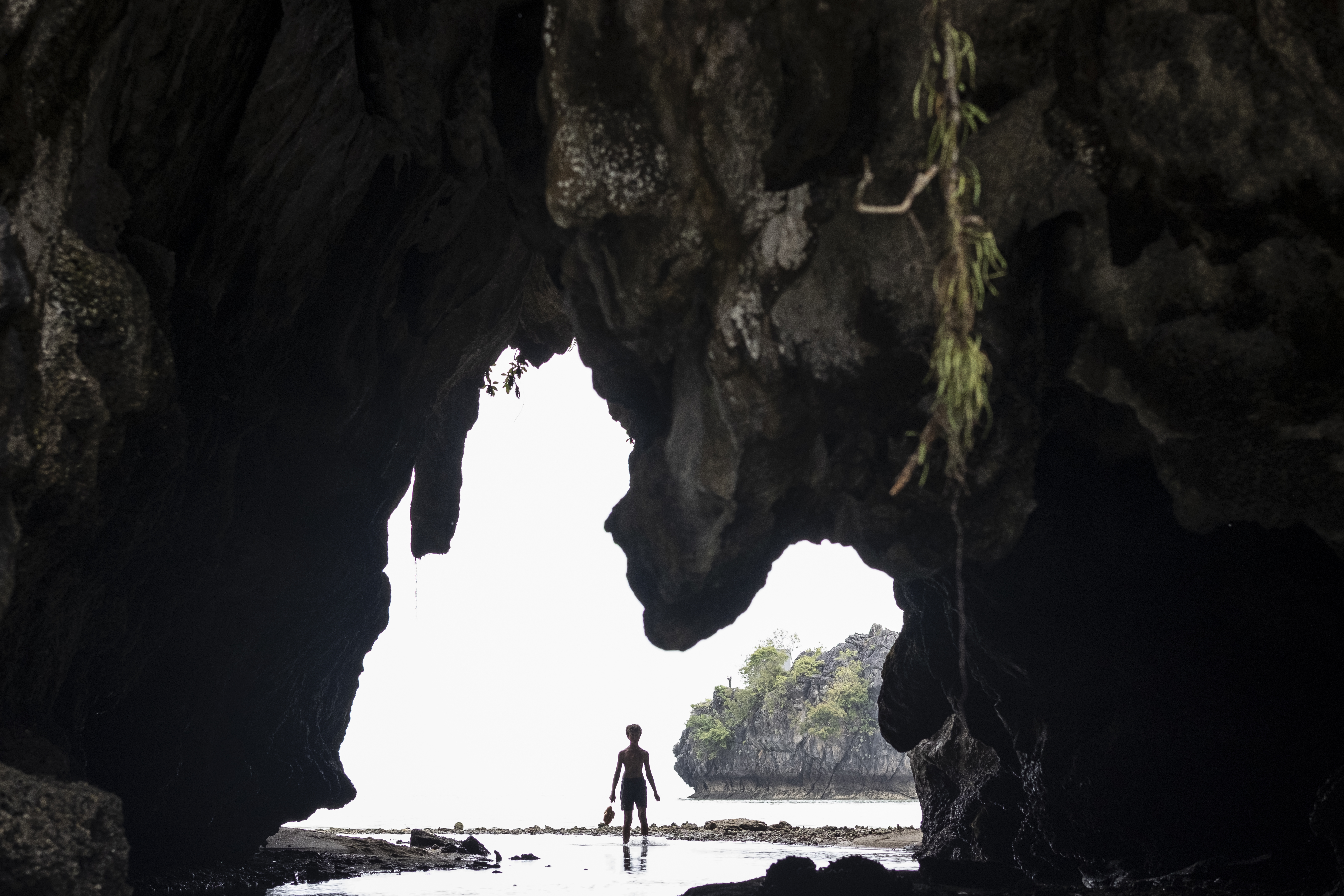
My thing is always to try and place the characters within the environment. Well, particularly the rainforest environment is such a rich, influential place on what the kids or anyone does to survive in that environment.
That’s why we included so much of the wildlife stuff in it because animals, you’re surrounded by animals. It’s quite an oppressive place. And also the kids, we try to convey the feeling that the kids see things that might be normal, but to them might turn into monsters.
In fact, that’s part of the storyline. They think there’s a beast on the island where in fact it just turns out to be a dead aviator who’s come down in a parachute and died. But they make up all this stuff about at nighttime how they see the beast.
You really do make green and red look horrific in Lord of the Flies. It gives that sense you’re experiencing it all through the characters’ eyes.
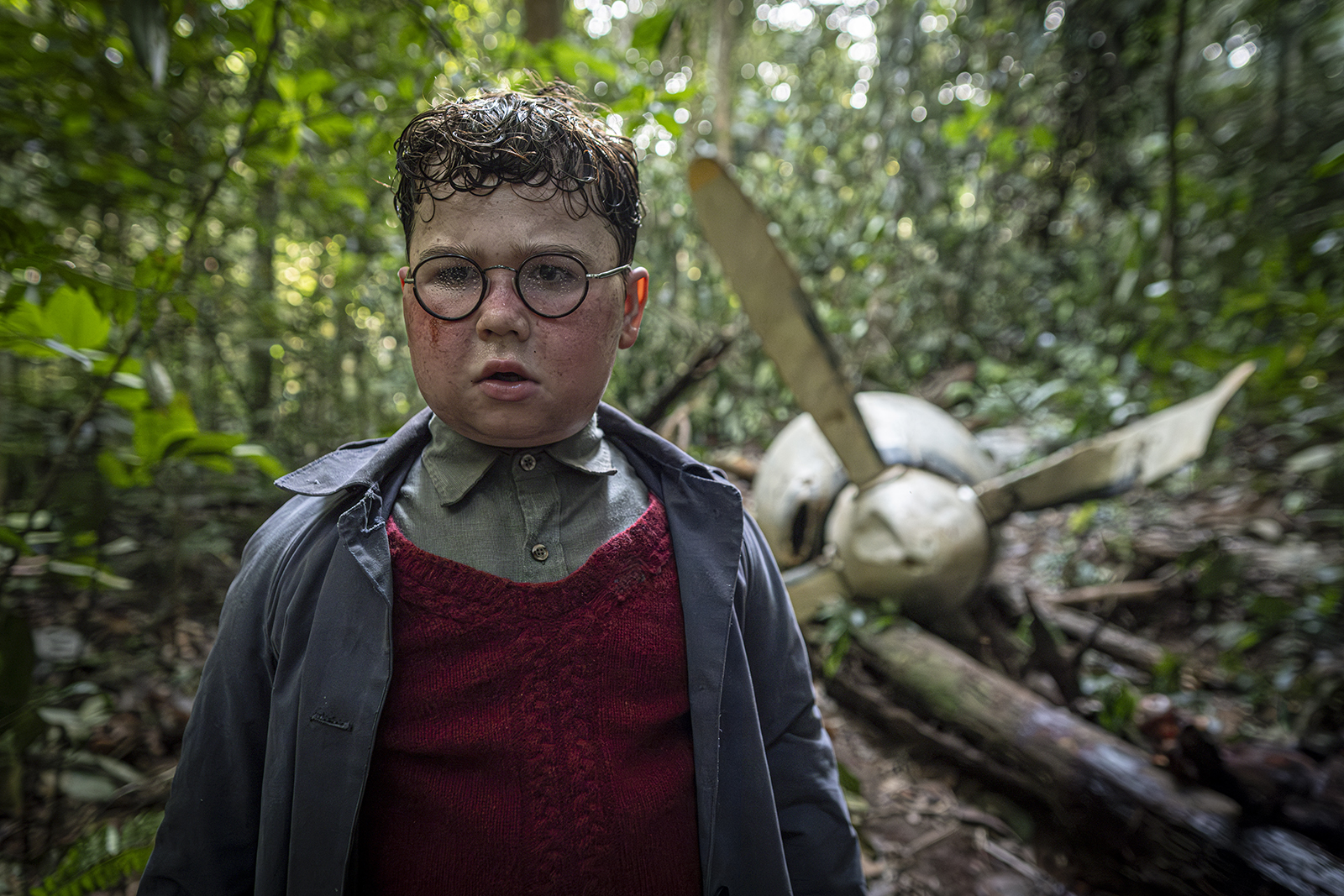
Well, interestingly, when I was testing, I was testing with my daughter in a forest just near where I live and she happened to be wearing a red top. We suddenly realized, God, that red looks incredible against the green background that really pops out, and has this amazing color contrast. So that’s why Piggy has that red jumper. It’s a very significant look for him, I think.
Being in the forest in that heat, in that oppressive environment, I think it really helps the stories and the actor’s performance. Quite a few people said, “Oh, why don’t you just film this in a studio? Why don’t you just make a rainforest set in a studio?” And that really wouldn’t have… I mean, I think we had to go through all those hardships in order to create a realistic looking environment for them.
Lord of the Flies – Season 1
Do you ever think about Werner Herzog or any nature documentaries while making this?
I had those in my mind. The main reference that Mark came up with, which is really for me, was most important, was the film Nicolas Rogue’s film, Walkabout.
Great movie.
Yeah. Very similar in the sense that there’re two children who find themselves in that alien environment, how do they survive? But also what I love about that film is that nothing is really necessary. You don’t know what’s going on a lot of the time. There’s no exposition. It’s just happening in front of you and you have to figure out what’s going on. The father’s taking the children out for a picnic and then all of a sudden he just shoots himself out of nowhere. I like that sort of uncertainty and the feeling of threats. The environment was quite threatening for them – and that’s how we tried to convey the rainforest environment.