
Picture Credit: Netflix
Below, we do a deep dive as we sit down with Kaelyn Moore to discuss her new 26-episode true crime podcast, Last Trace. The series pieces together the final moments before a disappearance or murder, using everything from CCTV footage to overlooked eyewitnesses to tell a full story.
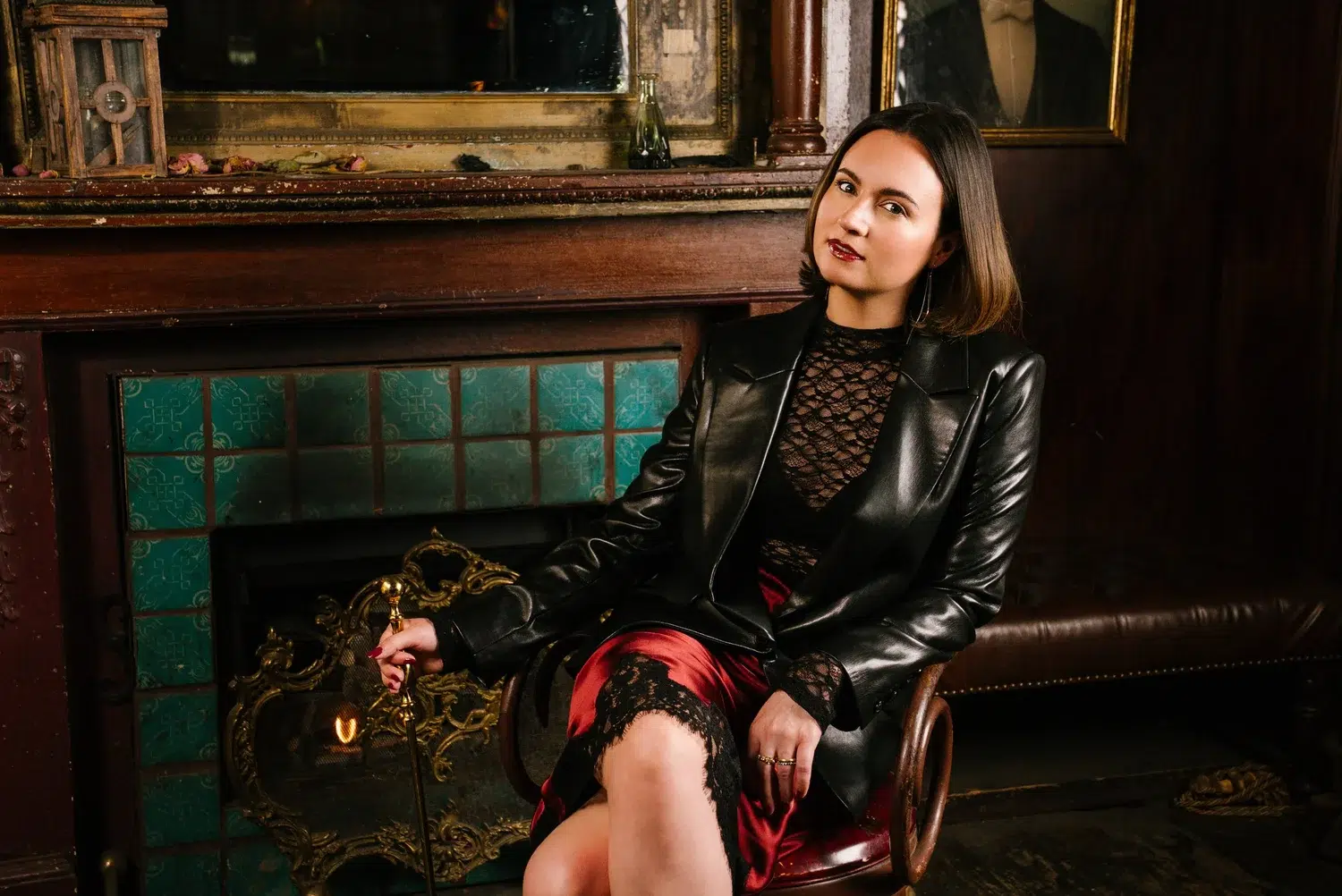
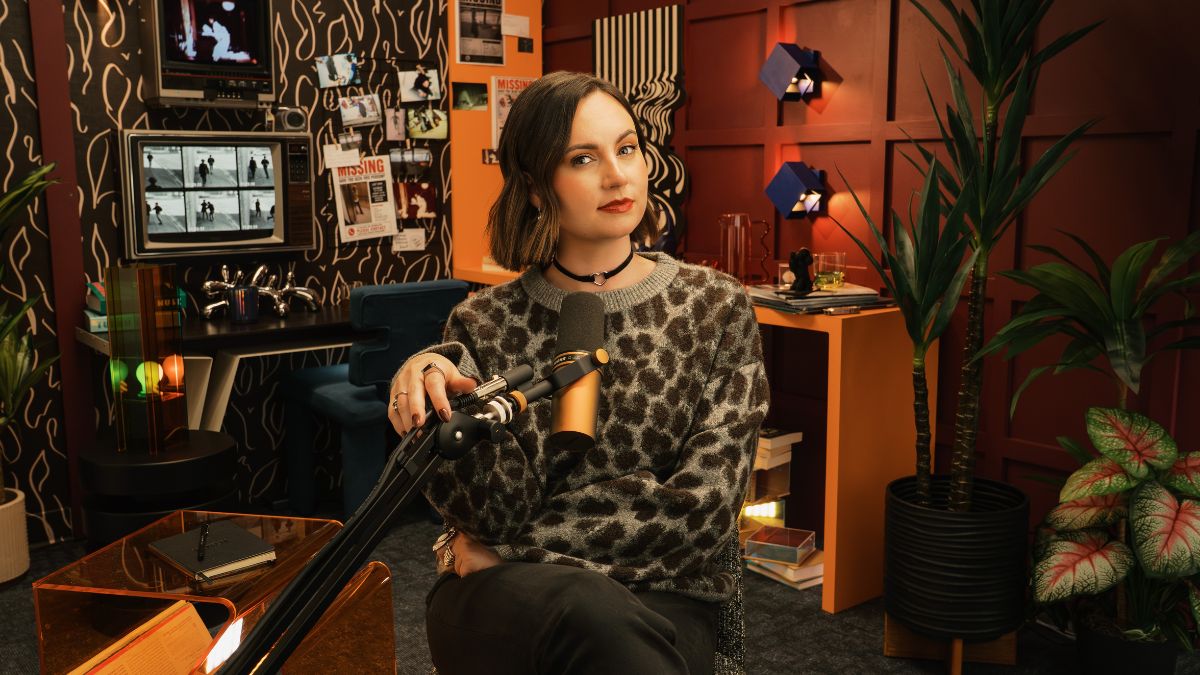
In recent years, Kaelyn Moore has become one of the biggest true crime podcasters out there. She boasts over 2 million followers on TikTok, where she covers true crime cases. She also hosts the Heart Starts Pounding podcast on YouTube, with over 500K subscribers, alongside being the co-host of the Clues channel. This fall, Moore brings her expertise to Netflix for an all-new 26-episode true crime podcast Last Trace—a project she calls a “very interesting and a fun challenge.”
So what is Last Trace about? Hosted by Kaelyn Moore, the series pieces together cases of true crime through all the fragments left behind, from CCTV footage, overlooked eyewitnesses, grainy videos, and everything in between. “Last Trace, it’s really about the traces people leave behind and putting them together to see what tells the full story,” Moore explains. “Are there pictures that hold clues? Is there CCTV that holds clues?”
“It is exactly what the title says: those last traces of someone before something unexplainable happened, either they disappeared or were killed in a really confusing way where it’s not obvious who did it. It’s piecing through the investigation to tell the whole story of what happened.”
Check out our big interview with Kaelyn Moore below, where we discuss her journey so far, the process of developing a Netflix podcast, and some of the cases the series covers.
How does it feel to land your own Netflix project? It’s such a big achievement!
It feels amazing! It’s really cool to be a part of this time where creators are starting to be taken seriously and a lot of our stuff is starting to show up on streamers—we’re starting to partner with streamers in really interesting ways.
I come from traditional film and television. I worked at Atomic Monster for a while, making horror movies. I worked on a couple of TV shows. When I left the industry, it was an interesting time because there was just not a lot of stuff being made; you had COVID and then you had the strikes. And so, a lot of people were like, ‘Is anything ever going to get made again?’ To be on the other side of it in the creator space, all of these opportunities are popping up.
I have a podcast on Netflix. Like, I never thought that that was even a possibility. I’m very excited and I’m also just very optimistic about this era of content that we’re in.
I was doing a lot of research into you as a creator, and you’ve really built a big audience through your true crime projects. So take me back on that journey: how did your fascination with true crime come about?
I always say my family: my great-grandfather was a detective. I never met him, but I grew up hearing stories about him. When he was young, he worked for the newspaper. He was the lowest level of the newspaper you could be where all he did was get death certificates and he would write the obituary, then that would go in the newspaper. He started getting all these obituaries and death certificates from this one house in our town—an old folks’ home, the first old folks’ home to ever be created in America.
He’s getting all these death certificates and he notices that all of the causes of death are Bright’s disease, and he’s like, that’s so weird. There are only 20 beds in this place and about 20 people die every year. That feels really high, even for an old folks’ home. So he starts investigating it and he finds, he goes to this old apothecary that was in our town and they have this black book. Whenever you made a big purchase at the apothecary, you had to sign your name in the black book and what you were buying. And he notices that the woman who owns the old folks’ home had been buying enough arsenic to kill a whole army of people. She was very clearly killing the people inside the house.
It was really my great-grandfather who just decided to sleuth, looking into it on his own. He knew no one would trust him because he was young and she was like a big figure in our town. People called her Sister Amy. She donated a lot to the church. People were not going to like him making the accusation against her.
I think that spirit of just looking out for your community, of having, like, a dark curiosity. If you notice something, like, spooky or dark is going on, not running away from it, but leaning in. That’s definitely been a big ethos in my family, too. My dad was a 9-1-1 dispatcher for a while.
We’ve all kind of entered different jobs that have, like, this darkly curious bend to them. And so for me, I’ve just always had a fascination with true crime kind of coming from that perspective of looking out for your community and what’s going on. That’s kind of where the interest in true crime came for me.
And then in my career, I worked at Atomic Monster, which was making horror movies, but we were branching into true crime and true stories fictionalized for television and starting to broach that area. Everything kind of clicked into place for me with that. I was like, I’m just so interested in this and I can find more stories than anyone can find and I can do deeper research than anyone on my team.
And so I just really took off in that direction.
Picture: Heart Start Pounding
You’ve built a huge audience with Heart Starts Pounding and Clues. What’s been the biggest challenge in translating your storytelling style into a 26-episode Netflix series?
I think the biggest challenge is doing it for a new platform. It’s a new process for everyone.
A lot of the true crime and the podcasting I’ve done, it’s been self-distributed. It’s on YouTube, it’s on all audio streaming. You can just make it and you put it out. But now with Netflix, we’re working with a team of execs. We’re working with a team of lawyers. There’s a lot of eyes on the scripts and there’s a lot of eyes on the cuts in a way that it’s just not when I’m making YouTube videos.
We’re all figuring it out together because we’re making 26 episodes of this, which is a lot. I don’t know any other Netflix projects that get 26-episode orders aside from their podcasts. It’s a challenge of learning how to put out a lot of content quickly on a weekly cadence while also making sure it’s up to an incredibly high standard. I love the high standard that Netflix holds us to while making sure, like, legal is happy and the execs are happy. And ultimately, it’s a product that we want to be putting out. That is the biggest challenge.
It’s a very interesting challenge and a fun challenge. It’s like a puzzle. It’s more of, ‘OK, how do we figure out this process together?’ And that’s been like a really satisfying thing to work on.
Projects like these demand extensive research. What did your average research day look like for Last Trace?
We have a team of research writers that help us. On my end, an average day is having a writer send me a research packet of everything they’ve looked into. I’m parsing through and I’m trying to say: What’s the part of this case that everyone’s going to connect with? What’s at the heart of this that we’re looking into? At the same time, I have another outline that’s coming from a writer of like: We’ve done all the research and now we’re outlining exactly how the episode is going to look.
I’m working with them on that. And then on the last part of my day I have a full script that I’m now combing through and making sure everything’s right, doing a voice pass, and sending that to legal so they can get eyes on it. It’s a busy process. There are a lot of things that are all happening at the same time. We’re also getting cuts now. So there are a lot of moving pieces.
Picture: Netflix
Last Trace reconstructs a missing person’s final hours using digital traces like photos, CCTV, voicemails, and texts. How do you approach piecing together these different types of evidence to tell a cohesive story? Because having so many fragments can get messy.
I think because we’re working with Netflix and we’re not on YouTube, part of it is also looking at the licensing element of things. Are there pieces of this story that we can actually license so that we can put them up on the screen for everyone to watch? That’s a huge part of it.
It’s also figuring out the part of the story that everyone’s going to resonate with and making sure that that’s in the forefront of everyone’s minds while we’re telling the story. We lean a lot on, what is the family saying? What are they looking for answers on that we can, just by amplifying this story, help out with? At the end, we say, if you have any information on this, you can reach out to this police department. We want to make sure that these stories are being told in a way that the twists have good reveals and the story keeps moving the whole time so that people really are sticking around to the end.
Do you find yourself getting particularly emotionally attached to these cases?
I do. I had a baby in January, and there was a shift, I think, that happened in my mind of… Especially being a mom now, I really see the world through a different lens. It’s hard to read these stories, and especially we do so much just reading through what families are saying. I’m watching interviews with moms who lost their children and don’t know where they went and are talking about it. It’s impossible not to get emotionally attached to these stories. I think that just fuels my fire even more to talk about them and make sure.
We have stories, too, that we’re doing where we’ve literally screenshot the parents saying: I wish someone like Netflix would tell this story. We just need answers. I wish a streamer like Netflix would do a segment on this. I’m like, okay, that’s great, because we’re now actually able to do that.
Can you share any specific cases or stories featured in Last Trace?
Yeah, definitely. 26 episodes, we’re doing a lot. One that we’re doing that I’m going to watch a cut on today is the case of Jennifer Kesey.
She’s one where her dad has specifically said we want a documentary on Netflix because we really don’t know what happened. Jennifer Kesey disappeared from her apartment in Florida. It looked like she had taken her car, but other than that, there was almost no trace of what happened to her.
In her apartment, it looked like she had taken a shower that morning. It looked like she had maybe grabbed a phone and then left to go to work, got in her car, and then vanished. About a week later, someone who’s at an apartment complex three miles away calls the police and is like, ‘Hey, I think her car is in our apartment complex parking lot. I see this car. It’s been here. It’s gathering dust. Someone should come look at it. It’s her car.’
What they found was that there were two cameras set up in that area. They start going through the footage. You can clearly see in this footage that someone parks the car, gets out of it. It’s not Jennifer. It’s a man. He’s dressed in all white, almost like a painter would be, like white pants, white shirt, a hat. And as he’s walking by, we get these really good photos of him because the camera only was capturing photos. It wasn’t capturing full video. We get three photos of this person walking past a gate. And every time they take a step and the photo takes, the gate is perfectly covering their face. So you see their whole body, but you can’t see any defining features of this person. And to this day, we don’t know who it was. And it’s so wild to look at this thing and be like, we have pictures of this guy.
We know about the height he was. We know what he was wearing. We know where he parked the car, how long he stayed in the car for, which way he walked. They got a scent dog who came and tracked this person’s scent all the way back to Jennifer’s apartment. They walked back to her apartment and we still have no idea who it is. So that’s one that I think it really helps to have that information out there because one day someone’s going to look at this picture and be like, I know that guy.
That’s a really scary one that kind of honestly does keep me up at night because it’s so scary. And it feels like it could be any of us.
Are there instances when cases you’ve worked on have evolved as you’ve been trying to cover and research them?
Yes. Oh my gosh. So many, so many.
One that we’re doing this season—because I think it’s the biggest thing on everyone’s mind—is Nancy Guthrie.
Nancy Guthrie’s daughter is on the national news here in America, and her mom just vanishes from her house and they get that really scary footage of him on her balcony, entering the home and he’s dressed in, like, a ski mask and all this stuff. And so we started telling that story kind of knowing it’s an open case. And as we were researching it, all this new stuff starts coming out about the tools that were available to the police department that day that they weren’t able to utilize, which was really unfortunate. So you kind of start understanding how handicapped the case was from the beginning. ‘Cause we just weren’t using the things that we had access to. Two of the ransom notes were pretty much confirmed to be real.
As we’ve been writing that one, it’s still unsolved, but we have a much better picture of what happened that day and probably not exactly who did it, but what they were communicating to the police when they did it. And, you know, also the people, those ransom notes, it came out in one of them. They said that she did pass away and they just buried her somewhere in nature, is what they said. So it’s like, we maybe have somewhat of a resolution on it now.
That was truly something that came out while we were doing the research on the show.
We thank Kaelyn Moore for her time. Episode 1, covering Jennifer Dulos, is now live on Netflix globally.
This interview has been edited for clarity.