
Picture Credit: Getty Images / Netflix
If The Body on Netflix feels familiar, it’s most likely because showrunner Quinn Shephard drew inspiration from a range of movies and series she grew up with, from Donnie Darko and The Crucible to 2000s teen dramas. Ahead of the series debut on Netflix, we caught up with Shephard to discuss references, turning mass hysteria into choreography, and bringing her dream passion project to life.
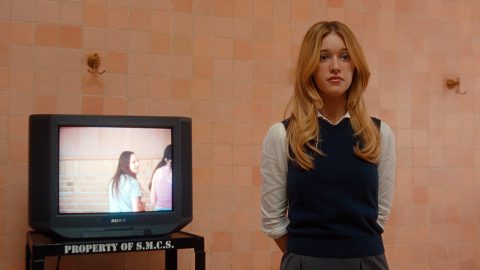
Netflix’s latest YA drama, The Body, bears all the hallmarks of a true passion project for showrunner Quinn Shephard. The 8-episode series takes viewers back to 2004, during an era when flip-phones and teen dramas were all the rage, setting the scene in a uniform-wearing Catholic school. We follow a cliquey girls’ dance troupe, who decide to initiate a new member during a Halloween house party by performing a faux ‘sacrificial’ routine; however, their sacrifice turns prophetic, resulting in their initiate Grace (Sofia Wylie) being thrown into a coma. As they come to terms with what happened, they each begin to see peculiar visions, which poses the all-important question: is there something supernatural at play or is it purely hysteria?
With the series now out on Netflix, we caught up with creator and showrunner Quinn Shephard to discuss her creative process, inspirations, and more.
Check out our interview down below.
What drew you to explore teenage girlhood, and hysteria through this supernatural, biblical lens?
I think this show is very me. It’s very much a continuation of the themes that I started exploring at the beginning of my career. My very first film [Blame, 2018] is about a girl who’s way too obsessed with The Crucible and I think that this is quite similar to that in tone — probably even more playful.
It’s the themes that were the most interesting to me when I was a teenager and I clearly haven’t moved on.
What specific influences or visual references were on your radar when designing the look of the show? There are biblical elements, some horror, a bit of comedy — how did you blend those together?
I would say if you were to look at my Tumblr from when I was first falling in love with film, it would probably look a lot like this show. I was very influenced by everything from Donnie Darko and old Winona Ryder movies like Heathers, The Crucible and Girl, Interrupted. I really loved the kind of girl erotic-psycho sexual thriller genre. I really like these movies where girls are obsessed with each other and then maybe try to get each other, and I think that for me I naturally gravitate towards that tone. Not so much that I’m thinking about those influences as I’m writing it, but it’s just more baked into the DNA of why I wanted to be behind the camera.
I do think it was really fun to get to play around with the tropes of the movies I used to watch in clips on YouTube on my laptop when I was a teenager and be obsessed with, and get to take those settings like, oh what if we did like a Wild Things pool scene but did it in a way that felt grounded and character driven. A little bit of a different approach and a personal approach. I guess it’s just baked into who I am.
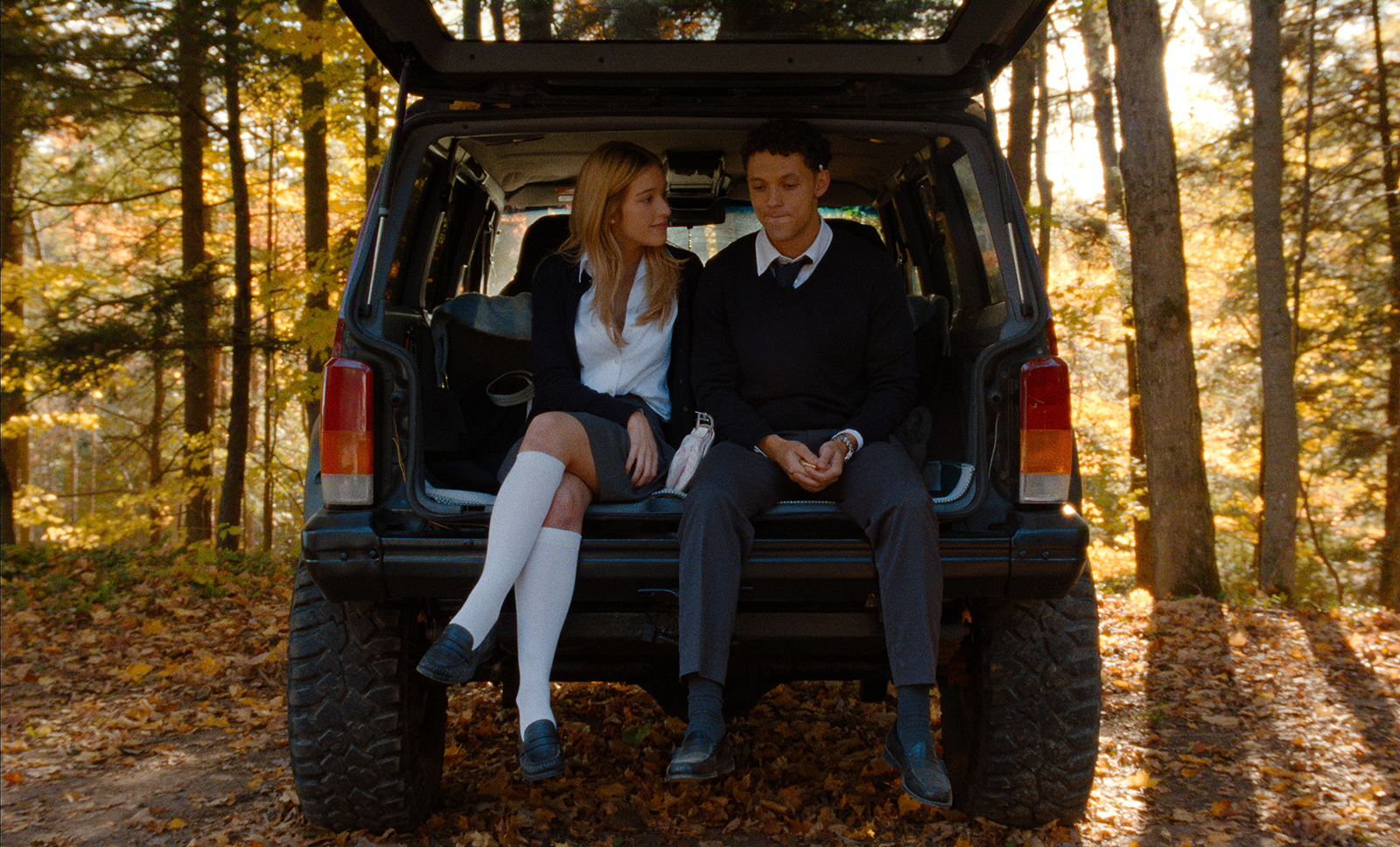
The Body – Season 1. (L to R) Kristina Bogic as Anya, Orlando Norman as Steven in episode 101 of The Body. Cr. Courtesy of Netflix © 2026
People talk about visual influences, but was there a specific song, album, or texture you kept on loop while figuring out how to direct these scenes?
Yeah, I mean I feel like I was listening to Ethel Cain and some Latin choirs a lot. I think that the actual score to the show is incredible, and I think when I’m writing season two I will probably just listen to the score that we have now because it’s like the best Catholic Mass you’ve ever been to, but make it a rave, and it really sounds like that.
I think it was definitely a big techno-meets-traditional Latin Catholic sort of sound influence. I’m a big playlist person; I could go on and on, I have a million different playlists.
When the girls experience their visions or hysteria, the performances feel real. What instructions or physical references did you give the actors to ground those out-of-body moments?
What a great question. They all worked with our choreographer Ryan Heffington on their possessions as well as their visions.
We would actually do almost like a dance rehearsal for everything from the seizures, falls, everything. We had movement coaching for that which I think was really cool. I had never had the opportunity to do something like that on a shoot so that was awesome and really fun. Sometimes we would go to a dance rehearsal and they would do a full-out dance and then they’d be like, okay and now we’re gonna do Shirley’s seizure and she would just drop and do it and it was a little different kind of dance but still fun to watch.
Sometimes we got kind of creative. I remember when we were shooting the big climax in [episode] six where Maddie sees Grace. Sophia, who plays Grace, actually came over from shooting tandem, and she came over from the other set and acted with Shirley for a bit off camera as if she was really having her vision, and that was a really cool thing to have Maddie seeing something that none of the other girls could see but to be able to do it practically live. We would just get creative with whatever made the scene most real for the girls.
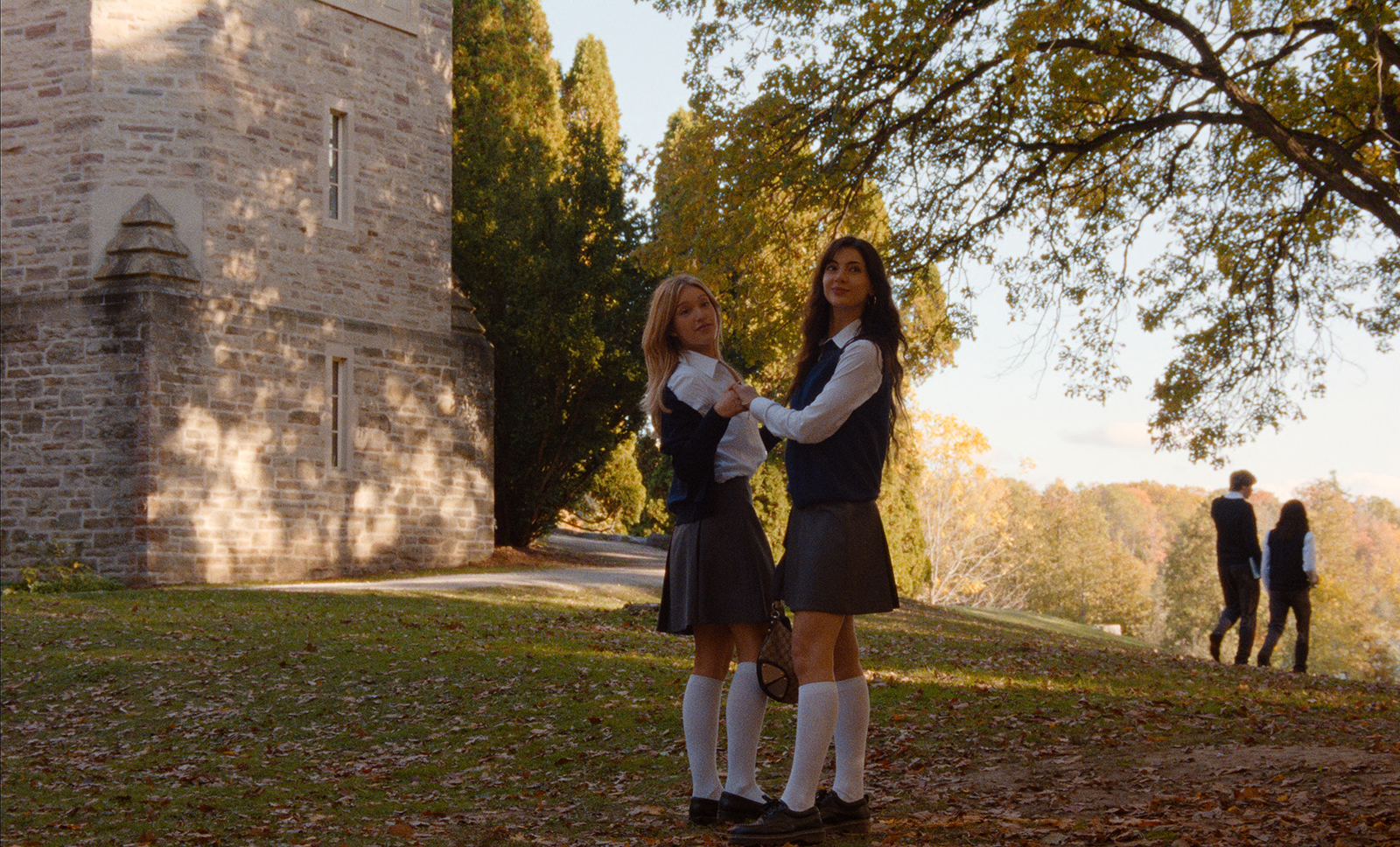
The Body – Season 1. (L to R) Kristina Bogic as Anya, Sara Boustany as Elise in episode 101 of The Body. Cr. Courtesy of Netflix © 2026
What was the hardest scene to execute on set during this production—logistically or emotionally—and why?
I would say everything in [episode] 6 — specifically around the dance competition — was quite complex because not only is the entire cast doing all of the dance themselves, we use no body doubles, so on top of their crazy shooting schedule they’re doing dance rehearsals every weekend.
We had a physical therapist working with the girls. It’s very physically demanding, and then we also had really limited shooting time to shoot a huge amount of material in that space and we’re basically throwing a dance competition with a packed room.
I would say that episode haunts me a little bit in terms of how difficult it was to pull off some of the scale and execution, but I also think that the days we shot it (especially the dance) were some of the most fun days as well even though your heart’s racing the whole time. It was honestly such a cool pay-off to watch all of the girls dance full-out all day and so much of the cast who weren’t in the scene came to support them and were just sitting in village, so yeah, it was one of the hardest.
You play a lot with religious tropes — which ones were you most excited to lean into, and which ones were you determined to turn completely on their head?
I feel like it’s two sides of the same coin. I think the show is ambitious in its goal to examine and sometimes criticize systems that exploit or manipulate the human desire for faith and also to showcase beautiful aspects of faith. The universal desire for faith, and a religious experience as something that is quite human.
I think anytime you’re trying to do something that’s both a bit controversial and probably tackling some challenging issues, there can be a lot of beauty. It’s like a tightrope to walk and I think the way that we did it on this show was that the people making the show come from all different sorts of backgrounds and a lot of us brought a lot of our own personal perspective which tends to be quite nuanced on these topics.
I think we really wanted to steer clear of anything that felt stereotypical, and dig more into why people need faith and what you believe, and so I think hopefully the show feels like it provokes those questions within the audience themselves. How you watch the show is probably indicative of what you believe about the world: Is she possessed or is it hysteria?
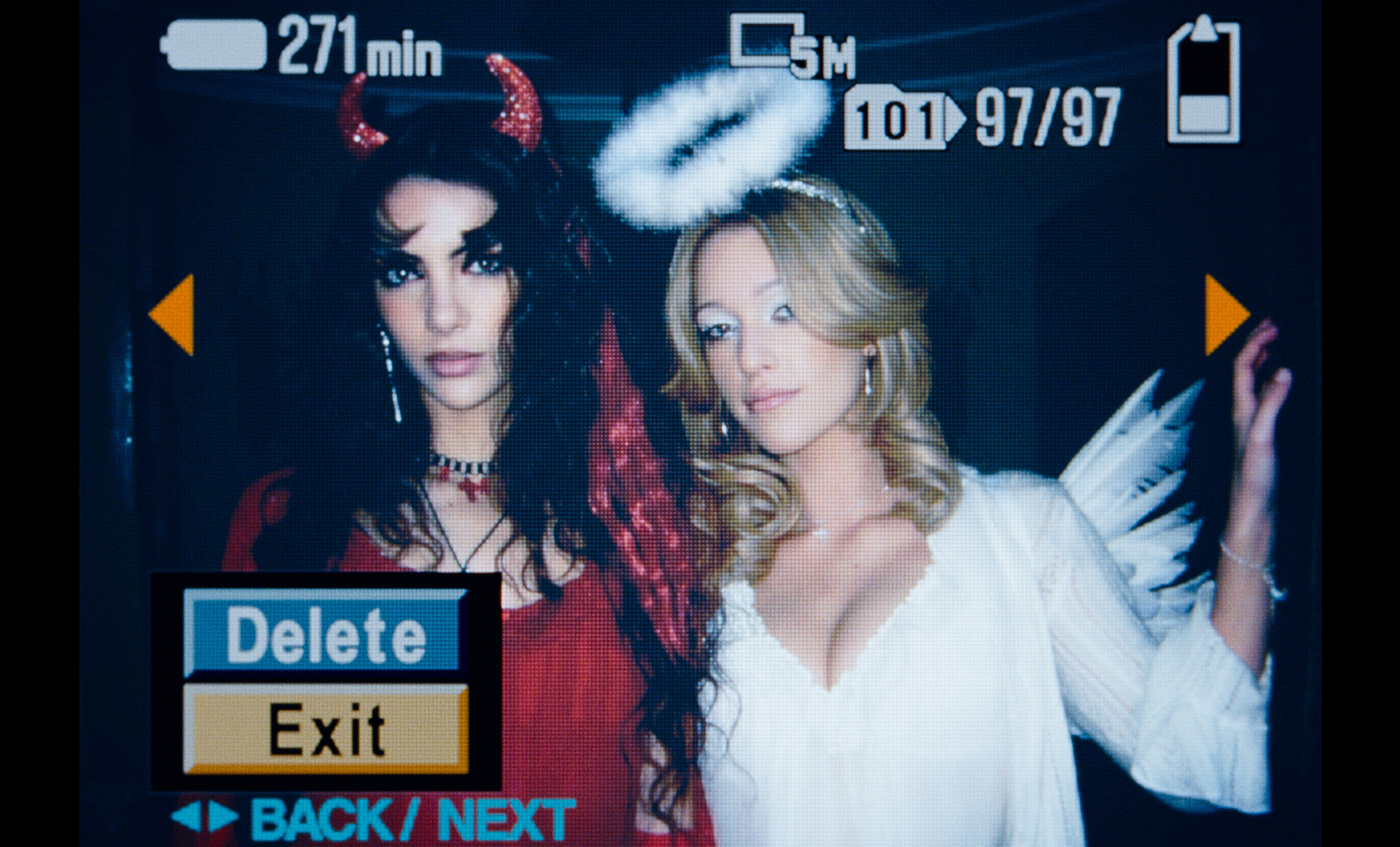
The Body – Season 1. (L to R) Sara Boustany as Elise, Kristina Bogic as Anya in episode 102 of The Body. Cr. Courtesy of Netflix © 2026
I actually interviewed your cinematographer Donte Lee recently. You two worked so closely together on establishing the tone of The Body. I asked him if he’d have a question for you, and he mentioned how deeply emotionally present you are on set, using that empathy to guide the creative process. How do you keep yourself anchored in that feeling while you’re balancing all the technical demands of directing?
Well first of all that’s honestly so sweet and I missed Donte, so that’s really what a kind thing he said; he’s also an incredibly kind man. We had a tremendous amount of fun shooting together.
I don’t know if I keep myself that anchored. I’m honestly pretty emotional as a person and I think I wear my heart on my sleeve, so I think probably one of the pros and cons is that people always know exactly how I feel just from looking at me on set.
I would definitely say my co-showrunner Gina [Gammell] is my rock and is the person who I was metaphorically and physically anchored to during the shoot, and she’s very good at calming my spirals. I think also you have to show up when you have a young cast. I think we both felt like those were our girls. We felt a certain responsibility to establish a pretty warm and calm setting for them. You can’t have a bad day when you’re around the Lions so I would say they were also a comforting force.
Finally, there’s a recurring theme in your body of work. You tend to cover girlhood and youth a lot. As a storyteller, why do you keep returning to that?
It’s a really good question because I think before being given the opportunity to bring this to life, I was chasing the feeling that writing this show used to give me when I was younger.
I think I was seeking out The Body in my other work for a while. Now that I’m making The Body, I wouldn’t be surprised if after making it — however long it goes — if I am like, oh maybe I’m ready to move on to a new chapter or not because I love working with youth. I find working with young actors incredibly inspiring and informative. You learn more about yourself from working with younger actors; the collaboration is so specific.
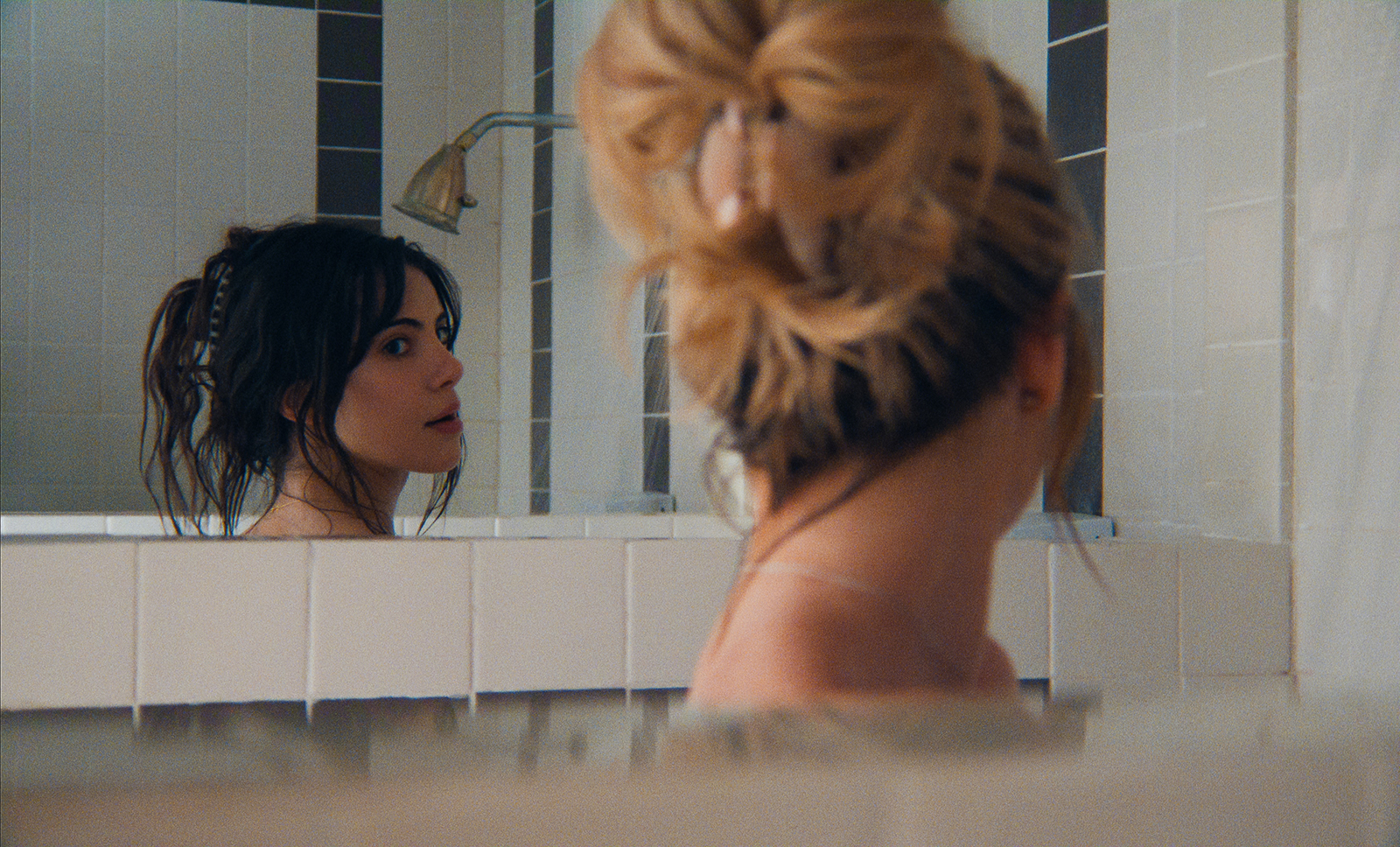
The Body – Season 1. (L to R) Sara Boustany as Elise, Kristina Bogic as Anya in episode 103 of The Body. Cr. Courtesy of Netflix © 2026
We thank Quinn Shephard for her time.
This interview has been edited for clarity and brevity.
The Body is now streaming on Netflix.