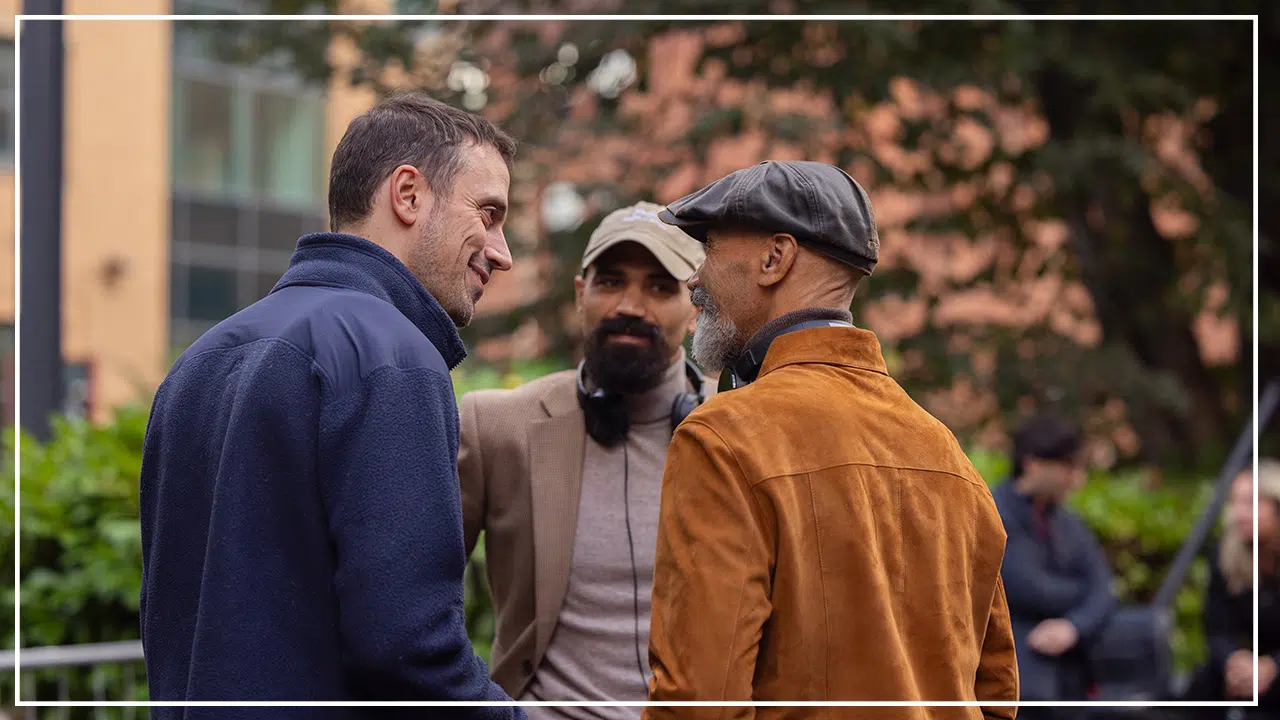
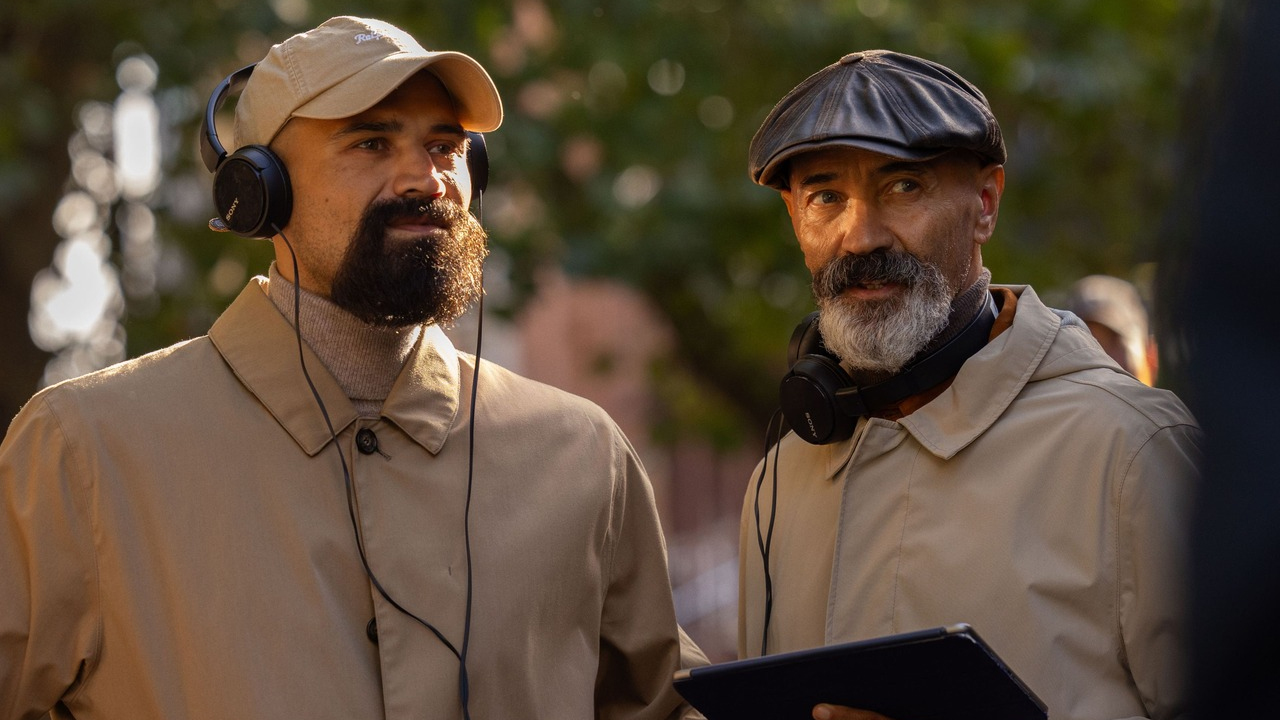
Alex Winckler, Alex Hanscombe, André Hanscombe. Cr. Courtesy of Rekha Garton/Netflix © 2026
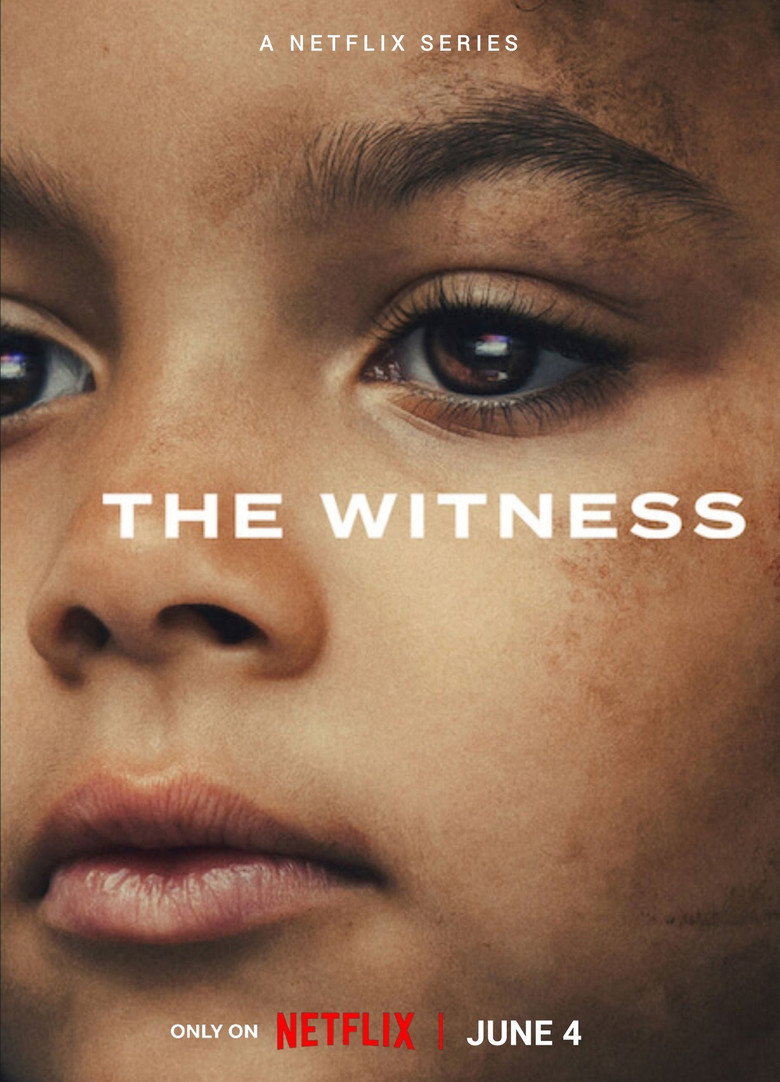
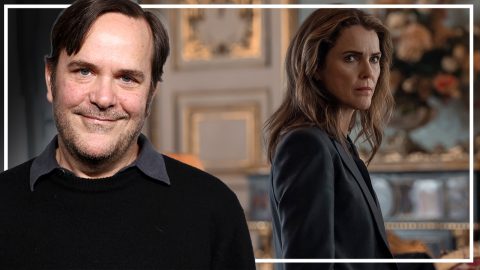
BAFTA-nominated director Alex Winckler helmed Netflix’s powerful, unsettling series The Witness, where he was tasked with capturing the fragile, enduring bond between a father and son thrust into the spotlight of a national tragedy. In our interview with Winckler, we delved into the challenges he faced in telling the story, his experience working with Alex and André Hanscombe, and more.
Netflix’s 3-part drama The Witness takes viewers back to 1990s England to retell the murder of Rachel Nickell, and the following (controversial) police investigation. Above all, it covers the huge emotional impact it had on single parent André Hanscombe and his son Alex — they grapple with the awful tragedy that changed the trajectory of their lives. We follow along in their powerful journey of resilience, spanning over a decade. The dramatisation of the story was written by Rob Williams (The Victim, Screw) with Alex Winckler helming the series. Both Alex and André Hanscombe were brought on board as consultants.
Read our interview with director Alex Winckler in full below.
What’s On Netflix: What did you already know of the real-life story of Rachel’s murder?
Alex Winckler: I grew up in Wimbledon, so I knew it very well. I remember very vividly, as a 12- year-old, hearing the news that someone had been murdered on Wimbledon Common, and it was a massive deal because this is a relatively safe middle-class part of London. It’s not a place where people get murdered. So that in itself was shocking, but then it happened on the Common, which is right next to where I went to school. It happened in the middle of the day, to a young mum with her kid.
As a child, I don’t think I fully appreciated any of it really. But as a teenager, we grew up hanging around the Common, and it was a sort of ghost story. We would tell each other, that’s where it happened, and the killer’s still out there, and they haven’t caught him yet. It was a ghoulish sort of thing we told each other. Over the course of this project, that obviously changed. It became something so completely different.
Yes, I did know quite a lot about it, but I actually didn’t know anything about it in a way. I think it’s very different when you meet the real people involved and learn as much as we had done.
The Witness. (L to R) Max Fincham as Alex Hanscombe, Jordan Bolger as André Hanscombe, in The Witness. Cr. Courtesy of Sophie Köehler/Netflix © 2026
How did your impressions on the case shift once you began working directly with Alex and André Hanscombe?
That’s a good question. Initially, I was just incredibly nervous because it’s a huge responsibility and you don’t want to make choices that will offend or upset or disappoint them. But you get through that relatively quickly because they’re both so at pains to make you not feel like that. They’re so genuinely humbled and sort of grateful that you’re doing it. You connect as human beings.
I had a thousand questions for Alex — in particular about his teenage years, because we wanted to get the details right. They’d both written books. André’s book is incredibly detailed about roughly July 1992 through the next couple of years, through to leaving France, roughly the time of the collapse of the [Colin] Stagg trial, which is when he wrote the book. In a way, André had answered so many of the questions. Alex’s book has very vivid anecdotes from his teenage years, but nothing like the level of detail of André’s book.
We wanted to know: what music did he listen to? What posters did you have on your wall? We just wanted to know everything. They were a great resource for us. The biggest thing of all was that they obviously have this incredible perspective on trauma and on suffering.
I think that the reality that Alex — and he’d written this in his book — that he had genuinely come to a place of forgiveness for the killer, was something that I think was genuinely quite challenging (and I don’t mean in a bad way challenging). It’s very moving and it has incredibly mature as well. He came to that place before [Robert] Napper’s arrest and conviction, and the way he spoke about it was quite profound. The idea that he himself more than anyone will understand the idea that you are going to be shaped by forces in your childhood and in your life over which you have no control.
He read various religions and various philosophies, but he came from the point of the forgiveness. He is a Catholic now. From a Christian perspective, it came more from this idea of almost determinism; we are all shaped and controlled by forces outside of our control. So if that was true of him, it would also be true of the killer. It was from that perspective, he was able to kind of forgive this guy. That’s quite a massive journey for him to have gone on. Most human beings don’t go on that journey. Just to be around him and to understand his way of seeing things was a huge deal.

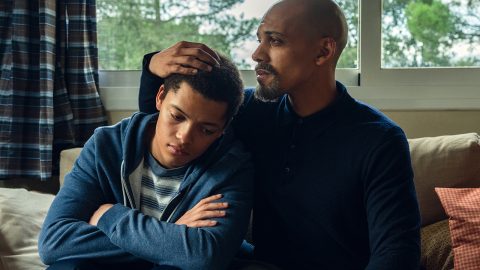
The Witness. (L to R) Jordan Bolger as André Hanscombe, Jahsaiah Williams as Alex Hanscombe, in The Witness. Cr. Courtesy of Netflix © 2026
Were there instances where Alex and André’s input fundamentally shifted your approach to a scene?
A couple, yeah, I think one was from André’s book. André gives the press conference. He comes into the room where he’s left Alex alone. And I related to it as a dad of young kids. Alex was very clingy to André, and André was terrified of leaving Alex alone, but he had to go out in front of the cameras without Alex. And it was almost the first time he’d left him alone in a room since the killing. He came back into the room, and Alex had been putting stickers on the police officer’s faces and ties and clothes. We put that scene in the film. It’s one of my favourite scenes, because on one hand, it’s just an observational moment that happened. But it does symbolise quite early on the possibility of hope — the possibility that Alex will be okay. You don’t have to spell that or say it; it’s there.
The other one is just a small thing, but it’s the police officers building the tent fort with Alex while André and his mum are talking about what to do. Should they show Alex? Has he understood that Rachel’s gone? Should he take Alex to the morgue to see Rachel? And that was something that came out of rehearsals. It felt like this is the sort of texture you don’t normally get in a true crime show or in a police procedural show.
Picture Credit: Rekha Garton/Netflix
Was there a defining scene for you or performance that blew you away?
From a human perspective, my favourite scene is always when they go into the house in France for the first time and [Alex is] dressed as Batman. It’s this moment of light, of joy, of love between father and son. It was always written in the script that he came dressed as Batman, but what you then see was not in the script. We wanted to rehearse with Jahsiah [Williams], with the child actor in all of the real locations.
You’re trying to prepare the kid for what they’re going to be doing in this environment with lots of strangers and the camera and all this lights and stuff. But also it’s seeing how he would interact with spaces often then informed the scenes themselves. The scene with the fort was very much about the geography, the relationship between the dining room and the set sitting room and the cushions on the sofa and all this stuff. But the scene in the house, when I took Jahsiah into this, it was actually in Spain when I took him in for the first time. It’s got a big, spooky, cold, dark space. So he was very nervous and apprehensive walking into this space for the first time.
And then we walked up to the first floor, like Alex and André do in the show, and suddenly he’s like a five-year-old kid. There was a big empty space and he just ran around like a madman. So that’s what we got Alex to do in the show. And again, it just felt like you get to capture something. It’s a more observational way of working and it just was very exciting. That’s probably, for whatever reason, that’s my favourite scene in the show.

The Witness. Max Fincham as Alex Hanscombe in The Witness. Cr. Courtesy of Ana Blumenkron/Netflix © 2026
The series uses a staggered, non-linear timeline across its three episodes. As a director, how did you use that structure to control the audience’s emotional journey?
Rob [Williams] had come up with that structure and I think the fact that it had that structure is one of the reasons why they sought me out as a director, because I did a show called Somewhere Boy that has a non-linear structure. It is also a father-son story and jumps between timeframes. What we learned on Somewhere Boy was that what works on the page doesn’t necessarily work in the edit. In the page you can read a transition like it’s 1992, Andre looks out the window, cut to Barcelona 2006. Emotionally in an edit you have to leave at the right point and come back in at the right point — and the audience has to organically feel that.
I think the archive footage on this show was just an absolute godsend, because it allowed you to sort of do exposition very succinctly. There’s a scene, the first time we go to Spain, you meet Alex with his mates, they’re smoking a joint and André’s saying, what are you doing, are you going to ask me about London? Alex sniffs the perfume bottle and they have an argument. And then you have this archive footage of where the investigation is three days after the murder, and you’re immediately back in.
In a way on this show, we could cheat. It does this double whammy: because it’s real, it’s sort of reminding the audience that yes, it actually happened, which you can’t do on a purely fictionalised drama. So it was an incredible tool. But the short answer is: You have to feel when the audience is ready to jump between timeframes.
Sometimes you have to squash loads of scenes from a different timeline together that were meant to be interspersed. Sometimes it’s the opposite, you have to break something up that was meant to run as a sequence. If you pull it off, it’s a great way of telling a story. But it is hard, because audiences respond emotionally to things. Once actors are giving performances, once you’ve got a composer’s music, the emotional logic of what way you want to be and what you want to find out — if you get it wrong, the audience almost immediately gets bored and frustrated. You only know you’ve got it wrong when you’re watching it for yourself on the edit.
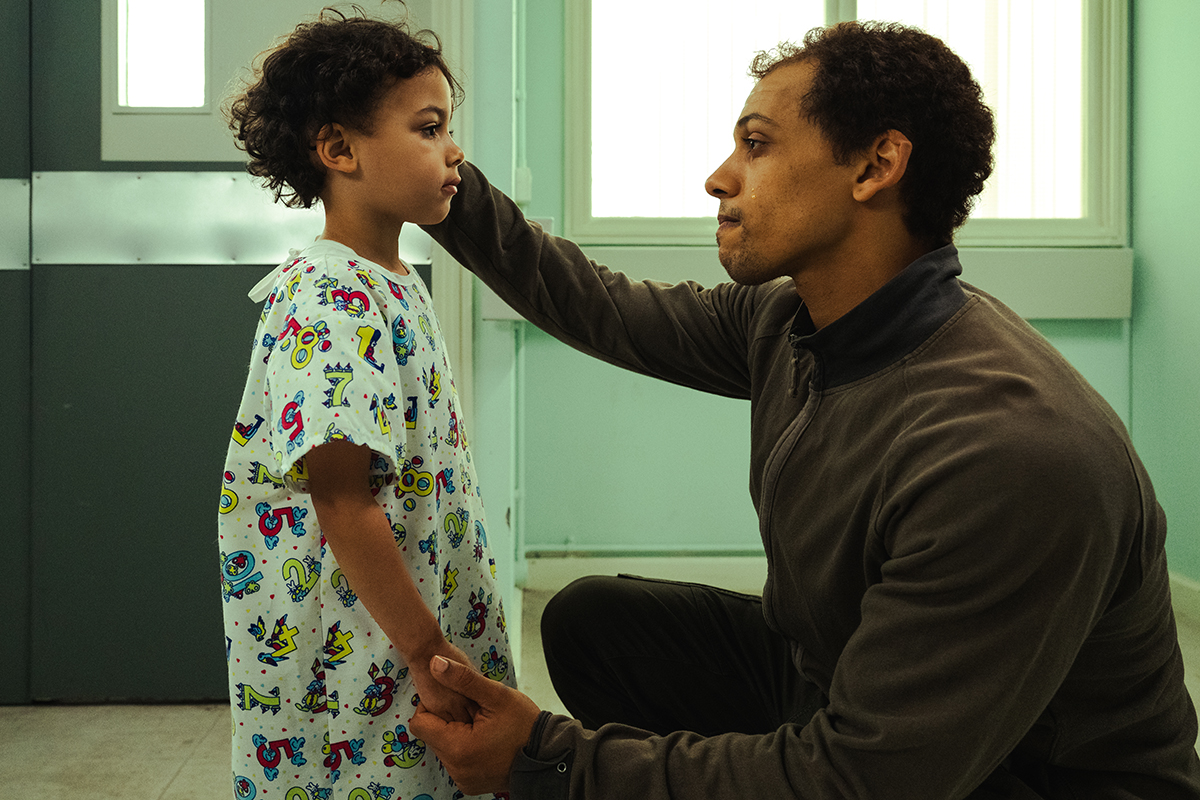
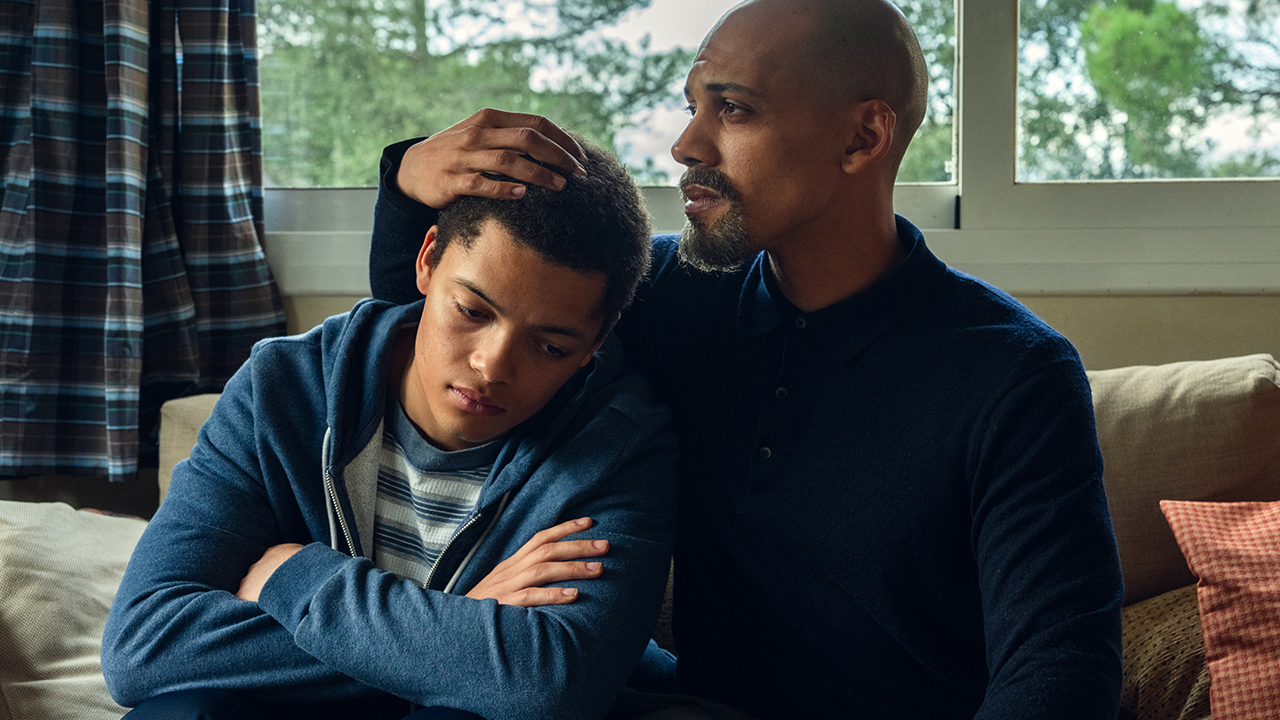
The Witness. (L to R) Jahsaiah Williams as Alex Hanscombe, Jordan Bolger as André Hanscombe, in The Witness. Cr. Courtesy of Ana Blumenkron/Netflix © 2026
This is an incredibly powerful and emotional story, so I suspect there was a lot of tough scenes to shoot. For you, what was the most challenging sequence to direct?
There were a couple. The really boring answer is safeguarding. Because of Jahsiah’s well-being, he wasn’t allowed to hear the word murder; we weren’t ever allowed to use the word killing. He wasn’t allowed to know the full truth of what he was taking part in. And so we had to work very closely with a child psychologist to construct an adjacent narrative to the one he was acting in. There were lots of scenes where that came up.
But probably just the murder scene. The opening of the show was incredibly upsetting. It’s a shot of Ellie [Williams] and Jahsiah walking into the woods from the carpark. I’d always designed it as this long tracking zoom shot that took you in and zoomed after them.
There’s a lot of people working on a film set; there were lots of extras that day and 150-odd people on set And I think everyone felt a sort of chill watching them walk into the woods. There were several moments on this show, in prep and in the shoot, where you felt a very deep sense of how sad, ultimately, the story was. That was a very uncomfortable feeling. There’s no getting away from that. You question why are you doing it? And what’s the value of it? And so on.
But I think that was a moment on set where I think it just felt so close to recreating what had happened. It was almost too much.
How would you describe your experience on this show? What are you going to take into future projects?
I’d say working on this project, it was a very actor-centric way of working, because we knew working with a very young child, you couldn’t work with a child in the traditional technical way. And so that then informed all of the performances.
Every performance in the show was led by a sense of, how do we get what’s real and not be a slave to the kind of technical TV way of directing, which is what I’ve done for 18 years. I think the immediacy and the sort of the way it was shot. We didn’t shoot traditional wide shots. We didn’t shoot with a kind of conventional classical grammar. We would always start with a medium shot. We would always enter locations through the perspective of a character. You never enter a room without going into the room with the character. You never have a big wide shot that’s sort of like a godlike view of everything. You only have as much perspective as the characters in the show had. And I think initially that made total sense for the story of Alex and André, because it was very influenced by arthouse films, and particularly the Belgian film Close.
Choosing to shoot the police scenes like that was a bit of a journey. Initially we felt like, well, it’s a police show, so you’ve got to do tracking shots and push-ins; they’re cliches for a reason. To shoot it like an arthouse movie felt like a real leap at the time. But when you watch it, hopefully it works.

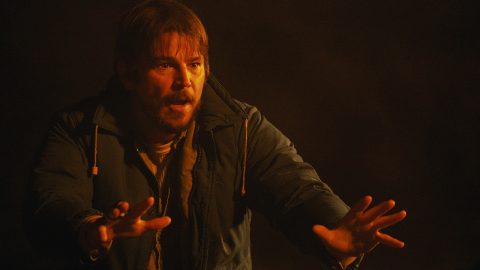
The Witness. James Bisping as Colin Stagg (5) in The Witness. Cr. Courtesy of Netflix © 2026
Up next for Winckler is David Nicholls’ adaptation of The Secret Diary of Adrian Mole at the BBC, an albeit inherently different kind of project. “I’m working on The Secret Diary of Adrian Mole at the moment, which is, you know, about as totally far apart from The Witness as you can get.”
This interview has been edited for clarity and brevity.
The Witness is now streaming on Netflix.