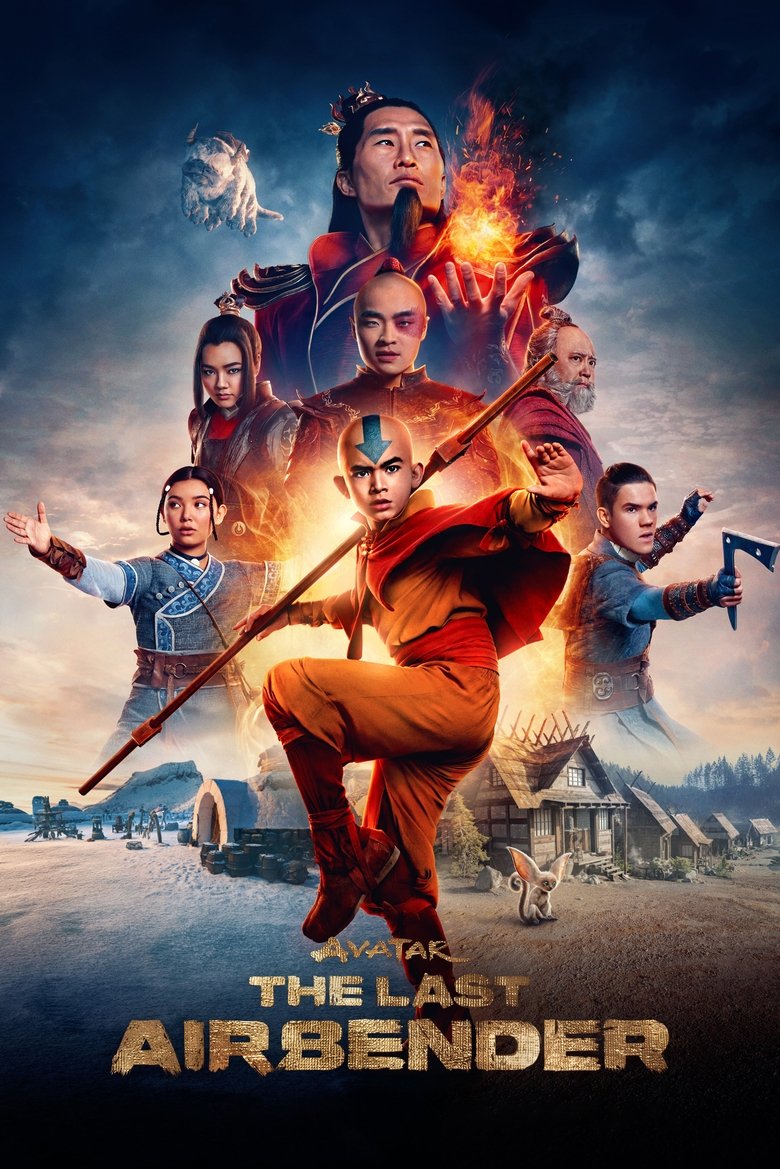
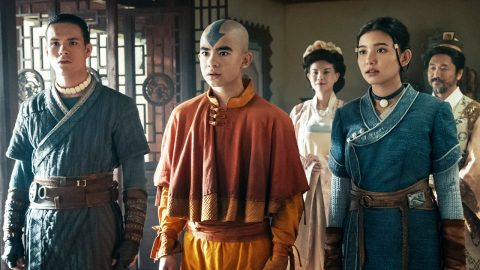
Avatar: The Last Airbender. Gordon Cormier as Aang in season 2 of Avatar: The Last Airbender. Cr. Courtesy of Netflix © 2026
Avatar: The Last Airbender brings Aang, Katara, and Sokk back for another adventure. Fantastical creatures and settings only get bigger, more complicated in the second season, based on the classic animated show. It meant more work from the VFX company, Framestore, and its VFX supervisor on the project, Ross Wilkinson.
Wilkinson is a fan of the original series, so when he’s working on animations of Appa and the elemental powers, the passion is always there – even if it’s invisible to audiences. “It’s an invisible art if we’ve done our jobs right,” Wilkinson told What’s On Netflix. “I think people don’t tend to notice. In terms of what we offer from Framestore’s point of view to our clients, to showrunners and executives, it’s high-quality work that elevates a story. It helps drive the narrative that our storytellers are trying to tell in a way that isn’t distracting, that feels grounded and feels real.”
Wilkinson spoke with What’s on Netflix about making the impossible feel real in Avatar: The Last Airbender.
With The Last Airbender, you got some of the most notoriously difficult VFX shots to produce – including fire, air, water, not to mention all the fur for creatures. What VFX shots are maybe deceptively simple, ones that kept you and the team up at night?
There are a few of those. On a show like this, it’s elemental, right? Everything is elemental, and all of our characters have some connection to the elements. So they all have varying levels of complexity within them.
In season two, there is a scene where Appa is being kidnapped. He has what we refer to as “aggressive airbending,” which was Appa’s, almost, defense mechanism to being attacked by the Dai Li. It was quite complicated because it needed to look powerful enough that it was coming from Appa, and he was able to repel most of these attacks, but it couldn’t look so powerful that it felt like it was going into Aang’s avatar state. We wanted it a bit more organic, which made the effect feel less controlled and more primal in that regard.
When it comes to airbending or firebending, each sequence must present new challenges too, right? Do you have to ask every time, where is the character at? How dramatic does this use of air, fire or water need to be?
Absolutely. A lot of that happens on set as well, and you get that from a lot of the choreography, and that will always come over as part of the brief. We will obviously brief that out to our teams. Again, we always try to take a big swing. Always take the big swing and then come back from that big swing. It is very performance-led, and that very much comes from our directors, our showrunners, our client-side team, in general.
Our artists do treat it as a passion project. They tend to layer on top of that their own choreography, which is quite nice. A lot of them are fans from the original animated series. With those 2D animations, being able to interpret that now as a tangible thing that feels real is quite fun. A hand-drawn thing obviously carries a certain amount of weight and tells a great story, but in terms of making that thing look real, you’re allowed to introduce so much more nuance to it.

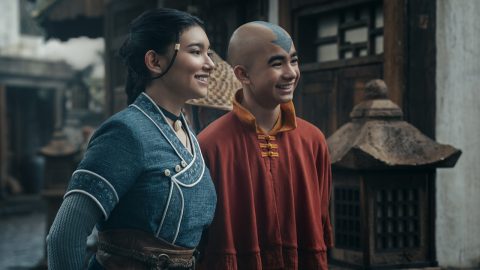
Avatar: The Last Airbender. Kiawentiio Tarbell as Katara in season 2 of Avatar: The Last Airbender, Cr. Courtesy of Netflix © 2026
As fantastical as the world is, what are some real-world references you’re using for VFX shots?
[Laughs] You’re coming right into my world now.
[Laughs] Perfect.
I’ll start with Appa. I absolutely fell in love. I was a big fan of the series, the original series. But I never did a deep dive into the original series until I got to work on the project. And so, when I deep dived into Appa and I bought all the concept books, I read as much as I could from the original series and took as much reference as I could.
When we created Appa, what was really interesting is that, yes, he was a bison. He’s a sky bison, but he’s also based on a manatee. His tau is that of a manatee. You’re trying to layer in on top of that. How would I interpret this creature? We then looked at hippos and large mammals that we thought would work. We lent on hippos quite a lot, actually, to be fair. It was hippos, manatees, and bison for the groom.
Then do you ask, OK, how do we make this mammoth creature fly realistically?
That was really interesting: how do we make Appa a creature that can fly that is 16 tons? [Laughs] It was complicated thing to try and develop. What we found was how hippos swim – and that weightlessness – was actually a great way of adapting how we could transfer that onto Appa. It’s something that’s extremely heavy that your eye perceives as extremely heavy but looks so graceful and weightless and has a level of weightlessness to it. That sort of level of work and getting into that was brilliant.

Cr. Courtesy of Netflix © 2026
What about Appa’s facial performance? How much should or shouldn’t he communicate through his eyes and mouth?
For example, he has a very human mouth, and that is quite interesting to try and manipulate, to feel grounded. Initially, you explored doing human expressions on that creature, and it does look a bit wild. So, you tend to lean more in the eyes. Appa is very, very performative around the eyes. You look at creatures that emote quite heavily – dogs, cows, things like that– through their eyes and try to pull as much from that as you possibly can. You draw from that where you can and layer in a little bit of that humanity to it so it connects with audiences.
Which animals were used as templates for Momo?
Momo, for example, you can lean on lemurs quite a lot. Facially, he’s got almost like a feline face, but you’re drawing on winged creatures. He’s got a lot you can play with, but he’s a little less abstract in that regard. You can look at Momo and you can draw some comparison to something in the real world that makes him feel grounded.
How much is the creature behavior, as well as the expressions, referenced from the original animated series?
We had Appa’s Lost Days storyline, which is a huge fan favorite from the animated series. AWe were doing the flashback to when we got Mama Appa and the baby appas and Aang first meeting Appa for the first time. We had to nail it. We really lent on the animated series references. We tried to layer as much of that aesthetic into it as we could. With Marion and the production designer, at their end, they did some really lovely concept upfront, which we sort of then took and then sort of layered on top of.
But it was all drawing from that animated series reference. Even some of the shots that we created were very much pulling that reference from the series. We wanted to pay homage to it as much as we possibly could. Being a fan myself, it was a moment that I don’t think you could have reconstructed. It was so perfect I think you really had to lean into it.
I think that lots of the other [visual effects] vendors try to do. They take those key moments and lean into them as much as they can to pay homage to the original series. We try to do as much as we possibly can, where we can.

Avatar: The Last Airbender. Gordon Cormier as Aang behind-the-scenes of Avatar: The Last Airbender season 2. Cr. Katie Yu/Netflix © 2026
To circle back to the beginning, with air, water, and fire, what advancements in VFX have been made in the last few years to really make them as believable as they are in The Last Airbender?
For the actual bending, the actual brief stayed the same. It was like we want the same stuff, but we want it to be better. It just needs to feel more grounded, pacier, hit harder. I think something that was actually quite challenging was with our groom, when we had a scene in Appa’s barn where Aang is lying on Appa’s groom.
What was the challenge there?
It’s a huge shot where we come up off Appa’s face and onto Aang. They shot that. In season one, they had an Appa back, and that Appa back had fur on it. We found that it wasn’t that useful because it felt synthetic. We actually ended up cleaning out a lot of that groom and then putting the CG groom in. This season, with Marion, we scrapped that, and we just went for archroma blue-black.
Aang was lying on that, and we added a bit of foam. There was a bit of compression so that it felt like he was laying in it, which was great. But it just meant that we had to reinvent how we approached the work to some degree, because there was no transition now into any practical groom. It was just all CG groom. We were much closer than we ever were on season one.
From a technical point of view it was extremely challenging because Appa’s in the millions and millions and millions of fur. He’s got a lot of fur. We had to create these hyper pockets on the head which had as much hair around where Gordon was, the actor who plays Aang, where he was, we had to put just as much on him as was on the whole of Appa. Then for it to feel grounded and real, we even had to put in the breath, like Aang’s breath. Every time he breathed, the cadence of his speaking needed to be reflected in the groom. Even just timing that out was very complicated.
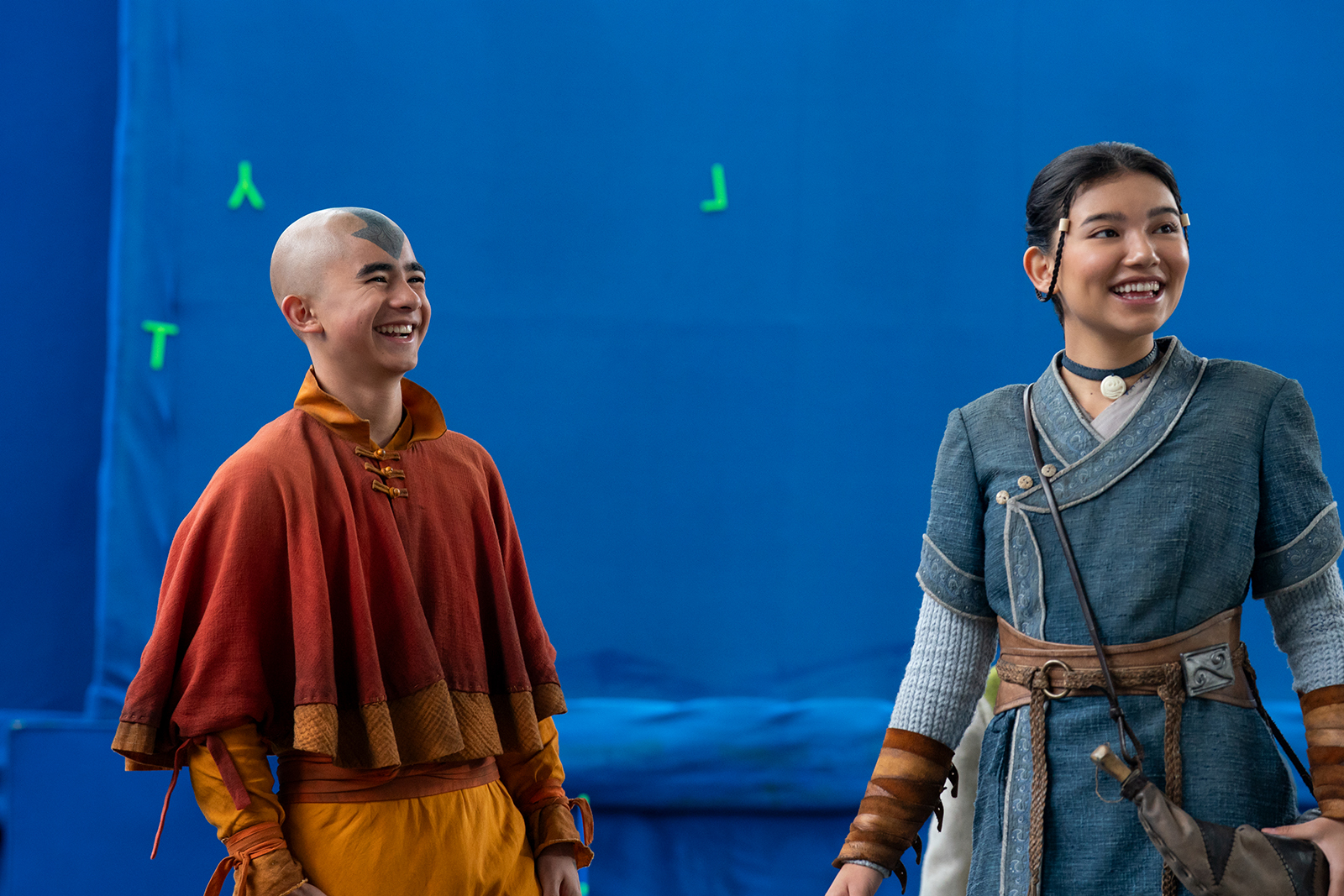
Avatar: The Last Airbender. (L to R) Gordon Cormier as Aang, Kiawentiio Tarbell as Katara behind-the-scenes of Avatar: The Last Airbender season 2. Cr. Katie Yu/Netflix © 2026
On a show like this, when you can see the massive technical advancements already from season one and two, how does it make you excited for the future of visual effects?
It’s an ever-changing field. I think that’s the beauty of being in visual effects. The ceiling is only ever going to be as high as the technology allows us to go – and that feels infinite, to be honest. As long as you have clients that are willing to push those boundaries, you’ll continue to hit new heights.
Effects in general are always very complicated. It’s a very complex field. Effects blurs the technical and the creative worlds quite a lot. A lot of the time, we work in a nodal-based system, but it’s a very code-based workflow a lot of the time.
It always feels like you’re coming into a show and you’ve got this really complicated thing to do. But then when the team gets in there and they start exploring what they need to do and they start developing new things, it evolves and becomes even better. It’s just born out of their beautiful, technical creative minds.
It is hard, but then you always get this beautiful thing that’s taking you to another level again. I think it’s why this industry has grown so quickly. The level of quality of the work always just scales and scales and scales because you have these wonderfully passionate people that are just extremely clever. There’s just huge amounts of momentum all the time within the industry.