Picture Credits: Netflix
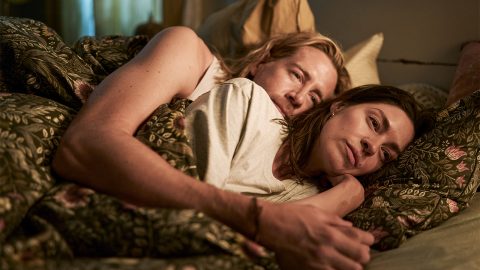
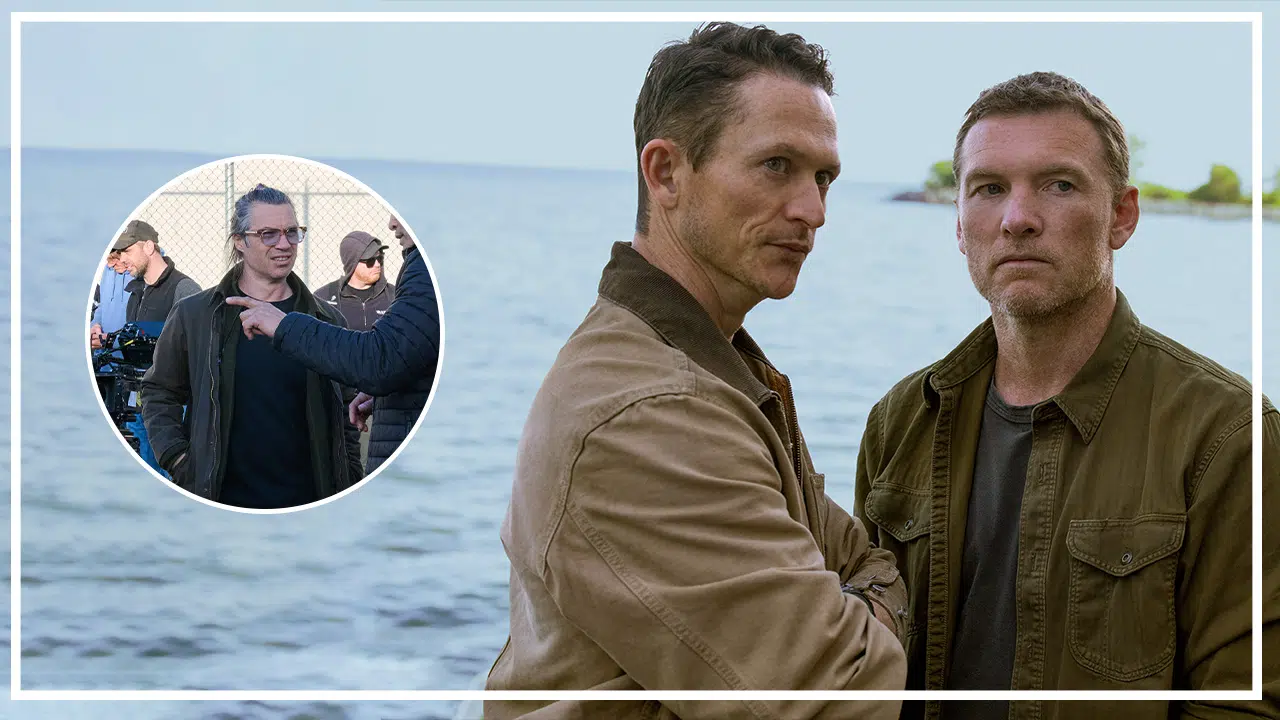
I Will Find You is a streamer-pleasing murder mystery. Based on one of Harlan Coben’s page-turners, the hit series is about an incarcerated man, David (Sam Worthington), escaping jail to find out what exactly happened to his son, and to prove his alleged innocence.
From prison to Boston to New York City, cinematographer Boris Mojsovski had to set up a variety of characters, clues and settings in the first two episodes of the series.
Mojsovski, who also shot episodes five and sex featuring Clancy Brown as a gangster, had to make a prison cold yet inviting to viewers. He had to make the mystery visually engaging from the beginning. As the cinematographer behind The Abandons and 12 Monkeys told What’s On Netflix, shooting a murder mystery leads to a lot of fine lines to walk.
With so many eyeballs watching the show, any details you really hope people are catching in I Will Find You?
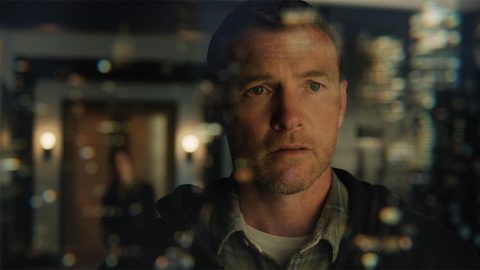
You don’t look for recognition of whatever technique or even the artistic merit. But what you do look for is that people find the world, that we’re breathing with those characters, that we feel as if this could be happening to anybody. It was important with Sam’s character.
To answer your question most directly, with very wide lenses, we were close to him and long lenses subjecting him to the environment that he’s in. So, it was the opposite: the long lenses were wide shots and wide-lens closeups. I try to do that a lot. In this one we insisted that this is how it’s treated. I think that contributes a little to people being close with the characters.
You shot the first two episodes, most of which we see David in prison. What did you want to capture about that location and make audiences feel?
The location for the prison in Kingston, Ontario, I mean, it’s a museum now, but it’s a really tough old-school prison. There’s some vast, huge environments that you imagine how it felt to be a subject in that kind of environment. But then when you populate it with people in costumes and all of that, it actually does a lot of the work for you because the place just oozes with that tough realness.
We just wanted to give it enough shape and drama to feel like something that could be part of real life. It’s just a little bit enhanced for us to buy into the movie aspects of the possibilities of how the light behaves with the characters, how they disappear into the darkness, how he’s led into the darkness when the brightness doesn’t matter because he can’t see out that window anyway.
The prison had cells we couldn’t film in. The cells are smaller than my car by design; there’s no windows. We needed to build the cells and then some hallways, et cetera, in the studio and match to the actual location.
How do you make the mistakes that the designers of the actual prison made? You know, the criminal design mistakes of painting it the wrong color and making it so bland? You have to follow that design in order for it to pay off and do the same thing that real life does that you wouldn’t normally do in a good design.

Picture Credit: Netflix
How does light carry in jail? How does it bounce off the cold walls?
It’s interesting. It’s a big debate at the beginning because what we look for – and I call that seemingly real feeling of you’re in a character’s environment and we think this is what prison looks like. What elements can you bring in that help you in the design of it, of the sets, et cetera, that help you achieve the filmmaking?
How much to visually dramatize, right?
So we actually see the characters the way we want to see them, we see the drama, we convey the feeling that we want without those elements being out of place. Because if somebody analyzes it fully, there’s probably always, in the movies and TV series, elements that would never be in the real jail, but we put them in and nobody thinks about them.
How do you walk that line?
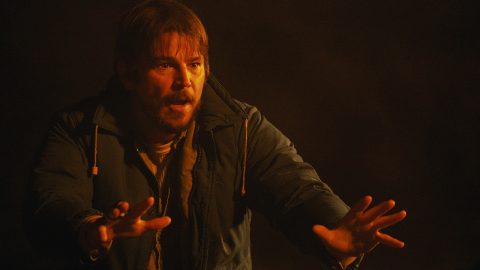
I fought hard, for example, for that window in his cell that he has no view of anything, really. It’s a burnt-out, dusty window that looks onto a wall so he has nothing, but there’s light that comes in that allows us to show the mood of the place and allows us to have variety within it.
You need to be able to do those dramatic things. It’s why you build elements that you push very hard for the audience to feel like they’re essential and that the cell can only look like this, like nothing else. You take that window out; now you don’t have all that mood, all that interest, all that light bouncing around, the feeling of possible hope.
But inside of him, all the doubt in the world, all those juxtapositions are very important. You can only achieve them if you have enough elements to work with. It’s a constant debate at the beginning of every series or a movie. Where’s the line? Where’s it too much? Where’s it?
Even what bed does he have? All of these things are super considered because if we did them as in real life, you would not ask this question. It would be bland, boring, and it would actually not tell us anything about this character.
A character who’s in a murder mystery. This is a show with a lot of red herrings and questions set up at the beginning. Since you shot the first two episodes, when clues were introduced, how much of a lightbulb – so to speak – do you use for shots in foreshadowing?
I think that’s a great question because that’s the number one thing I think about when I map out the look for a show. You cannot predict everything. Obviously, we have scripts so we can figure out where we’re aiming, but the most magical part of filmmaking for me is that you can map out and create a design in every way around a show before the show is being executed.
I make this thing – I call it the visual manifesto – because it sounds very pompous. Everybody’s like, “Oh, I have to look at this as a visual manifesto.” I play with that all the time. So, we make a visual manifesto that is a blueprint of what the show is going to look like, and more importantly, feel like.

Picture Credit: Netflix
How deep does the visual manifesto go?
I outline the techniques, how we’re going to get there. I outline why we’re going to cover things a certain way, how we’re going to treat the characters within it, what does the environment do? How do we show all these things? You learn a lot as you make the document, and a bunch of us are making it. I just kind of execute at the end and say, “Is this it?” We all look at it and we go, “We think that’s it.”
What happens is after the first test with the actors and stuff like that, that informs a little bit because you see behaviors, you see that Sam, who’s very stoic and little movement means a lot, and how he positions himself on camera. Immediately after those first tests, I was like, “Well, I have some new ideas because I had the personification of David in front of me in Sam’s behavior and with the other actors as well.”
Then with all that preparation you put in and all that mapping of how much mystery you’re going to carry in a scene and how much you’re going to allow the audience to see within that misunderstanding, the particular thing, you look at that actor there performing it and that informs it more than all of the preparation you’ve ever had. And then you adjust and that adjustment is based on your great deal of hours of preparation, but also can be super different than what you predicted. I live for that.
One actor I definitely want to ask about is Clancy Brown. Everyone loves Clancy Brown. What changes about your plan or your manifesto when you have him in front of a camera?
Oh my God. Immediately when I met him – I mean, I’m a big Highlander fan. I just loved that movie. We talked about that the whole time. For me, it’s probably wrong, but every time he was in a closeup, they’re all scared, in my head: “There can be only one.” I love that we talk about it constantly, and he couldn’t be more – he’s the sweetest man.
He is great at playing villains, though. Incredible performance in Carnivàle?
So good, so good. He knows the little things – taking a breath, taking a pause. With him, he had the simplest closeups we could come up with because the way he sat at that table with David, you didn’t need to go too low to emphasize [the threat]. You didn’t need all these things. You just needed to be present and allow for this character to be completely realized in front of that camera. Again, you cannot fully predict.
I love an off-angle. We shoot with two cameras. An off-angle camera, which is like a three-quarter shot where you see both eyes, but you also see the diagonal of the space. And so, the main cameras are more on the eyes, like a little bit of a flatter angle onto the actors – and that obviously is important. And then that other camera plays as a camera that adds even more character to every character. You find that sometimes that angle, and in this case, that angle was too much.
How so?
We’re foreshadowing and we’re telling too much about the character and we’re making him scarier, more dramatic, et cetera. We still kind of shot it. But with him, I think what ends up in the movie is a very simple straight-on closeup, which I really enjoyed.

Picture Credit: Netflix
You’re threading a needle with suspense. It’s a delicate process in angles and lighting, isn’t it?
Yeah. Well, with some actors, they hold it all. It’s a cliché with cinematography. We talked about this earlier, but I don’t think we really know anything in our preparation. We predict a lot and we are ready to adjust, and that’s great. That’s good preparation to be ready to adjust and be ready to be surprised.