Picture Credit: Getty Images for Netflix
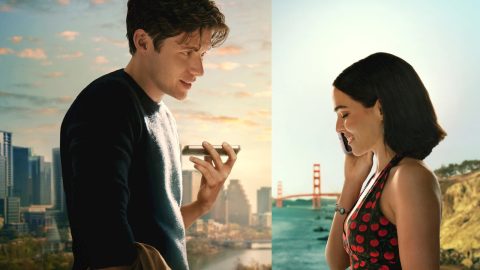
Cinematographer Julia Swain wants to shoot romance with warmth. As Swain notes, Voicemails for Isabelle is about more than romance and comedy, but when it does go full rom-com, it goes hard. Writer-director Leah McKendrick gives the film’s two leads, Jill (Zoey Deutch) and Wes (Nick Robinson), the kind of material that would make ‘90s rom-coms proud.
Swain is a versatile cinematographer, ranging from her work here to standout horror movies including The Wrath of Becky. With Voicemails for Isabelle, the script – and the visuals it called for – spoke to her immediately. “Leah’s script was so rich, tons of characters, so many locations, so much subtext and emotion and connection,” Swain told What’s on Netflix, “that I wanted something that was rich in color, contrast, and had a lot of life to it on the screen. I wanted to have a lot of warmth and character in the visuals, something that was rich.”
The first ten minutes showing Isabelle and Jill’s childhood, their bond growing – that could be a film of its own.
Totally.
How did you and Leah want to tell that story as efficiently as possible in a montage?
There’s dialogue, dancing, and you want to set up the relationship because that’s how you fall in love with your sister. There wasn’t a lot of visual variation because it does have to move so quickly. Same lenses. There wasn’t a difference in the time period. The warmth and everything that was the plan for the whole movie worked for that nostalgic feel of them growing up, but it moves into Zoey Deutch so quickly that I didn’t want to mess with aspect ratio or filtration or do anything different there.
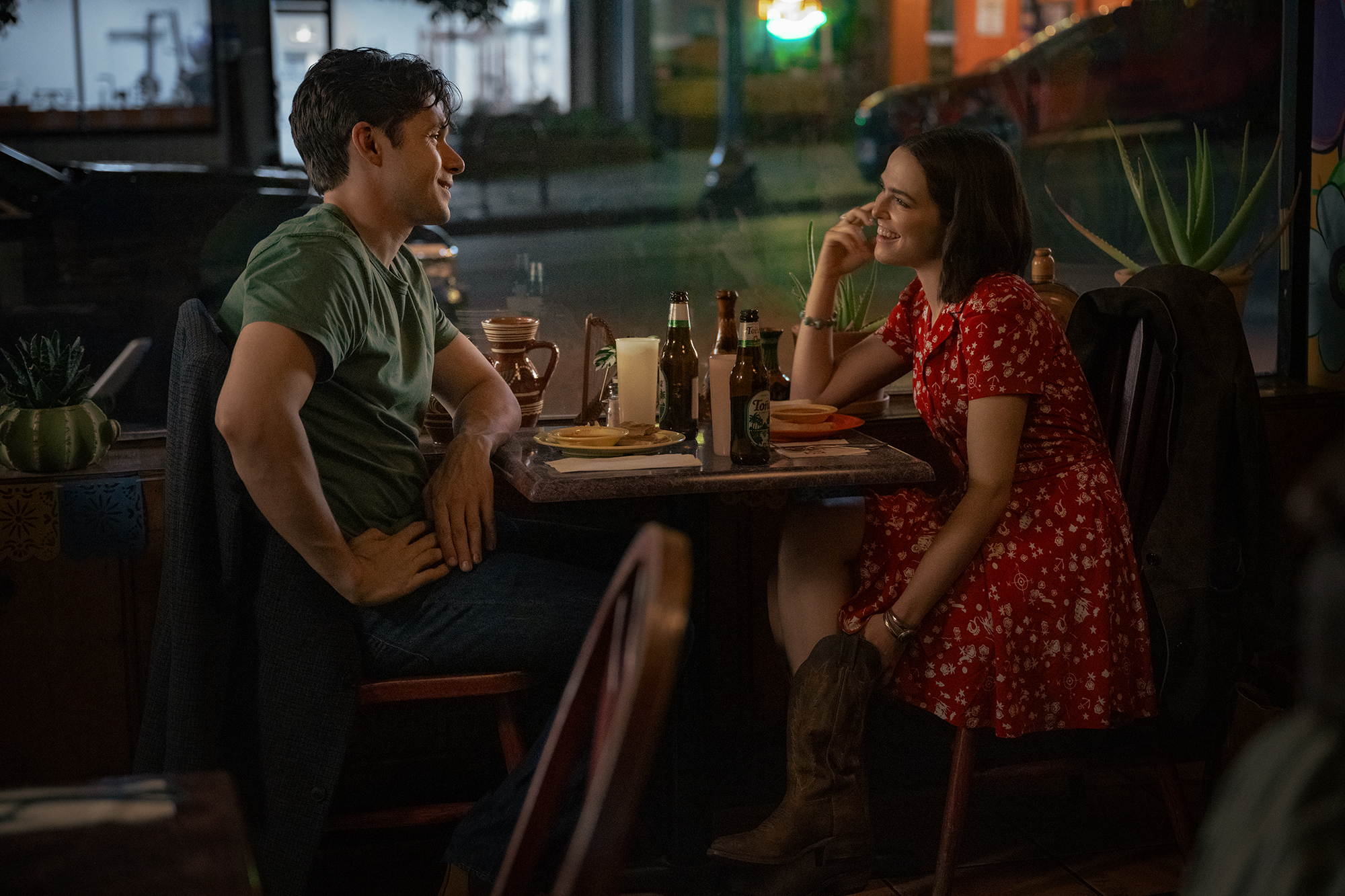
Voicemails for Isabelle. (L-R) Nick Robinson as Wes and Zoey Deutch as Jill in Voicemails for Isabelle. Cr. Diyah Pera/Netflix © 2026
When you were shooting the montage, were you and Leah moving the camera to Robyn’s “Dancing on My Own” in your heads?
Yes, yes. Robyn was written into the script, but I don’t think we had permission yet. We had to make this beautiful [pitch] deck and be like, “Here’s the story, here’s why this song is so important.” Leah’s scripts always have an amazing soundtrack built into them.
For the hospital scene, Isabelle held up the phone, so we knew that Izzy would be in the hospital. I was like, okay, we look up to the phone and then we look down at Izzy holding up her phone. Trying to make things cut together and move really seamlessly in that montage was important.
On one of the early scouts for the hospital, I said, “What if we bring in the dance lighting? Robyn’s dance lighting in Izzy’s hospital room.” When you look past the parents, it’s hospital lighting. It was tying the sisters together because they’re always connected wherever they are.
When you read songs in a script, like Voicemails for Isabelle, how much does it help you visualize a film?
Totally does. It’s hard to keep that song in your head as you’re reading because you’re paying attention to dialogue and action and everything, but it does give you an energetic feel of what this sequence is going to be. Depending on the song, how fast does it have to move? What energy can you bring from a camera standpoint because you know this song is hopefully going to play during that montage or whatever?
Or for a big ending dance sequence. As someone who grew up watching rom-coms, how fulfilling was shooting a dance party for an ending?
It was amazing. I can’t tell you how many good moments there were on set and happy tears because it was just like, we’re doing it. We’re here and we’re doing it. This thing we’ve dreamed of for so long on Hippie Hill. I cried on that set because Donna Missal was singing. We had two cranes. It was just so cool.
When we got to the ending dance, the sun was going down. There was this “we’ve got to get it” energy for the end. It played into running around and getting the whole group, everyone up and dancing.

Voicemails for Isabelle. (L-R) Zoey Deutch as Jill and Megan Danso as Zella in Voicemails for Isabelle. Cr. Diyah Pera/Netflix © 2026
It kind of sounds like going back to the original feeling of being a teenager with a camera and just running around.
Totally. Leah and I were both stepping up with budget, but we had more time for this one. We had scrambled together, but now we were doing this bigger movie – and it’s still never enough time. You have so much you want to get, so our indie chops had to come into play so that we could run around.
It’s the same no matter your budget. You have to get all the things that you have to get. Sometimes I’m like, give me a bounce board and a floppy and let’s go get this. A lot of it becomes that you’re just running around with a camera.
You get to do the classic third act scene with Wes running in the rain to get to Jill, but you go really big with it, fireworks and all. With the time you did have, how’d you pull that sequence off?
That sequence was never meant to be raining. It rained. That was one day it poured on us. There was so much chaos because of the rain, but it worked and it made it even bigger. Running in the rain was definitely one of the bigger set pieces.
You’re shutting down a street, you’ve got tons of extras, and you have tons of cars. Originally, that sequence actually started with him in the car making the decision to run. We actually shot him in the car being like, “I’m in a traffic jam. How do I get to Jill?” He gets out, and there’s this whole swinging crane shot where he gets out and starts running.
A lot of the AD team had to coordinate, and the picture car team had to coordinate, so many background extras with cars. It was a lot, and it was planning where he would stop. There’s also a stunt of him almost getting hit. It’s a testament to the team we had to pull that off, and the rain was the cherry on top.
And you get all those firework reflections with the rain. It worked out nicely.
We had a free wet-down, absolutely. I had cranes with those firework effects, too. The fireworks are actually the effects, but all the light play is me, and then the effects matched what we were doing in lighting.
Were there any other romantic-comedy staples or conventions that you really enjoyed shooting?
We love the ’90s, early 2000s rom-coms. I definitely think rom-coms are not what they used to be. We couldn’t shoot on film for this one. I do think film is a big attribute as to why rom-coms feel soft and textured and, frankly, romantic, because they’re shot on film. There’s this warmth to them, and they would light with tungsten back then. They didn’t have all these LED lights.
We couldn’t shoot film, but I really wanted to maintain the warmth, which I think a lot of rom-coms have lost. They’re kind of flat and cool. This is a whole discussion online, obviously, right now with how movies used to look and how they look now. It was a big conversation of like, okay, what can we carry over? I think that’s soft key lights, a lot of warmth, and a lot of richness. We didn’t want a muted movie that was not interesting visually.

Voicemails for Isabelle. Nick Robinson as Wes in Voicemails for Isabelle. Cr. Courtesy of Netflix
As you said, this subject is an ongoing conversation around how movies look today. What else do you consider the biggest differences, to your eye, between movies today versus 20 or 30 years ago?
It’s a culmination of things. A big thing I see when people put things side by side is warmth. There’s a lot of warmth missing. People are afraid of contrast now. I love shooting on film; there just aren’t as many opportunities for me because you also have to have a director who’s really down and is that champion for it. Not all of the directors I work with are necessarily – but film burns. There’s contrast. You let things go.
I think people are afraid to let darkness fall and highlights fall and have contrast on faces. I also think everything’s looking the same nowadays. Everything looks very similar. I do think it’s coldness, flatness, and a richness that’s missing, and that’s in the lighting, the contrast ,and the color.
Shadows, too. I miss deep shadows in movies.
Yes. People are afraid of shadows. People are afraid of hard light now, so everything’s soft. I do think rom-coms, if you look at The Holiday, there is a softness that is really beautiful. I did want to carry over to this because it is about faces.
You can see the affection for rom-coms here. Congratulations, Julia.
Thank you. We were really excited. Also, it’s being marketed as a rom-com, and there’s so much love for rom-coms in it, but there’s also the grief element. There’s so much more to it, which I’m excited for.