Photo by Aleksander Kalka/NurPhoto via Getty Images
For years, the multiplex was viewed as enemy territory in Los Gatos. Former co-CEO Reed Hastings and current co-CEO Ted Sarandos have long been famously—and vocally—against the traditional theatrical model. Their philosophy was simple: why make subscribers wait and pay extra for a movie when they already pay for a monthly subscription?
The pressure to change its ways—like on many other red lines which Netflix has crossed—has grown in recent years. While Netflix has maintained a small theatrical footprint for over a decade, it’s not the robust theatrical rollout that the hordes online and many others within the industry have clamored for. Other red lines over the years have included Reed Hastings famously being against ads. Now, it’s one of the streamer’s biggest growth drivers. They also swore off live sports, and while you can argue whether they’ve half-assed their approach thus far, they are undoubtedly in the game now.
Ted Sarandos highlighted these changes in a recent earnings call and said something that’s stuck with me: “This is a business and not a religion.”
The theatrical question has remained, though. But over the past year, something has undeniably shifted. Netflix is increasingly experimenting with the big screen and was at one point going all-in on its then-potential Warner Bros. acquisition, leaving industry analysts and subscribers alike asking: Is the world’s biggest streamer finally embracing the theatrical business?
That’s not to mention that some of its rivals have gone all-in (or partly in) on theatrical.
Amazon, through its acquisition of MGM, has already fully embraced the theatrical model, treating multiplexes as a viable revenue stream and a marketing engine for Prime Video with a huge slate planned.
Apple, on the other hand, spent astronomical sums releasing Killers of the Flower Moon, Napoleon, and Argylle in theaters. After enduring a string of bruising headlines over box-office write-downs, Apple has largely retreated, pivoting back to a much more cautious, mostly streaming-first approach. While they had F1: The Movie in 2025, which was undoubtedly a big success, they’ve hardly embraced theaters since.
With several changes over the past year, the dominoes, at least on paper, look to be falling, but are we about to see Netflix go full-throated into this business? The answer is probably not.
Netflix Has Always Been in Theaters*
To be crystal clear, Netflix has always had theaters as part of its release strategy, since its early film projects dating all the way back to 2015, but there’s always been a big bold asterisk.
If you look back at Netflix’s history of theatrically released movies, it has nearly always been exclusively built around awards season (Roma, The Irishman, Glass Onion). In fact, by our count, the number of films that Netflix has debuted at a film festival or screened in theaters before being released on Netflix is north of 200. Historically, this was a compliance play to get their movies qualified for various awards like the Academy Awards.
The one exception, as pointed out to me by one of our readers, was The Irishman, which came closest to what’d be deemed as a full theatrical rollout. Back then, theaters demanded a 72-day period of exclusivity for films, and Netflix wanted 45 days. You’ll see how the world has changed dramatically in a few paragraphs’ time, given that’s now the highly applauded new floor.
For the most part, though, most of these theatrical releases were two-week exclusive windows in select independent cinemas and smaller chains. The reason bigger theater chains wouldn’t play the movies was clear: Netflix wasn’t giving a long enough exclusive theatrical window, and, given the streamer’s reluctance to shift, they’ve been in a stalemate ever since.
But as we mentioned, there were multiple shifts in 2025, starting with stunt releases:
- K-Pop: Demon Hunters kicked this trend off. While it got a small two-week theatrical window ahead of its Netflix release (which most people didn’t even know about), it wasn’t until the movie really started picking up steam on Netflix (eventually becoming the most-watched movie in Netflix history) that it would make a stunt-jump over to theaters for a single weekend in late August, and again just ahead of Halloween. Another expected run in select countries is slated around its one-year anniversary mark in late June. This notably included larger chains such as AMC and Regal in the States.
- The sprawling world of Stranger Things was next to get massive theatrical love. Not only did the Season 5 finale head to theaters, but the newly released animated series gave US fans early screenings of Stranger Things: Tales from ’85.
- Netflix also gave One Piece Season 2 similar treatment, nabbing a limited theatrical release in select countries.
The Ghost of the Warner Bros. Deal
Of course, we can’t talk about Netflix’s theatrical ambitions without bringing up the elephant in the room: the recently aborted Warner Bros. acquisition.
Just a few months ago, Netflix almost solved its theatrical dilemma in one $82.7 billion swoop. When Netflix initially struck a deal to acquire Warner Bros. back in December 2025, Ted Sarandos made it clear that a major piece of the strategic puzzle was inheriting WB’s legacy distribution infrastructure. During the intense bidding phase, Sarandos openly defended the deal by stating, “We’re buying a movie studio and a distribution entity that we don’t currently have.” It was a clear signal that Netflix was planning to fully embrace the traditional theatrical model by simply buying a company that had already mastered it.
It proved they do want the box office revenue, but recognize that building that global infrastructure from scratch internally is far too expensive and complex. But as we all know, Netflix ultimately walked away from the bidding war in February, allowing David Ellison’s Paramount Skydance to take the prize.
That was it then, surely? Back to normal business? Well, not quite. There were some tea leaves that more was to come when Ted Sarandos reportedly continued with pre-planned meetings during CinemaCon, an annual summit for cinema owners and distributors.

3DD8GHN Netflix and Warner Bros Studios – Global Entertainment and Media Production
Narnia Breaks Netflix’s Decade-Plus Playbook, But Will It Become The New Norm?
Netflix first acquired the rights to Narnia in October 2018. Back then, it was planned to be a sprawling TV and movie universe, and while it took years of evolution (including the original architect leaving the project), we eventually scooped that it would be Greta Gerwig who would take on a pair of movies, with the first, Narnia: The Magician’s Nephew, due out in 2026.
It was in late 2024 when numerous reports surfaced that Netflix was planning its most unconventional and biggest theatrical rollout to date. It would head to IMAX over Thanksgiving and then release on Netflix around Christmas. Indeed, that had been the plan for a while, but on May 1st, 2026, that was upended with an even bigger rollout.
It has since been delayed to February 2027, but was given an expanded screen presence beyond just IMAX. More importantly, it adopted a large 45-day window that’s now become the standard timeline many have adopted across Hollywood, beginning with Universal’s big streaming adoption in March 2026, with others soon following suit.
We should note that whether Netflix is actually adopting this 45-day window properly is up for debate. As journalist David Poland, who spends much of his time pontificating about the state of Hollywood and the theatrical business through his Substack The Hot Button, recently noted:
The 45-day window for Narnia is not close to industry standard either. 45 days to PVOD is the current norm. Subscription Streaming is a minimum of 2 months, with most at 3 months and the most successful distributor at 4 months.
Still, this was a massive change in direction for Netflix. But it’s worth noting that in Netflix’s own write-ups of the movie, it called the release an “event” and an “eventized” release. As we’ve seen before, this is a special Netflix term that serves as the equivalent of an experiment, or something they can build up and treat as a one-off.

Today’s Bombshell: Stepping into Narnia’s Footsteps
With Narnia pushed out of its prime late-2026 holiday window, a highly coveted theatrical slot suddenly opened up. And today, Netflix announced exactly who is filling it, proving that the early Narnia blueprint is already being put to use.
If you want to know what it takes for Netflix to bend its own rules, the answer is apparently Quentin Tarantino, David Fincher, and Brad Pitt.
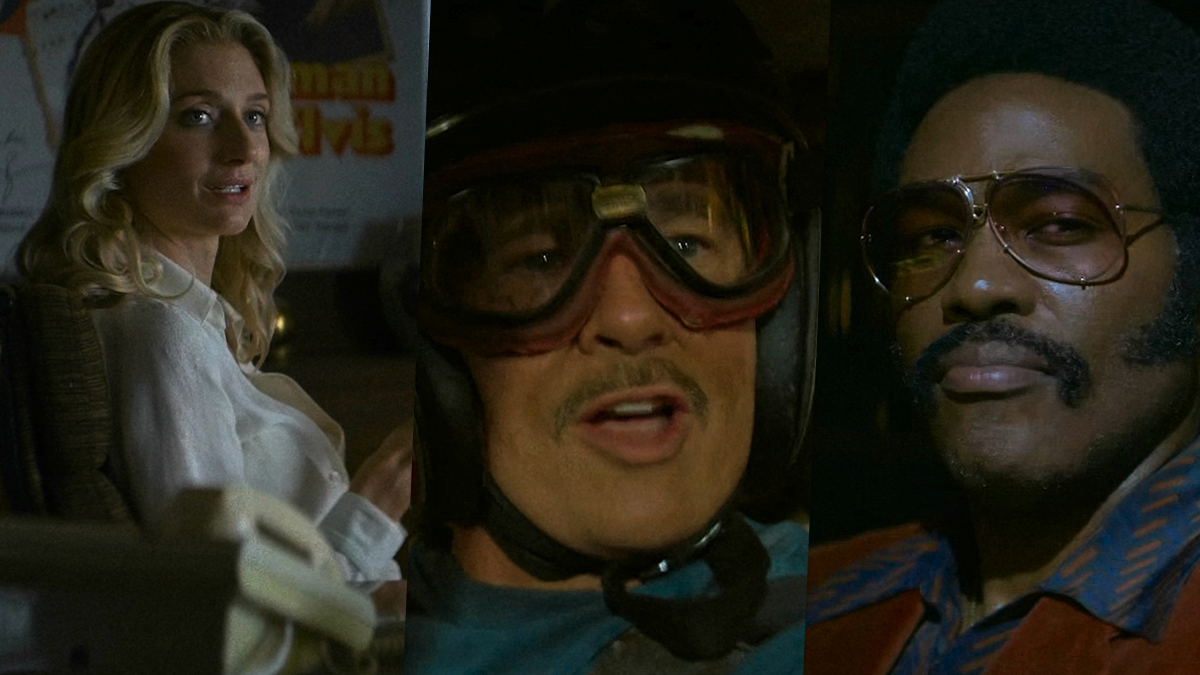
Today, Netflix announced its highly anticipated untitled film featuring Brad Pitt reprising his Academy Award-winning role as Cliff Booth (from Once Upon a Time in Hollywood). Only this time, it’s 1977, and it’s a very different Hollywood. The film is directed by Fincher from a screenplay by Tarantino, with a stacked supporting cast including Elizabeth Debicki, Scott Caan, Carla Gugino, Yahya Abdul-Mateen II, and Peter Weller.
But the real story for industry nerds is the release strategy. The film will get a two-week exclusive global engagement in IMAX theaters starting November 25, 2026, before hitting Netflix on December 23, 2026.
This roughly 28-day gap perfectly utilizes the exact runway Netflix had already negotiated and cleared for Gerwig’s epic.
With two major filmmakers now getting special or more traditional theatrical releases, are the dominoes finally falling? Again, probably not.
Pictures: Netflix
The Pros, The Cons, and the Bad Headlines
Why would Netflix bother with IMAX screens and wide releases at all?
The Pros:
- Attracting A-List Talent: Top-tier directors and highly sought-after packages frequently bypass Netflix in competitive bidding wars specifically because creators want their movies shown on the big screen. Having a proven 4-week IMAX runway makes Netflix a viable home for these cinematic purists.
- Cultural Cachet: Theatrical releases build undeniable cultural momentum. Most of the other pros of theatrical being better for building franchises and generating massive cultural awareness are hard to quantify, but many in the industry firmly believe it to be the case.
The Cons:
- Public Relations Risks: Netflix is incredibly sensitive to bad headlines. When a streaming movie underperforms, it quietly slips down the Top 10 list. When a wide theatrical release bombs, the box office numbers are published everywhere for the world to dissect.
- The Bottom Line: While a few hundred million at the global box office sounds fantastic, that added revenue actually pales in comparison to Netflix’s staggering daily subscription revenue. The logistical costs of marketing a movie globally for a theatrical release eat heavily into those ticket sales.
And from a data perspective, is it even worth it? Our friend over at Netflix & Chiffres did a fantastic deep dive asking, “Do movies released in theaters really perform better on streaming than movies released directly on SVOD?”
His analysis of Nielsen viewership data over the last five years revealed a massive takeaway: the most-watched direct-to-streaming films achieve audiences 20% to 40% higher in their first 14 days than films initially released in theaters. For live-action films, the gap is actually widening, with streaming originals holding a massive 41% viewership lead over their theatrical counterparts.
He also pointed out that there’s not always a correlation between box office and streaming success. Box-office flops like Red One and Encanto were actually the top-performing theatrical movies on streaming, proving buzz and short windows matter more than ticket sales. That’s in addition to the myth that movies released theatrically have longer “legs” on streaming. While theatrical movies hold up slightly better over time (a 1.35x growth factor between days 14 and 28 compared to 1.28x for streaming), that tiny 5% edge isn’t nearly enough to overcome the massive initial disadvantage.
Netflix Is Already Dining Out on Other Studios’ Theatrical Slates
Perhaps the biggest reason Netflix doesn’t need to fully embrace the theatrical business is that it’s perfectly happy to let Sony and Universal do the heavy lifting.
As you’ve no doubt heard, Netflix continues to dine out on massive Pay-1 deals. Look no further than the massive global deal Netflix struck with Sony Pictures, bringing guaranteed theatrical juggernauts like Spider-Man and the upcoming Zelda movie straight to the platform worldwide just months after their multiplex runs. That’s in addition to taking on Universal movies through their Pay-1 deal shortly after their theatrical and Peacock windows in the States. There are also many other smaller deals like this done either on a per-movie basis with smaller distributors or more local deals around the world, such as the StudioCanal one in the United Kingdom, for instance.
If there are really big benefits to theatrically released movies, then Netflix is already getting the benefit this way without footing the bill, meaning its own movie output can fill in gaps and provide different value to subscribers.
The Verdict
So, is Netflix fully embracing the theatrical business? Not quite.
Without the Warner Bros. distribution apparatus that they almost acquired, Netflix isn’t adopting a traditional studio model. Instead, we suspect they are treating the cinema as a promotional tool and an olive branch to elite filmmakers. Through fan-focused events like Stranger Things and the 28-day IMAX blueprint established by Narnia (and now test-driven by Brad Pitt), they are finding ways to utilize theaters without becoming beholden to them.
Our take for the immediate future is that theaters help as a marketing tool rather than a long-term extra revenue source.
That said, don’t put money on Netflix’s ambitions or goals in this space staying still. Much like the rest of their business, it’ll continue to evolve with the day’s wants and needs and their subscribers’ needs.