Picture Credits: Netflix
Julia Hart is good with people. It’s obvious in her character-driven films from Fast Color to Miss Stevens to her latest, Don’t Say Good Luck. The filmmaker’s new movie is no exception, featuring a believable family and High School theater company.
The latest from Happy Madison Productions is a heartfelt dramedy following young Sophie (Sunny Sandler) landing the lead role in the High School play. Hart celebrates theater kids and all their creativity, as well as their quirks. Given the filmmaker’s background, as she told What’s On Netflix, Don’t Say Good Luck (available August 14th) is an honest, loving portrait of kids putting on a show.
You had theater experiences at Columbia University and off-Broadway. In Don’t Say Good Luck, you get to show the behind-the-scenes of putting together a high school play, so how much were you drawing from your past theater experiences here?
I’m thinking about them all the time. I grew up in New York and I grew up going to off-Broadway, off-Broadway. Theater has always been a big part of my life. And then I did theater in college and then I did one show off-Broadway as a choreographer.
And then I actually ended up being a teacher. I was a high school English teacher before I started working in film. I choreographed the musicals, and that was such an amazing, rich experience as a theater nerd kid to be able to then be the adult in the room. To watch all of the magic happen from that perspective – it was just incredible. I actually went back to the high school that I used to teach at and do the musicals last spring to watch their Mamma Mia! rehearsals in preparation for making the movie.
How was it?
It was amazing. The kids at the school are so talented. When we were scouting all the different high schools in New Jersey, looking for our location to shoot the movie, I was just in awe of how talented all of these young people are. We were seeing dance rehearsals. We were listening to band rehearsals. There was a string quartet rehearsing, and it was reverberating through the halls. It was just so magical. We really felt like we were shooting in the right place.
The movie does have an affinity for theater kids. Not usually the norm in pop culture, so it’s nice to see.
Laura Hankin, who wrote the script, also based it on her experience as a theater kid. My husband Jordan, who along with Laura, we all ultimately co-wrote the script and then he produced the movie. We are all theater nerd kids.

Cr. Jaclyn Martinez/Netflix © 2026.
Particularly a big fan of Trista, who deeply thinks through her extra role for the movie’s Waitress performance.
I cannot say enough good things about Claire Scavone. She is so talented and so wonderful. I remember when I watched her self-tape for her audition, she auditioned for six different parts, all with different glasses and hairstyles. You couldn’t even believe they were the same person, but she is so special. She is also a New Yorker.
Did you make a point to cast theater kids?
A lot of them were in schools in New York and New Jersey, college, early college age or just college graduates from theater programs. Our New York casting team, Karlee Fomalont and Rori Bergman, knocked it out of the park. All of those kids they found make up such a special ensemble.
What is it that you really admire about theater kids?
I make a lot of movies for young people and a lot of that stems from my time as a high school teacher. I think so much content that’s made for young people is either very dark and very edgy and a bit pessimistic. My experience teaching high school is that all kids want to thrive, do their best, and want to be seen and loved. And so, honestly, I felt a lot of the time as a high school teacher that more important than teaching them how to write a great essay was showing them what it means to be a good person and to create a safe environment, to just be yourself. I miss that time.
I’m actually still in touch with and friendly with a lot of my former students who are all now in their 30s [Laughs]. I was very young when I was teaching high school, but still it’s crazy to me that they’re all adults now too. But it is. It’s such a special age, such an impressionable age. And even though they’re quite “adults” at 18, they still are… I mean, let’s be honest, I’m 44 and I’m still figuring some stuff out, but it’s a special time and a special group of people that I just try to honor with the work that I do.
One way this movie doesn’t pander to young people is in language. There’s no high schooler dialogue or lingo that immediately dates some high school movies.
So much of what’s made today for everyone, but certainly for young people is disposable and made fast and not to last. We really felt like young people deserved a movie that was built to last that could feel timeless and classic, but still represent them authentically. And so, it’s really that fine line.
The rehearsal process is such an important part of making a movie to me with my actors, like rewriting and tweaking and the kids telling me we would never text that way. We were having them write the text messages and change the lines. But still, yes, there’s always jargon and lingo that is of the moment, but there are things that are timeless. We just really tried to stick to those.
Any high school movies or films about young people that speak honestly to you?
We talked a lot about James L. Brooks. We talked a lot about John Hughes. Martin Ritt is a big one for me. I think he was telling stories about women and people of color and minorities in general at a time when not a lot of people were doing that in a way that inspires me. Then there’s this other film Running on Empty, which is the Sidney Lumet film.
Great movie.
Oh my God. I love it. Not everybody knows this movie.
Oh, it was on HBO all the time when I was a kid. It’s great.
That is so amazing. We always, no matter what genre of movie we’re making, we always find a way to make it make sense because it’s such a beautiful movie about family, community, conflict, and music. Music plays a big part in that movie, which is something that’s always important to me too.
For your rehearsals, did you do some theater practices like the energy ball the theater kids do in the movie?
Oh my God, yes. It was so fun. When we went to shoot that sequence, I was prepared as a former theater teacher and teacher in general. I was prepared to have to go over some stuff. But again, we cast a bunch of theater kids. I didn’t have to do anything. I was like, “Guys, let’s do some theater warmups. I don’t know.” And they were in it. They were doing them in their green rooms and in their trailers. It was so fun to capture all of that stuff in the movie because it’s all just real, and that’s the best stuff.
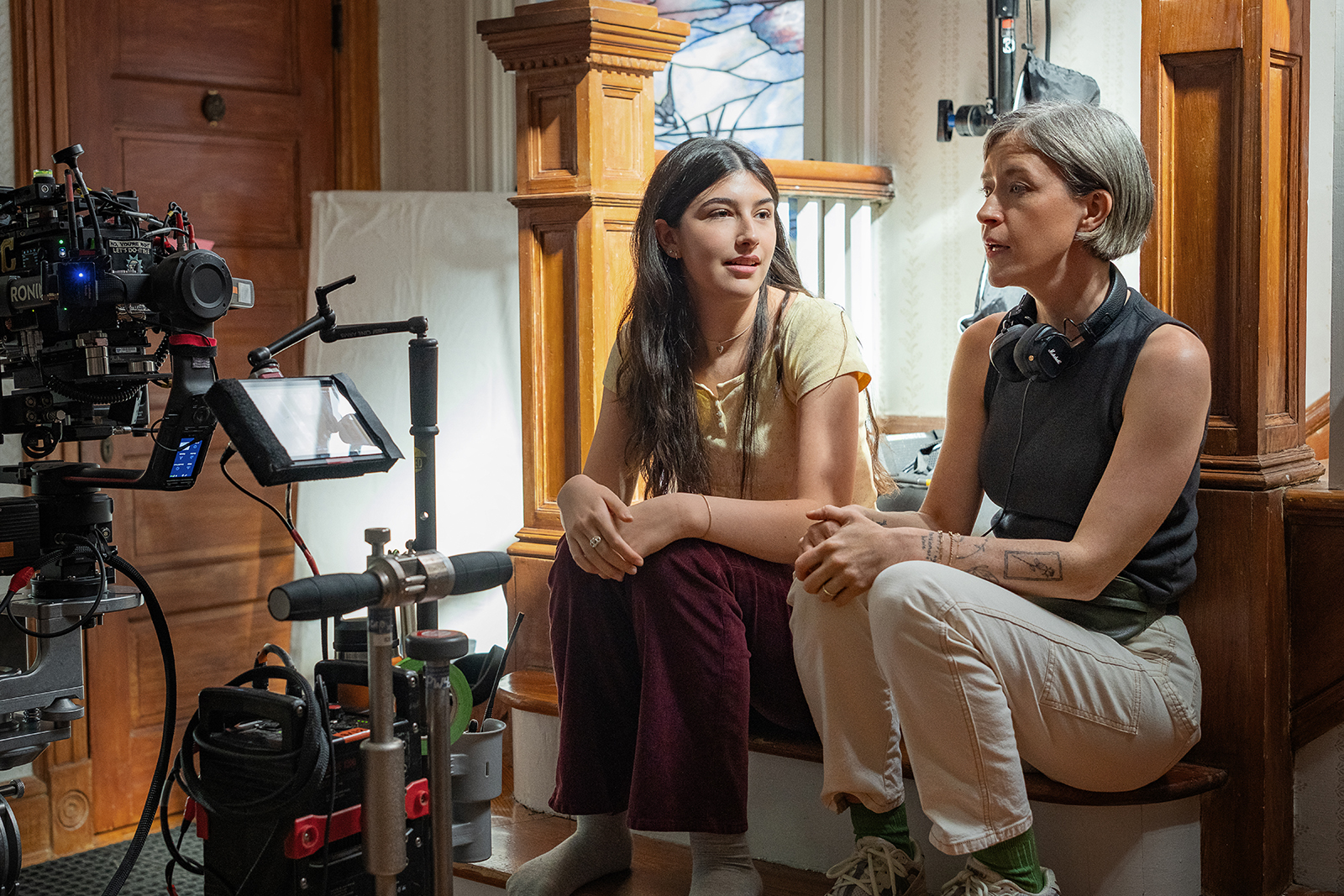
DON’T SAY GOOD LUCK. (L to R) Sunny Sandler as Sophie and Director Julia Hart on the set of Don’t Say Good Luck. Cr. Jaclyn Martinez/Netflix © 2026.
How much did you relate to Stephanie Beatriz’s theater director?
First of all, she’s so incredible. It was my first time working with her. I think she is so brilliant and such a lovely person. The character was originally based on Laura Hankin’s high school drama teacher, but then Stephanie in her performance was basing it on her high school drama teacher. And then on one of the last days of filming, she said that I reminded her of her high school drama teacher. I think there’s a little bit of all of us in that character.
Do you take a similar approach when she’s like, “Hey, draw on your experiences.”
Yeah. It’s just trying to get real with them and not worrying about things being perfect, but just worrying about getting to the heart of the work to show that in your performance.
Is it those little mistakes that you like as a director?
They’re my favorite. The dream is that someone flubs a line, but everyone stays in character and you catch that glimmer of reality. Or if someone drops something, just I always tell all my actors, until you hear me say cut, don’t stop. Just keep going, stay in the moment. Those natural reactions or those little human foibles and idiosyncrasies are the best.
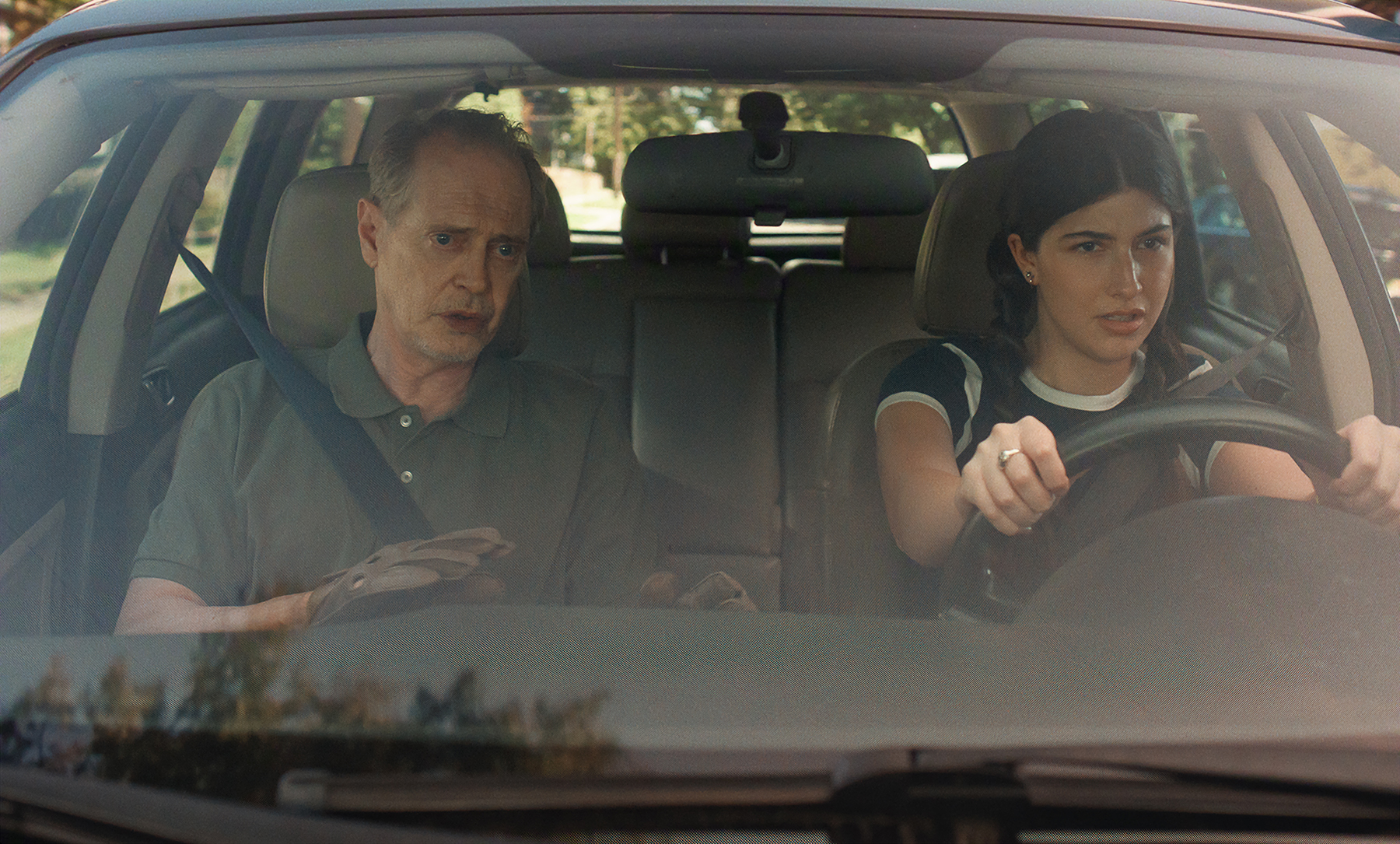
You got three different generations of great actors in this movie, too, including Steve Buscemi and Bebe Neuwirth.
Bebe Neuwirth was like my hero in high school. I still can’t remember if I ever had the guts to tell her that I dressed up as her, as Velma Kelly in Chicago for Halloween when I was like 16. I can’t remember if I actually ended up telling her that. Because I used to be a dancer, she and I did a few dance moves together, which was a dream.
I actually have a picture of her and me because I have this amazing vintage A Chorus Line t-shirt, which she was obviously also in the cast of. She and I have a picture of me in my A Chorus Line t-shirt doing a move. And she helped me. She repositioned me a little bit. She’s got all the moves. She’s so amazing.
Also, her theater background was so special as a little bit of an Easter egg in the movie. And then Steve Buscemi, he’s everyone’s favorite actor. So, it was just a dream. Max Greenfield and Melanie Lynskey – it was just a dream to work with all of them. It makes my job so easy when I have a cast like that.
Cr. Courtesy of Netflix © 2026.
Was it always Waitress in Don’t Say Good Luck?
In Laura’s original script, she had written Waitress into the script, but had said in a note at the beginning of the script that she ultimately wanted it to be an original musical that she would write with a songwriting team called Hotel Girl. But then when Jordan, my husband, first read the script, when he first spoke to Laura, he said, “Waitress works so well. Would you be okay if we just tried to do Waitress instead of writing an original musical?” And she said, “Oh, I actually want it to be Waitress. I assumed I could never get the rights.” Jordan was like, “Well, guess what? We’re going to get the rights.”
For all of you, what felt spot on about Waitress for Don’t Say Good Luck?
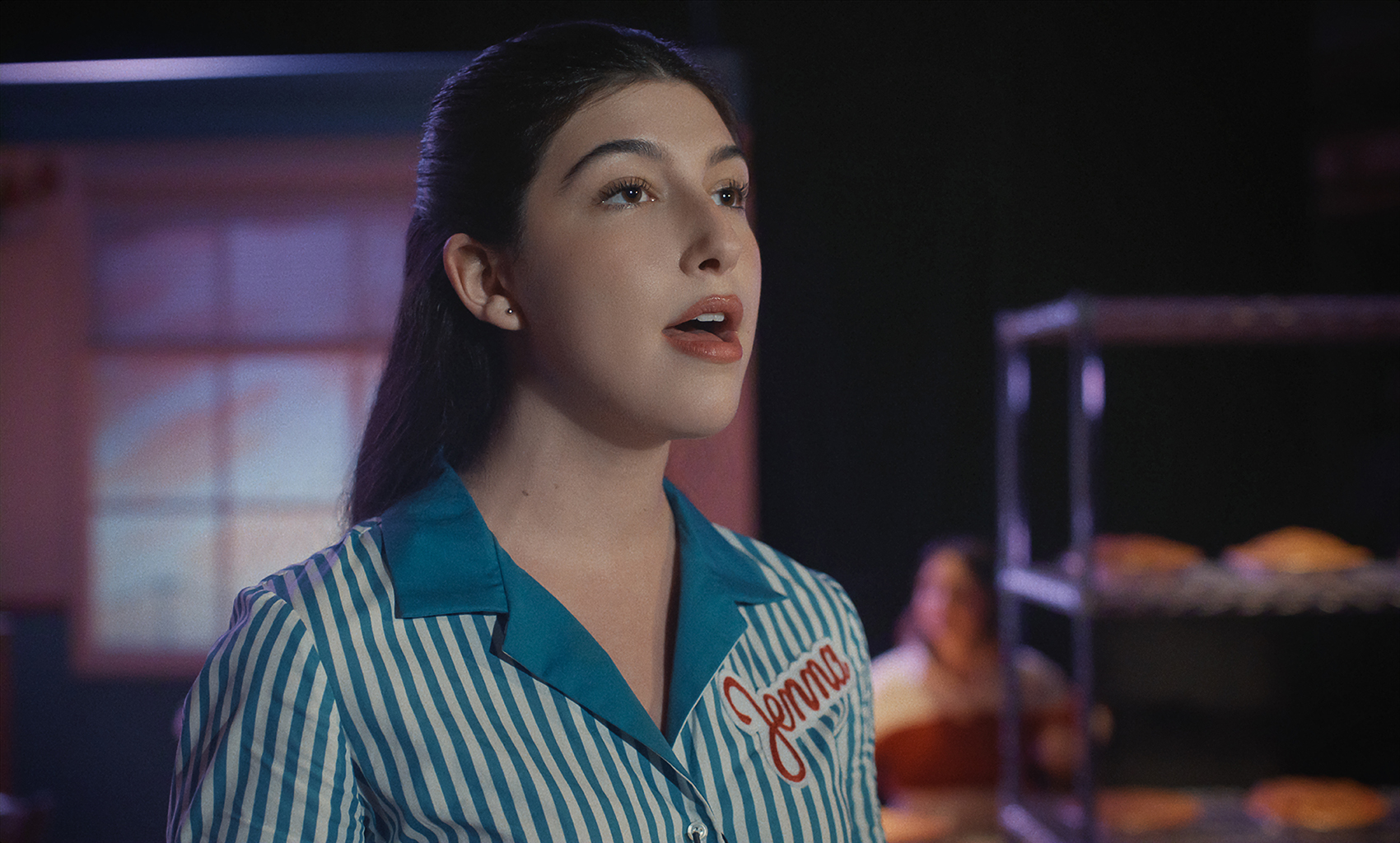
This idea of mothers and children and passing things on. Jenna’s mom, a waitress, passed away when she was young and now Jenna is pregnant, but she’s in a complicated marriage. And so, she’s not sure how. She falls in love with someone else. It had all of these really high stakes. There’s a lot of high stakes drama in the story, but also thematically, I mean, when you listen to Sophie sing “She Used to Be Mine,” it’s Jenna singing about a person she used to be. It’s hard not to also think of her singing about her mom. The way that Laura originally wove it into the script is what’s in the movie today. The way that she used all of those songs was just perfect.
When it comes to production design, what felt right and wrong for recreating a high school stage production of a Broadway show?
It’s such a funny process because if you watch a lot of movies, the stage productions have way too much production value. That does not look like a local public elementary school Christmas play. We really wanted to ride that line of the artists doing these sets in high school, there’s the kid who’s going to CalArts. There’s the kid who’s going to RISD who’s painting that set. The level of craftsmanship can be very high.
And so, we wanted to honor that, and the same with the costumes, but also wanted to make it feel like it was not necessarily on a Netflix budget. It was really fun designing the lighting in a way that felt like we were honoring the ability of these kids in the crafts that they’ve learned, but also, the reality of a public high school in New Jersey’s arts budget.
DON’T SAY GOOD LUCK. Sunny Sandler as Sophie in Don’t Say Good Luck. Cr. Courtesy of Netflix © 2026.
Even just shooting the performance itself with your cinematographer, were you like, “I want this to usually be wide.” How did you visually want to present it and just create that feeling of being in the audience?
Bryce Fortner, who’s our cinematographer, this was our fourth movie together. We also always work with the same camera operator, Matt Harshbarger. And so, we have a shorthand at this point in terms of style and preference.
But we’d never done theater together before. We’d done musical performances and stage performances, but never theater. It was fun figuring out, okay, how do we translate our predilection for naturalistic and authentic cameras? A camera that exists in a real authentic space, no bells and whistles with a stage production – that is quite literally inauthentic. You obviously want theater to feel real, but it’s people standing on a proscenium above you lit in costumes and makeup. We want the wider shots that allow you to feel like you’re watching a play, but also, the more intimate onstage handheld stuff that lets you really feel what the characters are feeling.
You work with a lot of the same crew on your movies. You got your own theater troupe, basically. Was that always a part of the dream?
It’s a dream. When you find your people, you just want to hold onto them and keep telling stories together. I mean, it was so cool working with Happy Madison and the Sandler family because they obviously start from a place of family. Jordan and I, my husband, work together, so we start from a place of family. It only made that feeling stronger that we always try to have on our sets, getting to work with Happy Madison.