Picture Credits: Netflix / Comix Asylum
Any movie and TV fan has witnessed the work of Bruce Zick. For the last four decades, he’s had a major hand in animation. He worked in visual development on The Lion King, Hercules, The Prince of Egypt, Inside Out, and Finding Nemo. In television, his career spans from Hanna-Barbera to Marvel to The Real Ghostbusters.
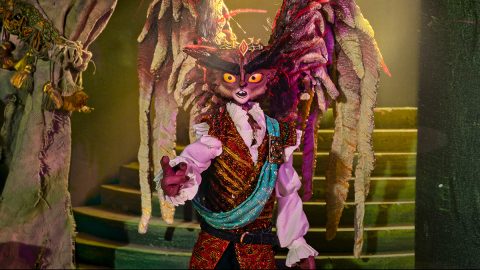
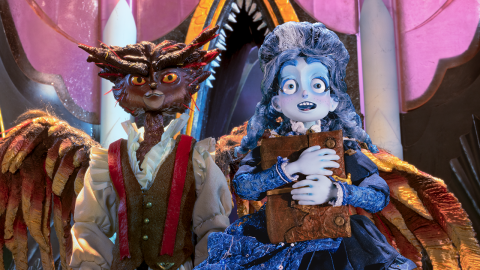
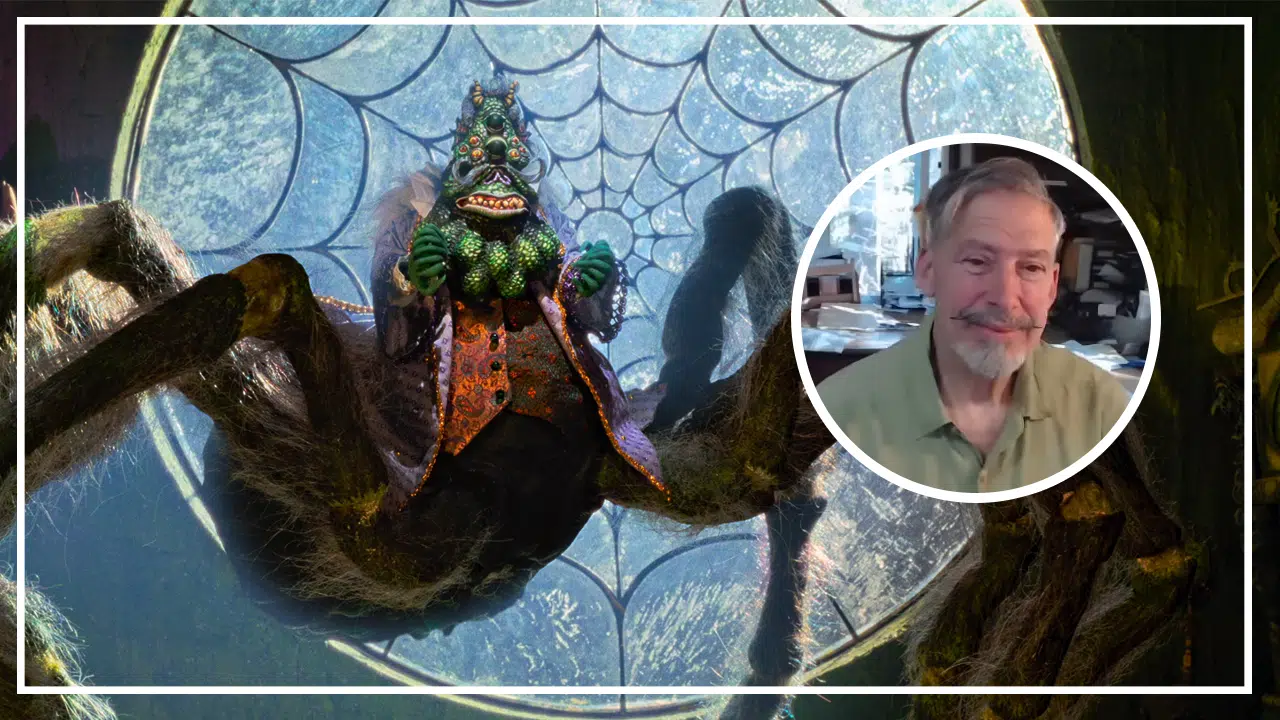
Zick often creates worlds that, as a viewer, one immediately wants to jump into and explore. The artist’s latest work, his production design role on I Am Frankelda, is no different. With filmmakers Roy and Arturo Ambriz, Zick worked on visualizing the realm of terrors, where monsters live.
Zick, whose work in comics is another sight of wonder, spoke with What’s on Netflix about crafting a new world for I Am Frankelda.
Given the movie is so much about creativity and storytelling, how did that inspire the environments you worked on for the film?
Well, a lot of that inspired me, especially because I find the Ambriz brothers to be just inspiring themselves. I met them at Pixelatl about eight or nine years ago down in Mexico, an animation convention. I was instantly taken with them and we developed a bond right there that lasts to this day.
They inspire me in a lot of ways about how open and creative they are and fearless in their commitment to their art. And so, that certainly came out in the story that they developed about creativity and the power of your personal vision.
It’s a beautiful vision.
Oh my God, the work they put into that. I sort of have the luxury when I create by just doing whatever the heck I feel like doing and then letting the production figure out how to do it. They didn’t want to change a thing. They just took what I did and surprised me in the field of creating all those sets, putting all that time and detail into everything. It was quite a surprise for me.
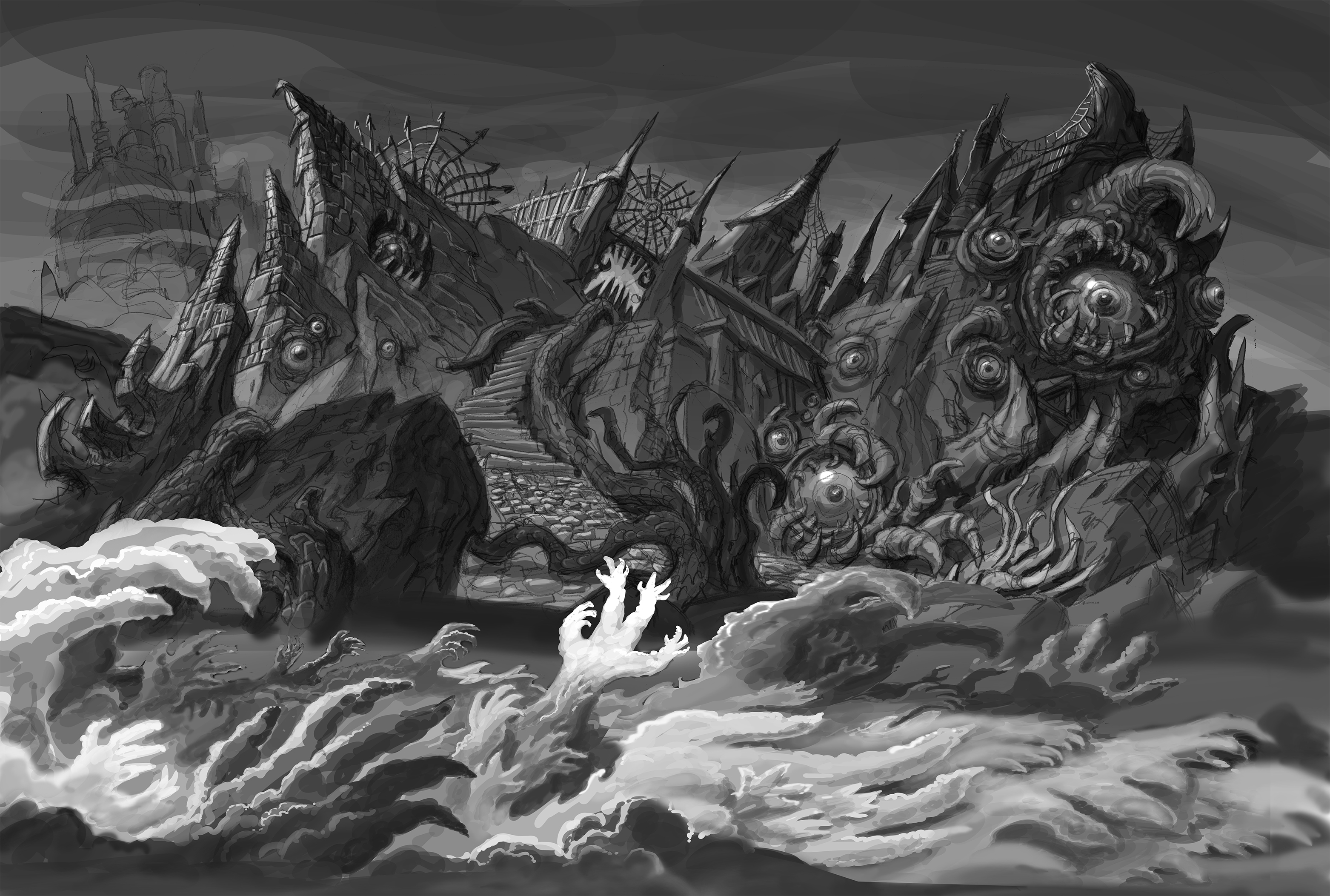
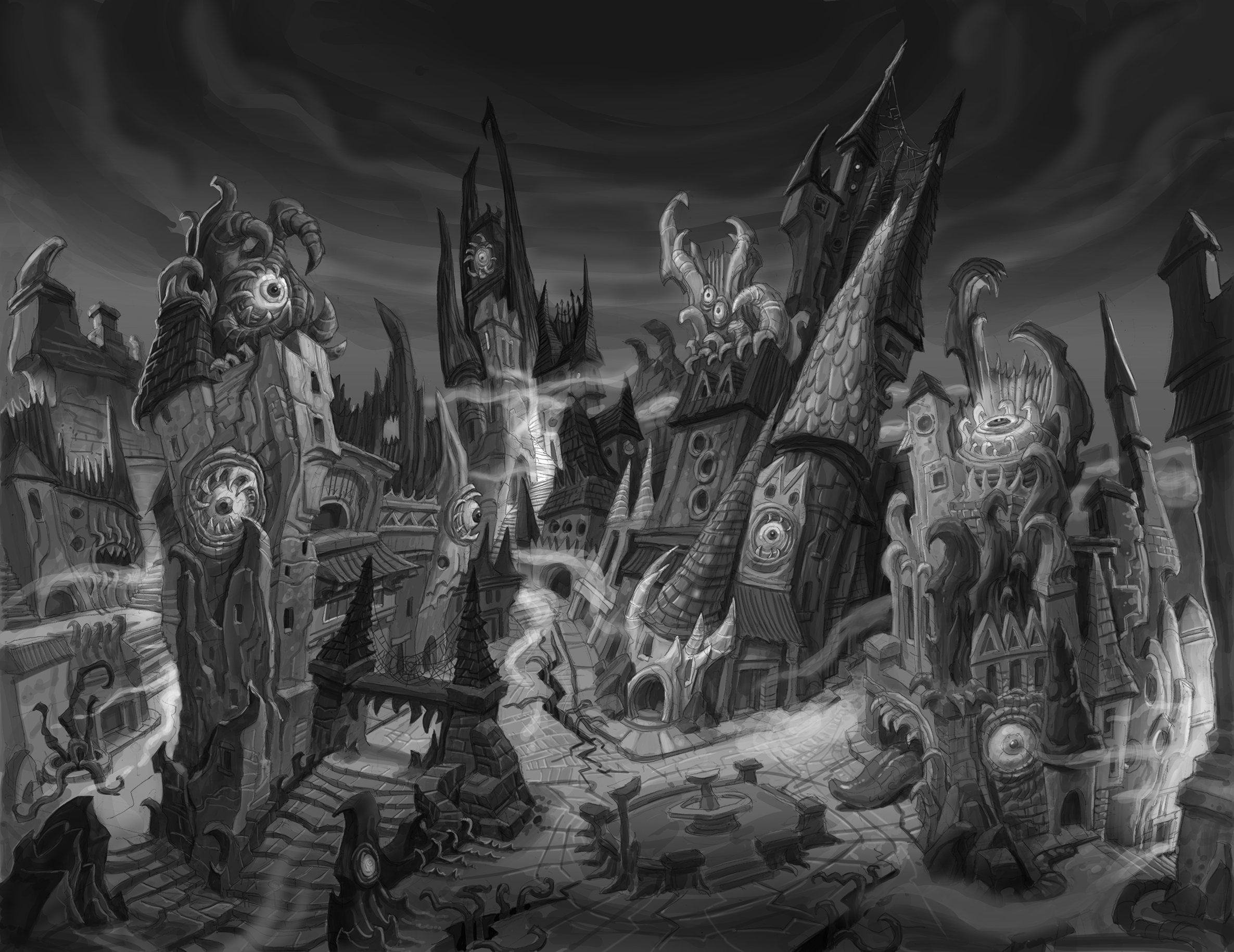
Concept Art for I Am Frankelda – Courtesy of Bruce Zick
What were some of the details they kept that surprised you?
Sometimes I work on a project and nothing gets in the film at all. They decide to do something different at the end. Maybe they take a little bit of what I do and it filters through all the different stages of production. With Frankelda, I can look at that movie and go, wow, there’s my artwork on the screen. I’m really thankful that it was such a happy experience.
What were some of the earliest pieces you drew for the film?
One of the earliest, one of my favorites was this village where all the monsters live. The two characters take this kind of journey through this ocean of cloudy hands and they’re on this magical ship that’s a creature. They come in, I don’t even know if the village had a name to it, but the camera weaves in and out of all the architecture and down the streets and all that.
I wanted to do a really unusual idea for a monster village, and that was one of my favorite pieces. Of course, they tried to do it very precisely. Then, one of the first pieces was from the outside of this world approaching it; there’s this kind of a long horizontal pan. I don’t even know how to describe it. There’s ruins and eyeballs and fangs and teeth and buildings – just the craziest stuff. Then in the foreground is that ocean of cloudy hands jutting out.
For me, that also helped set the mood on getting into the story and going, ‘Okay, I think I know what this place looks like now.’ It made everything else that came after that a little bit easier for me.
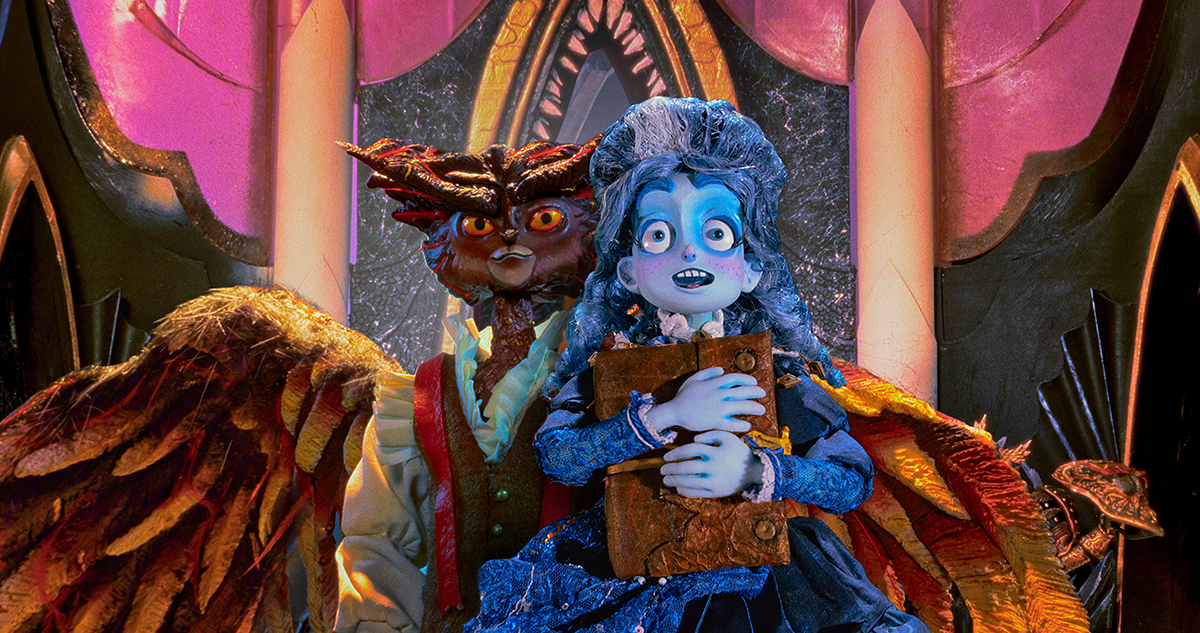
I Am Frankelda. Cr. Netflix © 2026.
For production design, what are your go-to tools when it comes to pen and paper and any tech?
Well, it’s a combination of old-school analog and new-school digital. I still work with a drafting table and tools. It’s a very old world. It’s almost caveman art in the sense of where art is going these days. I have the pencils, paper, and erasers. I just do a lot of scribbling and sketching, trying to let my mind wander for a while and do thumbnails, and slowly ideas emerge from that. I’ll then do a more detailed, intricate pencil rendering of the actual shot. From there, I scan that into the computer and then paint it in Photoshop using a Cintiq graphics tablet. And so, that gives me a lot of room to make mistakes, alter things, manipulate things, and come up with a final image that I really, really am excited about.
Like you said, that drawing of the village really sets a tone for you and gives you a roadmap of where to go. Once you completed the village, how did it lead to other ideas for the world of I Am Frankelda?
Well, even coming down to props and gadgets, shortly after those first pieces, there was the towering castle where the king and the queen and the royalty lived. I could take elements out of the first couple of pieces with all those gnarly fangs and eyeballs and teeth and batwings. It’s almost like you isolate out individual elements of what you think monsters are all about.
Eyeballs, fangs, batwings, and very sharp, jagged shapes and motifs—these become the language of what you work with. When it came to doing the exterior shot of the palace, those elements got worked into that design. If I had had to do that piece first, I don’t know what I would’ve done without the preparation of doing the other pieces first, which helped me develop those iconic shapes to use in the subsequent pieces.
There were numerous other pieces where I kept repeating some of the same elements over and over again, but in different kinds of ways. Some places, like the interior of a cave where this hierarchy of monsters all met to make their plans, were totally different.
Why’s that?
I didn’t want to keep using the same things over and over again, thinking some shots needed to be different and have their own feel. There’s a shot where you go into a kind of a crystal prism cave, and that was different.
Going back to the palace, I designed a shot inside the palace where there was a garden. Once again, it was appropriate there to get back to the eyeballs, the teeth, the wings, and even the idea of what plant life might grow in this garden. Even the little plants were monstrous ideas of plants, too. You pick and choose depending on what you think the shot’s going to be all about and try to make the right decisions on what it should look like.
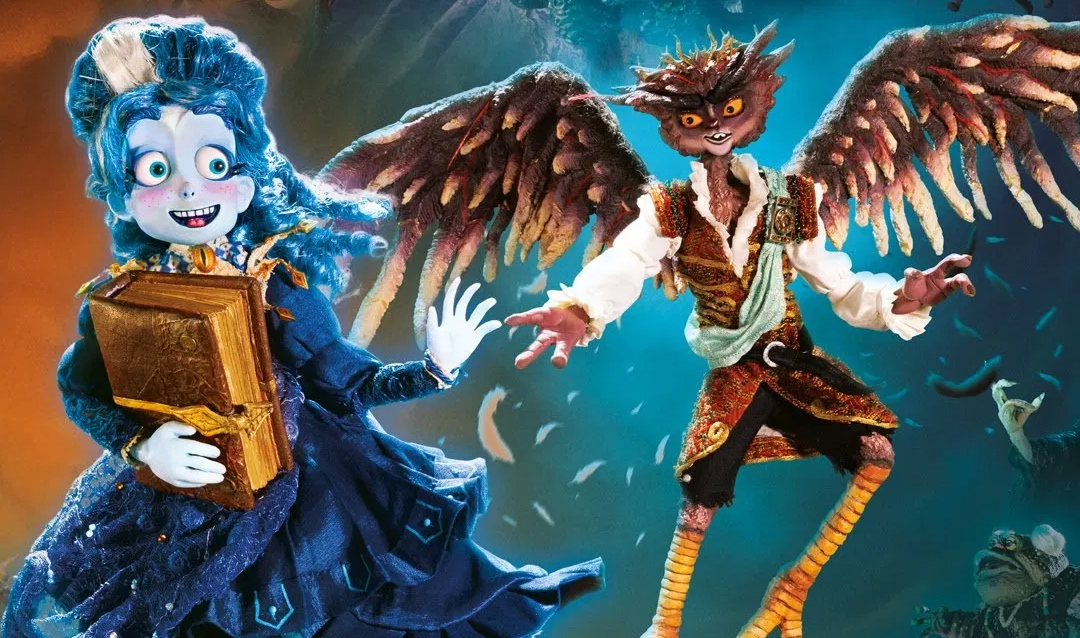
Picture Credit: Netflix
How do you want to bring history into these spaces as well? When you spoke with the directors about world-building, how did the mythology and past of the realm of terrors influence your work?
It’s funny you asked that because I was just thinking about that shot I did. As I kept developing more ideas, they would contact me and go, “Okay, we want to have this temple that we go to.” In the front of the temple, you walk down a pathway where on either side are statues of all the historical mythic creatures that were part of the origin story of how this world came to be. Then, carved into the gigantic doorway of this temple are representations of the history of this mythology. Of course, my first reaction is, “Oh, great, this is something I can’t wait to do.”
I mean, you don’t have any idea what it’s going to be, but their fertile imaginations instantly spark a fire like, “Oh, sure, I would die to do something like this. Thank you for giving me this assignment.” They, of course, give me a lot of reference material identifying who these historical characters are. So that tells me what the statues and carvings in the doorframe represent for some of the key moments from the creation of this mythology.
Stepping back a little bit, it was still incorporating those motifs of eyeballs, batwings, fangs, claws, and teeth. It was quite a mishmash. I just felt that was such a key part of the story, such an important shot that I wanted to go overboard in detail to give us something magical for that moment in the story.
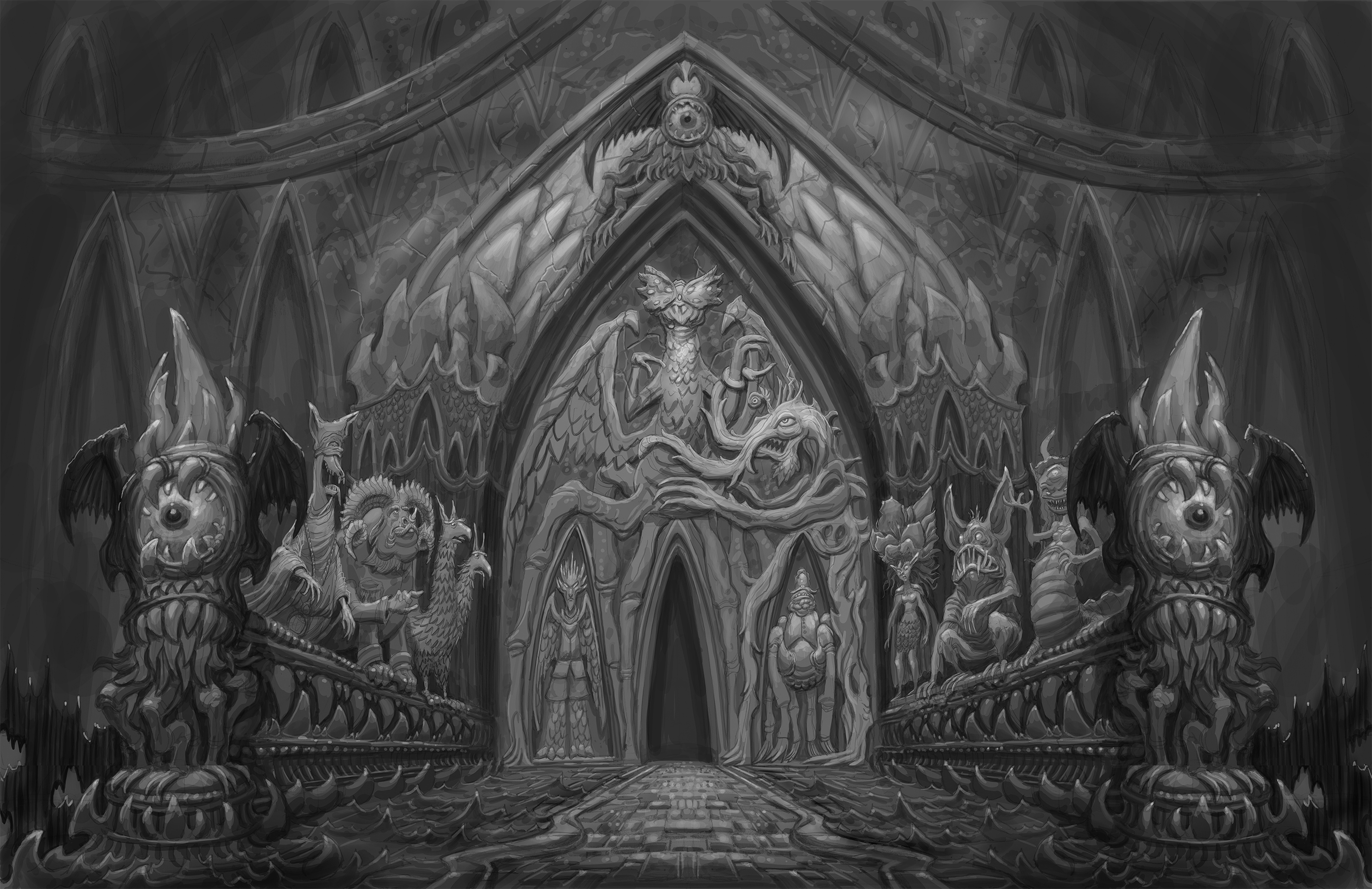
Concept Art for I Am Frankelda – Courtesy of Bruce Zick
If a viewer paused the movie, any details you hope they catch?
Well, that’s sort of the drawback of working in film—they have to keep the shots moving and can’t linger too long on all the details of what I do, because timing is so critical. They’ve only got so many minutes to get this whole story out. Generally, you have to live with the idea that a lot of your art will get missed.
I hope that when this thing really takes off for them, maybe they’ll do an art book on the making of the movie. It’s another way they can give viewers an opportunity to sit with not only the artwork I did, but the artwork so many other people did. People can just take their time looking at all the wonderful creativity going into it.
Sometimes I’d work on a movie, and they would do what is called a “zip pan.” I would spend a week doing the most intricate artwork on this long panning shot. Then, because most directors overproduce their movies and they are way too long when it comes to the editing process, they just go, “We’ve got to cut out so much material here to fit everything into a shorter story.” They do what’s called a zip pan where the camera starts and goes, woo [real fast], and then cut. What was that I just saw? I spent a week on that, but nobody’s ever going to see it.
They didn’t do that, of course, in this one. Actually, they came back to some of the shots I did many times throughout the story. Reusing some of those same shots gave them additional screen time, which was a delight for me.
That’s excellent. As an artist who’s spent a lot of time creating worlds for films and comics, what do you hope kids may take away from I Am Frankelda when it comes to imagination and creativity?
As artists, we all stand on the shoulders of those before us who inspired us and helped us become the artists that we are today. Then it’s our job to pay that forward to future generations of artists. A big hope that we all have is that what we do will inspire young people to come up with their own ideas and inspirations.
It certainly happened to me. Even a single movie could change the course of a person’s life. I think of The Seventh Voyage of Sinbad; when the Cyclops first appeared out of that cave, I think a whole generation of filmmakers was born at that moment, including Spielberg and his contemporaries. So, we all hope to fire up younger generations’ imaginations to dream and think about art and creativity, and what might inspire them to move forward and pay it forward once again to future generations.