Picture Credits: Getty Images / Netflix
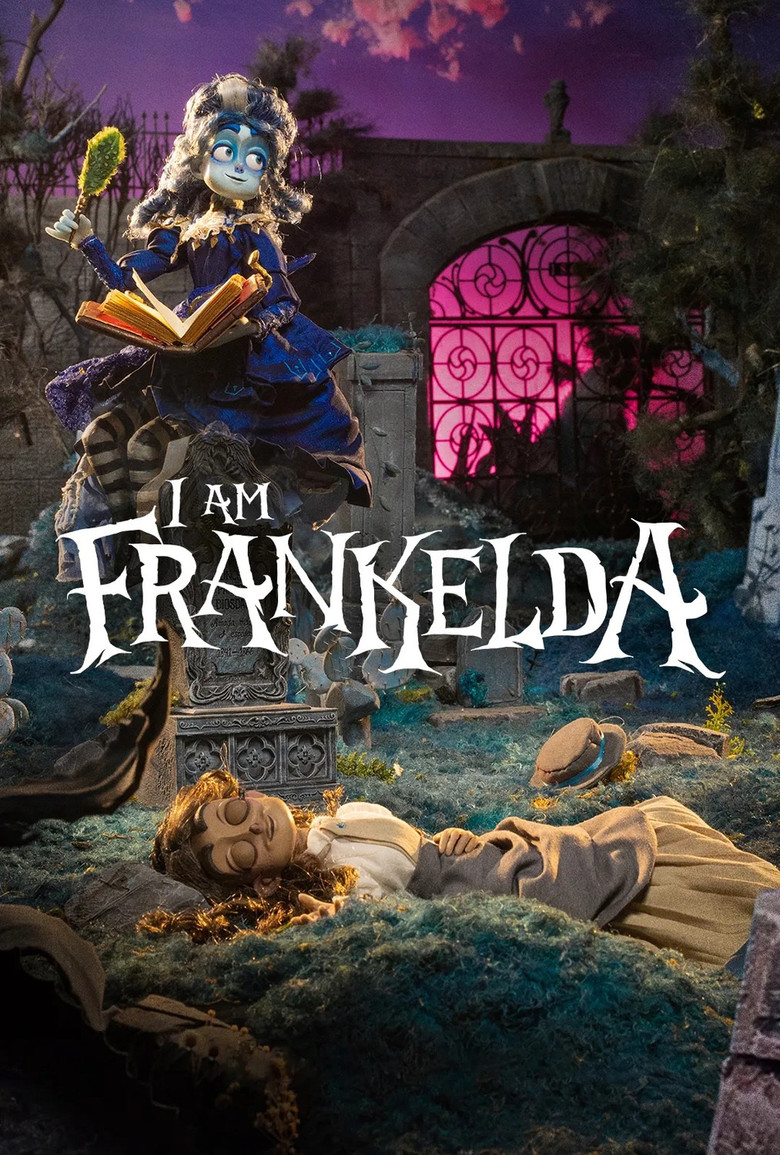
I Am Frankelda is a miracle. This is Mexico’s very first feature-length stop-motion animated film, a wonderfully dark, colorful story full of fantastical creatures, exquisite sets, and catchy musical numbers brimming with creativity.
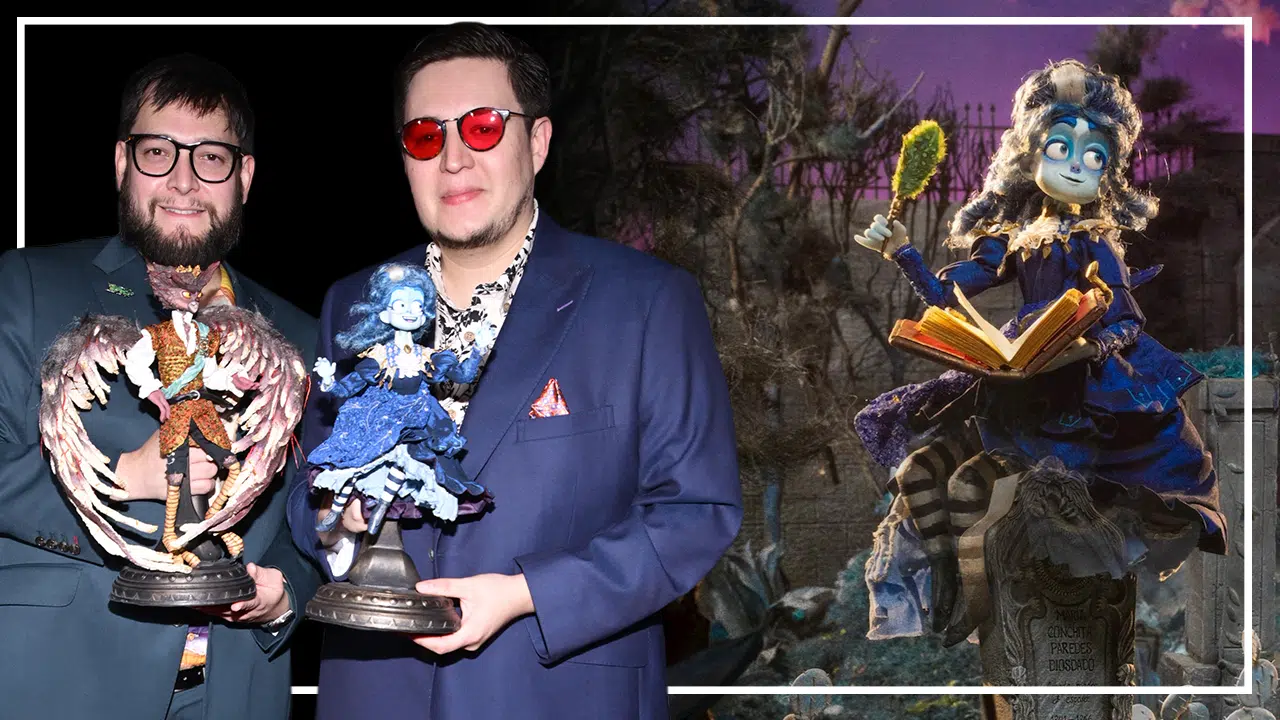
The film serves as a prequel to the TV series Frankelda’s Book of Spooks, an anthology horror stop-motion show that follows a mysterious ghostwriter (as in a writer who is also a literal ghost) telling stories full of spooky creatures. The film follows the titular Frankelda back when she was known as Francisca Imelda, a young aspiring writer in 19th century Mexico who struggles to fulfill her dreams of writing less-than-common stories for the time. This is a spectacular animated horror comedy musical for all ages, a film that has at least one visually stunning creature or set in every single frame, a film that’s the result of over a decade’s work for the two brothers who founded the animation studio Cinema Fantasma — Roy and Arturo Ambriz.
Before I Am Frankelda drops, we spoke with the Ambriz brothers about the challenges of being the first at doing such a daunting production, the most elaborated creature, and why you don’t need to know anything about Frankelda to love the movie.
Editor’s Note: The following interview has been edited for clarity.
What was the process like of expanding the world of the show into a feature film?
Roy Ambriz: The TV show is about stories that Frankelda tells, and we see her just a little bit as the narrator at the start and at the end. When we got the opportunity to make the movie, originally Warner Bros. gave us a budget for a 30-minute special, but we then decided to extend it and seek the rest of the money elsewhere because we really wanted to tell the sort of origin story of Frankelda herself. Where she comes from, how she gets to where we see her in the show.
Most importantly, we wanted to tell a story the frustrations of being a Mexican and a Latino creative, of wanting to live your art and having everyone tell you you’re not worth it as an artist. We wanted to leave a clear message to young Mexicans that you are worth it as an artist and even if you face obstacles, you have to keep pushing, to face your own spooks and create your art.
Picture Credit: Netflix
This being a prequel with many characters crossing over from the show, how much did you want to connect to that, versus keep it self-contained?
Arturo Ambriz: That was maybe the biggest challenge with the movie, because we knew the original show wasn’t really watched outside of Latin America, and the majority of the audience wouldn’t even know there is a TV show. So we obviously filled the movie with rewards for our fans, easter eggs and layers to connect to the original, but the movie is thought for who don’t know anything about Frankelda. The idea is you watch the movie first and then see that there is more.
Mexico has a long tradition of animation, even stop-motion, but this is the first time the country produces a full feature in stop-motion. What were the challenges of building that infrastructure from the gound up?
Roy: That was very difficult. We’ve been with the studio nearly 15 years and have tried for about 10 years to make our own movie and everyone told us no, that it was impossible because it was never done before. We applied to every fund we could and they said that kind of movie couldn’t be done in Mexico. We had to learn a lot on the go and we took many courses in project management to be able to handle the kind of production scale for this. Then when we finished, the fans themselves proved that, of course the Mexican audience wants to see this kind of complex production done in stop-motion, and it’s paid off at the box office. We’ve shown that fans want to dress up, make toys, piñatas, birthday cakes and so much more.
Tell me about your relationship with Guillermo del Toro and what he contributed to the film as a mentor.
Roy: We are super grateful to him. He came in when we were nearly finished with the movie and helped in so many different levels. He helped with the story in giving the narrative focus, and also improve the final cut. That’s why the cut that’s making it to theaters and now to Netflix is different and better than what we showed at festivals. Guillermo also helped us navigate the world of distribution, and it was him who got us distribution in Mexico and later internationally with Netflix.
Most importantly, he helped us in the most human way possible, which was listening to us and giving us advice not just as filmmakers but general artists. He’s been a spectacular mentor and a great friend and master in how to be human.
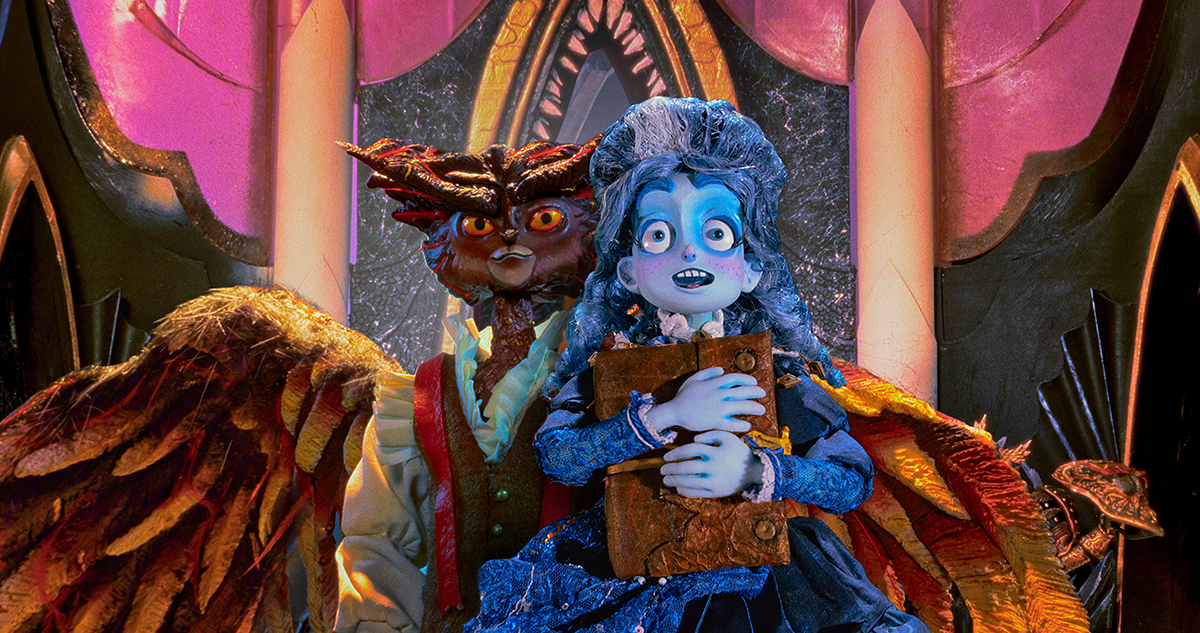
I Am Frankelda. Cr. Netflix © 2026.
The film has a phenomenal set design. What was the process like in designing the world of the film?
Arturo: The TV show is all about creatures from this nightmare world traveling to ours, so here we had the challenge and opportunity to create a brand new world. We wanted a massive world that felt like its own ancient civilization, with its own culture and logic. We were inspired by the illustrations of Gustave Doré, especially his giant paintings of the Divine Comedy or the Bible. Then we worked with several designers and builders to make it all a reality.
What was the hardest creature or set to build?
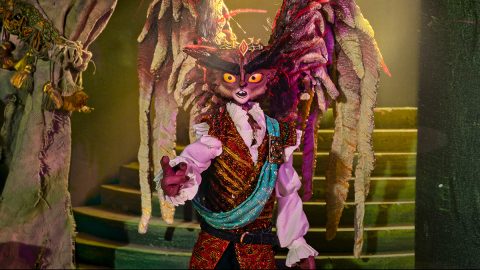
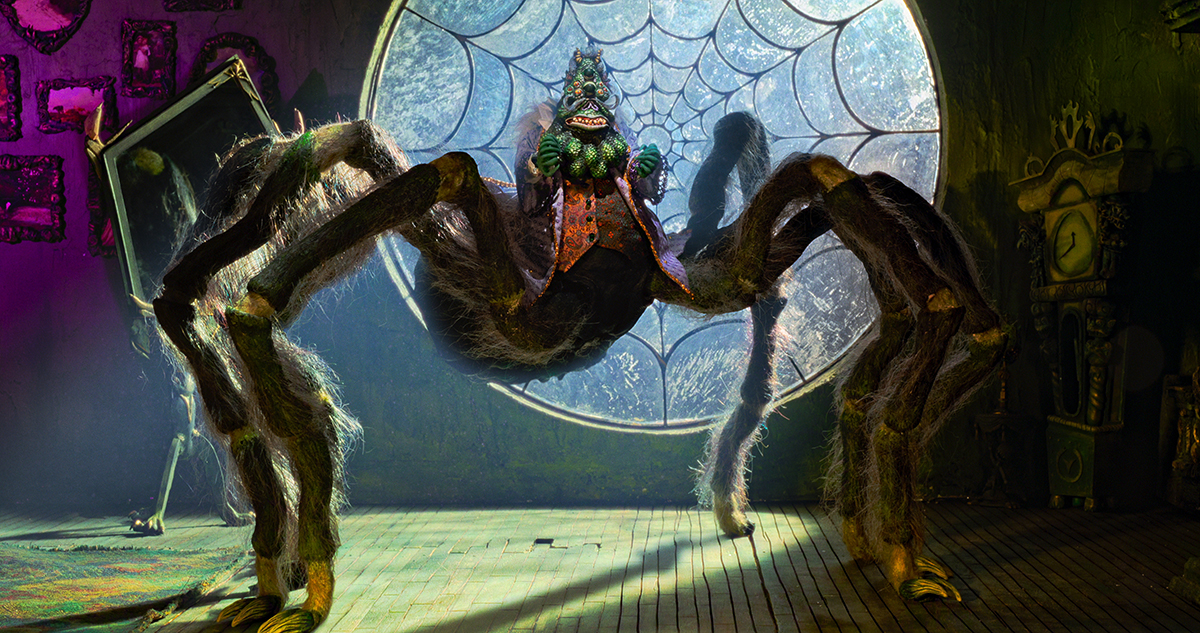
Arturo: Without a doubt the most complex creature is the two-headed griffin, because its wings are 22 feet long. Just to hold the necks we had a pulley system. Roy and I did the voices for the monster, because it’s us, it’s the worst version of us. Then the movie’s antagonist, Procustes was also super hard to make because he’s a giant spider, so we had to place individual hairs on every one of his legs, and it’s a super detailed puppet.
When it came to sets, there is an establishing shot of the main city, Topus Terrenus, where we had around 70 animated elements in every shot, and it was all for a shot that’s about 7 seconds long but took two and a half months to make. But it’s necessary to make the town feel alive and full of culture.
My favorite sequence in the film is the “Who? Who? The Prince of Spooks!” musical number, where you change art styles and play with the medium of animation itself. Tell me about crafting that number.
Roy: That one is one of our favorites, too, and the hardest one to make. For us, that’s the climax of the film, and of ourselves as directors. We love stop-motion, and the sequence is a celebration of all the arts necessary to make stop-motion. You need sculptors, you need painters, photographers, writers, industrial designers, and much more. So we wanted to pay homage to how beautiful the medium of stop-motion animation and combine different techniques and styles, including moving oil paintings. We had around 700 paintings made just for that sequence.