Picture via Caroline Duncan and Netflix
Costume designer Caroline Duncan gives Office Romance some extra rom-com sparks. Duncan, who’s worked with Jennifer Lopez on three films, wanted some old-school romance in Ol Parker’s comedy. Drawing from not only the early 2000s and ‘90s studio rom-coms, but the costume designer also went even further back in the past to make a modern rom-com between Lopez and Brett Goldstein.
Duncan is M. Night Shyamalan’s go-to costume designer, and when What’s on Netflix spoke with her, she was in the midst of production on a movie about the Women’s World Cup in 1999. “We get to wear a lot of hats,” she told us. “We’re storytellers, so I think what keeps it invigorating and keeps you fresh is sharpening new skills. Even though you bring your common and growing knowledge to each job, you get to build into new facets.”
You’ve said every job introduces new facets. What were some of the new facets for Office Romance?
It’s challenging and fun to design for a large ensemble. Jennifer and Brett’s world is one thing, and tracking and mapping out their character arcs was its own exciting and unique challenge. But then, in the context of the overall film, there are so many scenes where there are eight to 10 other characters surrounding them. It’s balancing everybody’s silhouettes, their palettes, and figuring out very quickly what the visual cues are for the audience to know who each character is pretty quickly. It’s harder than you would think, especially in a world of suiting where the color palette is slightly more limited.
You saw the world as a bit of nostalgia for ’90s rom-coms too, right?
It’s a rom-com very nostalgic for ’90s and early 2000s rom-coms, which is what I love about the movie. In a post-COVID world, people don’t really work in an office like Air Cruz, and they don’t wear suits to work. These are choices that we made to double down on that nostalgia. Those of us who lived before COVID miss that community and that connection – and that’s what this movie is about. It was a beautiful process to figure out what the modern version of working from the office looks like. Obviously, it sets the tone for all the tensions of the movie. The office romance doesn’t work if nobody’s in the office.
Cr. Ana Carballosa/Netflix © 2026.
You worked on another Jennifer Lopez romantic comedy, Marry Me, that had that ’90s, early 2000s vibe as well, but do you and Jennifer think of screwball, ’40s and ’50s rom-coms as well? How much do you two draw from past movie stars?
I love that you said screwball romance because the first conversation I had with Jennifer about her wardrobe was hearkening back to ’40s screwball romances. Katharine Hepburn – just bringing in a lot of elements costume-wise that speak to that era of filmmaking, that era of high-stakes physical romance. But in terms of the ’90s nostalgia element of it, I think what’s considered beautiful and popular is very quiet luxury, very placid tones. We played with that in some of Jackie’s wardrobe, but we didn’t shy away from color and pattern in the supporting cast. We leaned into a slightly more exuberant, optimistic, romantic palette and use of pattern.
Movie stars look fantastic in those movies we’re talking about, too. Obviously, Jennifer Lopez is Jennifer Lopez, but how do you want to support her star quality?
As you know, Jennifer can carry off truly anything. I’ve now worked with her three times. What’s fun is, in the large catalog of visuals that she’s created and costumes and looks she’s worn throughout the years, she’s very conscious of not wanting to repeat herself. As we develop a character, she’s the best resource for reminding me, “I wore something kind of similar to that in this film,” and then we have to work around that.
We needed an arc for her character. The throughline is she’s always the CEO of this company, so her major life change is not a change in status or situation, unlike some of her other movies where she has a real economic and social status change. In this, she starts at the top and she stays at the top. The change in her life is that her character softens, opens up, becomes more vulnerable, falls in love and bravely almost gives everything up out of integrity.
How else did you want to emphasize that arc?
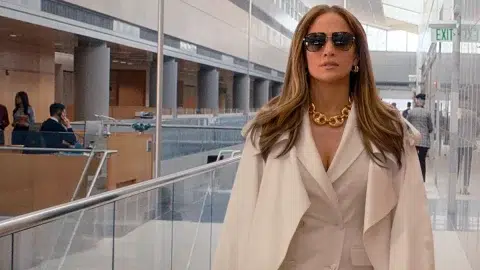
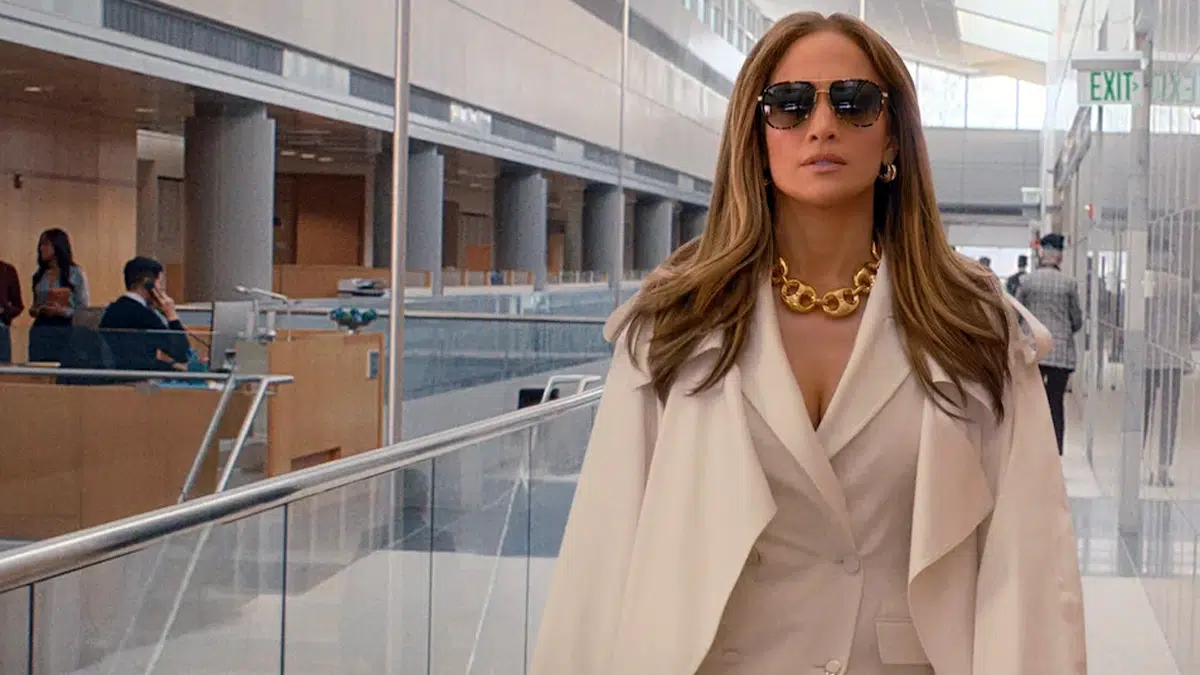
The silhouettes and the costumes that we put her in are more echoing her mental state, not showing that she has had a change in situation. Her looks toward the beginning of the film are more in the ’40s silhouettes of suiting. The trousers have a lot of drape to them. There’s a shoulder or a nip at the waist that’s calling back to that Katharine Hepburn silhouette.
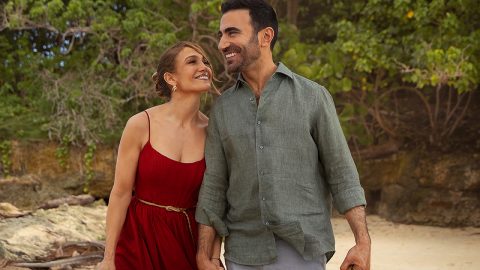
And then in the middle of the movie, once she and Daniel start leaning into the flirtation, her wardrobe leans more into Roman Holiday and ’50s rom-coms. Romantic silhouettes start to seep in there. And then, obviously, when they go to the Dominican Republic, her costumes start to feel saturated and tropical. There’s a lot more warmth and heat that plays through the colors and the silhouettes.
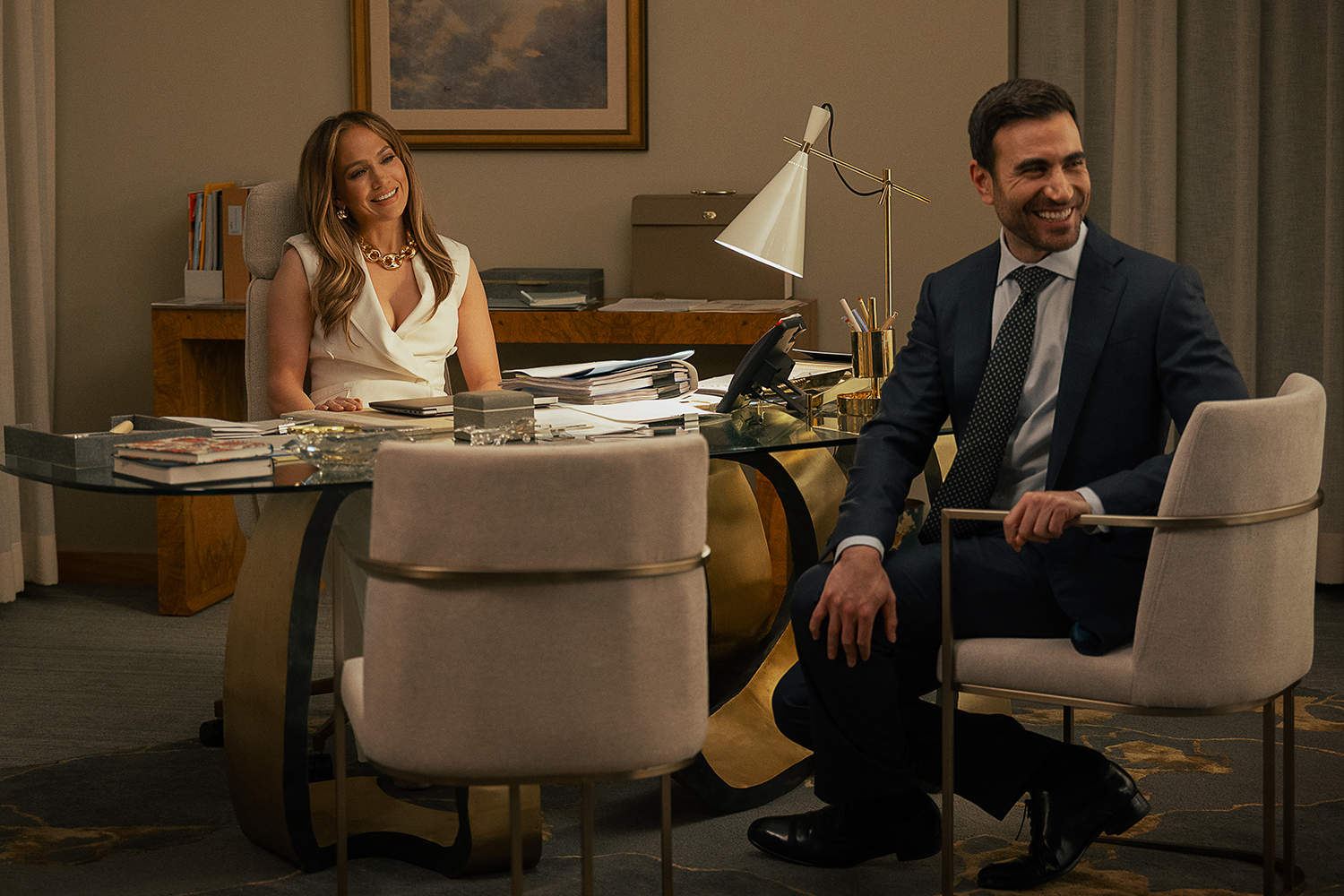
When they have a cooling-off period, the palette echoes that. We end up back with her in a white suit at the end that feels very, very different from the white suit at the beginning of the movie. It’s a softer silhouette. It’s nice in that it really shows her figure and delineates her in front of that large podium. You can see her clearly instead of at the beginning of the movie when Daniel first meets her. That original look is almost more guarded in that the cut of the suit doesn’t show her body as clearly and feels more armored.
When Jackie and Daniel go to the Dominican Republic, they look great. How’d you want to lean into the beauty there?
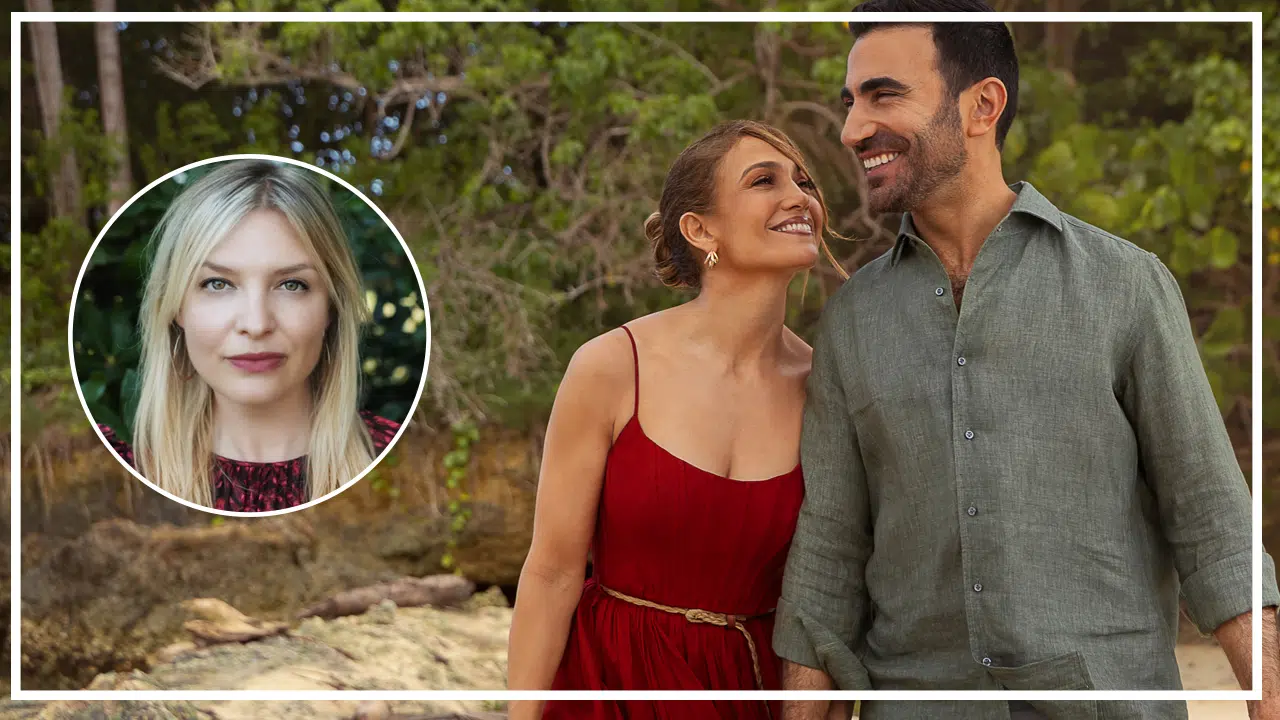
When they first kiss, when they dance, when they go to the restaurant and then they dance, I wanted that costume to be green. That was always very important to me. I wanted her to feel verdant, ripe, and sort of like spring, the beginning of something new for her and the end of something that was, as they describe in the movie, wintry and cold. So, green always felt right.
Then I found this Victoria Beckham dress, which is what she wears. Sometimes you’re not sure. Sometimes you have a couple of thoughts and moments where one of a few things might work well in the scene, and that dress solved everything for me. I wanted her to feel alluring and seductive. Clearly, she packed her luggage knowing that they might have this moment of connection or go out to dinner.
It was intentionally more revealing than her other wardrobe has been, but it’s not scant. It’s not short. It’s a maxi dress and it really shows off her décolletage, but to me, more importantly, her back. I knew how Ol Parker was going to shoot the dancing scene. It’s about their skin touching for the first time, feeling that intimacy and connection. I wanted a lot of her skin out, but I didn’t want it provocative or short. That piece was the balance between all of those tones that we were trying to hit.
Office Romance. (L-R) Jennifer Lopez as Jackie Cruz and Brett Goldstein as Daniel Blanchflower in Office Romance. Cr. Ana Carballosa/Netflix © 2026.
Obviously, character drives your choices, but a part of the appeal of romantic comedies is movie stars looking like movie stars. How do you balance designing costumes for both a character and a movie star?
She’s worn such a large catalog of looks, and she’s very famously fashion-forward and somebody that everybody loves to dress. All fashion houses love to dress Jennifer. She is not at all a snob about what she wears. She’s so open to trying things on and sees critically like a camera would.
She might love something, but it might not be right for the moment. She’s not driven by vanity in that way. She wants to find the right piece for that scene. It’s a pleasure to collaborate with her in that respect. Also, she looks great in literally everything. You have a leading lady who’s adventurous and confident, understands the mechanics of a camera, and happens to look gorgeous in everything you put her in.
You have two frequent collaborators at the moment, Jennifer Lopez and M. Night Shyamalan. You did excellent work on his Apple show, Servant.
Thank you.
I did want to ask, how did you and Night become so lockstep together? How do the both of you want costumes to tell the story?
He’s one of my favorite human beings in the world, not just to collaborate with, but just because he’s a tremendous man. One of the kindest people in Hollywood. I would say we were in lockstep quickly on Servant. I had an interview with him, like you would with any director, and he had given me one reference from a movie. It’s not a film I’d ever seen, and I went 200% forward in a direction that I think was probably exciting and surprising with Dorothy’s wardrobe. He’s a bold filmmaker, so he was excited.
Ever since then, Night and I communicate best through visuals. I’ll make him a mood board. He and I will sit and look carefully, with intention, at the mood board. We’ll ask questions about the color of a shirt or the pattern of something. Every relationship with a director and designer is very different. But for Night and me, it’s the most visual relationship I have with any director. He has such a beautiful eye.
As a costume designer, I love that he cares so much about every detail. Every single scene is storyboarded. That’s a part of our language too, because I will have seen the storyboards for the entire movie before he and I lock in a costume. I can really understand how he’s going to film it and probably how it will be lit. Working with Night is more like working with a painter than working with any other director.
Also, he’s very decisive, which is nice. He has a visual language he wants to create through the cinematography, the production design, and the costumes. He ensures that we’re all in sync. Once he makes a decision, the confidence is high. He really trusts his team.