Picture Credit: SYFY / Getty Images
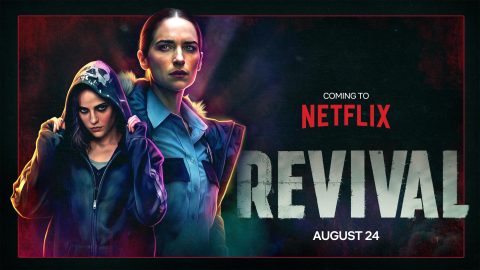
Later this month, a zombie series like no other lands on Netflix. Introducing Revival, a show where the undead are not violent savages, but regular people who died and suddenly, inexplicably find themselves brought back to life — and one of them must solve the mystery of her own murder. Ahead of its Netflix debut, we caught up with showrunner Aaron B. Koontz to give you the complete rundown of what to expect.
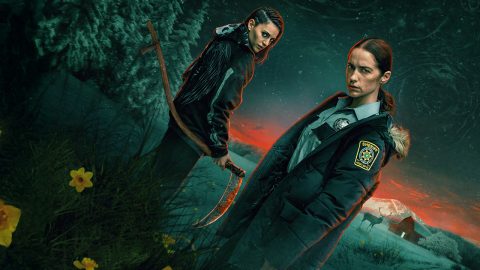
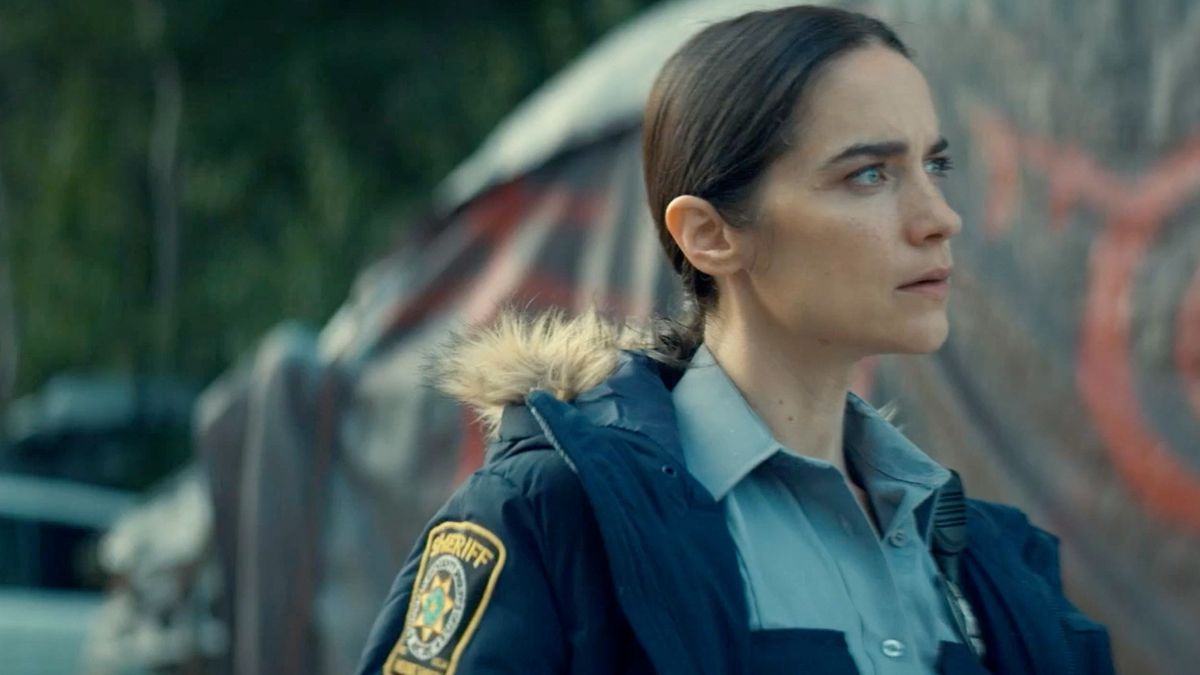
Back in 2025, Syfy debuted zombie series Revival, based on the Image Comics series by writer Tim Seeley and artist Mike Norton. The series is a far stretch from your traditional zombie narrative: the dead come back to life, yes, but they retain almost everything that made them human. They’re not bloodthirsty, savage and undignified monsters, but rather, their memories and personalities remain in-tact. They’re known as the ‘Revived’ — and whether they should be supported or ostracised depends entirely on whom you ask. The series is headlined by Melanie Scrofano as Deputy Dana Cypress and Romy Weltman as Dana’s younger sister Martha ‘Em’ Cypress.
Revival was adapted for television by Aaron B. Koontz (The Pale Door, Scare Package) and Luke Boyce. The 10-episode series debuted back in 2025, receiving solid ratings, but not quite generating enough buzz to score a renewal. However, on August 24, Revival finds new life on Netflix, where should it be successful, we may see the series get another season — of which, showrunner Aaron B. Koontz believes that we’re only at the “the tip of the iceberg.”
Ahead of its Netflix debut, we caught up with Koontz to discuss all things Revival. Check out our interview down below.
What’s On Netflix: What initially convinced you that Tim Seeley and Mike Norton’s graphic novel had to be brought to the screen?
Aaron B. Koontz: I thought it was so interesting to have a TV series was not necessarily a zombie story. People are like, ‘oh, this is like Glitch [the 2015 TV series].’ Revival actually came well before Glitch — which is a great show. What was so fascinating to me was, this is a person who, because the dead have come back to life, they come back and realise they were murdered and now they have to try to help solve their own murder. Now that’s different. That’s a hook. But they’re also a teenager and they’re messy and there’s people after them and crazy stuff going on; that’s kind of central idea. And when your sister’s a cop and your dad’s the sheriff, this is really juicy character stuff. I don’t want to rush that in 90 minutes.
Tim [Seeley] and Mike [Norton] — the two creators of the comic — they built so many beautiful Fargo-esque characters that are just so cool and just have all this Midwestern charm. I want to give them each moments. I didn’t know if I’d be able to make it a show, but thankfully, we got it sold.
Did you manage to chat with Seeley and Norton about the adaptation? What was their input?
[Revival co-creator] Luke Boyce and Tim [Seeley] were trying to make this for years. Once I got involved, I was able to help. I make a lot of movies and I’ve been in the industry for a while, so I was able to really put some fuel on the fire. They had so many ideas. My role was amalgamating all the things they wanted to do.
Then Luke and I were putting [our ideas] up on this big board: here’s all these huge moments from the comic. How do we build to the Czech Brothers? How do we really construct a murder mystery? We invited Tim and Mike into the writer’s room. We had a lot of North Stars from them. Every now and then there’d be some crazy idea. Many times it was me because I was newer to the comic, whereas with Tim and Luke… Tim literally created a comic, and Luke was so invested in the comic. He went after that comic and got the rights from Tim.
And that’s how this all happened. Luke would keep me on the path of the comics. I would come up with some wild idea and then we would go to Tim and he’d be like, ‘no, no, no, no.’
Tim and Mike are just wonderful humans, wonderful partners, and so supportive and allowed us to try things. There were also things that they wanted to do in the comics, and for one reason or another, didn’t. [SPOILER] We do conclude with the murder mystery being solved, but there’s so many things that happen in between, and so in our series, I was like, ‘OK, if we focus on just the murder mystery, there is still this bigger mystery to this series beyond that.’ There’s a lot of meat on the bone for us to to move forward with — but at least the central question gets essentially answered in season one.
As someone with extensive experience producing indie horror, what was the biggest challenge in scaling to a project of this size — a 10-episode series?
I mean, the biggest challenge was shooting in New Brunswick with these wonderful partners at Hemmings Films and everyone there. There was a lot to juggle. And, also, we were just so low budget. I’m here in L.A. and when I tell people how little we made this show for, they literally do not believe me. They’re like, ‘That’s not possible. Like, how could you have done that?’
It looks good for the budget we have. We were nominated for awards and the other series were like The Last of Us, Alien: Earth, Dexter. The budget of our entire season is the budget some of those have on single episodes. We’re proud of that.
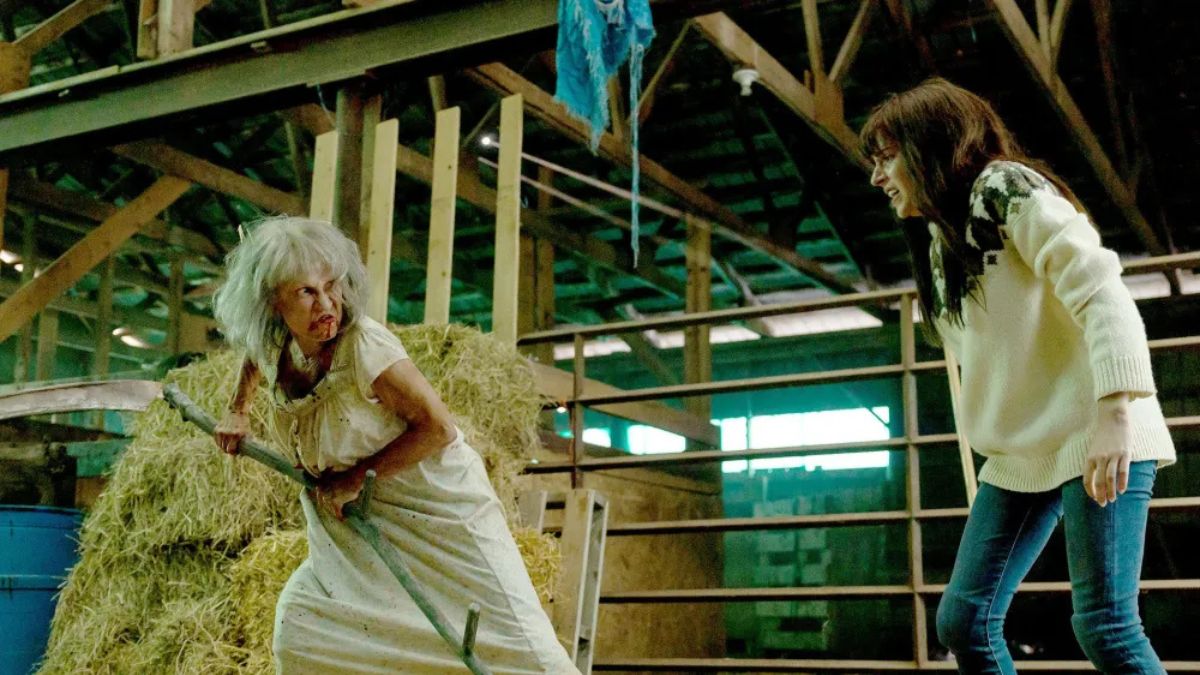
Time and money is a thing. But then also, trying to have scope while also trying to create an intimate family story. There was a wrestle of like, oh, here’s this crazy, cool shit that happened, the comic, and I want to do this big thing. How can we get there? We were able to build to these moments like episode six of Revival, which for some people is so crazy. It takes too much of a swing for me. That’s my favourite thing I’ve ever done. Like literally of all the movies I’ve made, episode six of Revival is my favourite thing. It makes me so happy. It’s also a turn from the comics, the thing that appears in episode six is very prevalent in the comics from the beginning. We push that to later for a variety of reasons — mainly Syfy wanted it later.
I had a blast. The cast, the crew, my collaborators were just the most wonderful people. Everybody was just so gung ho and we were so excited about the story. That leads into the production.
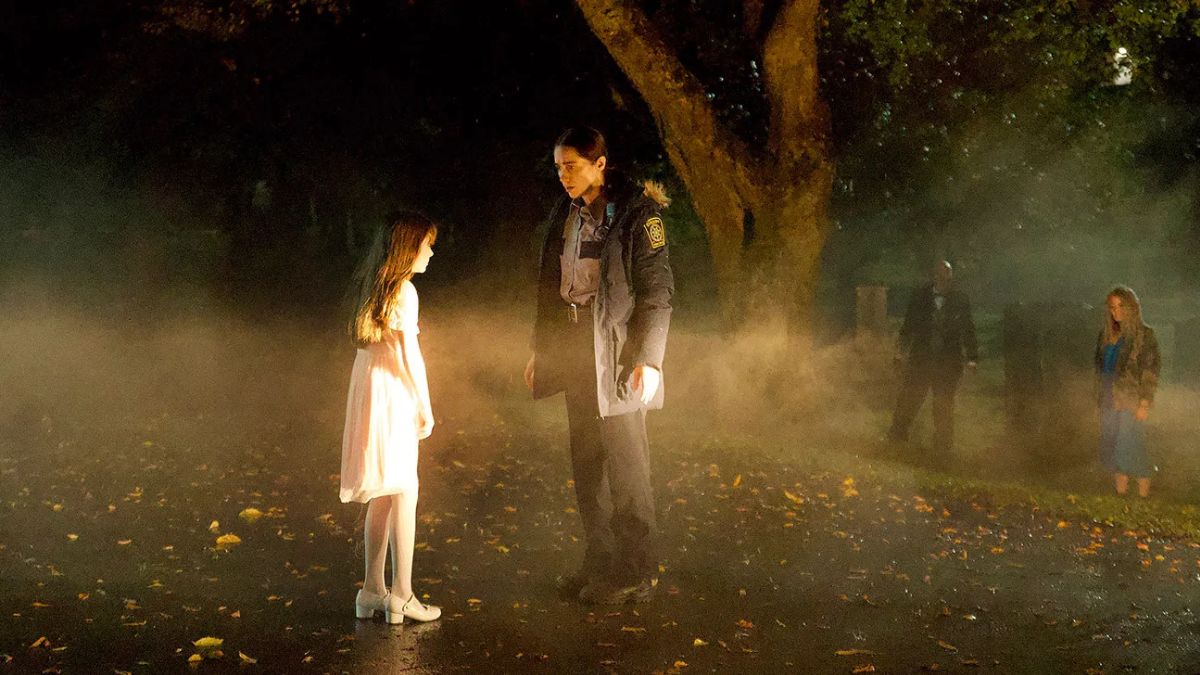
Obviously you’re adapting a comic, so you have that incredible artwork as a direct visual roadmap. But beyond that, what were your non-comic visual inspirations for the look and feel of the series? Were there specific films, shows, or photography styles you kept on the mood board? I caught the essence of John Carpenter’s The Thing, David Lynch’s Twin Peaks, and even a little of Stuart Gordon’s Re-Animator.
Every reference you said is spot-on. Luke and I are cinephiles. We talk in the language of movies. When we’re constructing a scene with Amanda [Row] or Samir [Rehem], our two directors, we would talk about set pieces from movies. There’s a little E.T. in moments, there’s Kill Bill in moments, there’s some crazy stuff. As far as the aesthetic, we wanted this kind of dreary Fargo kind of town.
We wanted it to feel cinematic; we wanted it to feel Amblin-esque if you will, which is crazy because now I’m working with Amblin. That was a huge inspiration to Luke and I — that’s what we grew up in and have those types of feelings. We had a look-book that was just filled with all this stuff. We’re nostalgia junkies.
For a more contemporary example, there’s a bit of Stranger Things, right?
There’s definitely a Stranger Things aspect to this, and we talked about that. Keep in mind the comic predates Stranger Things, so it’s not like we’re copying them.
And Stranger Things, which I love, is very Amblin. I mean, the first season of that is completely E.T., so we’re leaning into that. And then the last season is more Nightmare on Elm Street. So yeah, we, lean into that just without the scale.
You’ve mentioned there’s still plenty of story left to tell. If horror fans binge this on Netflix and make it a hit, where do you want to take this world next?
We believe that this is the tip of the iceberg for what Dana’s journey could potentially be. I think what’s nice about it is that the season ends; I think it’s a very satisfying way to end the core story that we’re trying to tell. But there’s also things that are not answered. There are deliberate things that are like, ‘wait a second.’
I will say, everything that we’re doing has meaning, it’s very laid out. We’re so excited about the Netflix opportunity, because that is that is what we picture: we pictured the binging. The reason why we don’t have a season two right now is because, on Syfy, nobody watches cable and they have to wait week to week here in the States. But on Peacock, it did well. So now if Netflix likes this and it does well, we could make a season with Netflix.
They’re excited about it. You never know what’s going to land or not on Netflix. It’s so hit and miss. I’m excited to see what happens. And regardless, a new audience is there. We have crazy ideas that are so fun that build off this that I promise going in directions people do not expect. It would be an honour to get to do more. But we’ll see.
This is an indie show. This was constructed by a little money from Canada and a little money from like Sky in the UK and a little money from Crave in Australia. Like, ‘oh, can we just rub some pennies together to like be able to make a series?’
My favorite thing I’ve ever done is make Revival, even though it was the hardest.
This interview has been edited for clarity and brevity.
Next up for Aaron B. Koontz is perhaps his most exciting project of all: adapting The Mandela Catalogue with Alex Kister and Steven Spielberg. That is undoubtedly a behemoth of a project, but clearly there’s both time and passion to continue with Revival — let’s hope it scores a renewal at Netflix!