Picture Credit: Netflix / Mitchell Travers
Costume designer Mitchell Travers brings some western noir to Nashville, Tennessee, in Heartland, the new thriller led by Jessica Chastain. Filmmaker Shana Feste’s thriller marks another collaboration between Travers and Chastain. They’ve worked together on The Eyes of Tammy Faye, George & Tammy, Mother’s Instinct, and, due out on Apple TV+ next year, The Savant.
Travers has built up an impressive resumé. The costume designer brought to life In the Heights, Eighth Grade, Hustlers, and Late Night, creating vivid characters across a variety of genres. With Heartland, Mitchell got to craft a tough-as-nails hero in Misty Jones (Chastain), who searches for her missing niece in style.
Mitchell’s first reaction to the project: “What if we do a Western noir?” The costume designer told What’s on Netflix how it was done.
This movie has a lot of cowboy hats. What do you want a cowboy hat to say for a character?
Oh my God. Well, the hats in this film are such a part of the storytelling. I started telling people that, to me, I’ve done a decent amount of Westerns in my career, and I do feel like cowboy hats are haircuts. They have to be based on the person’s physicality, their jawline, where their nose sits, how their ears interact with the hat.
Honestly, I could fit a cowboy hat for an hour and a half, truly just trying different crown heights, brim widths. There’s a tool that we use to shave down the width of the brim. It’s really millimeters of difference. If you pull it in just a little bit more, the DP has the ability to light the face. Fitting a cowboy hat is no small feat, and it has to be done with a lot of intention, and you have to think about it from different angles in the same way that the camera will capture it.
The cowboy hats were a huge part of the design of the project.
The smallest of adjustments can say a lot, right? With cowboy boots and hats, so many different types.
Definitely. Just to isolate the hat alone, you can do straw, you can do felt, you could do wool, you can do beaver. Does the person keep his or her hat in a hat box? Shana tells an amazing story about this where she was on a plane once and somebody got on with one of the hat boxes, which, if you’ve ever seen one, have this sort of unusual, nearly coffin-like structure – and it’s to keep a hat perfect.
She loved that somebody was willing to carry their hat in this way. I was saying to her, “Shana, I really get it because if you’ve had your hat shaped to your head, you don’t want to mess with it. You don’t want to just throw it into the overhead bin on a plane because all the angles really matter.” Shana’s someone who really understands clothes, so she totally got it, but she just loved the specificity of that type of person, who would care about their hat that much.
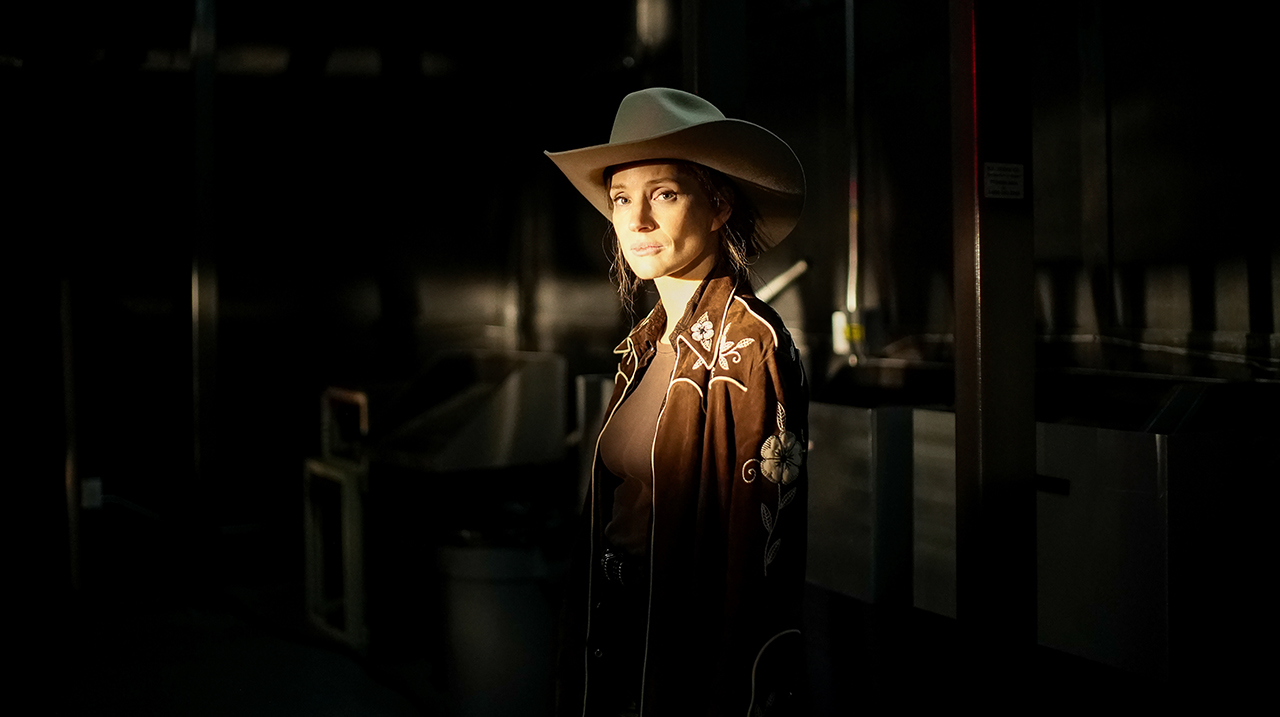
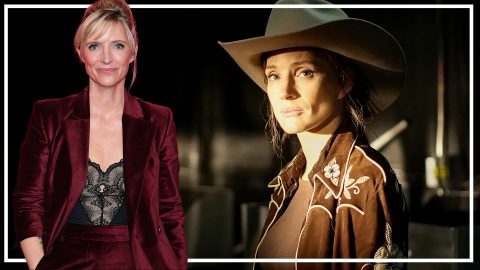
Heartland. Jessica Chastain as Misty Jones in Heartland. Cr. Khalid Mohtaseb/Netflix © 2026.
They’re not cheap, either.
They’re not cheap. That was an important part of my budget battle, always, was trying to just explain to people, yes, you absolutely can get a $30 cowboy hat, but it really does look like one. For people who are very serious about them, they are willing to throw down in the way that others might for a designer heel or an incredible suit or something. People really spend money on their hats.
When you get to downtown Nashville, especially Broadway, you do have people from all over the country and world there visiting. What was a detail you wanted to get right there?
Bachelorette parties, right? What kind of girls threw down for the expensive white hat, and what girls bought the cheap tourist version of the bachelorette party hat? You can’t really tell a story about Nashville. A contemporary story about Nashville involves bachelorette culture. So we have that represented a couple of times in the film, but there’s also the tourist approach to a hat.
As you say, it is sort of like the ubiquitous souvenirs. Everyone ends up getting some terrible cowboy hat that I least favor, and I say this, I cherish them because they’re useful in the film, but that coastal cowgirl hat that they sell in Nashville where it’s like straw that falls apart in seconds, it’s spray-painted black along the brim and has seashells on its hatband. We’ve totally missed the mark of what a hat is meant to do, but it is absolutely present if you’re going to tell the story about Nashville today.
Not all actors can wear cowboy hats, either. Chastain’s jawline fits the brim so well, though.
I appreciate that. It took many fittings. Jess was very patient with me, and we got it right in the end.
You two have worked together a few times now. How do you two build a character literally from the feet up?
Well, the fun part about getting to work with Jessica so many times is we’ve explored so many different types of people together. Misty, I used to joke with her in the beginning, I was like, “I am terrified of Misty. She scares me. I don’t want to be getting caught in an elevator with Misty.” And she was like, “Yes, exactly. That’s the point.”
She and I have explored characters like Tammy Faye in The Eyes of Tammy Faye and Tammy Wynette in George & Tammy. We have a new one coming out soon. It’s a series with a very different character. So, I always feel like the beginning for us working together is just, it’s all conversational. What are you bringing to this? How do you see this person? Are there any sartorial details that feel really true for you? But oftentimes what will happen is I’ll show her the images that I’m responding to, and she’ll guide that process a bit, and then I just do what I always do.
What do you always do on a project?
I fill a room full of clothes that I think are on the path to finding something, and that first fitting is usually where she and I will lock into what’s real for this person. What we found to be real for this person was that you really couldn’t do outfits. This isn’t somebody who thought about outfits. She just thought about pieces, and they got put together in a way.
And so, there was never a thoughtful head-to-toe version of things. It would be like she got dressed for one kind of a day, and then it got pivoted, and she threw this on, and there’s this rough-and-tumble quality to Misty that felt very true for Jessica. There’s obviously Western sartorial elements that have to be there if you’re going to tell the story about Misty Jones, but it was also references that she and I would trade back and forth.
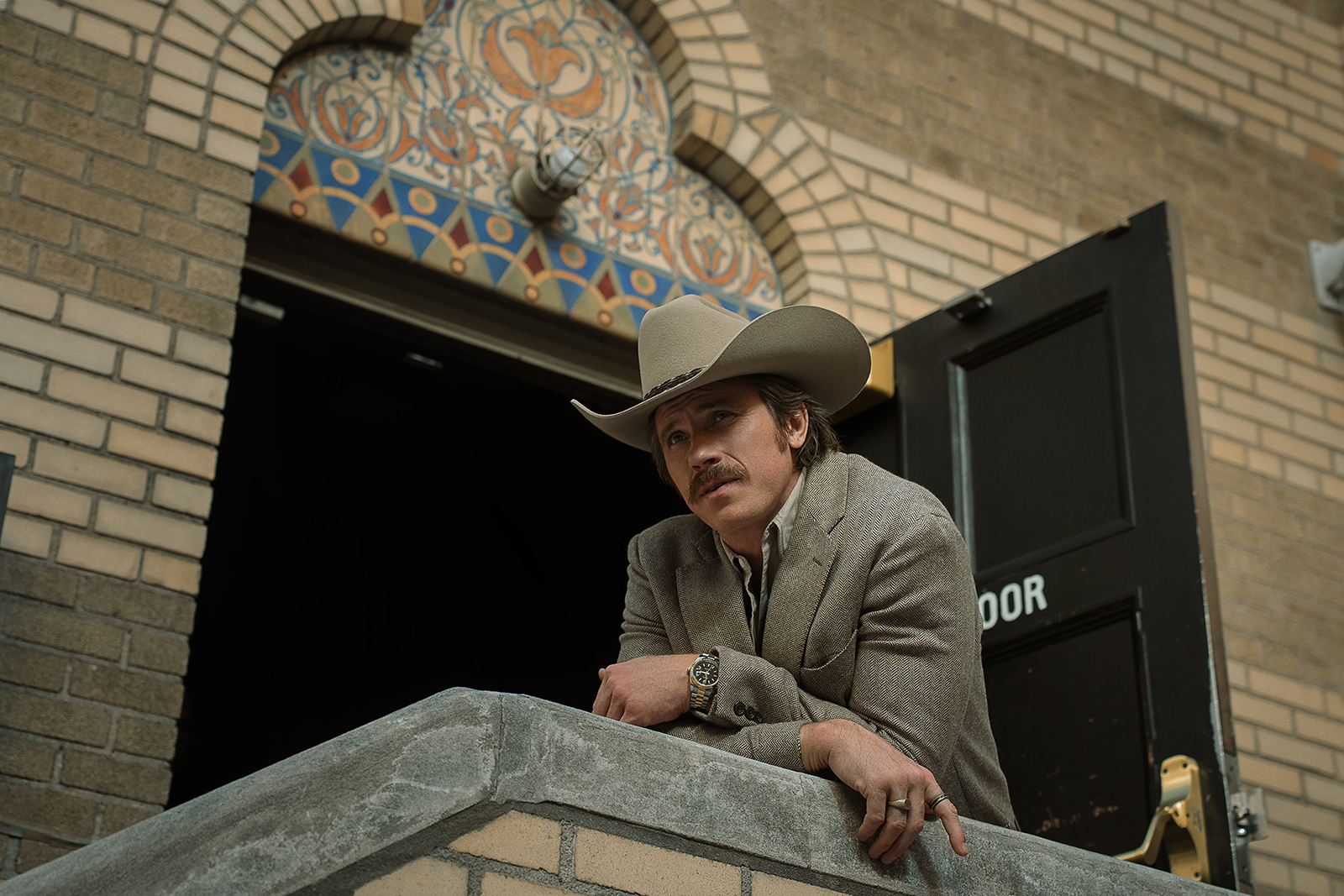
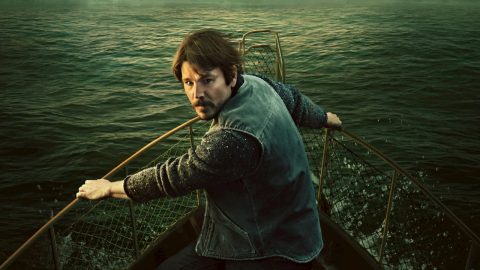
Heartland. Garrett Hedlund as Roy Combs in Heartland. Cr. Tina Rowden/Netflix © 2026.
And what kind of country artist was she, right?
Was she underground? Was she super famous? Did fame affect her clothes in any way? A great jumping point for us is that, I’m not sure if it actually made it into the final film, but there were some sequences with young Misty, so we got to figure out who the character was in an earlier part of her fame.
And so, that was really informative for the character, too, just to try to figure out the whole series of how she went from being top-of-the-world Misty to sort of bottom-of-the-barrel Misty, and how do we figure out the climb between those two people?
So it’s always fun with Jess. I really enjoy when she calls for a project because it’s always going to be different. My racks never look the same. Also, my fitting rooms never look the same. The approach is always different. I’ve had some of my most creative highs have come from our work together.
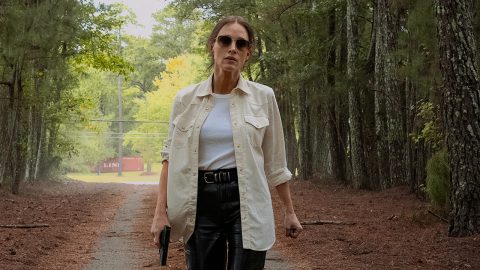
That’s excellent. When Misty gets to the scene of the crime, the home of her niece, she’s wearing these black leather pants and a long brown coat. Western meets noir. How’d you land on that striking costume?
So that is runway Ralph Lauren, and it’s a piece that I had my eye on for the film. Ralph Lauren has been incredibly giving to both Jessica and myself in different projects over our time. I reached out. That whole collection was super inspirational to me because it felt very American, it felt very heritage, but it felt sort of like heirloom, like things that have been around for quite some time. Ralph Lauren obviously does that very well.
I asked if we might be able to get those pieces in house to not only study them and see them on Jessica, but just to see if the shapes were right and if that felt good for this character. As soon as we got that duster on Jessica, it was like, “Oh, well, this has to be in the movie.” It’s so right for her.
With George & Tammy and The Eyes of Tammy Faye, there was such an authenticity to your work with Jessica there. Those real figures were just vivid in those stories. What do you find most enjoyable about, whether it’s Nashville or a real person, creating an authentic costume?
It’s your responsibility to fully make someone believe that they are watching the real world. A lot of that comes down to the production design, the cinematography, the hair, the makeup, and the costumes. That’s what makes people feel real. I firmly believe that we all speak the language of costume design, whether or not we think we do.
Everything that we choose to put on our body is a way to communicate to somebody else something about us, and it’s this universal language that we all speak. As a costume designer, you get put in charge of that. What do you want your audience to know about this character at this moment, how they’re feeling, if they are apprehensive, if they’re confident, if they are frightened, if they are feeling gorgeous? That all comes down to costumes, and it doesn’t have to be in the script for the audience to understand what that person’s headspace is.
With that in mind, how was it when you got to paint probably your biggest canvas with In the Heights?
It’s the same. I always design from the same headspace. That was just about reaching for the bigger brush. I can get really caught up in the details of veneering or a stack of rings or a print or something like that, but that was really permission to zoom out. The city block is your canvas instead of a tight shot of somebody’s collar and jewelry. So, the scale of it was unbelievable.
The amount of clothing it took, the amount of fittings, but it just all comes back to balancing the storytelling of who lives on this block, what time of day is it? Are people going to work? What would they be doing at this moment in this story? It’s just about the scale of production and the amount of human beings to get dressed, and then paying attention to the choreography.
How does it interact? Where do we want the audience to be looking at this moment in this musical number? Your job is to help the audience enjoy the project. And so, that can come down to tiny little details or it can become filling the entire screen with characters.
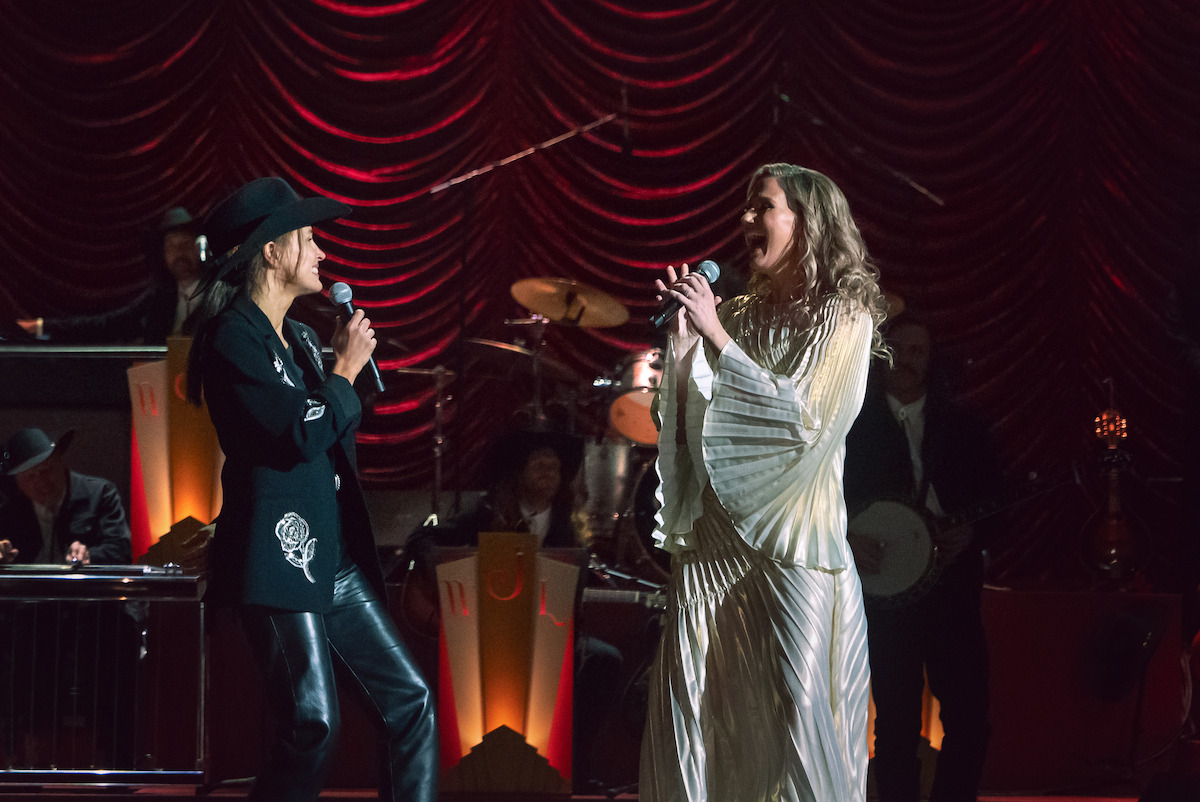
Picture Credit: Netflix
When you were getting into costume design, would you say the career you have now is pretty reflective of what you hoped to achieve when you began costume designing?
I think yes, I do. I very much enjoy variety. I’m not someone who can do the same thing with repetition and continue to do a good job at that. I’m an all-in kind of person. If I’m going to do something, I’m going to mean it with every molecule of my body. I’m going to throw myself into it.
I’m really rewarded by that work, and I find my career very rewarding because I’ve gotten to become obsessed with very different times in history, different types of people. And then luckily I’ve been able to, when the next job comes, I get to pivot and dive into a different universe and create new people from that. I’m always studying the way that people dress themselves, whether it’s in historical photos or on the train in New York City or at the airport. I love to figure out who people are based on how they get dressed and then apply that in my work.
To answer your question, I think college me would be pretty psyched about what I’ve been able to do. I think he’d be excited.
Another highlight from your career is a fur coat from Hustlers. [Director] Lorene Scafaria cut from an epic dance to Jennifer Lopez’s character simply on a roof, smoking a cigarette. It’s such a moment. How do you look back on costume designing at that moment?
That doesn’t happen all the time, and there’s not always the opportunity to be that greedy as a costume designer. Lorene’s script gave me permission to be as greedy as possible with that moment, and so I’m not going to miss the opportunity. And of course, Jennifer Lopez was really game to fully embody that character.
Watching it on the monitor, seeing that moment that you put so much work into where she’s leaning back on the roof like that… Todd, who shot the film, Lorene and I, we sort of just looked at each other like, “Yeah, exactly.” In our wildest dreams, we hoped it would feel that way. And then to get to be in an audience myself and hear the reaction from people from just a visual… As I say, you don’t want your designs to do that all the time. You really have to earn those moments in a story, but it’s really cool when the audience gets what you are trying to say in that moment without dialogue.
I just remember the big laugh from the audience when the film cut to her on the roof. It’s such a funny cut to this just spectacular image of Lopez.
Yes. I give Kayla, the editor for the film, a lot of credit, too, because the way that that is set up and then just the boom visual of that coat, it’s a lot. It’s all of our departments working in tandem.