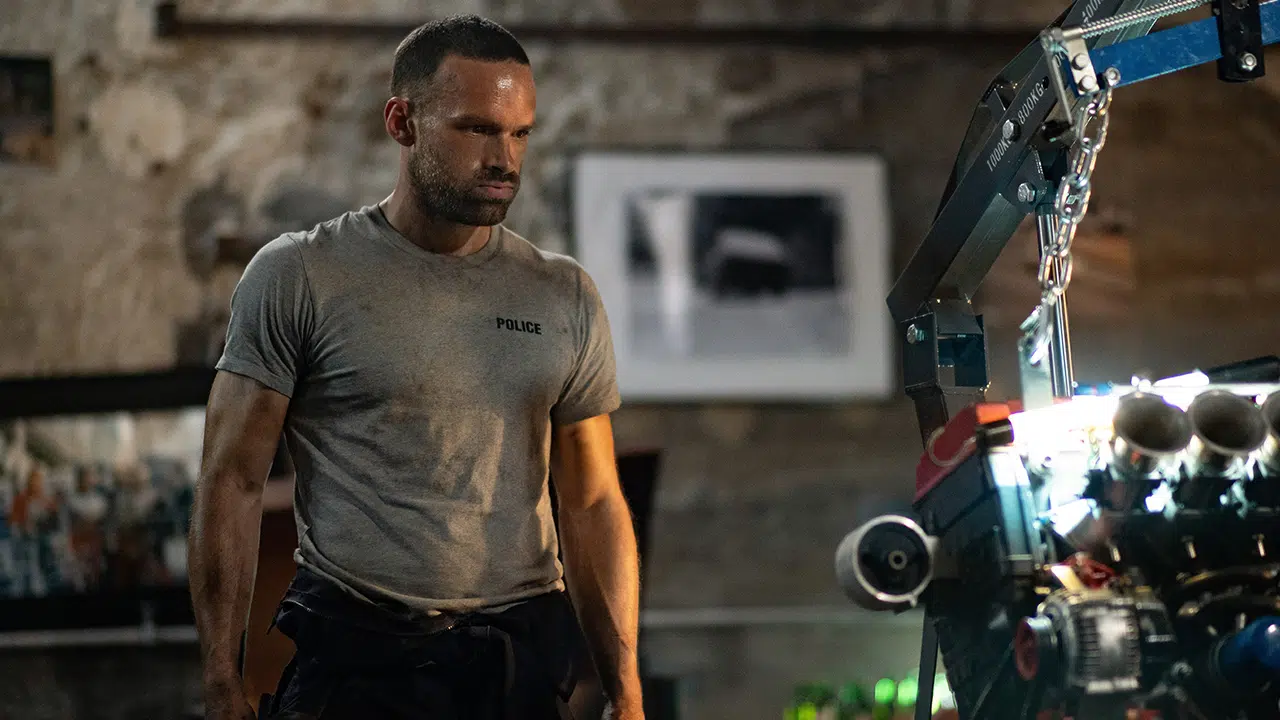
Behind the scenes on Lost Bullet – Picture: Netflix
Common criticisms leveled at Netflix original programming argue that the stories and directing are “dumbed down” for the audience and demands are made to place the biggest sequence in the first few minutes to “hook” subscribers. A recent Libération investigation got rare on-the-record comments to provide fascinating nuance into the working methods of the platform with French directors. Here is what they had to say.
With dozens of titles still being released every week and hundreds of millions of subscribers around the world, Netflix programming has made a lot of impact over the past 15 years. And, successes or not, has raised criticisms for what a modern “made-for-a-platform” project is. Recently, comments from Matt Damon on the Joe Rogan podcast have made headlines: “Now, they [Netflix] are asking: ‘Can we get a big one in the first five minutes? We want people to stay. And it wouldn’t be terrible if you reiterated the plot three or four times in the dialogue because people are on their phones while they’re watching.’”
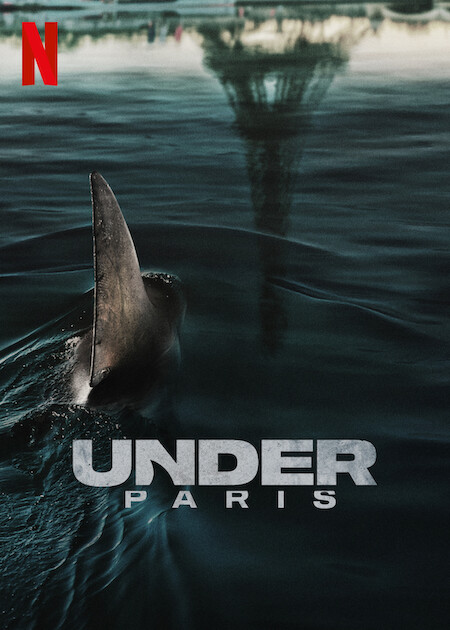
Even though Netflix executives have recently denied that such orders are given to the creatives, including Film Chief Dan Lin in a New York Times profile, French newspaper Libération published an investigation (paywall story) on Sunday to verify some of these claims with some of their collaborators on French projects. What they found out is a more nuanced reality of the day-to-day making of a movie; more surprisingly, a few directors like Guillaume Pierret (the Lost Bullet trilogy) and Xavier Gens (Under Paris) were on the record to lift a bit of a curtain on their respective experiences.
The “Clarity” Mandate
To counter the claims of Netflix executives, Libération relied on a 2024 investigation by German publication Süddeutsche Zeitung, which attended a Netflix “producer summit” in Berlin, where representatives of the platform gave a few of their working principles to local industry representatives. The notes from those sessions said that a viewer “had to understand tone, genre, characters and their motivations within the first few minutes” of a project, with a story that “had to stay coherent and offer highlights, no mix of genres or unusual story devices”. A German producer insists that “clarity” was the buzzword in terms of directing and storytelling. An unnamed French director who worked with Netflix echoed that sentiment to Libération: “Basically, they want two things: a sequence to hook viewers at the start, and a clear story”, arguing that the method is warranted by the “crazy market” and strong competition between platforms: “If viewers are not hooked, they will bail”. Finally, the anonymous director said that to illustrate and give an oversight post-release, Netflix shared limited audience metrics with the crew: “there has been a drop in attention in minute 28 because it was a little slow”. The story also highlights the existence of “starters”, an internal metric showing the rate of subscribers stopping a movie before minute 12.
An Open Dialogue
Writer Morgan S. Dalibert (action movie Aka) recognized that the demands of streamlining the script “met a certain logic” and insisted that, outside of these parameters, “they gave us carte blanche on the project”. Countering the reported ban on “unusual story devices”, he added that “I don’t have a memory that there were things that were mandated: I held onto flashback sequences in my script, I was able to explain it and it all went well”.
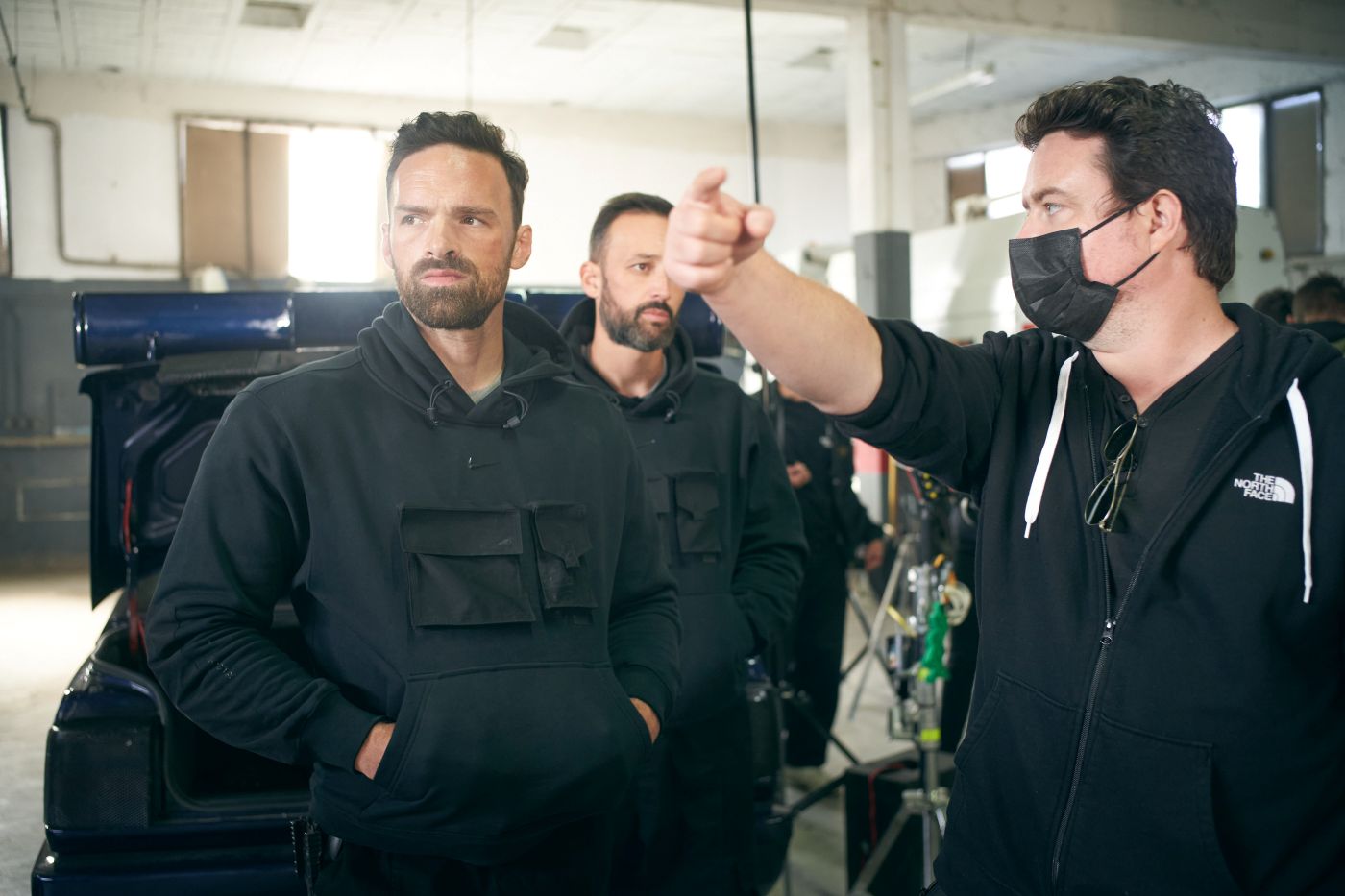
Guillaume Pierret (right), on the shoot of Lost Bullet 2. (Cr : Netflix)
That open dialogue extends to the technical side; Guillaume Pierret explained that some of the sequences on his Lost Bullet movies were shot with GoPro cameras, despite the fact it was not on the list of approved cameras by the platform, and he was able to keep it in. “Over the years [for Lost Bullet 2 and 3], we know each other, so there is more trust and more freedom” as a result. Xavier Gens said that, because of the French creative process, the final sequence of Under Paris was finally approved despite concerns that it would be impossible to shoot: “Basically, it’s an open dialogue, and we have a right to disagree”. He added that Netflix was concerned with the attention of the audience: during test screenings, cameras are fixed on the audience to analyze their level of awareness; feedback from those screenings is then used to address these issues. On the French movie side, Netflix will release globally a new take on the myth of Quasimodo this fall, and you can find all the shows and series in production in our French preview.
Are these new insights into Netflix’s process helpful to you? Do you still think there are ways to go in terms of creative freedom? Sound off in the comment section below!