
Picture: Netflix
Netflix’s Monster: The Lizzie Borden Story chronicles the life, relationships, crimes, and the subsequent ‘trial of the century’ in which she was accused of murdering her parents in a brutal axe attack—but later acquitted. How true is the story to real life? In this article, we cover the true story behind the Lizzie Borden case.
In the latest installment of Ryan Murphy’s Monster anthology at Netflix, he traces the life of Lizzie Borden, who was accused of brutally murdering her father and stepmother with an axe in 1892. The 8-episode series Monster: The Lizzie Borden Story is the fourth narrative in the Monster anthology after previous seasons covered Jeffrey Dahmer, Lyle and Erik Menendez, and Ed Gein. Like the others, this one takes creative liberties to chronicle the life of Lizzie Borden. It condenses the timeline, adds storylines that didn’t happen—or are only theorized in reality—and jumps into later serial killer stories, including Aileen Wuornos, who is another example of deadly female rage across history.
If you’ve finished Monster: The Lizzie Borden Story and you’re curious about which elements of the series are true, exaggerated, or altered from the real-life case, you’re in the right place. Down below we deduce the fact from the fiction.
Who was the real Lizzie Borden?

Lizzie Borden c. 1890 (Aged 29-30)
Lizzie Borden was born in Fall River, Massachusetts, in 1860. In March 1863, when she was just two years old, she lost her biological mother, Sarah Anthony Borden. Three years later, her father Andrew Borden remarried, tying the knot with Abby Durfee Gray in 1866. From then on, Lizzie would endure an extremely oppressive childhood: Abby Borden was uncaring towards her. Her father was a wealthy businessman; a property developer, bank president, and director of textile mills. As the Netflix series focuses on, he also had a business constructing caskets. Known for his frugality and being a miser despite huge wealth, he was distant, often cold and nasty towards Lizzie, but still afforded her the luxury of living within his household. There’s no concrete evidence that her parents were abusive.
Lizzie also had a sister, Emma Lenora Borden, nine years her senior. Emma too had a complicated relationship with her stepmother and was subjected to similar strained relations. She was out of town at the time of the murder case and was therefore not considered a suspect.
During the period surrounding the murders, the Borden household employed numerous servants. When the murders occurred, the servant in service was 25-year-old Irish immigrant Bridget Sullivan, whom the sisters referred to as Maggie. She had been living with them for almost three years. In the show, Abby names her ‘Maggie’ so as not to have to learn a new name from the previous servant, but there is no evidence to back this up. Additionally, the name ‘Maggie’ was a common nickname for an Irish maid in the late 1800s. Maggie was a key eyewitness in the case, being within the household at the time of the killings.
After years of oppression from her stepmother and father, on August 4, 1892, when she was aged 32, Lizzie Borden supposedly snapped. She was accused of brutally beating Andrew and Abby to death with a hatchet. She was arrested on August 11, 1892, and faced trial in June 1893. There was overwhelming incriminating evidence against her, but she was supported by her sister Emma, who used inheritance funds to help her defense. On June 21, 1893, Lizzie Borden was found not guilty after the jury deliberated for 90 minutes.
Lizzie was acquitted, and she returned to Fall River, where she and Emma purchased a luxurious home named ‘Maplecroft,’ living a quiet life in solitude. She later changed her name to Lizbeth to further distance herself from public scrutiny. The sisters became estranged in 1905 for unknown reasons, and they did not see each other again. They died merely days apart in 1927.
Lizzie Borden died on June 1, 1927. Emma Borden died on June 10, 1927.
Key moments in Monster: The Lizzie Borden Story: What’s fact and fiction?

Monster: The Lizzie Borden Story. (L to R) Ella Beatty as Lizzie Borden in episode 401 of Monster: The Lizzie Borden Story. Cr. Courtesy of Netflix © 2026
Down below, we’ve listed some of the burning questions that fans have after watching Monster: The Lizzie Borden Story, and whether the points are backed up with historical fact.
Did Lizzie Borden kill her parents?
First and foremost, here’s the big question: did Lizzie really kill her parents? The answer to this one is down to interpretation, naturally. Despite her historical acquittal, the show portrays her as guilty. Plus, the evidence against her is highly incriminating; her recollection of the event was extremely incoherent. Plus, she burned a dress shortly after the murders, claiming that it was old and tattered.
There were other suspects involved in the case. Bridget Sullivan was a suspect as the only other person confirmed to be on the property during the murders. Sister Emma Borden was quickly exonerated having been around 15 miles away from the scene. The other main suspect was John V. Morse, Lizzie’s maternal uncle, who visited the household the day before the murder. He was cleared of wrongdoing thanks to a very solid alibi.
What was Aileen Wuornos’ link to Lizzie Borden?
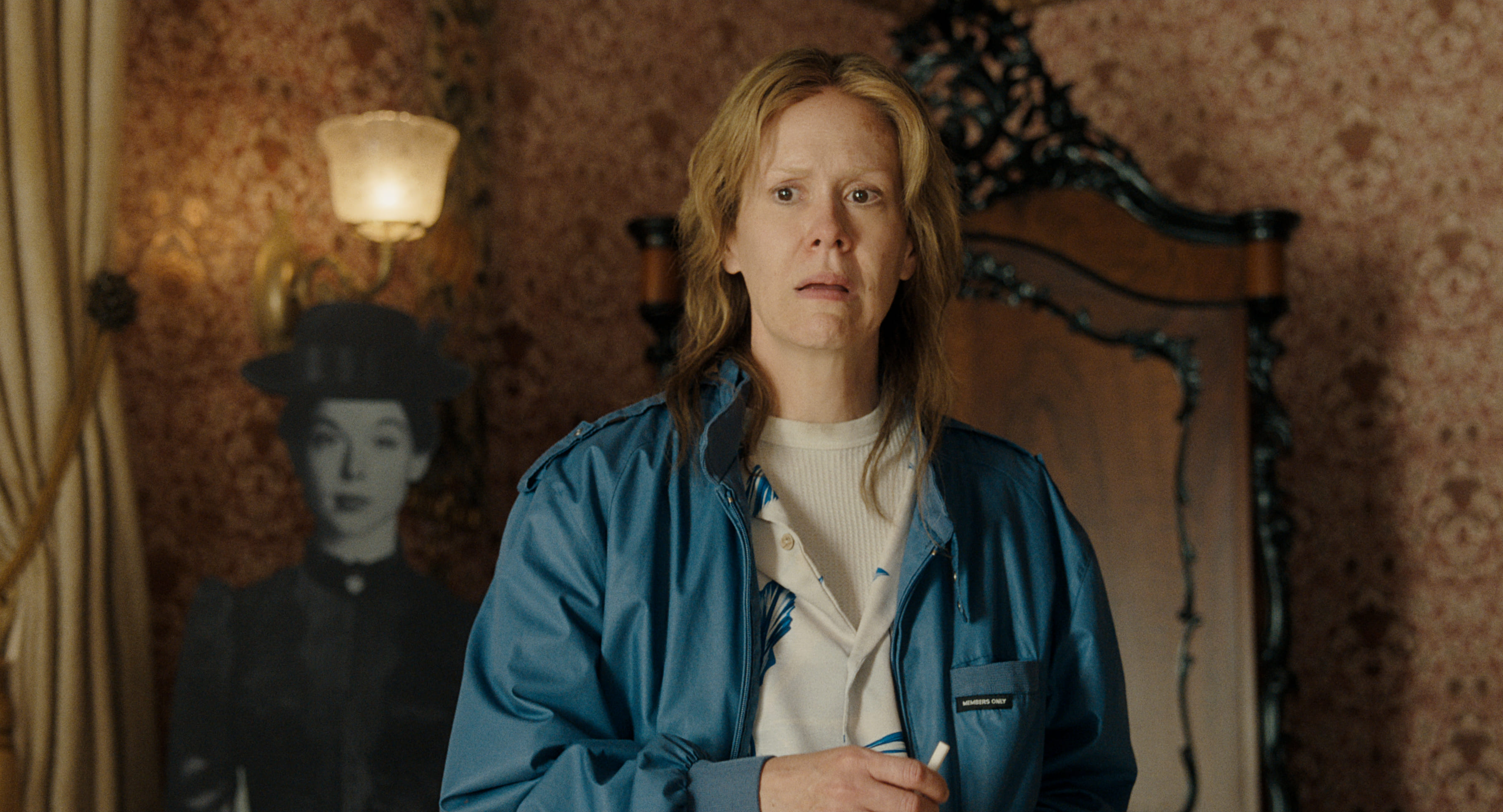
An American serial killer, Aileen Wuornos murdered seven men in Florida between 1989 and 1990. She was a street prostitute, getting close to clients and both robbing and murdering them. Wuornos was sentenced to death in 2002 and killed via a lethal injection.
In Monster, Ryan Murphy portrays Wuornos as an example of someone who was fixated by Lizzie Borden; she visits her house, and appears inspired by her acts. Like Borden, Wuornos lived in an oppressive environment. The Monster series uses her story to explain how psychological circumstances can have deadly consequences. There is no direct link between Lizzie Borden and Aileen Wuornos.
Of course, Monster has explored similar paths before. For instance, Season 3 shows how Ed Gein’s acts inspired Hollywood filmmakers to write movies such as The Texas Chainsaw Massacre and Psycho.
Did Lizzie have a relationship with the housemaid?

While the idea that Lizzie Borden had a romantic relationship with the housemaid Bridget Sullivan has been theorized, there is no historical evidence to confirm that this was the case. The show’s portrayal of a relationship is largely a fiction fueled by dramatic license. The theory gained particular traction following Evan Hunter’s speculative 1984 novel Lizzie, which portrayed the two in a secret relationship.
Unlike what we see in the show, there is also no historical evidence that Maggie was an accomplice in the killings of Andrew and Abby.
Did Lizzie’s mother kill her doves?
One of the key turning points in the series comes when Lizzie’s mother kills her many doves inside the birdhouse, driven crazy by their incessant noise. The show twists this real event. In reality, it was her father who killed the birds, citing them as carriers of disease.
Did Emma Borden support Lizzie in the trial?
When she first learned about the axe murders, Emma Borden blamed her sister. However, when the trial took place, she ardently spoke in support of Lizzie’s innocence. In fact, she dipped into the family’s inheritance to help fund her sister’s defense.
Did Lizzie Borden have 200 pets?
Following her acquittal, the show portrays Lizzie Borden having many pets—she states at the dinner table that she has over 200. However, there is no historical evidence that she had that many pets, though she did famously support animal welfare, and left $30,000 to the Animal Rescue League of Fall River in her will, as per We’re History.
Would Lizzie Borden have heard the song about her in her lifetime?
One of the recurring melodies throughout the series takes inspiration from a famous rhyme about Lizzie Borden. The lyrics are as follows: “Lizzie Borden took an ax; And gave her mother forty whacks; And when she saw what she had done; She gave her father forty-one.”
In the final episodes of the season, Lizzie Borden hears children sing the rhyme about her, but would she have heard it in her lifetime? The answer is yes, she almost certainly heard it. The rhyme became synonymous with her 1893 trial. It’s likely she heard it innumerable times before her death in 1927.
Did Lizzie Borden change her name?
Yes, following her 1893 acquittal, she changed her name to Lizbeth, most likely in an attempt to distance herself from the notoriety.
Sources/Further reading
Below we’ve cited all of the articles and reports that we’ve used to gather this information.
Monster: The Lizzie Borden Story is now streaming on Netflix.