Picture Credit: Netflix / Instagram
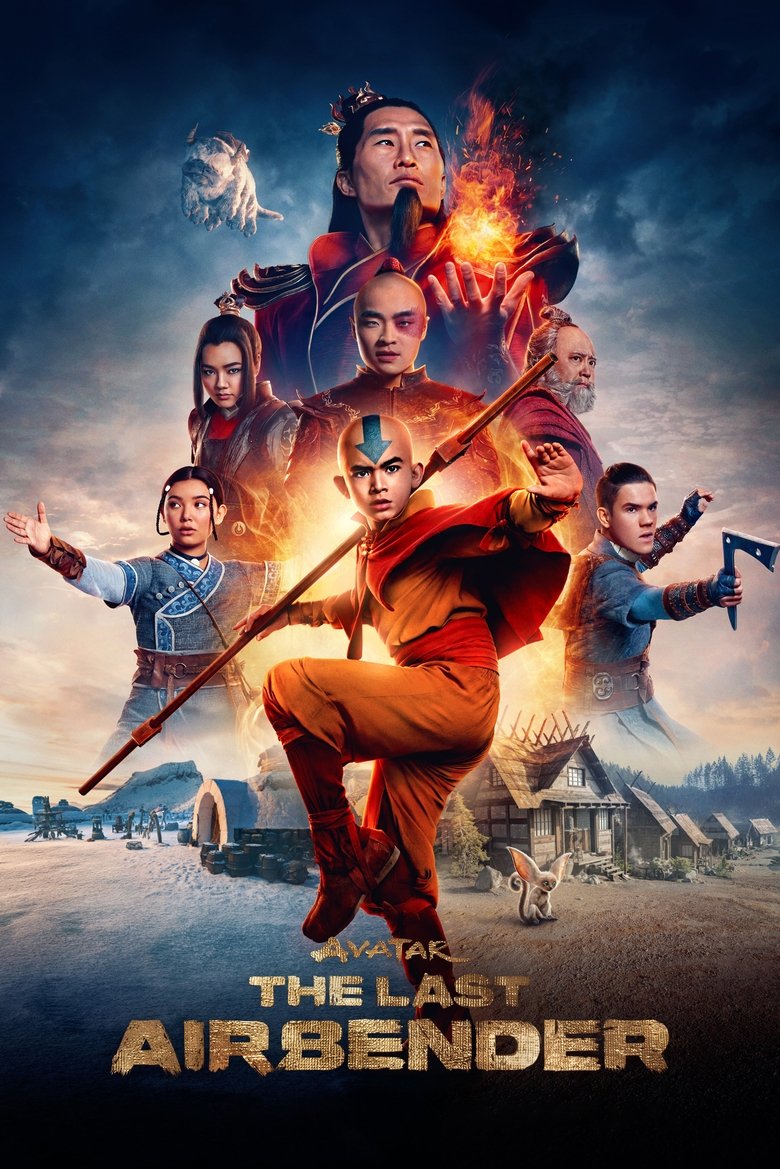
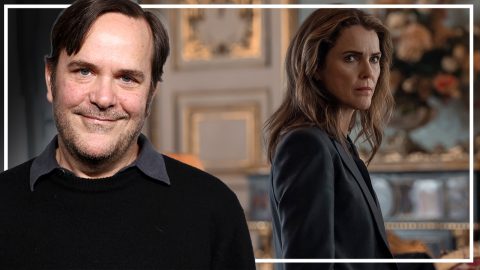
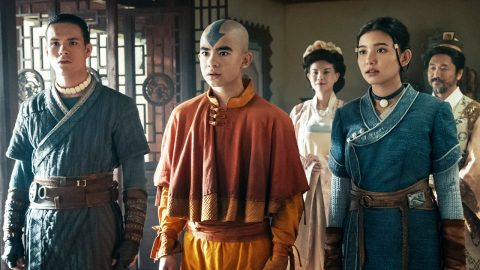
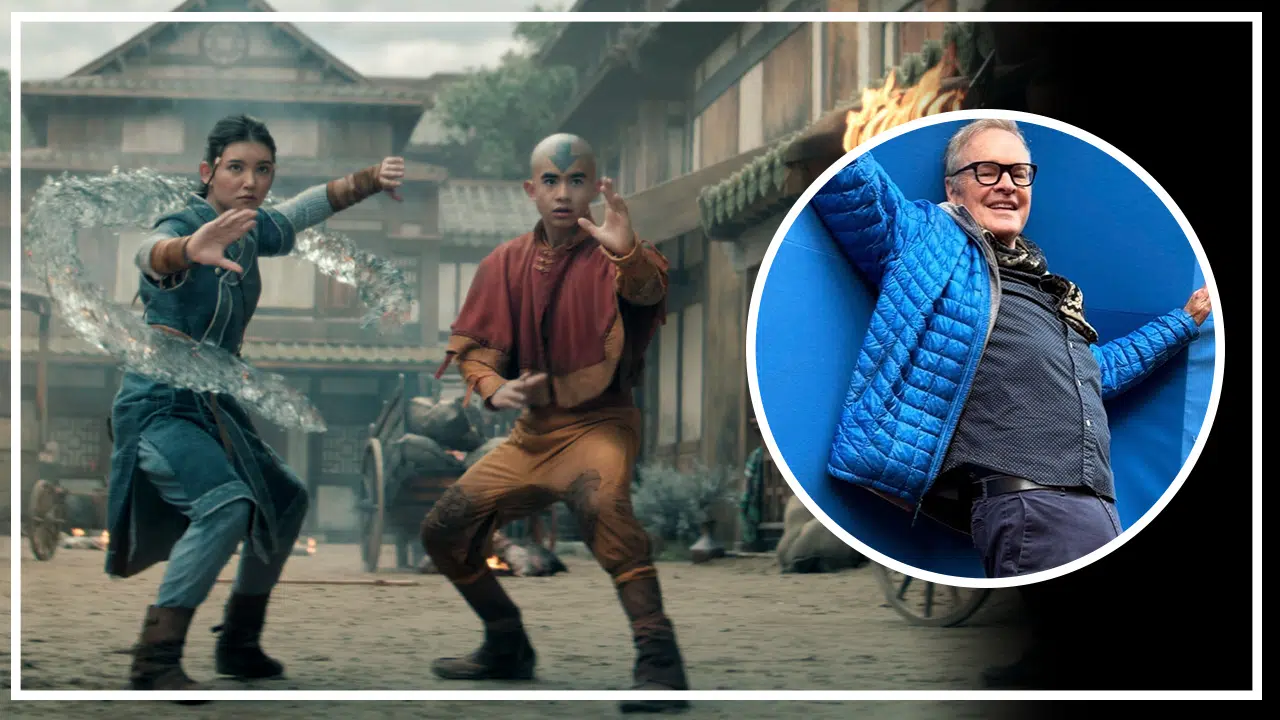
Christopher Hargadon expands upon the world of Avatar: The Last Airbender. The costume designer, who worked on season two and the upcoming third season, not only introduces new characters but shows the classic heroes – Aang, Katara, and Sokka – in a new light. Hargadon sought to add more history and personality to their live-action appearances.
“Well, the thing about something like The Last Airbender is that there’s a template already,” Hargadon told What’s on Netflix. “You have to be aware of the fanbase, because you don’t want to mess it up and have people angry at you. I always tried to respect the original concepts and sketches, but you do want more depth and texture. My main directives internally are texture, silhouette, and colour.”
Recently, the costume designer – who also worked on The Umbrella Academy – spoke with What’s on Netflix about grounding the fantasy in Avatar: The Last Airbender.
Like you said, you haven’t had the opportunity to talk too much about this show. So what haven’t you had a chance to talk about that you really want to cover with people?
First of all, because we did two seasons back to back, I almost have to stretch my mind to remember what season two was because it was two years ago, actually, that I think I started it. But the thing that was really cool about this show for me was the fact that it was an entirely Asian and Indigenous cast. I actually felt very honoured that I had the opportunity to work with such a large group of people that in the past have usually been secondary characters on shows that I’ve done.
We worked with hundreds of actors and background people, and I always enjoy working with actors and costuming them, especially on a show where it is actual building and costuming because people really enjoy that. But this was just such an amazing group of people. I’m just happy to be part of something that was kind of significant. It has a very large fan base, I understand.
That was actually the thing for me that, when I think about it, stands out the most: to work on something that I feel really is nice for a community.
There’s wear and tear, there’s history in the costumes. In what ways do you and your collaborators try to make fantastical costumes as authentic and lived-in as possible?
There were a lot of processes. I didn’t do the first season, and the first season was largely CGI background. It was shot, I think, for the most part interior. So when they launched into the second season and I came on board, my initial directive was to make it as gritty as possible.
The lived-in aspect, it wasn’t so much for the Royal Palace. That’s another thing that was cool about this, was that I could just focus on peasants right up to royalty. It was everybody in the middle, too, so it was a real cross-section of society.
We based a lot of the Asian component on the Qing Dynasty and the Tang Dynasty. So, certain sartorial elements of these different cultures I was always aware of when I was designing these costumes. But Jabbar, our awesome director, wanted it to be lived-in as far as when you see Zuko and Iroh at the beginning in their new clandestine life. They’re basically disguised as peasants working in the field.
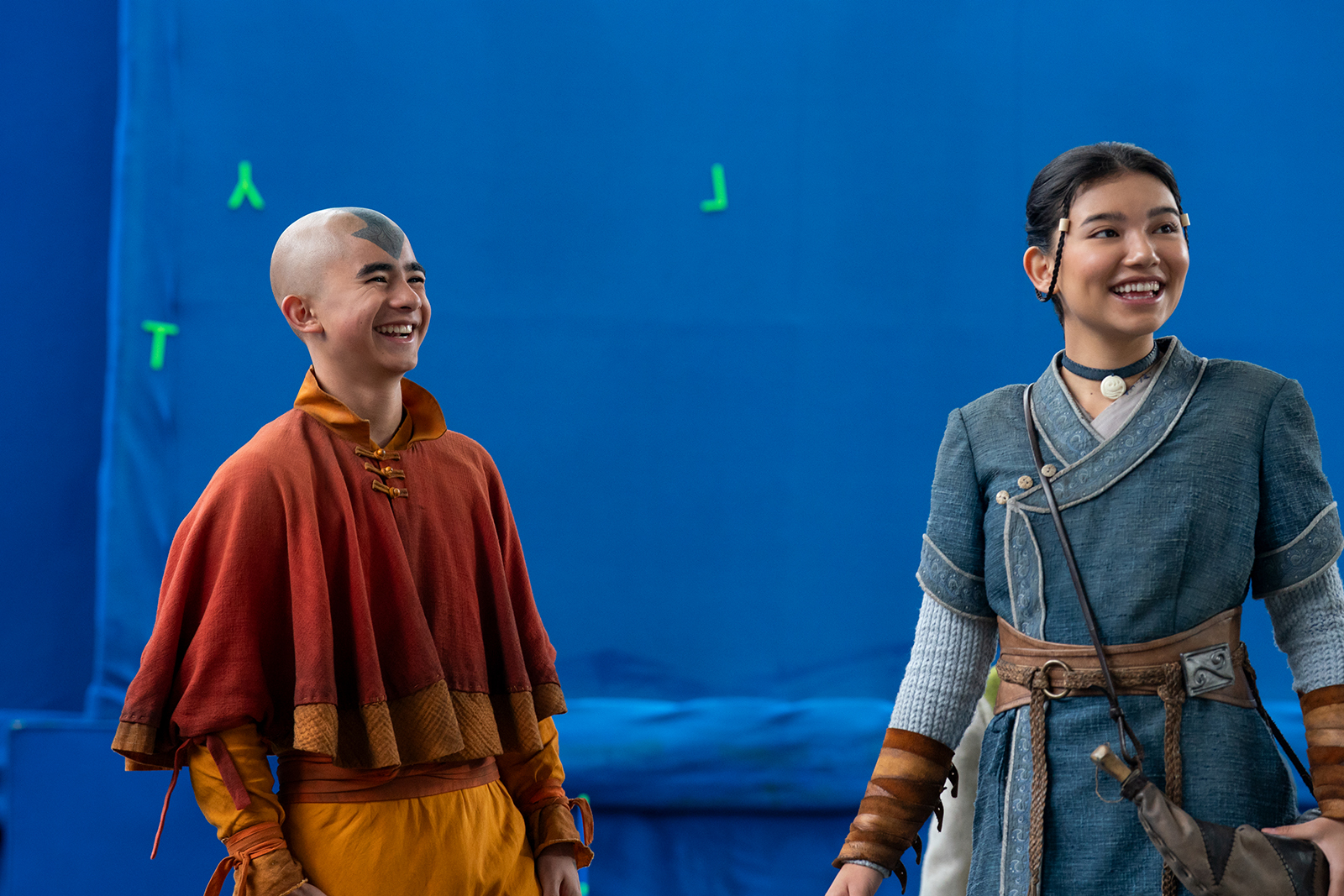
Avatar: The Last Airbender. (L to R) Gordon Cormier as Aang, Kiawentiio Tarbell as Katara behind-the-scenes of Avatar: The Last Airbender season 2. Cr. Katie Yu/Netflix © 2026
Given the scope of the show, how large is the crew?
It was probably the biggest crew I’ve ever had. I think there were about, including people who came in to dress background on day calls, that type of thing, probably 75 to 80 people. It was a massive crew. I remember somebody in accounting told me at one point, “Yeah, no, we’ve gone over a thousand people on the crew now.” And then it was 1,200 all of a sudden.
But that for me also was a great gift because I look back on projects I’ve done in the past and I scratch my head and try and figure out how I actually did it because we’d have a skeleton crew of me and maybe five other people. You still had to do dyeing and mending and a certain amount of building. None of that could be done in-house on those kinds of shows.
We had a large office. I went from my office with my immediate support people and then down to the ageing and dyeing room. So many of the people on this crew were actually fans of the show. They were 11 when the first anime came out, and now they’re in their 30s. They were stoked to be on the show.
And then next door, there’s the specialty builds. We farmed out certain kinds of mould-making, but anything in leather, this group in the build department did. And then the sewing room, we had between six and 12 cutters going with many sewers as well.
You had an army.
It was an army. My thing is, I just went between all of these. That would be my day. I’d just walk through the whole place and check to make sure everybody was feeling on track and encourage them and compliment their beautiful work because they were all artists. Working with makers is really, really a great thing.
It’s also nice to do fittings with these people because a lot of the time they’ll do things, but they don’t actually participate in the fitting. But I always brought the people who cut the garments or the ones who built the armour or whatever. They always came into the fittings so they could actually see the reaction of the actors live.
What were some of the memorable moments of building character in those fittings with actors, especially since you do get to introduce new ones with season two?
I welcome people’s input as well, especially if they know and understand the storyline. If I have time, specifically with leads who stay, I’ll send them sketches and discuss the character. That’s often when I get input about what they feel they might want.
You find your character. On so many shows like that, period shows and fantasy shows, the costume actually brings the character’s essence into the fitting room and into the actor’s sort of conscience.
I remember Julie Andrews telling me years and years ago, the character that I did with her, that she always started with the feet, like the boots. And so, when she did Mary Poppins, she put the boots on and then her feet immediately went into first position in ballet. And that’s one of the things that, I don’t know if you ever noticed or saw that, but she’s always standing there with her feet so displayed like they are, and that happened in her first fitting. A lot of things happen in fittings.
Where do you usually begin with costume designing?
Everything starts with fabric and a build experience where you’re basically creating from scratch. The first thing I do on any kind of show that I get engaged in is start sourcing fabrics because just the drape of the fabric, the weave, the texture, all these things sort of inform me as to what garment I can build. I’ll have a character in mind, and then I’ll start looking for specific types of fabrics. In the old days, I would do all the fabric sourcing myself, but on a show like this, I had multiple people helping me as well.
Did you build a lot of costumes?
On this show, I initially planned on renting. I wanted to rent at least for the background, and we looked all over the world and we couldn’t find Asian medieval costumes available in any rental house, so we just ended up making all of it. Some of it was reworked. Some of the distant background people were things that existed that were manufactured, maybe in China, for instance. And then when we got it, we’d dye it, we’d add to it, we’d take away from it. We’d just make it our own.
I have to really hand it to my background people. There were three principal ones. I largely handed that to them because there were literally thousands of people, so they did an amazing job.
You began your career in fashion, but you studied art in school too, right?
I studied translation as a major and art history as a minor. I was not a costume designer. This was not my original direction.
What was the original direction?
Translation. I did German and French, and then I found out, much to my chagrin along the line, that translation isn’t a particularly creative field. I loved it for communication and for living in different places, but it wasn’t for me.
With the art history minor and also your background in fashion, how do you think that shapes how you are as a costume designer when you work on Avatar: The Last Airbender?
I also learned here because I didn’t know much about the Tang and Qing dynasties. But if you look at the templates for these societies, one of them had closures up the middle, the other one had a closure across and down, and I couldn’t do that with every single character.
I had to bring in what I would consider to be my fashion history brain. Because it was a fantasy, I would add elements into it that I thought would distinguish the character, first of all, individualise them, and respect to a certain point what sort of timeframe they were supposed to be relating to.
But I remember talking to Michael Wylie, our production designer, and I said, “I’m kind of finding it a bit repetitive. I wonder if I could just step outside the line a little bit.” And he said, “People are firing fire from their hands, for God’s sakes. I think you can do pretty much whatever you want.”
Basically, it was my favourite scenario. I did what I felt should be done. Once in a blue moon, they would have a little suggestion to tweak something, and they were always right. So, it was really a glorious experience all in all.
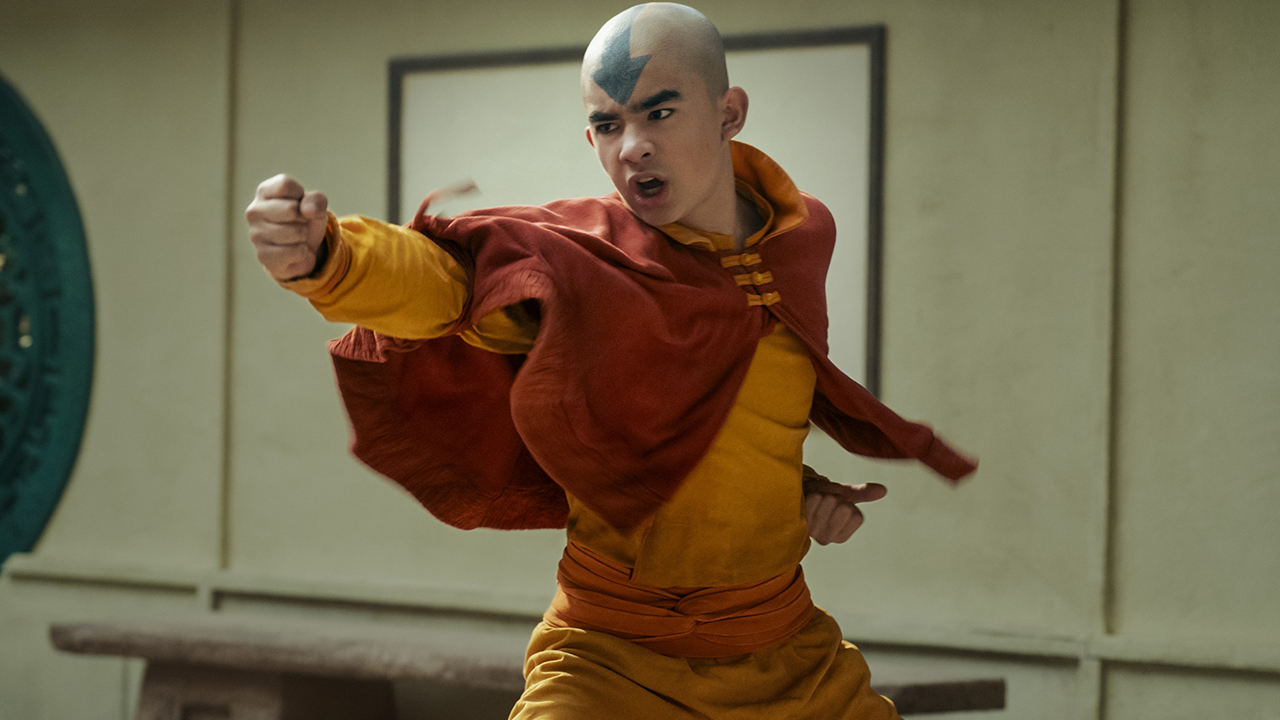
Avatar: The Last Airbender. Gordon Cormier as Aang in season 2 of Avatar: The Last Airbender. Cr. Katie Yu/Netflix © 2026
What were some costumes where you were immediately like, “I’m going to really lean into the fantasy element here”?
When I came on board, there’s a scene where Azula is in the Fire meeting room with her dad, Ozai, and she thinks she’s going to be awarded because she’s gone and trashed this town. She thinks she’s going to be awarded the super general position. It’s then given to someone else. Off the page, you could just feel the seething anger.
This costume, and it was the first thing I actually presented, I said, “I’d really love to do a costume where when she walks, flames are flying out of her back.” And so, that ended up being a journey of discovery as to what kind of fabric would actually react. Even fine silk chiffons, it would stick together or they’d flop like that, but they wouldn’t actually go out like that.
And finally, we found something called onion skin, and it was just feather, feather light. And then my beautiful department of dyeing coloured it all with orange and red and yellow and made it very flame-like.
I actually did, in her fitting, I took a bunch of videos of her just walking around with a big, huge fan, and it was, I thought, a success. And the girl who played Azula, Lizzy, she was so, first of all, really into her character because she had nails that she filed razor sharp. She kept them like that through the entire shoot for a year and a half. I said, “How do you function with those things?” She said, “Well, I’ll just work around it on my computer, my phone.”
You did fantastic work on Hannibal as well. It’s on Netflix now. I miss watching Hannibal in his suits. Is there something you really miss about costume designing for Dr. Lecter?
Well, first of all, I miss Mads Mikkelsen. He’d come out of the truck before we’d shoot all dressed with his hair done, looking like a little Christmas present. He could make anything look fantastic, so I have to give a good percentage of the credit to him.
But that show, I ran away from that show, to be honest. When I met the producers, I actually didn’t think I wanted to do it because it’s not really my thing. I’m used to dressing dancers and fantasy and that kind of stuff. The producer said, “Well, think about it.” And then she called me a week later and said, “Well, what do you think?” I realised I hadn’t even thought about it, just forgot about it.
And then she said, “Well, I wouldn’t show this show to my mom, but I think it’s a really nice group.” She was right. I thought, “What am I being such a prima donna? That is a great cast.” It was a really, really great experience as far as working with those actors, the vision from Bryan Fuller and the writers.
We got along great, but Bryan would not go forward until he was happy, including with his writing. Actors would be running to set with revisions on their way to set. He worked things and worked things until he really felt that they were 100%.
So they’ve always talked about doing a movie, which everybody’s going to be with walkers if they don’t hurry up, but…
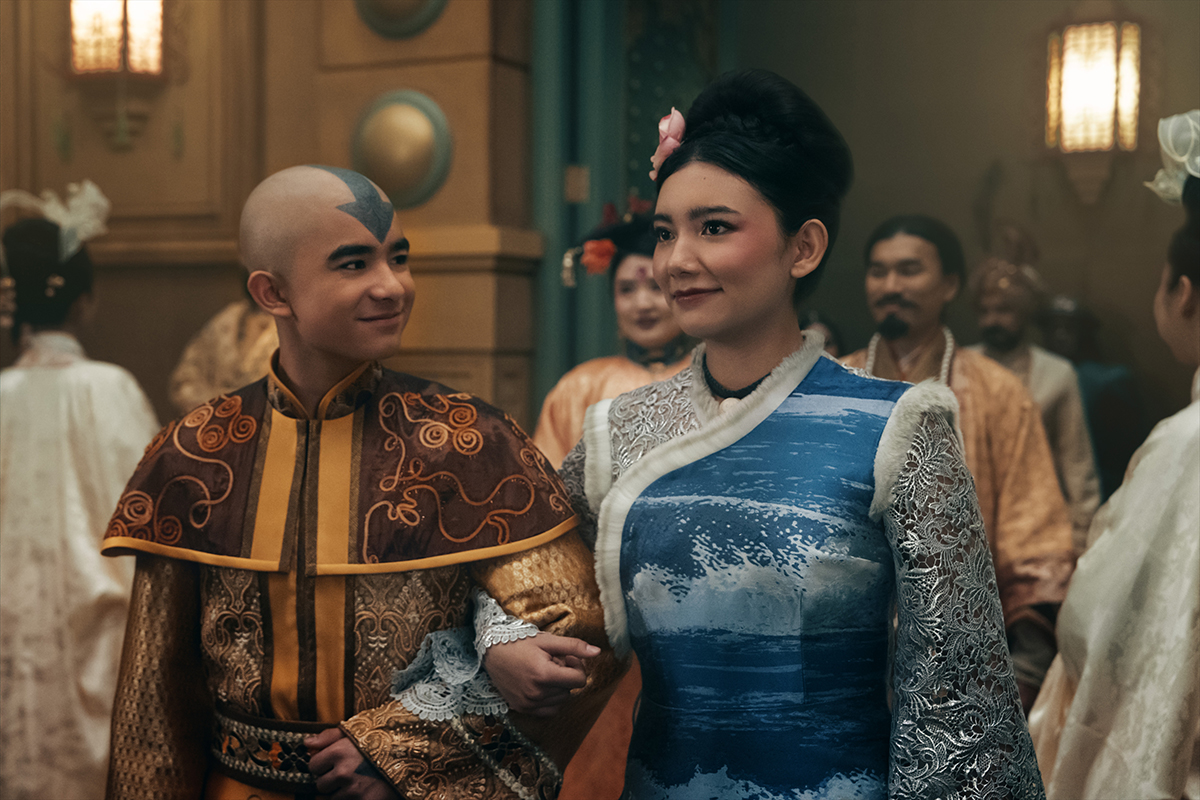
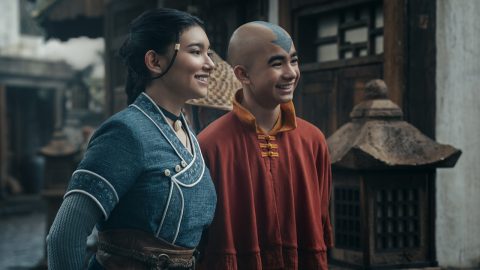
Avatar: The Last Airbender. (L to R) Gordon Cormier as Aang, Kiawentiio Tarbell as Katara in season 2 of Avatar: The Last Airbender. Cr. Katie Yu/Netflix © 2026
I’d still watch that version.
I would totally do it because it was making beautiful stuff, and that’s what I like to do. I have to also credit Bryan because I sort of thought of his Lecter… I was open to all sartorial possibilities, and he just said, “I like the plaid.” It was a great decision because that’s really what gives his signature look.
Few fanbases are as passionate and kind as fannibals. They look deeply into everything.
So, I remember my set people were standing on the set, and I went and looked, and I never did spread-collar shirts, and for some reason with that character, I just went to spread-collar shirts like that with big knots on the tie.
And then when Mads put it on, I thought, okay, this is good for him. I was on the set and my two set guys, I kept noticing the tie knots kept getting bigger and bigger and bigger. I said, “Guys, would you pull back on the size of these tie knots? They were like the size of a fist.”
Anyhow, I read an article someplace just randomly and it said, “Yeah, well, it’s clear that the tie knot is phallic and it’s a total F-you to the man.” [Laughs] It was actually not my intention, but it kind of amused me. It made me happy that people were looking at things in depth to find meaning. Sometimes there is no meaning.