Picture Credit: Getty Images / Netflix
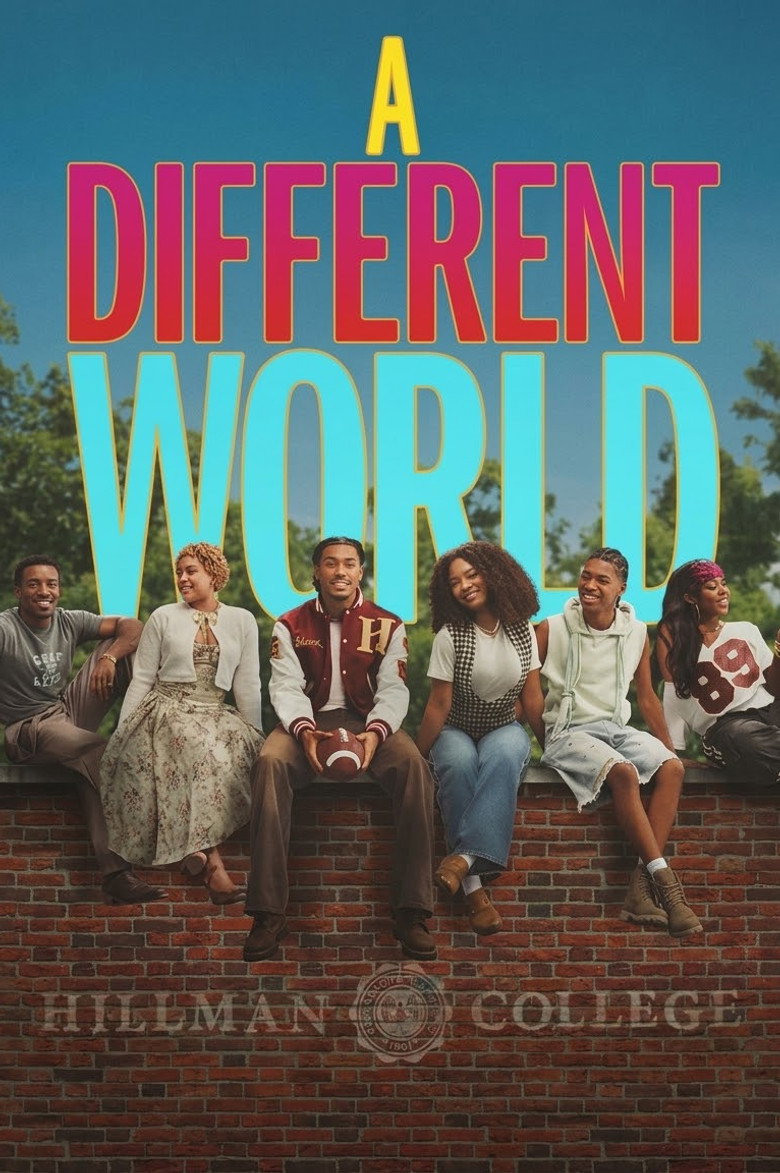
Providencia “Provi” Fulp reintroduces audiences to A Different World. With the hit Netflix reboot, now confirmed for a second season, Provi designs costumes for familiar and new characters. All under the HBCU umbrella – a world that meant something to her growing up.
“The style back then was like, wow, it was mind-blowing,” she told What’s On Netflix. “I wanted to be Whitley. Mom bought me a Tiffany’s phone, and I had that phone. I had a vintage mink and gloves. That was so big for the ’80s and ’90s. I was like, ‘There’s no way I can let that go. I don’t care if it’s 39 years later. We’re going to take that, and I’m going to evolve it, and I’m going to grow it.’”
The Emmy-nominated Provi recently walked What’s on Netflix through the costume design of A Different World.
Congratulations on the success of the show. As people are streaming it, any details you really hope they catch in the costumes?
It’s interesting, some of the things that organically got put together. For instance, Deborah’s vintage Black presidents T-shirt has Jesse Jackson listed like it’s kind of a ballot. I found that T-shirt years ago. I brought it in, and I was like, “This is kind of a cool T-shirt that’s like an archive.” And he ended up being on the first rendition of A Different World. But then when I found out, I was like, “Look at that.” It’s in the first episode, and it just happened.
But there are some intentional things: Deborah’s mink and bringing back Dwayne’s sneaker swag. The Chicago Bulls, oh my God, that goes crazy with Dwayne wearing it, and then she wears that with the Coogi shorts. It’s the exact nod, almost like she took her dad’s jersey. I was really intentional about that because that’s one of my favorite scenes from the original.
The whole through line for this, through costume design, is intention. It’s an intention for kids to want to see themselves. It’s the intention for someone to relate to somebody, visually and story-wise. It’s the whole HBCU culture, reimagining what that is, and presenting that to the new generation.
I really like what you just said about intention, so I want to follow up on that. How do you hope people see themselves in these characters and the costume design?
I think what’s really going on now is that the young people are just unafraid, and they’re bold in whatever it is they want to do. I always tell people you might not see yourself in just one character. You might see a little bit of Deborah, Rashida, Kojo, Amir, Shaquille, and even in the OGs.
I hope through the design you can see that you’ve got an LGBTQ young man who is not in a box, who’s not leading with his sexuality, but is also not afraid to be in it. And so, it’s refreshing to build what that means for a Harlem kid who comes from the streets, who’s got a criminal past, but is also dealing with his sexuality, and he’s also really smart.
You’ve got Kojo. Beyond Black Americans, what does that mean for a Black Brit African to be in the HBCU space, which is established culturally by Black Americans? And so, it’s almost like being part of the Black community, but in a different way, and seeing the layers of him trying to be a fashion designer.
Then Rashida comes in, she’s from Compton, and has a 4.6 GPA. But she’s still unafraid to have her street style, and that’s her style. She leans into some of her nerdiness. She loves comics, she loves anime, which we didn’t really touch on, but some of her costumes kind of reflect some of that.
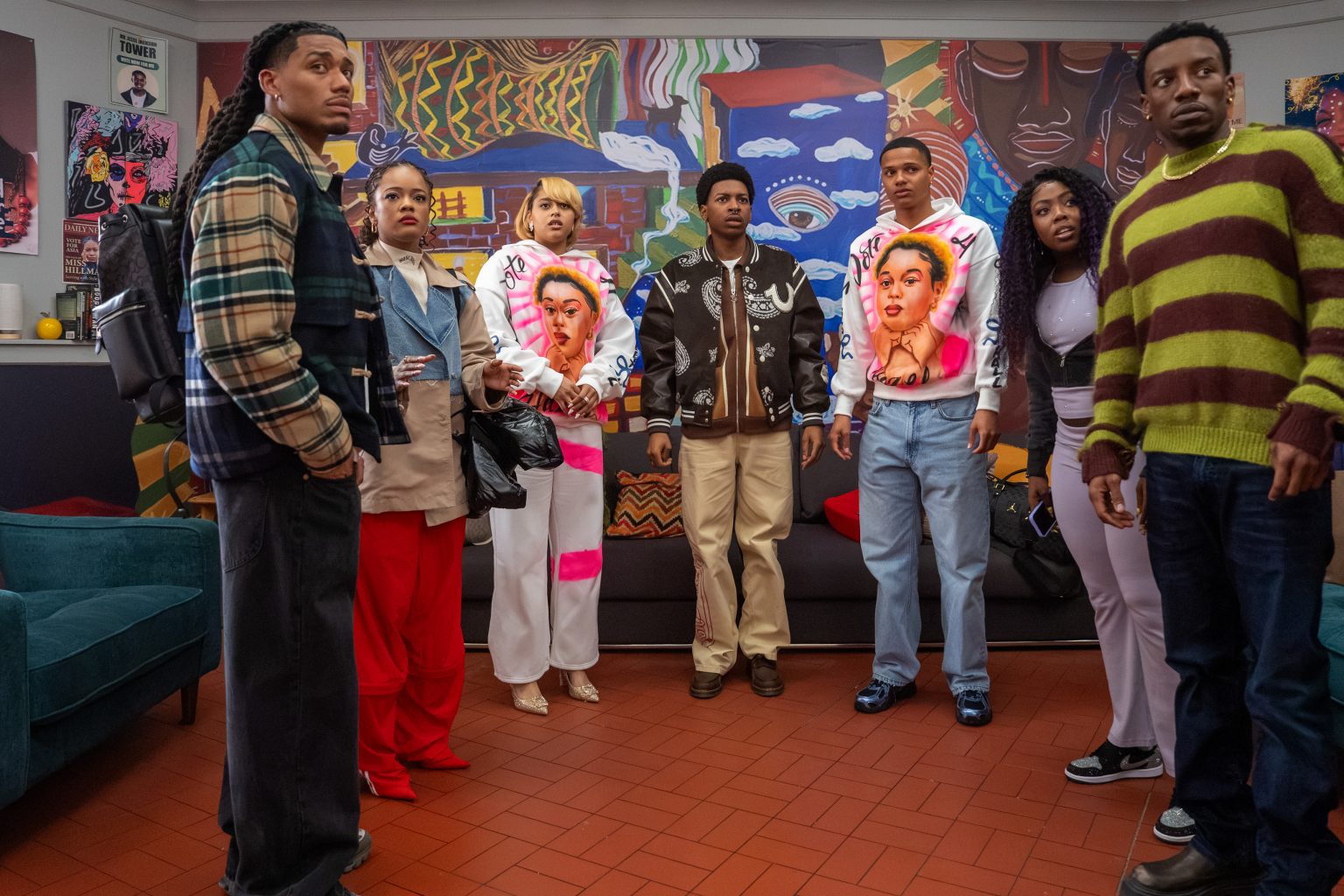
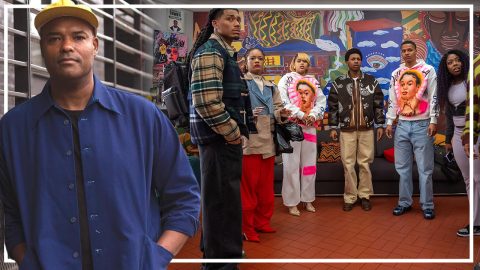
A Different World – Season 1. (L to R) Cornell Young IV as Shaquille, Maleah Joi Moon as Deborah, Kennedi Reece as Hazel, Jordan Aaron Hall as Amir, Elijah J. Roberts as Jalen, Alijah Kai as Rashida, Chibuikem Uche as Kojo in Episode 105 of a Different World. Cr. Quantrell Colbert/Netflix © 2026
What about Deborah?
Deborah, our main character, is like the perfect split between Dwayne and Whitley. But then she has her own personality. She’s all over the place, literally and figuratively. There was this one scene where she wore this Ritz-Carlton pajama set, right? It’s black. She’s sitting with her mom, who’s in a vintage mink, and they’re sitting there. So she’s in her dorm, and there was a trend going on where all these nepo European kids were going all over the world, going to all these Four Seasons or whatever, and they were collecting these pajamas and wearing them to dinner.
Really?
They were just ridiculous, but I was like, “Okay, Deborah definitely would do something like that.”
And then you’ve got Hazel.
Who’s like a church girl, right? Southern. We see it at every college, whether you’re at an HBCU or a PWI. It’s the churchy, real conservative girl who’s a pastor’s kid, comes in very demure, and then they’re like wilding out at some point. She didn’t get to the really sexy, “Oh, I’m wearing short shorts and a halter top,” but you see her kind of transition into what that means as far as finding herself. And then she becomes like, “Okay, well, pageantry is still Southern, it’s still safe, but it’s allowing me to come out of myself and bring some confidence.”
For the young cast, it’s freshman year, right? At an HBCU, homecoming is a big deal. I went to Clark Atlanta for quite a bit of time and transferred out, but I was a cheerleader. And so, all of that HBCU-ism was there. There was this certain energy that we had to hit the mark for, from sketch to screen. So it was really, really important.
Drawing from your own college experiences, whether it’s the sweaters, the T-shirts, the swag, what makes an authentic college look?
For an HBCU specifically, there’s a lot of pride in going to an HBCU. It’s interesting because if you’re a Rattler, you’re from FAMU, and there’s “Strike, strike, strike again.” There are little things, right? If you’re Morehouse, it’s the House. If you’re a Spelman, you wish you were a Spelman girl. So it’s almost like little sororities and fraternities in and of themselves.
And Hillman was the epitome of the standard of excellence for HBCUs. It’s what made people want to go there.
If you’re going to do majorettes, when I was designing their costumes, they had to have the most elaborate costumes. Unfortunately, HBCUs don’t have that PWI money. You don’t get the cool Auburn or Georgia Tech or Georgia jerseys. They kind of get what they can afford.
I was like, “This is Hillman. We’re going to do top-level jerseys.” All right, the band, all of those things are done with intent. With the swag, Hillman stands on its own.
Everything, even if it was just a T-shirt, I wanted it to be something that somebody wanted, that was like brand recognition. I think I accomplished that because the DMs are flooded with, “When are you guys dropping the merch?”
So that was a whole process, and we did that in-house. I came up with every single concept, every color palette, the shape, the idea. Even if it was the glee club, our skaters, everybody, our fictional fraternities and sororities, that was all conceptualized in-house.
We had a printing press in-house. We pressed everything in-house. Everything was jeweled in-house. Everything was cut in-house. So everything was done from scratch.
When you’re creating something from scratch, when you get these actors in costume, what are you looking for?
I’m looking for emotion. I’m looking for the story before they even open their mouths. I’m looking at it as an audience member and also as an artist or storyteller. To see the emotion and the storytelling through the costumes, and to see the audience flood my threads on social media and say, “Oh my God, we noticed this. Oh my God, this is great.” And then the OGs, imagining 39 years later in that evolution.
It is such a different job and poses a question for a costume designer: Years later, how much does someone actually change in how they present themselves? What stays, what goes with the OGs?
Typically, I’ll have conversations with talent, like say, “Hey, you’re now a professor at Hillman. Let’s talk about how that is still Freddie Brooks, hippie Freddie, but in a professional position, right?”
And then the same with Whitley. It’s just, “I don’t want to wear those Chanel suits that I used to wear back in the day. I hate them.” And okay, that’s fine. We’ll do the brooch. We’ll do less fabric. How can we evolve and still be tailored? We could do a beautiful gown, right, which she wore for the gala. She looked amazing.
That was such a big point for me because what would Whitley Gilbert wear to the homecoming gala, which is huge for an HBCU? Oh, she’s going to look stunning. She should look stunning. This is a moment for her and Dwayne.
And so, all those are conversations between myself, Debbie Allen, Felicia, whatever director is on the episode, and talent. It’s collaborative. I always like doing presentations. “I think X. What about this? What about this?” And Felicia and Debbie are really great about allowing me in that creative space. And so, it’s a partnership.
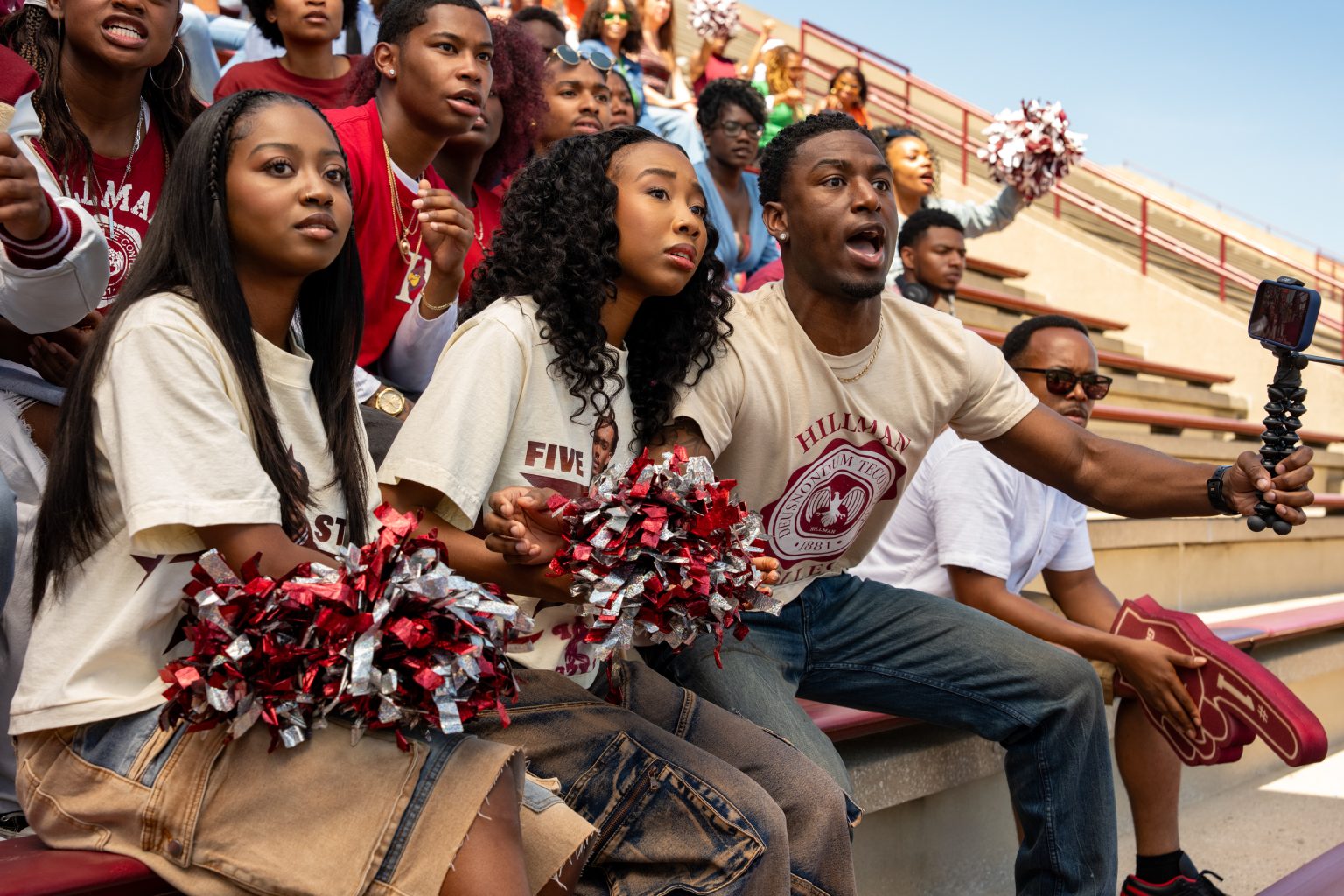
A Different World – Season 1. (L to R) Dasan Frazier as Xavier in Episode 102 of a Different World. Cr. Daniel Delgado Jr/Netflix © 2026
Where was that eye for character shaped? What were some early inspirations or jobs that really informed how you build a character?
I was a nosy kid, first of all.
Both of my parents went to HBCUs. My mom went to Fayetteville State University, and she’s a member of Alpha Kappa Alpha Sorority, Incorporated, which is what the sorority is mirrored after, I think, for A Different World. And my dad is an Omega. He also went to an HBCU.
I had that experience as a kid. My mom had all four of us, and then she decided to go back to school. She chose an HBCU, so at eight years old, I was at her band practice. I was in her classroom. I would come with her to class. She didn’t have a babysitter. I got exposed to HBCU culture very early as a kid.
And then I’m a military kid. I grew up in Germany until I was seven. German was my second language, and then I moved to the United States. My dad ended up crossing Omega Psi Phi. My brother was at FAMU, which is another HBCU in Florida. Going back to homecoming, even as I got older, I would go with my mom to her homecoming in North Carolina.
And then I went to Clark Atlanta. It’s always just been that energy, that culture. You can’t explain it. It’s like a feeling. There’s a look, there’s a taste, there’s a feel.
And when you watch Hillman, when you watch A Different World, I need for people to feel they go there, right? And so all that information is just world travels. I just was always interested in culture and people, the psychology of people and why and how. And so, who knew that I was being trained to be a costume designer? It just kind of ended up being my track.
Even today, how often are you – or even A Different World – inspired by what you see when you’re out in the world?
All the time. People are constantly characters in my mind. I don’t even know it. Characters.
There’s a character named Candace who’s the RA. I grew up in a really preppy neighborhood at one point in Florida. That look of a Southern prep: Lilly Pulitzer, the monograms, Lululemon and her Stanley cup, right? To imagine that for a Black American girl, which does exist, but we don’t see on TV. I was like, “Let’s make Candace her.”
And then I talked to Felicia. She was a volleyball player. I thought she should be a golfer. She should golf because women of color right now – I’m a golfer currently, and I see young women coming from college golfing all the time. Why wouldn’t that be our story? I’m on the range, I see three young Black college women with their Georgia State bags and their golf clubs, and I’m absolutely sure Candace should be a golfer. Showing the multifaceted layers of our community in so many ways is just so fun to do.
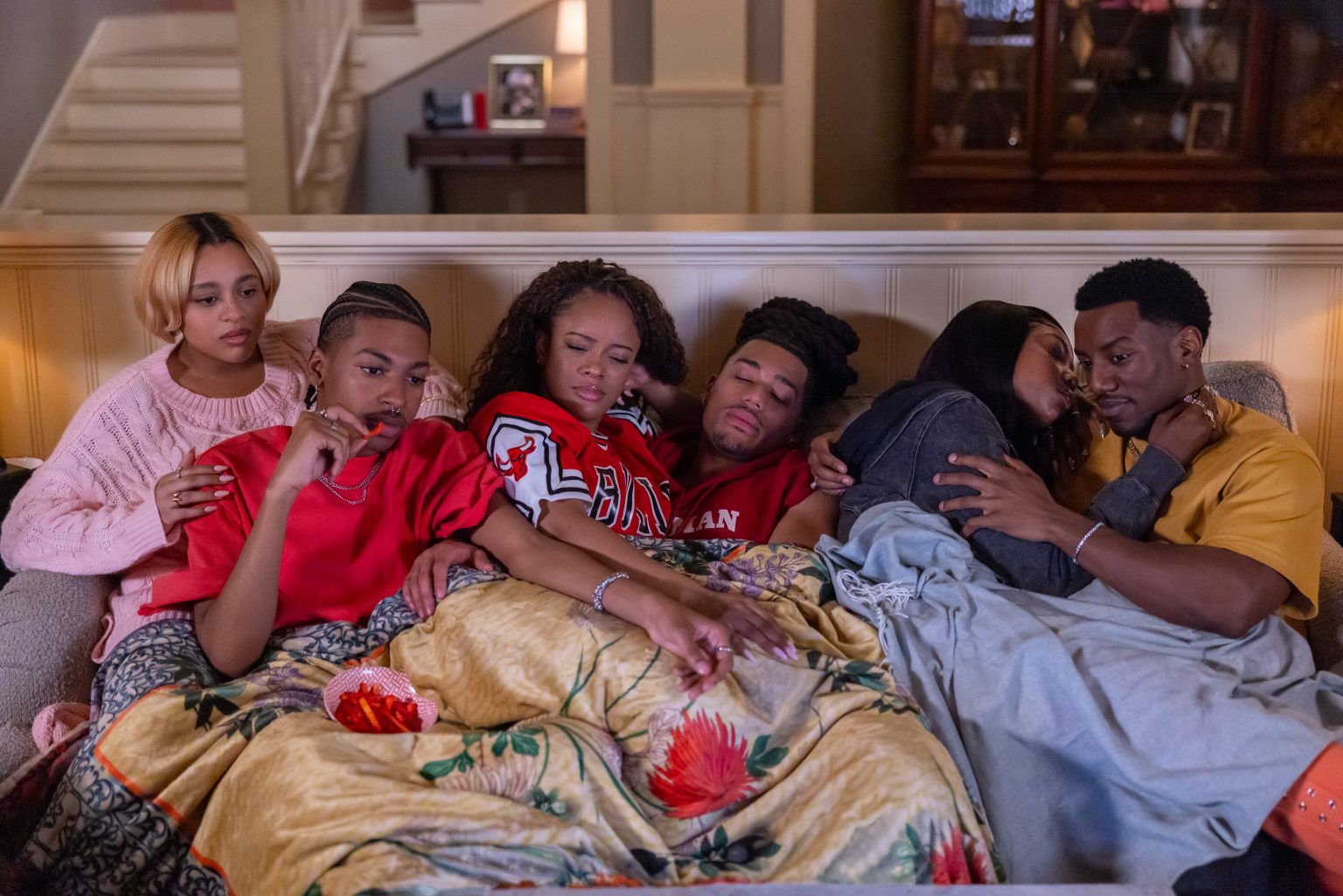
A Different World – Season 1. (L to R) Kennedi Reece as Hazel, Jordan Aaron Hall as Amir, Maleah Joi Moon as Deborah, Cornell Young IV as Shaquille, Alijah Kai as Rashida, Chibuikem Uche as Kojo in Episode 107 of a Different World. Cr. ELI ADE/Netflix © 2026
Season two has been announced, so are you already looking ahead for these characters?
Sophomore year is going to be crazy. There’s no limit on what we can do because the world has been established. We’re growing. You could change in a semester. You can change over the summer, depending on what was going on.
I could interview you for season two, and who knows, you’re completely goth by then.
[Laughs] Rashida could totally be goth. Deborah could have a spiritual revolution and become like this. Anybody. Hazel could have a phase and be coming in with booty shorts. Who knows? Or the opposite: she finds Jesus, and she’s back to dresses down to the ground.
Shaquille could be like, “I’m a star, and every day I’m wearing a suit to school.” Kojo could literally be on the runway in Paris and come in like, “Hey guys, I know you thought I was just a student, but I’m also a very famous fashion designer.”
So many things. Amir could come in and be like, “Hey, I was masc-presenting, but this year I might just lean into my feminine. What’s up? What are you going to do about it?”