Picture Credit: Getty Images/ Netflix
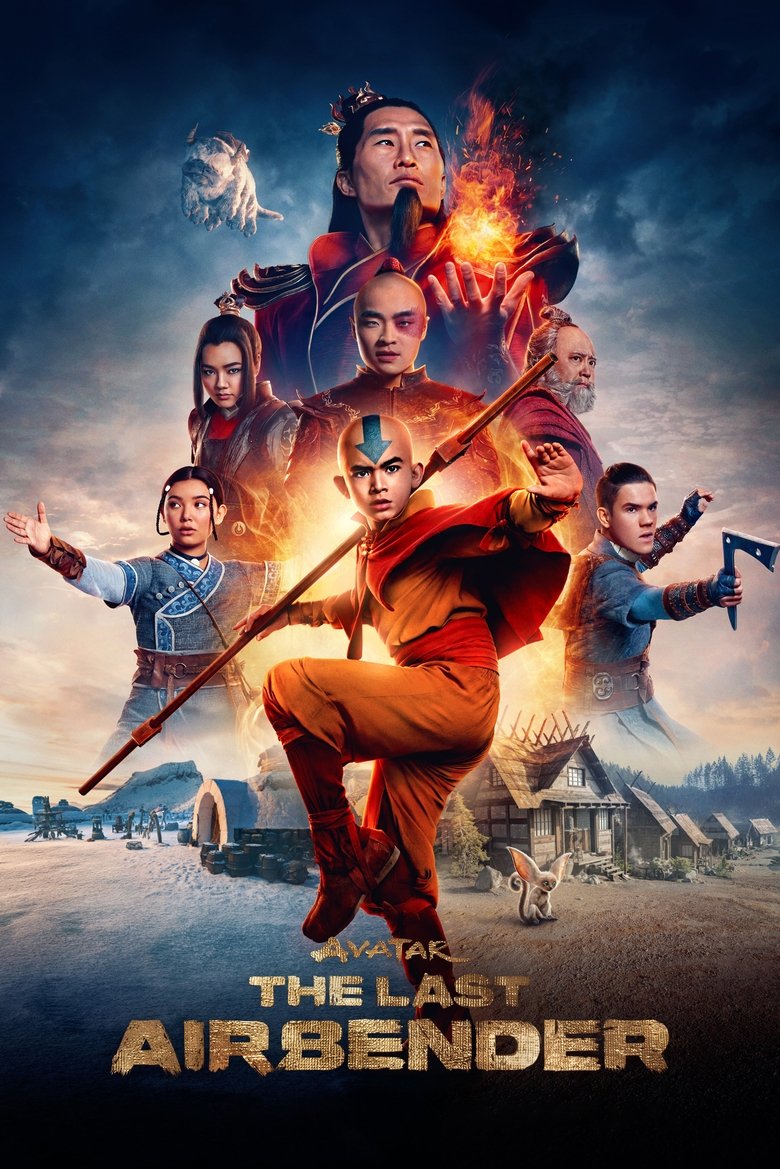
Similar to Avatar Aang in Avatar: The Last Airbender, Takeshi Furukawa expanded his skill set with each season. As Aang, Katara, and Sokka reassemble, travel to the Earth Kingdom, find a new teacher in the blind warrior Toph Beifong, and persuade the elusive Earth King to help them fight the terrifying Fire Lord Ozai, the show’s composer came up with more than “six hours of music” for Season 2.
In our conversation, Furukawa discusses the creative challenges and cultural considerations in expanding the show’s sonic landscape. He addresses the interplay between being inspired by Central Asia and utilizing the original score from the animated series’ composer, Jeremy Zuckerman. He also talks about the technical complexities of blending traditional instruments with Western orchestral arrangements, the differentiation between high court and commoner music for various settings, and the respectful representation of cultural influences without appropriation.
When Season 2 was getting started, what challenges did you find awaited you?
I think, first of all, before the challenges, it’s a lot of excitement. I think for any composer, starting something in Season One and then getting to continue it or starting a new IP and then doing a sequel so that you could build upon your themes, I think it’s a privilege, and it’s an honor, and it’s a great thing. That could also simultaneously be the challenge, though, because we want to elevate. We want to expand and raise the bar.
How did you find giving the Earth Kingdom its own rhythm and contrast to everything in Season One with the Southern Water Tribe?
So we inherit, I guess, the MO of the world of Avatar having this pan-Asian cultural influence both in the world-building and the music as well. For the Earth Kingdom, we looked to Central Asia, and it was really an exciting opportunity for me and my music team because I think places like China, Japan, and Korea, we’ve seen and heard a lot of that in Hollywood productions already, not to take anything away from them. But Central Asia—Afghanistan, Kazakhstan—I think they are a little bit less represented, but it’s such a rich cultural history, and this very exotic sound, which is a blend of Eastern Asia, and that’s where the Silk Road all converged. So it was very, I wouldn’t say easy, but the answer was obvious. We’re like, okay, let’s look to that geographical region for inspiration. And actually, I backtrack.
I think another challenge, though, was for us to be able to be respectful in our representation of the culture and music because we don’t want to appropriate. We don’t want to go and just be half-baked in borrowing from their culture. I’m not sure if borrowing is even the right word, but you get what I mean. So I think we just have to be very, very attentive to that as well. But that’s how we built the sound of the Earth, even.

Avatar: The Last Airbender. Gordon Cormier as Aang in season 2 of Avatar: The Last Airbender. Cr. Katie Yu/Netflix © 2026
When it comes to differentiating an orchestra and having one set of instruments, how do you go about picking the right moment or picking the right kind of sound for each moment of the season?
Sometimes it’s based on characters and themes. So Toph would have an instrument, a signature instrument, which is representative of her, and it becomes an obvious choice. When we want to play the Toph theme, then we would gravitate towards that color. And then we have these, I like to call them “spectacle moments,” where the music really opens up and you have these wide shots, which are, I think, one of the hallmarks of a show like this where everyone just goes, “Wow.” That’s when you want to blend that cultural sound with the orchestra.
That’s how we pick and choose our moments. There is a challenge, though, I have to say, when we start blending these traditional instruments with the Western orchestra. Sometimes the musical construct and the physics of the music are very different, from tuning to even the way they think about the music. Maybe it’s not necessarily melodic and harmonic. It’s maybe just based on a riff that just stacks. And the concept of harmony is just simultaneous occurrences in different lines just becoming harmony. So I guess I don’t want to get too technical, but the way Western music and these traditional musicians are and the way they think about it is sometimes very different. So there are some challenges like that where you’re trying to fit a square and a circle together to make it all harmonious, but it’s all fun.
Speaking of Toph, tell me about how you went about exploring her sound. Which signature instrument did you ultimately select, and was there any experimentation you conducted prior to discovering her theme?
Yeah, so I think the audience will quickly pick up that her signature instrument is one called the pipa. It is actually a Chinese instrument, so it’s more China, in this case, but it’s a Chinese plucked zither. However, its origins lie much further west. It originated from the Silk Road, one of the lutes and the zithers from that region, which came into China and then became the pipa. So I guess Asian culture, because it’s one continent, is all kind of like this big blending pot, but we used the pipa. It was great because it’s very agile and it’s very small. I don’t mean small in the sense to take away from it, but Toph is this tiny girl. And then it’s actually one of my favorite cues on the soundtrack. We have the pipa carrying her riff and then we backed it with this massive taiko section, which is representative of this volumetric earth that she moves. I hope the fans enjoy it.

Avatar: The Last Airbender. (L to R) Elizabeth Yu as Azula, Gordon Cormier as Aang in season 2 of Avatar: The Last Airbender. Cr. Katie Yu/Netflix © 2026
Tell me about exploring the elegance in the Earth Kingdom with the Beifong family and then the Ba Sing Se parties. There’s a little bit of diegetic music played onscreen during one of the party scenes. It just also has such a beautiful sophistication that goes with the different type of class that comes with the Earth Kingdom, at least with those people.
So those are actually the details that we pay attention to. When we go to these traditional musical influences, as you very astutely pointed out, there’s what we call peasant music or commoner music, as we like to call it in Japanese music, and there’s high court music. I think that kind of distinction exists in any place where there was a royal court. And so the Ba Sing Se party, yes, we made sure that what we hear diegetically in the party is very, very representative of high society music.
And how we went about it is I would compose the music first, and then, well, there would be a discussion before we actually shoot. We’re actually doing that for Season 3 as well, where in a scene there’s diegetic music, which is necessary, and all the questions are asked, “Okay, so what’s going on? Is this a high society thing? Is this more of a brawly bar fight thing? What’s going on?” And then I would pick the right instruments, make it appropriate for the setting, and then write it, and they would shoot it on the set with that. Sometimes it’s playing, sometimes it’s not. They would listen to it; they know what’s going on, and then we just rerecord it because when I’m writing it, we just use modern technology.
It’s a horrible sampled synth, and then we get the real-deal musicians to come in and rerecord it. And oftentimes I would write the core construct of the music, but there are these inflections and ornamentations, which are so in the blood of these musicians who originate from these areas where they would sometimes change it up, and then it just comes to life when they do that.
So when it comes to the style of the comedy within the show, how do you find some moments to let the music go along with the comedic beats as opposed to just letting it drown out to no sound behind it at all?
I think we generally gravitate towards the latter because the acting just carries the scene, and then we would pick our moments where it’s like, okay, well, let’s help this scene. Help isn’t the right word. Let’s underscore this scene with a little bit of comedy. But more often than not, I would first try a pass of lighthearted levity music, and if it’s at a level five, then we would very quickly realize, no, we don’t need to go that high. Let’s turn down the voltage a bit. And we would ultimately land at maybe a three because, again, it’s all on-screen—the chemistry between the actors, their acting chops—they’re great. So the music does not need to say much.
So when it came to Azula, we had a lot more of her this season. Can you tell me about finding her specific path and her viciousness in her themes?
The theme for Azula is one of the few select themes that we have permission to use from the original OG animated series because it’s just so iconic, and the audience loves it. Azula, I love her character, and I love the sound that the original composer Jeremy Zuckerman built for her. So we very respectfully received stewardship of that theme, and we use it. I think for me, I don’t want to mess with it too much. It’s like a nice Porsche. It’s great. You just don’t mess with perfection. So we use it very, very judiciously on the appropriate scenes. And what I usually do with that theme is, for me, my touch is to bring in the orchestra, the surrounding bigness, because her theme is that percolating gamelan that just keeps on swirling over and over again. It’s almost like her vicious mind is just kicking, but I try to bring the orchestra behind it to make it just a bit bigger in scope because we’re in a live-action scene.
But I’d like to say, stay tuned, because I think whatever emotional journey arc Azula is on right now in Season 2, it continues into Season 3, and it’s fascinating. The audience will be in for a treat with her.
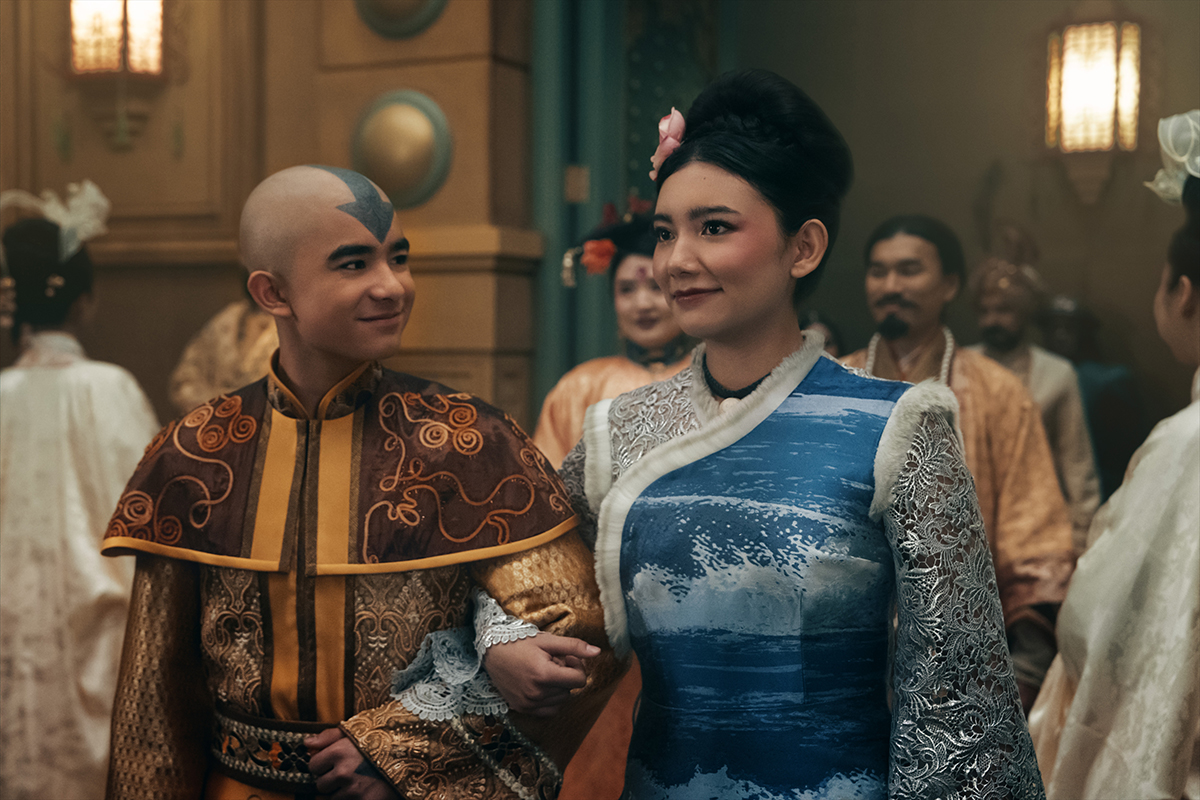
Avatar: The Last Airbender. (L to R) Gordon Cormier as Aang, Kiawentiio Tarbell as Katara in season 2 of Avatar: The Last Airbender. Cr. Katie Yu/Netflix © 2026
What’s the session like in person with your team? How long is the entire process when it comes to this season as opposed to the first season? How long do your sessions usually go?
For something like this, or actually any music genre, it’s actually a team effort. I always feel guilty because the composer often gets the spotlight, but we cannot do it alone. It takes a massive village and a massive team. In my case, we have my orchestrators, we have the engineers, and we have the musicians. This music would only live in my head or on the computer without the very talented musicians. I think we had probably a hundred-plus musicians at the end of the day, everyone from orchestra to choir to all the soloists. So it really does take a village. For Season 2, we had a little bit over six hours of music, I think, so it’s a lot. It’s a lot of music.
So I’m very lucky that Netflix is very supportive, and they afford us the orchestra at Vienna Synchron. It’s one of the finest recording destinations in the world, with the finest players in the world, Vienna, City of Music. We go there. At the end of the day, I think we have about two weeks’ worth of session time between the orchestra and the choir, and we do them in sprints. So maybe I would write two or three episodes, just get that in the bag, get them all signed off, then we would go to Vienna and record them, and we would record the soloists, and we would just try to chip away at it a little at a time because, again, doing six hours of music in a year, it’s a lot of music. And I think I would even hazard to say some classical composers in the classical lexicon, I don’t think they even wrote six hours of music in their whole opus collection.
So I guess that’s our way of saying modern film composers—and it’s not just me, by the way; I’m not trying to flex myself, but we write a lot of music.