Picture Credit: IMDb / Girl Climber Doc
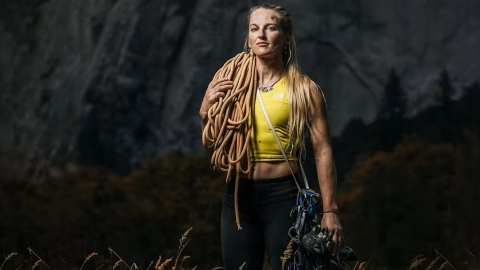
Making its highly anticipated SVOD debut on Netflix this week (dropping in the US and UK on September 16th!), Girl Climber follows elite mountaineer and five-time US National Champion Emily Harrington as she attempts a career-defining, 24-hour free climb of Yosemite’s legendary El Capitan. After a VOD run on Jolt Film earlier this year, the hit independent documentary is finally ready to reach a massive global audience.
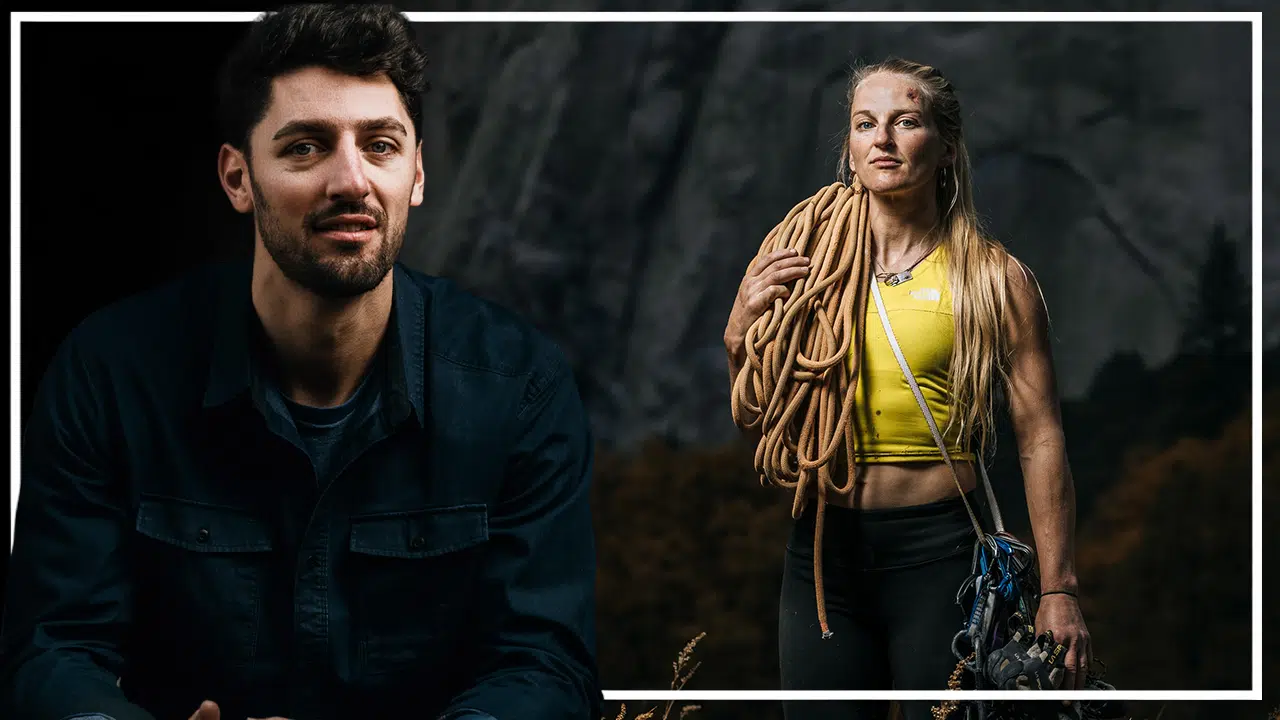
To celebrate the film’s arrival on Netflix, we’re bringing you a special two-part feature. For Part 1, we sat down with Jon Glassberg—who not only directed and produced the film, but physically scaled the wall to shoot it himself. We talked about the terrifying logistics of filming on a sheer cliff edge, the ethics of capturing harrowing falls, and what it means to bring this incredible story to Netflix.
Here’s what he had to say.
What’s on Netflix: Jon, you directed, produced, and shot this film. What are the unique logistical nightmares of trying to balance narrative storytelling and directing while literally hanging off the side of one of the world’s most daunting rock formations?
Jon Glassberg: The biggest challenge is that the filmmaking and the climbing cannot really be separated. Every creative decision is also a logistical and safety decision. You are thinking about story, performance, camera position, sound, weather, light, battery life, and whether everyone can move safely through the terrain, often while hanging thousands of feet above the ground.
As the director, I need to remain emotionally connected to Emily and understand what she is experiencing. As a cinematographer, I am also trying to anticipate where the story might happen and place myself in a position to capture it. On a wall like El Capitan, moving the camera even a relatively short distance can require a significant amount of time and physical effort. You cannot simply ask someone to repeat an authentic moment because the camera was in the wrong place. You either get the shot or you miss the shot.
The real logistical nightmare is trying to prepare for everything while accepting that the most meaningful moments will probably be the ones you cannot predict. You build the safest and most flexible system possible, then stay present enough to recognize the story when it appears.
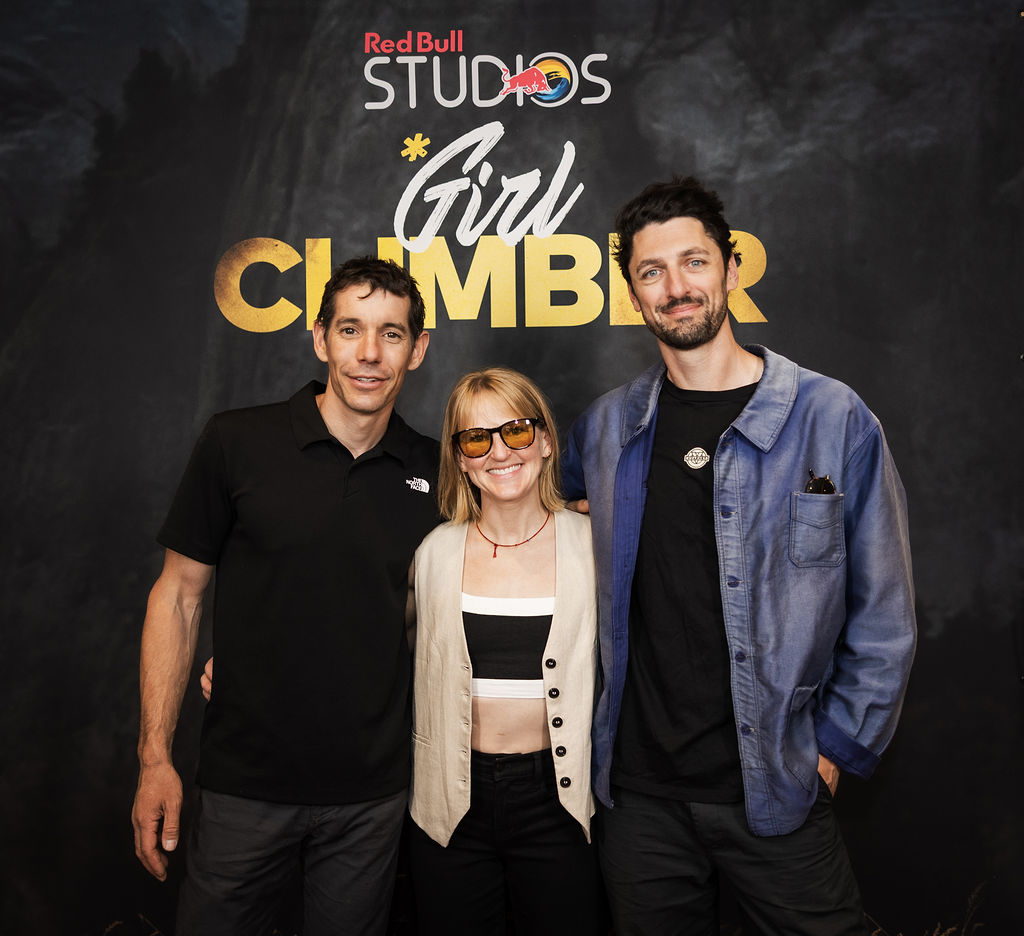
There are multiple points throughout the documentary where, quite reasonably, Emily would be able to throw her hands up and say this challenge is too tough. How did you approach your relationship with Emily? Were there any points where you thought about stepping in given the quite brutal falls? In other words, how hard is it to have the director hat on given your foot in the world of climbing?
My relationship with Emily was built on trust. I have known her for many years, and I understand that she is an incredibly experienced climber who makes her own decisions. My responsibility was never to convince her to continue or to push her toward an outcome that would make the film more dramatic. My responsibility was to create the space for her to make honest decisions and to document those decisions as truthfully as possible.
There were absolutely moments when the filmmaker in me disappeared and the climber and friend took over. When someone takes a frightening fall, your first concern is whether they are safe. The film immediately becomes secondary. At the same time, climbing has taught me that a fall can look terrifying to an audience while still occurring within a system that the climber understands and has chosen to accept.
The difficult part is knowing when to remain quiet, when to ask a question, and when to put the camera down. Emily always retained control over whether she continued. If she had decided to stop, that would have been the story. The goal was never to manufacture triumph. It was to honestly document the uncertainty, fear, determination, and cost behind whatever decision she made. But, of course I wanted her to succeed, the climber in me was like: “This is going to be so cool if she does it.”
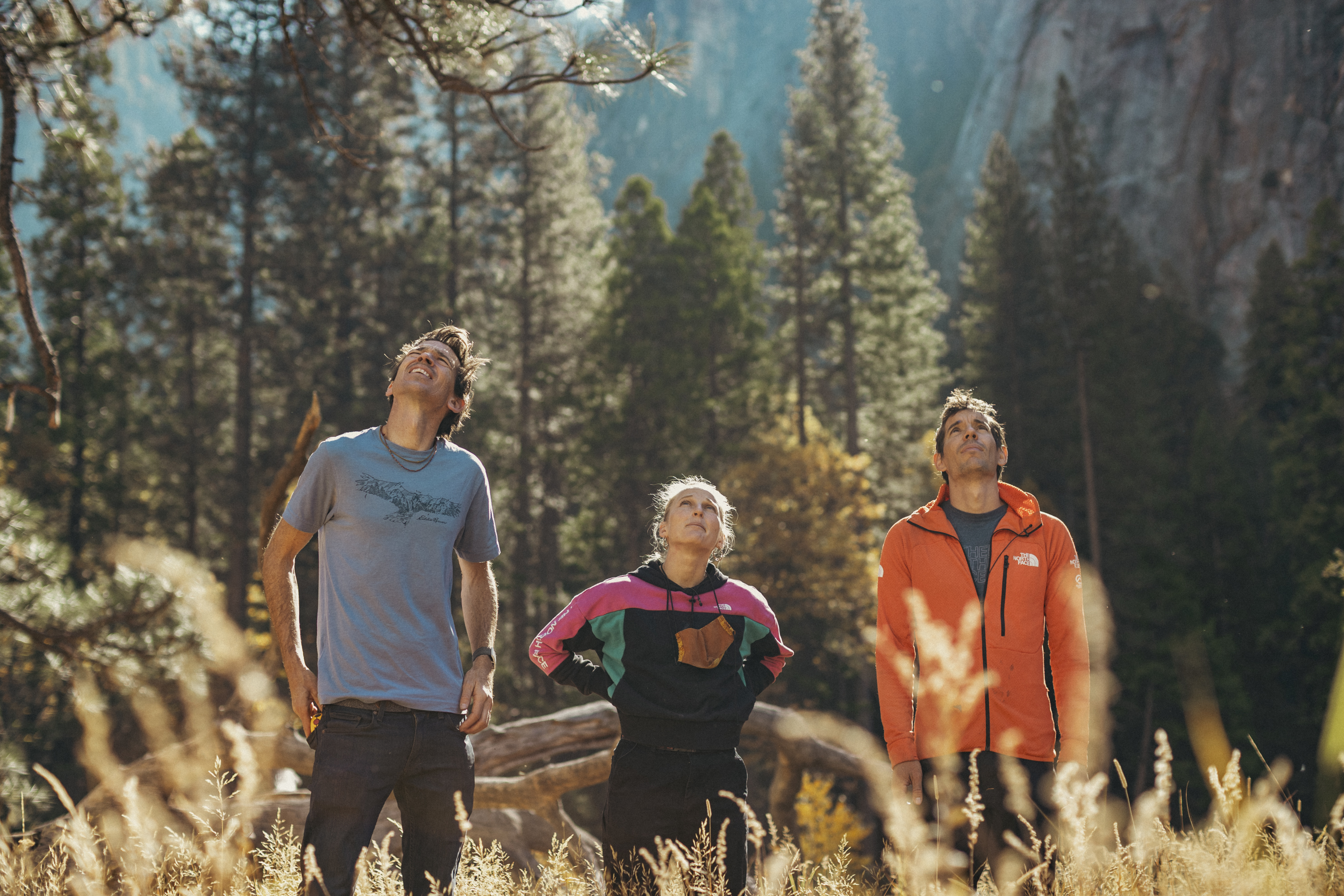
Can you walk me through some of the challenges of filming something like this? Given your climbing roots, it must add an insane level of complexity to your own climbs to be filming. What sort of equipment are you using while scaling the rockface yourself?
Filming on a big wall requires you to build a production system that can function in a place where almost nothing is convenient. Every camera, lens, battery, microphone, rope, and piece of rigging has to be carried, secured, protected, and accessible while you are suspended in a harness. Dropping something is not an option, and changing a lens can become a surprisingly complicated task.
We use compact professional camera systems that provide cinematic image quality without becoming impossible to manage on the wall. The majority of the filmmaking was done on Canon C300 and C400 cameras. Everything is attached to us or to the rope system. We also use fixed ropes, specialized climbing hardware, radios, remote cameras, and long lenses from positions on the wall and on the ground. Sound is another major challenge because of wind, distance, and the constant noise of climbing equipment.
My climbing background makes this kind of filmmaking possible, but it also adds another layer of responsibility. I have to move efficiently, manage my own safety, stay out of Emily’s way, and still think like a director and cinematographer. The physical strain is significant, but the mental load is often harder. You are constantly evaluating risk, anticipating movement, and trying to capture an intimate human story in an environment that resists almost every part of the filmmaking process.
There’s a harrowing moment in the film where you’re filming a conversation as Emily begins her ascent and she falls and you just hear a mix of crying and screaming. It’s probably one of the most harrowing 30 seconds I’ve ever seen in a documentary – what was it like revisiting that footage in the edit bay and how did you approach including it in the final cut?
That footage was extremely difficult to revisit because the fear and emotion in it are completely real. In the moment, none of us were thinking about whether we had captured a powerful scene. We were trying to understand what had happened and make sure Emily was safe.
In the edit, we had to ask whether including the moment served Emily’s story or simply exploited something painful. That distinction was very important to me. We chose to include it because it reveals the real stakes of what she was attempting. It is not only about the physical danger. It shows the emotional pressure, the accumulated fatigue, and how quickly confidence can be shaken.
We did not want to sensationalize it or manipulate the audience with unnecessary music or editorial tricks. The raw sound and the duration of the moment allow the viewer to experience some of the confusion and fear that we experienced. It is uncomfortable, but it is also honest. Without moments like that, the eventual outcome would feel incomplete because the audience would not fully understand what Emily had to move through to get there.
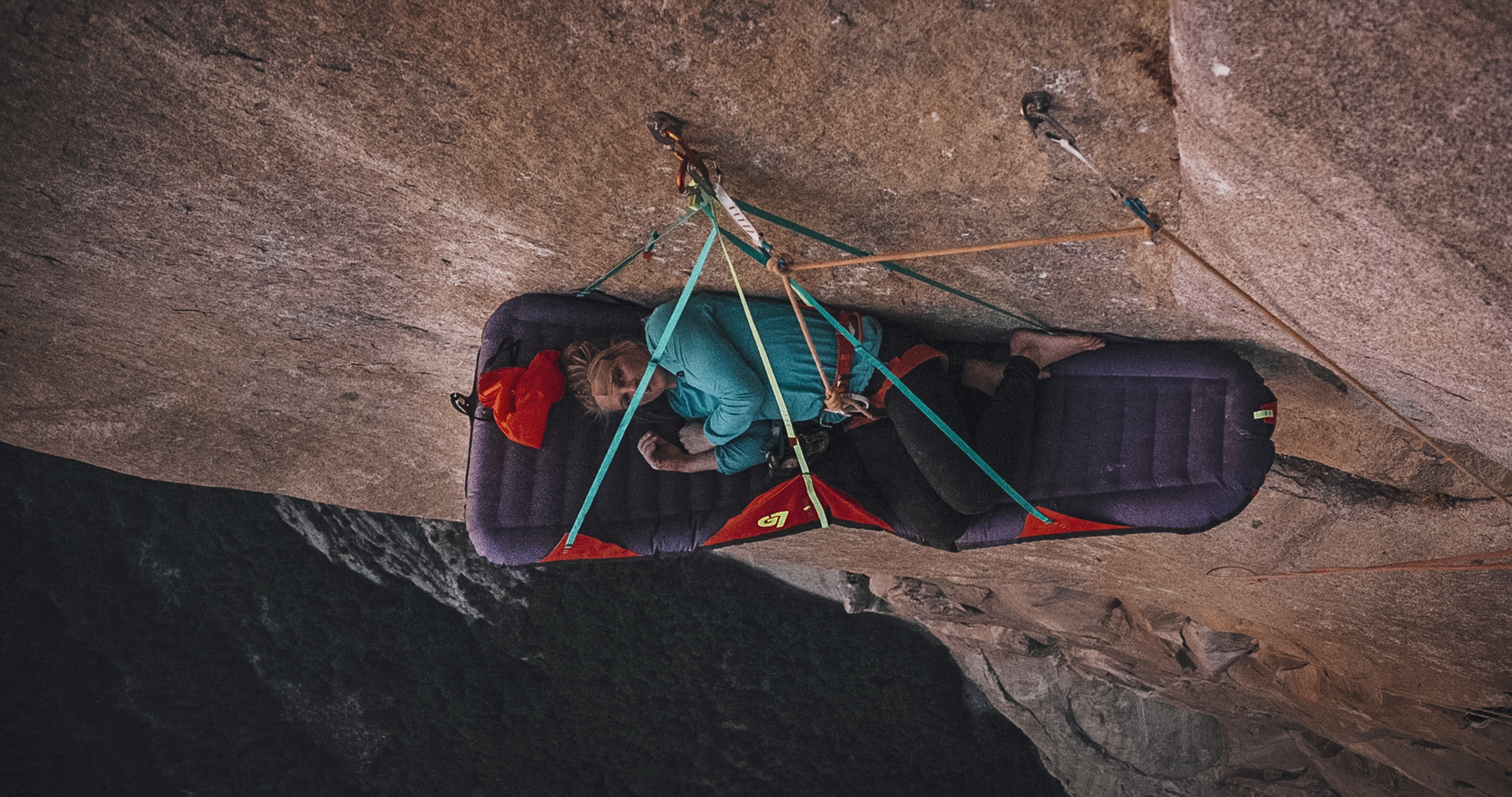
The film had a successful initial VOD run via Jolt Film earlier this year. As a filmmaker, what does it mean to you to have Girl Climber make its SVOD debut on a massive platform like Netflix?
Having Girl Climber come to Netflix is incredibly meaningful. We made this film within the climbing community, but the story has always been about something much larger than climbing. It is about identity, ambition, motherhood, partnership, fear, and the question of whether the parts of yourself that once defined you can evolve without disappearing.
The initial release through Jolt Film allowed us to connect directly with an audience that already understood the climbing world. Netflix gives the film an opportunity to reach people who may have never watched a climbing documentary or even thought about what it means to climb El Capitan. That scale of access is extraordinary for an independent documentary.
As a filmmaker, you spend years living with a story and making thousands of decisions in relative isolation. To know that the film can now reach millions of people around the world is both surreal and deeply gratifying. My hope is that audiences come for the scale and intensity of the climbing, but stay because they recognize something of themselves in Emily’s struggle to hold onto her ambition while becoming a new version of herself.
Netflix has seen massive success with climbing content recently, including Alex Honnold’s live climb in Taipei, which you were part of. Why do you think mainstream streaming audiences are currently so captivated by extreme climbing?
I think climbing connects with mainstream audiences because the stakes are immediately understandable. You do not need to know anything about grades, technique, or climbing history to understand what it means to see someone thousands of feet above the ground attempting something that feels impossible. There is a physical clarity to it that translates across languages and cultures.
But the spectacle is only what brings people in. What keeps them engaged is the person inside that experience. Climbing exposes fear, doubt, preparation, obsession, failure, and resilience in a very direct way. During Alex Honnold’s live climb in Taipei, the audience was not simply watching whether he could reach the top. They were watching how a human being manages pressure and remains composed when the consequences are enormous. Sure, the audience with a free solo wants to understand if the climber will live and die, but with free climbing on El Cap in the style that Emily does, it certainly looks like Emily might die at any given moment and she even has two dramatic accidents on camera in this film. Something you do not get from free soloing.
Girl Climber is obviously a very different story, but I think it connects for many of the same reasons. Emily is trying to climb El Capitan, but underneath that, she is wrestling with questions that a lot of people can relate to. Who am I after becoming a parent? Can I still pursue the things that made me who I am? How much risk am I comfortable taking now that other people depend on me? You come for the huge wall and the scary falls, but hopefully you stay because you see some part of your own life in what Emily is going through.
A massive thank you to Jon Glassberg for taking the time to answer our questions.!
Girl Climber will be available to stream on Netflix starting September 16th. Whether you’re a seasoned climber or just looking for your next edge-of-your-seat documentary binge, do not miss this one. Keep your eyes peeled for Part 2 of our coverage tomorrow, where we’ve got more questions for the documentary’s star—the legendary Emily Harrington herself—to talk about what it was really like up on that wall.