
Picture Credit: Netflix
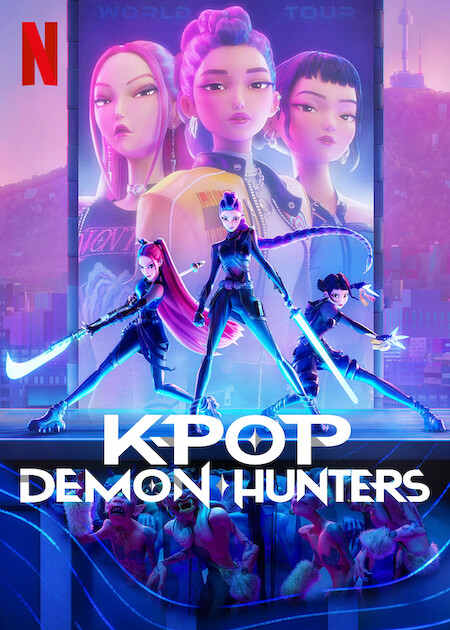
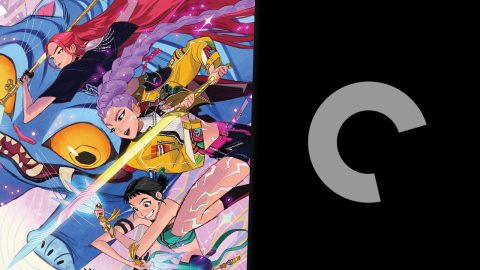
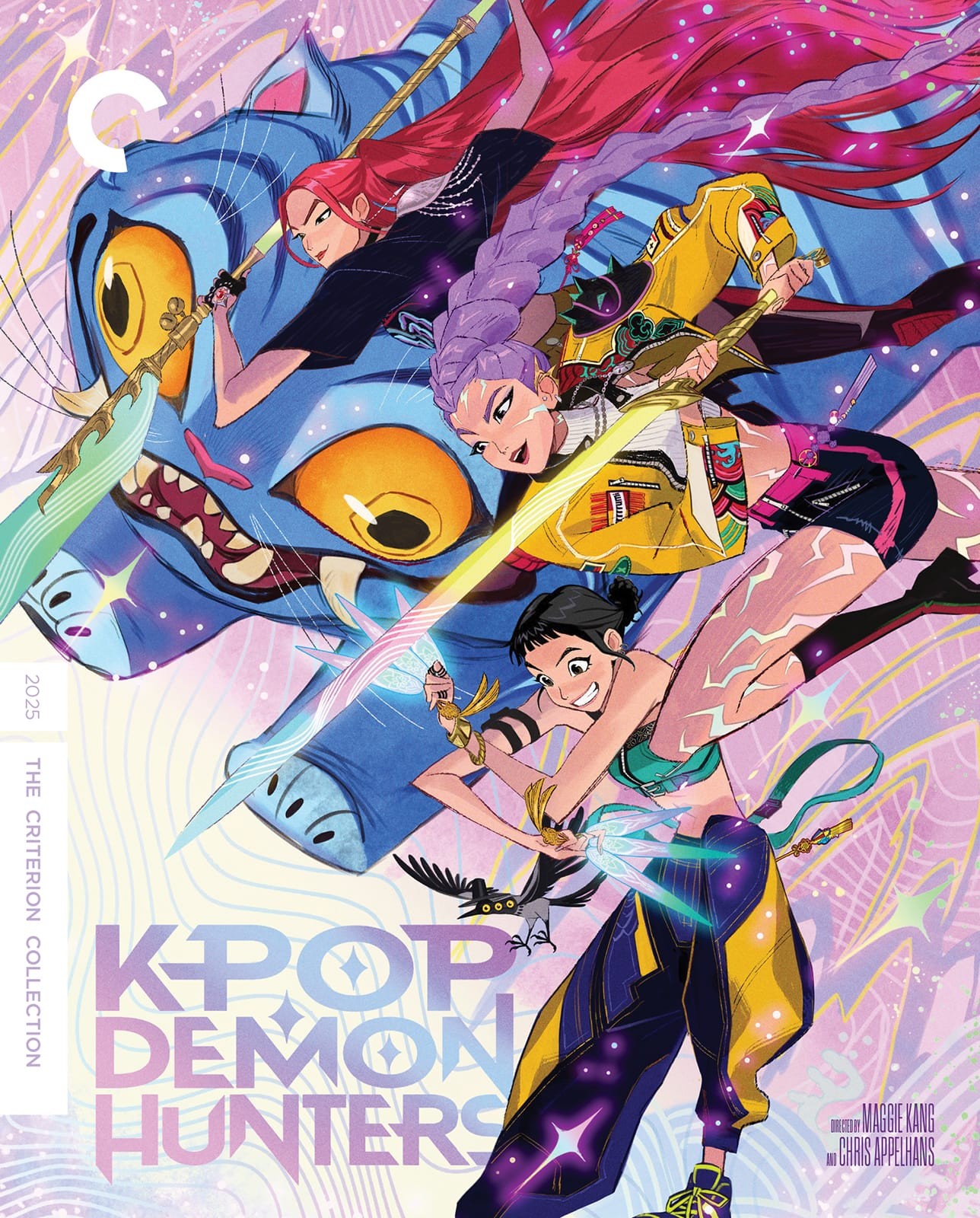
It was a golden Sunday morning as fans gathered at the Barnes & Noble at The Grove in Los Angeles in anticipation of Criterion’s release of KPop Demon Hunters. Directors Chris Appelhans and Maggie Kang, accompanied by production designer David Bleich and art director Wendell Dalit, sat down with Criterion’s Valeria Rotella for a conversation about the new 4K release, sharing insights into building a visual language for a movie that simultaneously had to function as an animated musical, a K-pop concert experience, a love letter to Korean culture and a fashion fantasy.
Lighting a K-Pop Concert, One Shot at a Time
Amid the behind-the-scenes stories of making the movie, and this Criterion release, was an appreciation for the artists who worked on it, sometimes for years. Much of what fans love about the movie came from animation gambles that had never been taken before. One of the biggest was animating the film’s musical sequences. “One of the hardest things in animation is you animate all the shots, and a sequence is broken up into all these shots, and it’s divided amongst dozens of artists,” said Appelhans. “So you might have a sequence in lighting that is 50 shots, and there’s 40 artists, and each of them has one shot. And when you’re trying to do a concert or a music video where you have performance continuity, but also lighting changes, that lighting is supposed to respond and be in a vibe with the tempo of the song and the emotions of the song. It becomes this crazy sort of chessboard of how to do that.”
The film’s visual identity wasn’t simply a matter of beautiful artwork. It required an entirely different way of thinking about how animated sequences could behave like live performances. As Dalit explained, it was hard to make things feel cohesive once they started stringing scenes together, and a challenge to make them feel like a music video or concert. “We discovered doing this process [to] just put everything together and do one master paint over the whole movie file,” he said. “Then, that way you could just quickly rough in the emotional beats, and the color changes, and the tempo changes. It helped bring the music video and concert sequences together and give it its own voice, and made it feel like you were really watching a K-pop concert.” These sequences became a “living painting,” as Appelhans put it.
Cracking the Code on “Your Idol”
One of the major sequences, in which rival band the Saja Boys perform “Your Idol,” was particularly tricky. “The three of us [were] like, how is this going to work? How is this going to work?” said Bleich. It was Dalit who eventually cracked the code. “Wendell put it into this application and did it on a timeline, and we got to see it for the first time,” Bleich continued. “I’ve never lit a film in animation…to where the music usually comes afterwards, not to light it to the music. So this was a challenge overall. It’s like okay, well, we’re gonna go to the beat, and that’s where Wendell came in. He started doing some rough sketches and some rough paintings. Next thing you know, it’s like, oh, we can visualize that. We can see it, and we have a blueprint and a recipe for [Sony Pictures] Imageworks to go ahead and design it from there.”
Vogue Covers and Seoul’s Back Alleys
Korean music and television were a big influence on the production, but so was fashion. “The underlying thread was fashion,” said Bleich. “So the girls have to look beautiful in every shot, and think of them as being on the cover of Vogue.” Because of that, there was always a push to use more color, or to find ways to inject it into shadows and other places you wouldn’t expect. “Dave just really pushed color every meeting,” said Kang, so much so that the group joked they ran out of magenta.
Appelhans praised the work of production designer Celine Kim, who brought an extraordinary level of detail to the film’s Seoul. “She nailed every detail: the brick size, the patterns, the architectural motifs, the way the streets,” he said. “If you’ve been to Bukhan and then you go there in the movie, it feels so immersive.” The accuracy was so impressive, Appelhans said, that a Korean YouTuber made a whole series on the movie’s faithful depictions of Seoul’s back alleys. “Celine said she was alone in her house, and she’s like, ‘Yes!’ So there’s a level of love that goes into that set before it ever hits lighting.”
Storyboards From Before the Greenlight
The Criterion release is packed with bonus content charting the seven-year journey to bring the film to the screen. Some of the storyboards included in the bonus features, Kang revealed, are among the originals she drew before the movie was even greenlit. The early Rumi and Jinu date scenes were part of the original proof of concept used to pitch the movie, and can be seen in the disc’s extras. “When we were wrapping the film, we got to do this amazing thing where we [went] to London and we record[ed] a live orchestra playing our score,” she said. “And when we got to [the song] ‘Free,’ it was so emotional I was just bawling…most of that scene is pretty much what I boarded in the beginning, seven years, eight years ago.”
“Putting that on the DVD,” said Appelhans, “you can see just how much of the movie was discovered and sort of brought to life at that stage. Of course there’s incredible work on top of that to truly animate and light and all those other stages. But it’s pretty neat to see it living as a big old sketch. That’s something that rarely makes it out of the studio.”
“Pork Chop Sandwiches”: The Scratch Vocals Behind HUNTR/X
That lengthy development process also meant the filmmakers wore multiple hats, including voice actor. Because they didn’t have their final cast for several years, they relied on scratch vocals from members of the crew to edit and develop the movie. At one point, Kang was voicing all three members of HUNTR/X, and those recordings are included on the disc. “Maggie, at one point, was doing all three girls all at once, so it was like this weird one-man play,” said Appelhans. “I would try to direct her through a scene and then she would come out of it. She’d be like, ‘Who am I? Am I Rumi or Zoey? What’s my name?'” To get into character, Kang would repeat the same phrase in each character’s voice: “pork chop sandwiches.” “I have to switch between all the characters,” she said. “So when I’m Zoey, I’m, like, [high voice], ‘Pork chop sandwiches, pork chop sandwiches.’ And then when I’m Mira, I’m, like, [deep voice] ‘Pork chop sandwiches.’ That’s how I got into character. It was wild.”
Appelhans also did scratch vocals for Jinu, to more humorous effect. “There’s a couple lines from Jinu that I did the scratch for,” he said. “There was a meme when the movie came out of all of the moments where he was a real dork…So they were like, ‘This is a loser in a hot body,’ and they had all the moments from the film. I’m like, ‘Oh, those are all the times that I did this.’ I felt very seen.” The crew also revealed that one of their editorial assistants, Charlene, was so good at scratch vocals for the movie’s various fans that they hired her to voice them in the final film.
All of this, and more, is on the new 4K Criterion release of KPop Demon Hunters. It’s wonderful to see such a labor of love on screen translate into such a rich collection of extras for fans to enjoy.
Can’t wait for your copy to arrive? Netflix recently launched a dedicated KPop Demon Hunters: For the Fans! hub, gathering the movie, the sing-along version and more than 20 new bonus episodes in one place. As for what’s next, Kang and Appelhans are returning for the officially confirmed sequel, though Sony Animation bosses have suggested it may not arrive until after 2029.