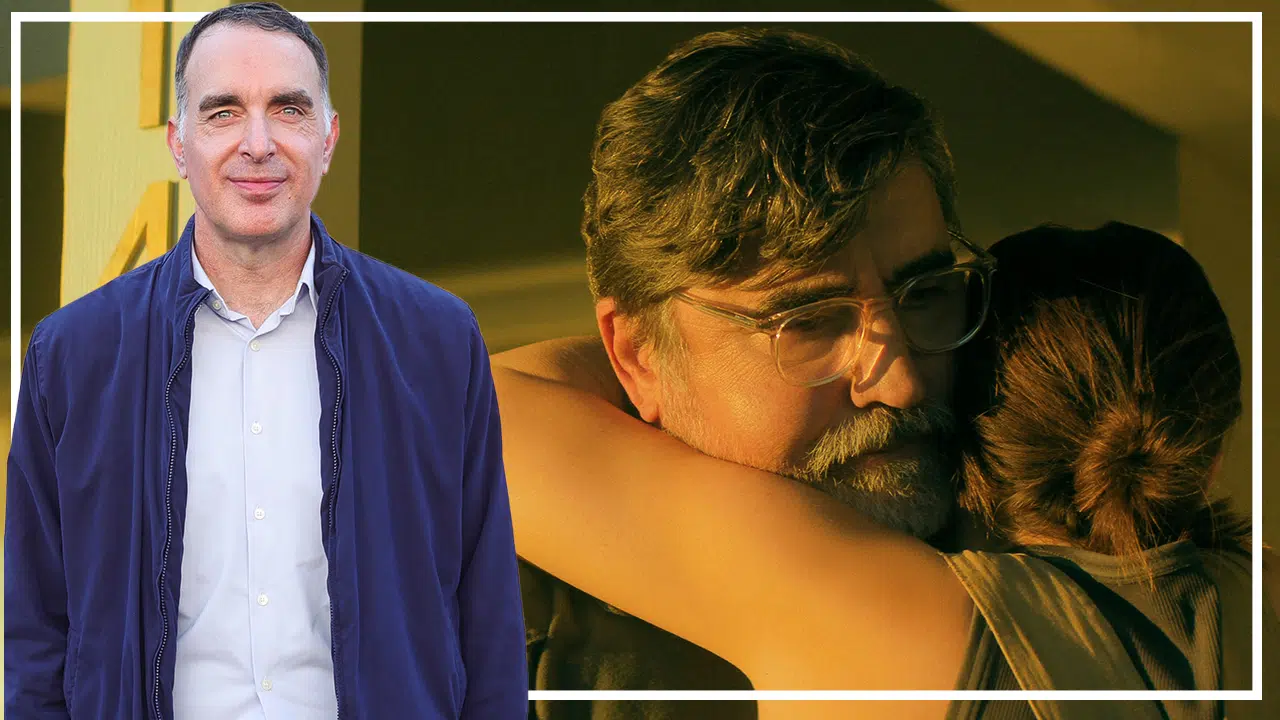
Picture Credit: Getty Images / Netflix
The Boroughs couldn’t have found a more fitting composer than John Paesano. When the Maze Runner and Kingdom of the Planet of the Apes composer was growing up, as he waited for home videos of his favorite films, he’d buy the soundtracks and play the stories over and over again in his head. It made him think: “Oh, this is incredible – how music can do that. I got to learn how to do this. ”
Composers John Williams and Jerry Goldsmith – two of kings of sweeping scores – were a few of his inspirations, not to mention early mentors. “I’m a creature of the late 80s, and in the early 90s, that’s when I got bit by the film bug,” Paesano told What’s On Netflix. I got into music because of films. I fell in love with movies and then the music from those movies.”
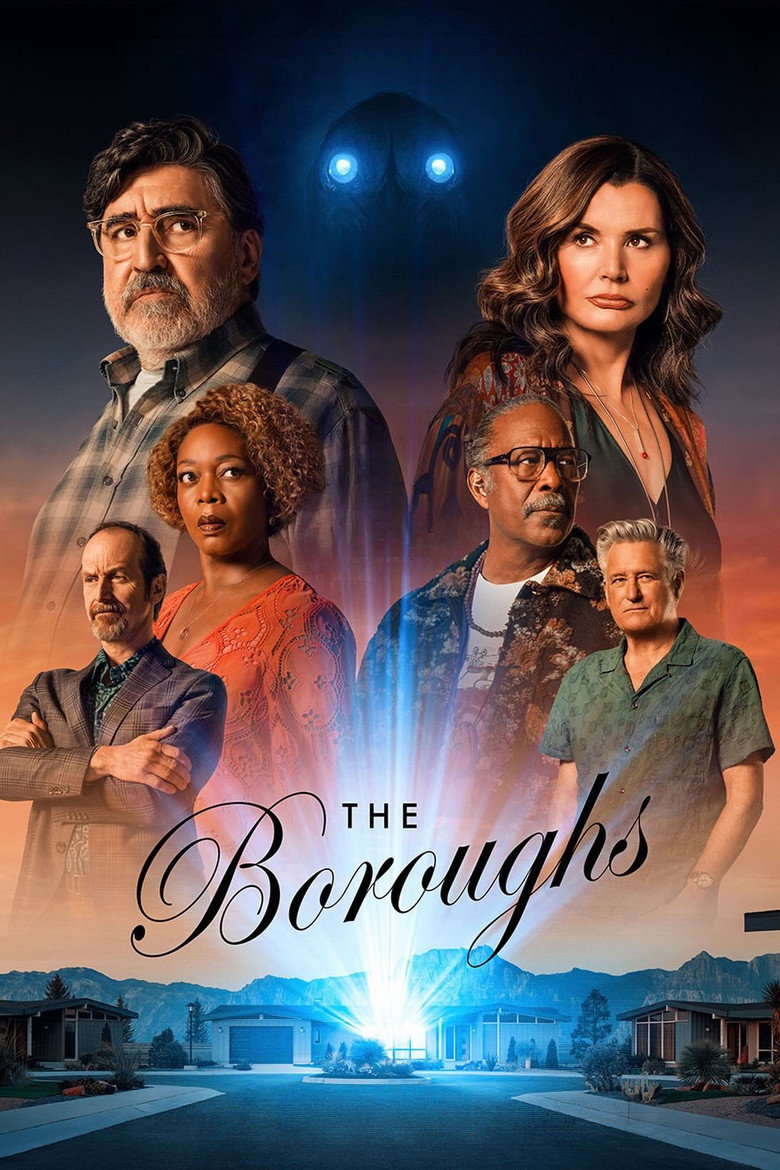
In an interview about The Boroughs with What’s on Netflix, Paesano explained how he scored the exact kind of project he had always aspired to score.
You grew up on a healthy diet of John Barry, Jerry Goldsmith, and John Williams. With The Boroughs, were you tapping into that upbringing of music?
Those scores to me were everything growing up. It ties into The Boroughs when we got into talking about the music. Not only did we want to try to capture that sound, but also the way that the music functionally works against pictures. It’s the sensibility of how tight you want that music to picture and how much you want that music at the same level with the actors, with emotion, and right along with them telling the story. Scores in the ’80s and ’90s were not afraid to be right there in your face, letting the audience understand what was going on in the scene. They were definitely not background scores. They were very musical, very melodic, and the emotion was really tight with pictures of the characters.
As much adventure and bravura there is in the score, similar to those composers listed, you’re also not afraid to let a gentle piano support the storytelling in The Boroughs.
It’s a good point because I always say this to younger composers, sometimes a single piano works much better in a scene than a full-blown orchestra. The job of the composer is to gauge that and make those decisions. I always go into projects and say, “Hey, listen, if it ends up being a great musical score at the end of this thing, that’s a total bonus, but the priority is to make sure that I’m trying to put something against the picture that’s going to help enhance the viewer and the story.” It’s not about writing great music; it’s about writing the right music.
That’s well-said: not writing great music but the right music. What was the right music for The Boroughs?
After Kingdom of the Planet of the Apes, I remember talking with my agent at the time about finding the projects that I knew that I was just the right fit for. I love that sound of the ’80s and ’90s. We laser-focused on, “Okay, what’s out there that wants this?” I narrowed my window a lot.
Another thing I’ve realized as I’ve gone through the business, I’m not going to be right for every single project. I can do a lot of different styles, but we were really focused on trying to find a project that wanted exactly what I did for this.
We had known that Jeff and Will wanted to experiment in this space, to see what we could do with it. Sometimes you don’t really know what the project is going to need until you actually start seeing frames and you start throwing things up against it. So during the beginning process, before I had seen anything, I was able to write some suites and ideas.
What were they?
Some big, broad character themes. I could get it to them while they were in New Mexico shooting. They had a chance to absorb it, but again, we didn’t really know until all the footage came back and we started applying it to see if it was going to work or not. It was just one of those things where the initial idea actually ended up working in the end.
Normally, that doesn’t happen. I remember Maze Runner when [director] Wes [Ball] and I had this grand plan that we wanted to do a big Jurassic Park-type score for the movie, but it didn’t have the mystery we needed and the characters didn’t align quite with it. We had to shift and try to find what the right sound was for that project. You always have great intentions going into it, and where you end up sometimes doesn’t really end up where you started off. This was one of those projects where it actually did.
Awe, wonder, and danger – those are all big ingredients in those ’80s scores you’re talking about. How do you want to evoke those feelings in the score for The Boroughs?
With Jeff and Will, we started seeing all these characters not as older people living in a retirement community, but we saw them as kids, like young kids. All of a sudden that informed what I wanted to do with the score. I’m going to score it like a bunch of 13-year-old kids running around trying to solve something. Let’s ignore what we’re seeing in the picture with their age; let’s try to score this subtext of who they are.
As I’ve gotten older, I still feel like I’m 15, no matter how old I get. I’m sure they feel the same way, like your inner self doesn’t necessarily grow up as your physical outer self. In a weird way, the music followed that sensibility as well.
I didn’t want to ground the show by any means. If anything, I wanted to try to get the audience to suspend disbelief a little bit. I want them to feel like they were watching kids getting into trouble, screwing around, running around the neighborhood, and breaking into houses. It’s that sense of adventure.
With the track “Welcome to The Boroughs,” how’d you want to set the tone for that vision?
That was the initial suite I wrote. Anytime I start on a project, I always write four or five bigger ideas of music that I can share with the showrunners or the director. I always describe the suites…. I always use the analogy that it’s like fashion. Somebody comes out on the runway, they’re wearing this crazy loud outfit, and you’re like, “Who’s going to wear that out in public?” But then you realize it’s about the grand idea. When it goes from the runway to the rack in a store, it’s toned down and maybe done in a way that makes it a little more accessible to everybody. In a way, that’s what these suites are.
“Welcome to the Boroughs” was the first suite that I actually wrote for the show. There’s lots of little motifs, themes, and different things that we use from within that suite. I don’t think that suite was ever used as a whole piece of music, actually.
Really?
Yeah, but things were born off of it. The main title, Sam’s theme — there’s a little running four-note motif that we use that represents The Boroughs. All the other character themes kind of live within that four-note motif.
How much joy did you get out of naming the track “Crow Encounters”?
[Laughs] “Crow Encounters” just seemed too perfect to pass up. Initially, it was called “Crow Encounter” in the Q sheet. We name all the cues as we’re working. With all the crows and everything in the scene, it’s so funny that it ended up being “Crow Encounters” as the track name.
That kind of playfulness feels right for the show, too.
It was a real fun score. We were in a little bit of a time machine with the show while working on it. It could have been, like I said, 1988 through all the time I worked on it. Back in the ’80s and ’90s and earlier, composers couldn’t get a QuickTime and throw it up in their timeline and start putting markers in and writing to picture right away. They had to read the script, talk to the director, and go sketch something out.
I think that’s why so many scores of the ’80s and ’90s and ’70s were very musical because the composers weren’t writing against picture. They were building a musical world based on conversations and story. Composers nowadays conceive a lot of music against picture, and it’s something I’ve always kind of pushed away from. All my heroes didn’t do it that way. I always tried to adopt their process as much as possible.