Picture courtesy of Vanessa Porter and Netflix
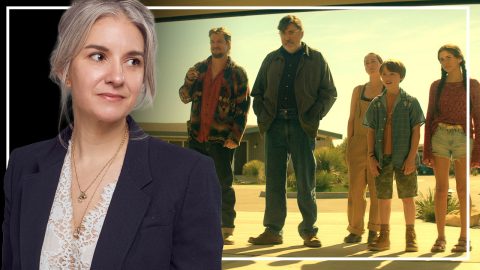
As the costume designer for Don’t Say Good Luck, Vanessa Porter felt right at home. Julia Hart’s film is a kind-hearted ode to theater kids, a world Porter knows well having worked behind the scenes on her own high school’s stage productions. Those early shows paved the way for her to eventually design costumes for projects like Archive 81, Companion, Brawl in Cell Block 99, and The Kindergarten Teacher.
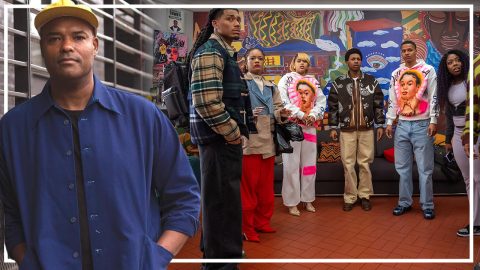
“When I started Don’t Say Good Luck, I had conversations with the director, Julia, about wanting to create an aesthetic that was sort of timeless,” Porter told What’s On Netflix. “The way that we did that was by not leaning into any current trends and pulling from more retro references. We pulled from a lot of ’90s imagery for the kids and for the whole family.”
Recently, the costume designer spoke with us about creating an authentic family and high school.
To begin, who was on your mood board for Don’t Say Good Luck?
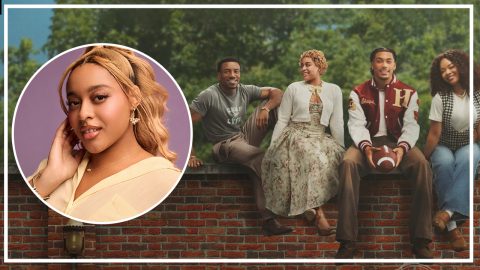
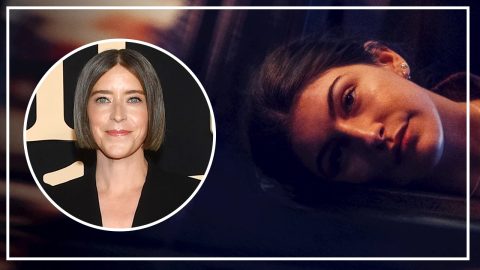
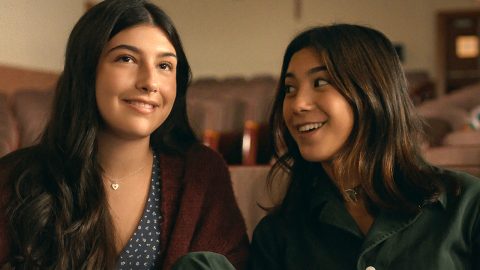
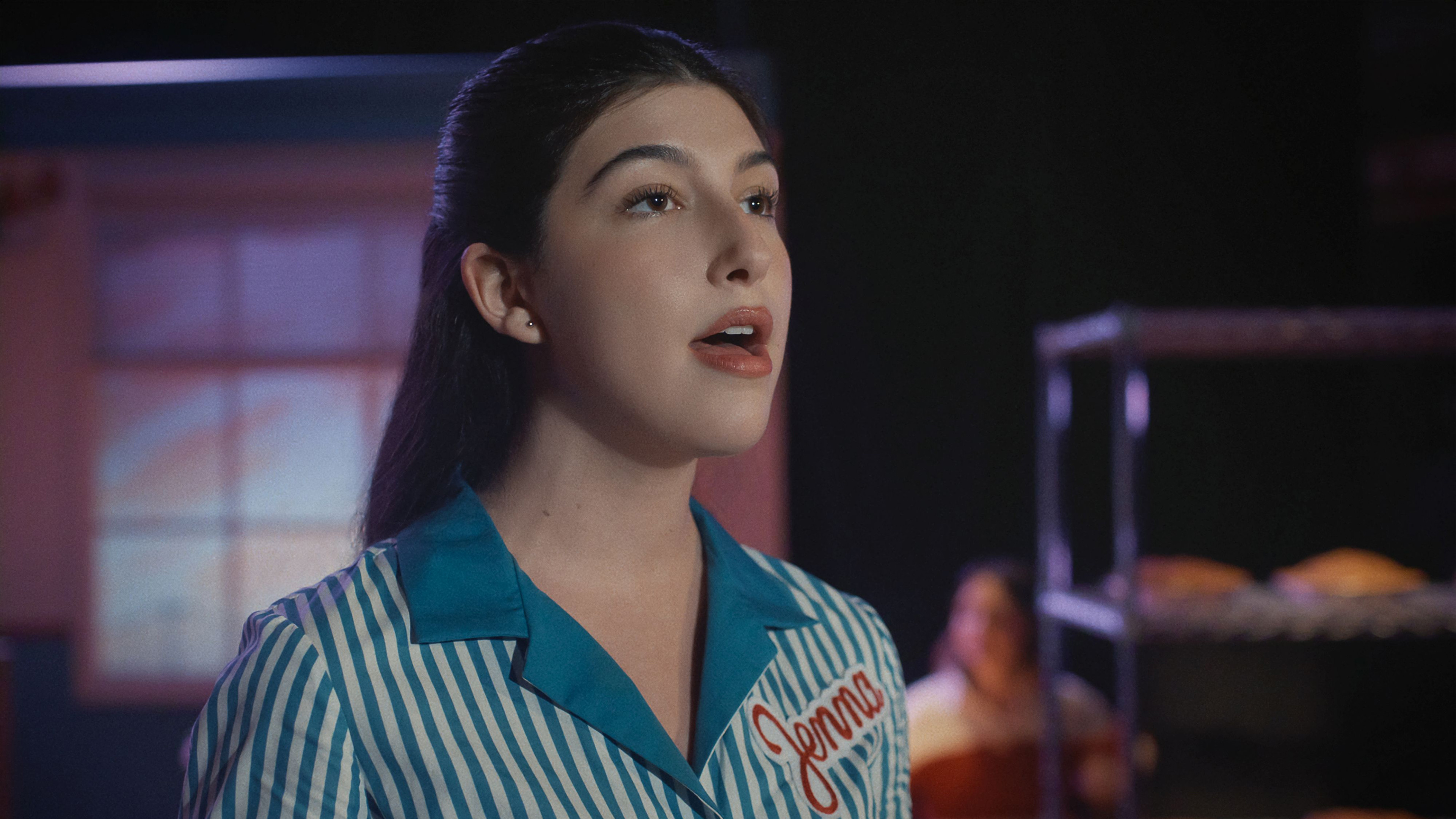
Our main Sunny reference – the musician Clairo. Clairo has sort of an ethereal dreamy style that fits the tone of the film. She is a little bit alternative while also being classic rather than trendy. With Sophie we have a bit of a transformation in her style over the course of the film. She starts in baggy sweaters and loose styles in the beginning of the film and then becomes more bold and vulnerable in her choices as she gains confidence. The last floral dress reflects the sense of playfulness and hope that will continue on after Elizabeth passes.
What were some of those ’90s references? Were you looking at some high school classics or some certain magazines?
I tend to look at music references a lot, so I’m sure that we had some different sort of grungy things. Sunny wears a lot of these small florals in the movie that I think are kind of ’90s fabrics that Liv Tyler and people would’ve worn in the ’90s, so kind of referential of that.
Where do you begin for extras in creating an authentic high school?
We mined Instagram for some imagery that felt real, but also, it was really fun working with all these young actors and actors who, for some of them, it was their first movie or their biggest movie certainly. I was getting to work with them to build these characters and find looks that would feel authentic, but also playful for them, I think.
You studied theater at CalArts, right?
Yeah.
Did you look back at that time and think of any theater kids?
When I first read the script before getting the job to prep for the interview, I immediately started thinking about my high school theater experiences because I had actually designed costumes in high school. It immediately brought me back to that and brought me back to my mentor then being similar to the mentor character in the film. I was thinking about the nostalgia that I feel for high school theater and trying to build that tone into the movie. Julia was trying to build a little bit of this nostalgia, too.
What were some of the high school productions you worked on?
We did Les Mis. We did Grease with some of the musicals and did a bunch of Shakespeare.
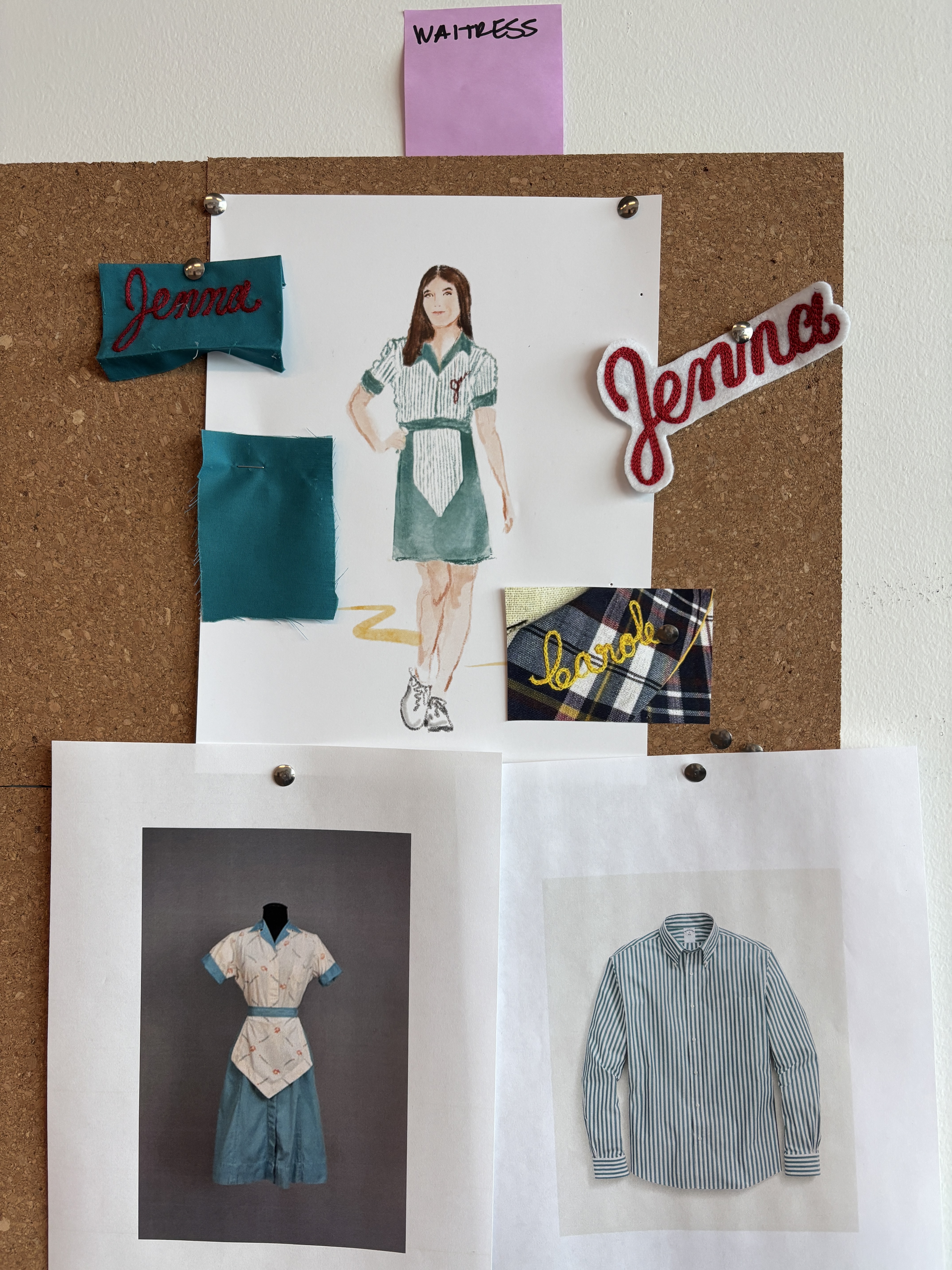
How good should the costumes be for the movie’s stage production of Waitress?
We talked about that a lot in terms of the production value of the show within the movie. Ultimately, looking back, at least at my high school experience, the production value was kind of good. I think it’s surprising what high school kids can pull off. Maybe we did a slightly unrealistic take.
Are the costumes similar to what’s on Broadway?
No, specifically Broadway, I can’t remember what color they are or something. We made sure that they weren’t the same so that we could have our own take. But of course there’s been so many productions of Waitress across different high schools and different tours. It’s been played a thousand different ways with different costumes, so we came with our own take.
When you worked on high school plays and musicals, what kind of costume budget did you have?
I assume that we didn’t have much, but there’s a whole legacy of shows that came before you. You’re in the costume closet pulling things from past shows and changing them to make them work. And that’s kind of a fun concept too, that we didn’t necessarily play with in the movie. After high school, I went to college, and then after that got into independent film, which definitely is all about stretching the small dollars.
What about studying at CalArts? It’s more experimental, right?
I think that CalArts is more experimental than some of the more traditional theater schools. Even though we would do a Shakespeare play or something, it would be wild costumes and a reinvention on some level. We did more experimental, strange work than maybe is the focus at other schools.
So when you read the script, did it really speak to you like, oh, this movie has an affinity for theater kids?
When I first spoke to Julia, I told her my first reactions are to A, want to call my mom, and B, to reach out to all the theater school friends from high school that I haven’t spoken to in forever. For that to be sort of an adult woman’s reaction to the movie, I think is really powerful and speaks to how well it’s written and how it can be relatable and emotionally resonant for people.
As someone who’s worked on genre projects, like Companion and Archive 81, is it just as hard making a movie that’s contemporary and grounded like Don’t Say Good Luck?
People always think that the hardest costume design is some big period movie. But I think actually you can get away with a lot in a period movie because people don’t know if it’s wrong. In a contemporary movie like this, the audience will feel if you have not gotten it right. They can tell that it won’t feel right. And so, I think contemporary costume design can be really difficult to make feel naturalistic. In terms of how we did that, it’s trying to have things that were worn in, washed down. Again, not leaning into trends too much, just relatable styles that people recognize.
The grandfather’s driving gloves, for example.
And it’s such a character moment. Not all grandfathers do that. It’s a certain kind of guy who’s got that going on. Steve came in kind of at the last minute as I recall, but just trying to have it be relatable and real was the focus for him. Approachable, too, having nothing that would feel distancing.
As you were looking back at your high school theater days, was it exciting? I always assumed back in school all the crew working on the theater shows were cool.
As I remember it, I don’t remember us being cool. I remember us being pretty nerdy.
That’s cool too.
But yeah, there was excitement, at least for us. I’m not sure whether the wider school was excited about going to the plays or not, but we were excited.
Picture Credit: Netflix
Knowing even in high school you wanted to be a costume designer, which designers were you looking up to?
It would’ve been in the early 2000s. I graduated high school in 2003, and I feel like the late ’90s and early 2000s were such a time of these big epic period films. I remember specifically watching Elizabeth and being like, “Oh, wow.”
The scope… It’s like theater, you have to do things so big, or a movie like that. But actually working in film, there’s so much focus on just details and the shots are here up mostly [focusing on the face], and the things that you focus on are so different.
It’s interesting how my interest has evolved to now. I’m really interested when somebody has a specific earring instead of a huge costume.
Why is an earring so important to you now?
I don’t know what prompted that evolution, but yeah, it’s interesting. A lot of my costume designer friends come from different backgrounds. I come from always wanting to do this, but a lot of my friends come from psychology backgrounds and social work backgrounds. It makes sense because it’s so much about trying to figure out who people are and what makes them present in the way that they present. Those things are what’s interesting to me now.